Kirjojen hintavertailu. Mukana 11 244 527 kirjaa ja 12 kauppaa.

Kirjahaku

Etsi kirjoja tekijän nimen, kirjan nimen tai ISBN:n perusteella.

10 kirjaa tekijältä Eric Gill

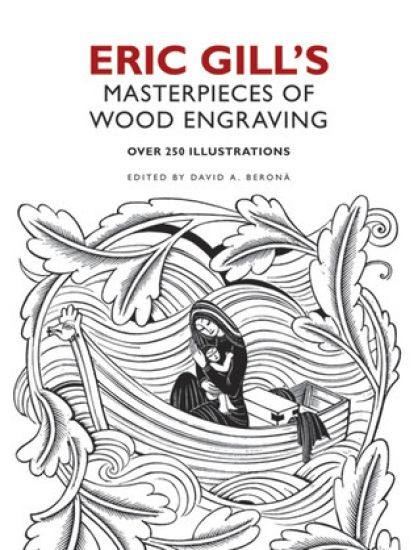
Eric Gill's Masterpieces of Wood Engraving

Eric Gill's Masterpieces of Wood Engraving

Eric Gill

Dover Publications Inc.
2013
nidottu
This original collection unites the finest woodcuts of one of the twentieth century's most creative and prolific English artists. Ranging from the religious to the erotic, the engravings include images inspired by The Song of Songs, The Canterbury Tales, and The Four Gospels.Eric Gill was a sculptor, typeface designer, stonecutter, and engraver. In addition to designing such well-known typefaces as Joanna, Perpetua, and Gill Sans, he produced illustrations for more than a hundred books. The first affordable edition to showcase Gill's wood engravings, this volume constitutes a feast for the eyes as well as an important and accessible reference work for artists, designers, crafters, and bibliophiles. Contains mature content.
Eric Gill

Eric Gill

Eric Gill

Unicorn Publishing Group
2017
nidottu
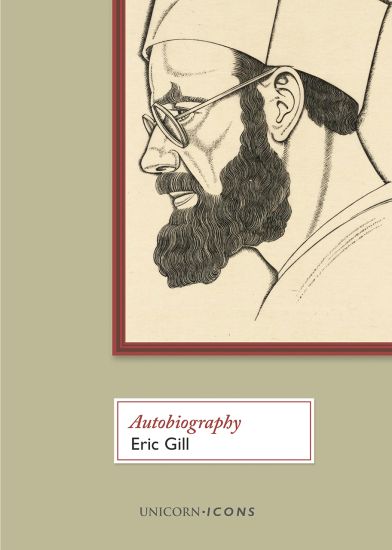
Eric Gill (1882 – 1940) was an English sculptor, stonemason, typographer and printmaker; a controversial figure whose fascination with erotica and sex were at odds with his deep religious beliefs. He spent his formative years in Brighton and Chichester before a period of study in London. After marriage in 1904, he moved with his young family to Ditchling in Sussex where he set up an artistic community. In 1924 Gill and his disciples left for Capel-y-ffin in Wales, followed four years later by a move to a home near High Wycombe in Buckinghamshire. Among his many enduring artistic achievements are the typefaces Gill Sans, Perpetua and Joanna; the group of sculptures Prospero and Ariel for BBC Broadcasting House; numerous First World War memorials; and a vast array of illustrations for the private Golden Cockerel Press. He died in 1940 and is buried in Speen Churchyard, in the Chilterns.
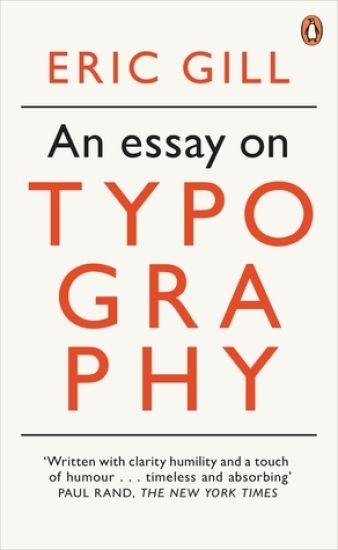
An Essay on Typography

An Essay on Typography

Eric Gill

Penguin Classics
2013
nidottu
Eric Gill's opinionated manifesto on typography argues that 'a good piece of lettering is as beautiful a thing to see as any sculpture or painted picture'. This essay explores the place of typography in culture and is also a moral treatise celebrating the role of craftsmanship in an industrial age. Gill, a sculptor, engraver, printmaker and creator of many classic typefaces that can be seen around us today, fused art, history and polemic in a visionary work which has been hugely influential on modern graphic design.'Written with clarity, humility and a touch of humour . . . timeless and absorbing' Paul Rand, The New York Times'His lettering was clear, confident and hugely influential on the development of modern type design. The world has now caught up with Gill' GuardianHow do we see the world around us? This is one of a number of pivotal works by creative thinkers like John Berger and Susan Sontag whose writings on art, design and the media have changed our vision for ever.
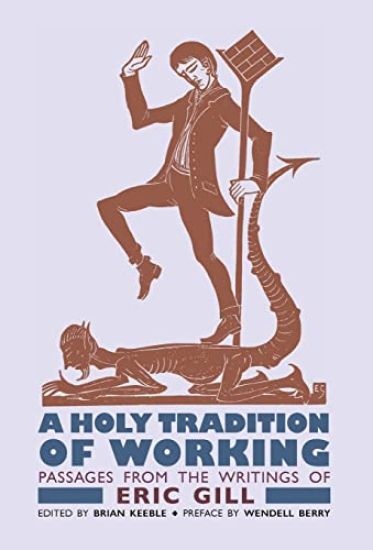
A Holy Tradition of Working

A Holy Tradition of Working

Eric Gill

Angelico Press
2021
pokkari
Eric Gill (1882-1940) is well known as a sculptor, wood and stone carver, letter, engraver, typeface designer, and graphic artist. But he was also a radical religious and social philosopher-a Christian revolutionary-for whom "life was more than art," because it was the highest art, the art of being human. Thus his interests were never theoretical and his view of life was holistic, involving the whole person in a unity of art, work and spiritual values. A convert to Catholicism in 1913, Gill brought to the movement of social and aesthetic renewal founded by Ruskin and William Morris a sensibility sharpened both by Non-conformism and by the enthusiastic acceptance of Thomism. After World War I, Gill helped create the Ditching Guild, and independent society of Roman Catholics bound together by common faith and common ideas about work and human society. In 1924, Gill moved with his family and a few friends, now under the rule of third-order Dominicans, to Capel-y-ffin, in South Wales. Here the task of integrating human work and religious life in a craft community continued, and here, too, Gill began to write, at first short pieces, then longer essays. In 1928, he moved back to Buckinghamshire, where he lived until his death. A Holy Tradition of Working is an anthology drawn from the full prophetic range of Gill's concerns. The topics covered include: First Things; What is Man?; What is Art?; The Four Causes; Of Work and Responsibility; Of Beauty; Of Imagination; Property, Ownership and Holy Poverty; and A Vision of Normal Society. Brian Keeble writes "There can be no mistaking the directional impulse in Gill's thought; it is heavenward, Not so much a heaven 'up there' as one with a more local habitation; the kingdom of heaven within which is the kingdom proper to man, that is, man the maker, one who is uniquely fitted, being created in His image, to 'collaborate with God'..."