Kirjojen hintavertailu. Mukana 11 590 110 kirjaa ja 12 kauppaa.

Kirjahaku

Etsi kirjoja tekijän nimen, kirjan nimen tai ISBN:n perusteella.

16 kirjaa tekijältä Eric H. Cline

The Trojan War

The Trojan War

Eric H. Cline

Oxford University Press Inc
2013
nidottu
Homer's tale of the abduction of Helen to Troy and the ten-year war to bring her back to Greece has fascinated mankind for centuries since he related it in The Iliad and The Odyssey. More recently, it has given rise to countless scholarly articles and books, extensive archaeological excavations, epic movies, television documentaries, stage plays, art and sculpture, even souvenirs and collectibles. However, while the ancients themselves thought that the Trojan War took place and was a pivotal event in world history, scholars during the Middle Ages and into the modern era derided it as a piece of fiction. This book investigates two major questions: did the Trojan War take place and, if so, where? It ultimately demonstrates that a war or wars in the vicinity of Troy probably did take place in some way, shape, or form during the Late Bronze Age, thereby forming the nucleus of the story that was handed down orally for centuries until put into essentially final form by Homer. However, Cline suggests that although a Trojan War (or wars) probably did take place, it was not fought because of Helen's abduction; there were far more compelling economic and political motives for conflict more than 3,000 years ago. Aside from Homer, the book examines various classical literary sources: the Epic Cycle, a saga found at the Hittite capital of Hattusas, treatments of the story by the playwrights of classical Greece, and alternative versions or continuations of the saga such as Virgil's Aeneid, which add detail but frequently contradict the original story. Cline also surveys archaeological attempts to document the Trojan War through excavations at Hissarlik, Turkey, especially the work of Heinrich Schliemann and his successors Wilhelm Dörpfeld, Carl Blegen, and Manfred Korfmann. ABOUT THE SERIES: The Very Short Introductions series from Oxford University Press contains hundreds of titles in almost every subject area. These pocket-sized books are the perfect way to get ahead in a new subject quickly. Our expert authors combine facts, analysis, perspective, new ideas, and enthusiasm to make interesting and challenging topics highly readable.
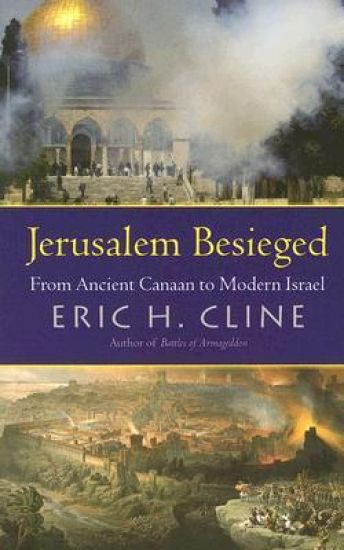
Jerusalem Besieged

Jerusalem Besieged

Eric H. Cline

The University of Michigan Press
2005
nidottu
"Jerusalem Besieged is a fascinating account of how and why a baffling array of peoples, ideologies, and religions have fought for some four thousand years over a city without either great wealth, size, or strategic importance. Cline guides us through the baffling, but always bloody, array of Jewish, Roman, Moslem, Crusader, Ottoman, Western, Arab, and Israeli fights for possession of such a symbolic prize in a manner that is both scholarly and engaging."-Victor Davis Hanson, Stanford University; author of The Other Greeks and Carnage and Culture"A beautifully lucid presentation of four thousand years of history in a single volume. Cline writes primarily as an archaeologist-avoiding polemic and offering evidence for any religious claims-yet he has also incorporated much journalistic material into this study. Jerusalem Besieged will enlighten anyone interested in the history of military conflict in and around Jerusalem."-Col. Rose Mary Sheldon, Virginia Military Institute"This groundbreaking study offers a fascinating synthesis of Jerusalem's military history from its first occupation into the modern era. Cline amply deploys primary source material to investigate assaults on Jerusalem of every sort, starting at the dawn of recorded history. Jerusalem Besieged is invaluable for framing the contemporary situation in the Middle East in the context of a very long and pertinent history."-Baruch Halpern, Pennsylvania State UniversityA sweeping history of four thousand years of struggle for control of one city"[An] absorbing account of archaeological history, from the ancient Israelites' first conquest to today's second intifada. Cline clearly lays out the fascinating history behind the conflicts."-USA Today"A pleasure to read, this work makes this important but complicated subject fascinating."-Jewish Book World"Jerusalem Besieged is a fascinating account of how and why a baffling array of peoples, ideologies, and religions have fought for some four thousand years over a city without either great wealth, size, or strategic importance. Cline guides us through the baffling, but always bloody, array of Jewish, Roman, Moslem, Crusader, Ottoman, Western, Arab, and Israeli fights for possession of such a symbolic prize in a manner that is both scholarly and engaging."-Victor Davis Hanson, Stanford University; author of The Other Greeks and Carnage and Culture
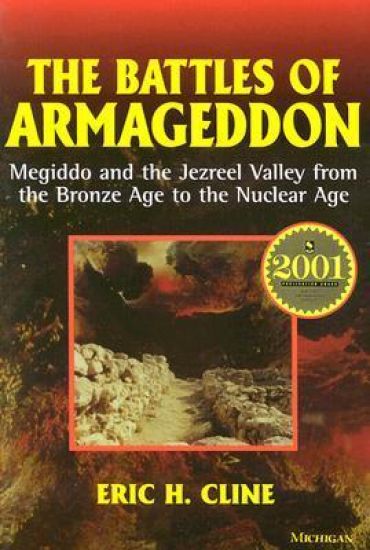
The Battles of Armageddon

The Battles of Armageddon

Eric H. Cline

The University of Michigan Press
2002
nidottu
WINNER > Best Popular Book on Archaeology --Biblical Archaeology SocietyApocalypse. Judgment Day. The End Time. Armageddon. Students of the Bible know it as the place where the cataclysmic battle between the forces of good and the forces of evil will unfold. Many believe that this battle will take place in the very near future. But few know that Armageddon is a real place--one that has seen more fighting and bloodshed than any other spot on earth.The name Armageddon is a corruption of the Hebrew phrase Har Megiddo, and it means "Mount of Megiddo." More than thirty bloody conflicts have been fought at the ancient site of Megiddo and adjacent areas of the Jezreel Valley during the past four thousand years. Egyptians, Israelites, Greeks, Muslims, Crusaders, Mongols, British, Germans, Arabs, and Israelis have all fought and died here. The names of the warring leaders reverberate throughout history: Thutmose III, Deborah, Gideon, Saul and Jonathan, Jezebel, Saladin, Napoleon, and Allenby, to name but the most famous. Throughout history Megiddo and the Jezreel Valley have been ground zero for battles that determined the very course of civilization. No wonder that the author of Revelation believed Armageddon, the penultimate battle between good and evil, would also take place here!The Battles of Armageddon introduces readers to a rich cast of ancient and modern warriors, while bringing together for the first time the wide range of conflicts that have been fought at Megiddo and the Jezreel Valley from the Bronze Age to the Nuclear Age.Eric H. Cline has participated in more than seventeen seasons of excavation and survey in Israel, Egypt, Jordan, Greece, and the United States. He is currently a Senior Staff Archaeologist at the ongoing excavations of Megiddo.
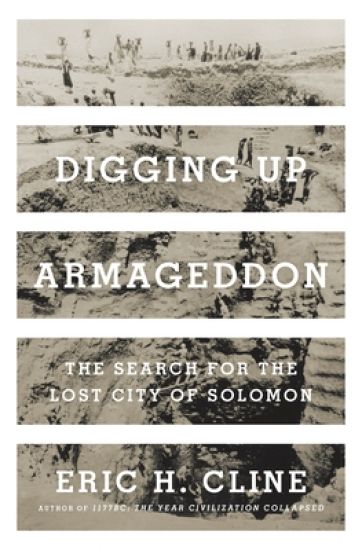
Digging Up Armageddon

Digging Up Armageddon

Eric H. Cline

PRINCETON UNIVERSITY PRESS
2020
sidottu
A vivid portrait of the early years of biblical archaeology from the acclaimed author of 1177 B.C.: The Year Civilization CollapsedIn 1925, James Henry Breasted, famed Egyptologist and director of the Oriental Institute at the University of Chicago, sent a team of archaeologists to the Holy Land to excavate the ancient site of Megiddo—Armageddon in the New Testament—which the Bible says was fortified by King Solomon. Their excavations made headlines around the world and shed light on one of the most legendary cities of biblical times, yet little has been written about what happened behind the scenes. Digging Up Armageddon brings to life one of the most important archaeological expeditions ever undertaken, describing the site and what was found there, including discoveries of gold and ivory, and providing an up-close look at the internal workings of a dig in the early years of biblical archaeology.The Chicago team left behind a trove of writings and correspondence spanning more than three decades, from letters and cablegrams to cards, notes, and diaries. Eric Cline draws on these materials to paint a compelling portrait of a bygone age of archaeology. He masterfully sets the expedition against the backdrop of the Great Depression in America and the growing troubles and tensions in British Mandate Palestine. He gives readers an insider's perspective on the debates over what was uncovered at Megiddo, the infighting that roiled the expedition, and the stunning discoveries that transformed our understanding of the ancient world.Digging Up Armageddon is the enthralling story of an archaeological site in the interwar years and its remarkable place at the crossroads of history.
Three Stones Make a Wall

Three Stones Make a Wall

Eric H. Cline

PRINCETON UNIVERSITY PRESS
2017
sidottu
From the bestselling author of 1177 B.C., a comprehensive history of archaeology--from its amateur beginnings to the cutting-edge science it is today. In 1922, Howard Carter peered into Tutankhamun's tomb for the first time, the only light coming from the candle in his outstretched hand. Urged to tell what he was seeing through the small opening he had cut in the door to the tomb, the Egyptologist famously replied, "I see wonderful things." Carter's fabulous discovery is just one of the many spellbinding stories told in Three Stones Make a Wall. Written by Eric Cline, an archaeologist with more than thirty seasons of excavation experience, Three Stones Make a Wall traces the history of archaeology from an amateur pursuit to the cutting-edge science it is today by taking the reader on a tour of major archaeological sites and discoveries, from Pompeii to Petra, Troy to the Terracotta Warriors, and Mycenae to Megiddo and Masada. Cline brings to life the personalities behind these digs, including Heinrich Schliemann, the former businessman who excavated Troy, and Mary Leakey, whose discoveries advanced our understanding of human origins. The discovery of the peoples and civilizations of the past is presented in vivid detail, from the Hittites and Minoans to the Inca, Aztec, and Moche. Along the way, the book addresses the questions archaeologists are asked most often: How do you know where to dig? How are excavations actually done? How do you know how old something is? Who gets to keep what is found? Taking readers from the pioneering digs of the eighteenth century to the exciting new discoveries being made today, Three Stones Make a Wall is a lively and essential introduction to the story of archaeology.
Three Stones Make a Wall

Three Stones Make a Wall

Eric H. Cline

Princeton University Press
2018
pokkari
From the bestselling author of 1177 B.C., a comprehensive history of archaeology—from its amateur beginnings to the cutting-edge science it is todayIn 1922, Howard Carter peered into Tutankhamun’s tomb for the first time, the only light coming from the candle in his outstretched hand. Urged to tell what he was seeing through the small opening he had cut in the door to the tomb, the Egyptologist famously replied, “I see wonderful things.” Carter’s fabulous discovery is just one of the many spellbinding stories told in Three Stones Make a Wall. Written by Eric Cline, an archaeologist with more than thirty seasons of excavation experience, this book traces the history of archaeology from an amateur pursuit to the cutting-edge science it is today by taking the reader on a tour of major archaeological sites and discoveries. Along the way, it addresses the questions archaeologists are asked most often: How do you know where to dig? How are excavations actually done? How do you know how old something is? Who gets to keep what is found? Taking readers from the pioneering digs of the eighteenth century to today’s exciting new discoveries, Three Stones Make a Wall is a lively and essential introduction to the story of archaeology.
After 1177 B.C.

After 1177 B.C.

Eric H. Cline

PRINCETON UNIVERSITY PRESS
2024
sidottu
In this gripping sequel to his bestselling 1177 B.C., Eric Cline tells the story of what happened after the Bronze Age collapsed—why some civilizations endured, why some gave way to new ones, and why some disappeared forever“A landmark book: lucid, deep, and insightful. . . . You cannot understand human civilization and self-organization without studying what happened on, before, and after 1177 B.C.”—Nassim Nicholas Taleb, bestselling author of The Black SwanAt the end of the acclaimed history 1177 B.C., many of the Late Bronze Age civilizations of the Aegean and Eastern Mediterranean lay in ruins, undone by invasion, revolt, natural disasters, famine, and the demise of international trade. An interconnected world that had boasted major empires and societies, relative peace, robust commerce, and monumental architecture was lost and the so-called First Dark Age had begun. Now, in After 1177 B.C., Eric Cline tells the compelling story of what happened next, over four centuries, across the Aegean and Eastern Mediterranean world. It is a story of resilience, transformation, and success, as well as failures, in an age of chaos and reconfiguration.After 1177 B.C. tells how the collapse of powerful Late Bronze Age civilizations created new circumstances to which people and societies had to adapt. Those that failed to adjust disappeared from the world stage, while others transformed themselves, resulting in a new world order that included Phoenicians, Philistines, Israelites, Neo-Hittites, Neo-Assyrians, and Neo-Babylonians. Taking the story up to the resurgence of Greece marked by the first Olympic Games in 776 B.C., the book also describes how world-changing innovations such as the use of iron and the alphabet emerged amid the chaos.Filled with lessons for today's world about why some societies survive massive shocks while others do not, After 1177 B.C. reveals why this period, far from being the First Dark Age, was a new age with new inventions and new opportunities.
1177 B.C.

1177 B.C.

Eric H. Cline

Princeton University Press
2021
pokkari
A bold reassessment of what caused the Late Bronze Age collapseIn 1177 B.C., marauding groups known only as the "Sea Peoples" invaded Egypt. The pharaoh's army and navy managed to defeat them, but the victory so weakened Egypt that it soon slid into decline, as did most of the surrounding civilizations. After centuries of brilliance, the civilized world of the Bronze Age came to an abrupt and cataclysmic end. Kingdoms fell like dominoes over the course of just a few decades. No more Minoans or Mycenaeans. No more Trojans, Hittites, or Babylonians. The thriving economy and cultures of the late second millennium B.C., which had stretched from Greece to Egypt and Mesopotamia, suddenly ceased to exist, along with writing systems, technology, and monumental architecture. But the Sea Peoples alone could not have caused such widespread breakdown. How did it happen?In this major new account of the causes of this "First Dark Ages," Eric Cline tells the gripping story of how the end was brought about by multiple interconnected failures, ranging from invasion and revolt to earthquakes, drought, and the cutting of international trade routes. Bringing to life the vibrant multicultural world of these great civilizations, he draws a sweeping panorama of the empires and globalized peoples of the Late Bronze Age and shows that it was their very interdependence that hastened their dramatic collapse and ushered in a dark age that lasted centuries.A compelling combination of narrative and the latest scholarship, 1177 B.C. sheds new light on the complex ties that gave rise to, and ultimately destroyed, the flourishing civilizations of the Late Bronze Age—and that set the stage for the emergence of classical Greece.
Digging Deeper

Digging Deeper

Eric H. Cline

Princeton University Press
2020
pokkari
From the bestselling author of 1177 B.C., an accessible primer to the archaeologist's craftAn archaeologist with more than thirty seasons of excavation experience, Eric H. Cline has conducted fieldwork around the world, from Greece and Crete to Egypt, Israel, and Jordan. In Digging Deeper, Cline answers the questions archaeologists are most frequently asked, such as: How do you know where to dig? How are excavations actually done? How do you know how old something is? Who gets to keep what is found? How do you know what people from the past ate, wore, and looked like? Adapted from Cline's acclaimed book Three Stones Make a Wall, this lively little volume is brimming with insights and practical advice about how archaeology really works. Whether you are an armchair archaeologist or embarking on your first excavation, Digging Deeper is an essential primer on the art of the dig.
Digging Up Armageddon

Digging Up Armageddon

Eric H. Cline

PRINCETON UNIVERSITY PRESS
2022
pokkari
A vivid portrait of the early years of biblical archaeology from the acclaimed author of 1177 B.C.: The Year Civilization CollapsedIn 1925, James Henry Breasted, famed Egyptologist and director of the Oriental Institute at the University of Chicago, sent a team of archaeologists to the Holy Land to excavate the ancient site of Megiddo—Armageddon in the New Testament—which the Bible says was fortified by King Solomon. Their excavations made headlines around the world and shed light on one of the most legendary cities of biblical times, yet little has been written about what happened behind the scenes. Digging Up Armageddon brings to life one of the most important archaeological expeditions ever undertaken, describing the site and what was found there, including discoveries of gold and ivory, and providing an up-close look at the internal workings of a dig in the early years of biblical archaeology.The Chicago team left behind a trove of writings and correspondence spanning more than three decades, from letters and cablegrams to cards, notes, and diaries. Eric Cline draws on these materials to paint a compelling portrait of a bygone age of archaeology. He masterfully sets the expedition against the backdrop of the Great Depression in America and the growing troubles and tensions in British Mandate Palestine. He gives readers an insider's perspective on the debates over what was uncovered at Megiddo, the infighting that roiled the expedition, and the stunning discoveries that transformed our understanding of the ancient world.Digging Up Armageddon is the enthralling story of an archaeological site in the interwar years and its remarkable place at the crossroads of history.
After 1177 B.C.

After 1177 B.C.

Eric H. Cline

PRINCETON UNIVERSITY PRESS
2026
pokkari
In this gripping sequel to his bestselling 1177 B.C., Eric Cline tells the story of what happened after the Bronze Age collapsed—why some civilizations endured, why some gave way to new ones, and why some disappeared forever “A landmark book: lucid, deep, and insightful. . . . You cannot understand human civilization and self-organization without studying what happened on, before, and after 1177 B.C.”—Nassim Nicholas Taleb, bestselling author of The Black Swan At the end of the acclaimed history 1177 B.C., many of the Late Bronze Age civilizations of the Aegean and Eastern Mediterranean lay in ruins, undone by invasion, revolt, natural disasters, famine, and the demise of international trade. An interconnected world that had boasted major empires and societies, relative peace, robust commerce, and monumental architecture was lost and the so-called First Dark Age had begun. Now, in After 1177 B.C., Eric Cline tells the compelling story of what happened next, over four centuries, across the Aegean and Eastern Mediterranean world. It is a story of resilience, transformation, and success, as well as failures, in an age of chaos and reconfiguration. After 1177 B.C. tells how the collapse of powerful Late Bronze Age civilizations created new circumstances to which people and societies had to adapt. Those that failed to adjust disappeared from the world stage, while others transformed themselves, resulting in a new world order that included Phoenicians, Philistines, Israelites, Neo-Hittites, Neo-Assyrians, and Neo-Babylonians. Taking the story up to the resurgence of Greece marked by the first Olympic Games in 776 B.C., the book also describes how world-changing innovations such as the use of iron and the alphabet emerged amid the chaos. Filled with lessons for today's world about why some societies survive massive shocks while others do not, After 1177 B.C. reveals why this period, far from being the First Dark Age, was a new age with new inventions and new opportunities.
Love, War, and Diplomacy

Love, War, and Diplomacy

Eric H. Cline

PRINCETON UNIVERSITY PRESS
2025
sidottu
From the acclaimed author of 1177 B.C., a spellbinding account of the archaeological find that opened a window onto the vibrant diplomatic world of the ancient Near EastIn 1887, an Egyptian woman made an astonishing discovery among the ruins of the heretic king Akhenaten’s capital city, a site now known as Amarna. She found a cache of cuneiform tablets, nearly four hundred in all, that included correspondence between the pharaohs and the mightiest powers of the day, such as the Hittites, Babylonians, and Assyrians. Love, War, and Diplomacy tells the story of the Amarna letters and the dramatic world of the Bronze Age they revealed.Blending scholarly expertise with painstaking detective work, Eric Cline describes the spectacular discovery, the fierce competition among dealers and museums to acquire the tablets, and the race by British and German scholars to translate them. Dating to the middle of the fourteenth century BCE and the time of Tutankhamun’s immediate predecessors, Amenhotep III and his son Akhenaten, the Amarna letters are the only royal archive from New Kingdom Egypt known to exist. In them, we learn of royal marriages, diplomatic negotiations, gift-giving, intrigue, and declarations of brotherly love between powerful rulers as well as demands made by the petty kings in Canaan who owed allegiance to Egypt’s pharaohs.A monumental achievement, Love, War, and Diplomacy transports readers to the glorious age of the Amarna letters and the colonial era that brought them to light and reveals how the politics, posturing, and international intrigues of the ancient Near East are not so unlike today’s.