Kirjojen hintavertailu. Mukana 11 244 527 kirjaa ja 12 kauppaa.

Kirjahaku

Etsi kirjoja tekijän nimen, kirjan nimen tai ISBN:n perusteella.

8 kirjaa tekijältä Eric J. Sundquist

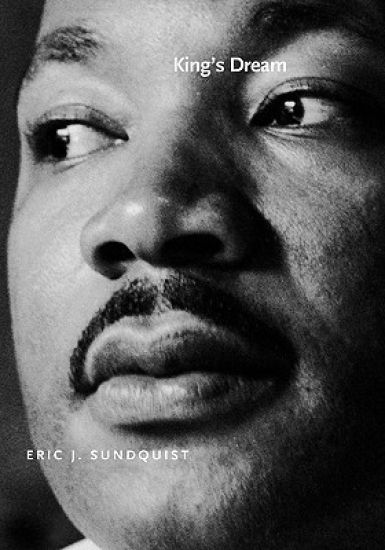
King's Dream

King's Dream

Eric J. Sundquist

Yale University Press
2008
pokkari
"I have a dream"--no words are more widely recognized, or more often repeated, than those called out from the steps of the Lincoln Memorial by Martin Luther King, Jr., in 1963. King's speech, elegantly structured and commanding in tone, has become shorthand not only for his own life but for the entire civil rights movement. In this new exploration of the "I have a dream" speech, Eric J. Sundquist places it in the history of American debates about racial justice--debates as old as the nation itself--and demonstrates how the speech, an exultant blend of grand poetry and powerful elocution, perfectly expressed the story of African American freedom. This book is the first to set King's speech within the cultural and rhetorical traditions on which the civil rights leader drew in crafting his oratory, as well as its essential historical contexts, from the early days of the republic through present-day Supreme Court rulings. At a time when the meaning of the speech has been obscured by its appropriation for every conceivable cause, Sundquist clarifies the transformative power of King's "Second Emancipation Proclamation" and its continuing relevance for contemporary arguments about equality.
King's Dream

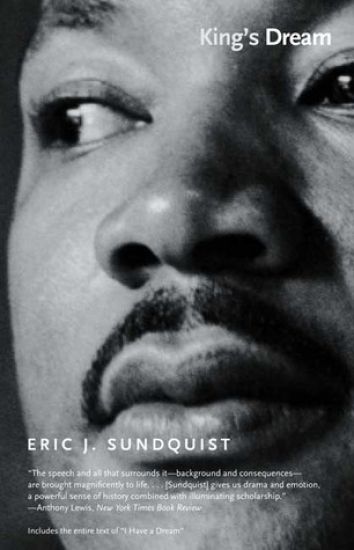
King's Dream

Eric J. Sundquist

Yale University Press
2009
pokkari
A new evaluation of Martin Luther King, Jr.’s, renowned speech, now hailed as the most powerful American address of the twentieth century Includes the entire text of "I Have A Dream" “I have a dream”—no words are more widely recognized, or more often repeated, than those called out from the steps of the Lincoln Memorial by Martin Luther King, Jr., in 1963. King’s speech, elegantly structured and commanding in tone, has become shorthand not only for his own life but for the entire civil rights movement. In this new exploration of the “I have a dream” speech, Eric J. Sundquist places it in the history of American debates about racial justice—debates as old as the nation itself—and demonstrates how the speech, an exultant blend of grand poetry and powerful elocution, perfectly expressed the story of African American freedom. This book is the first to set King’s speech within the cultural and rhetorical traditions on which the civil rights leader drew in crafting his oratory, as well as its essential historical contexts, from the early days of the republic through present-day Supreme Court rulings. At a time when the meaning of the speech has been obscured by its appropriation for every conceivable cause, Sundquist clarifies the transformative power of King’s “Second Emancipation Proclamation” and its continuing relevance for contemporary arguments about equality.
Strangers in the Land

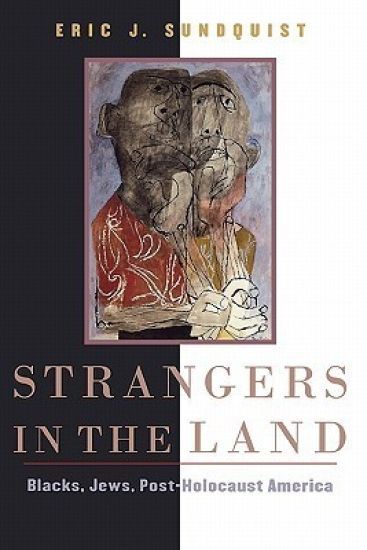
Strangers in the Land

Eric J. Sundquist

The Belknap Press
2008
nidottu
In a culture deeply divided along ethnic lines, the idea that the relationship between blacks and Jews was once thought special—indeed, critical to the cause of civil rights—might seem strange. Yet the importance of blacks for Jews and Jews for blacks in conceiving of themselves as Americans, when both remained outsiders to the privileges of full citizenship, is a matter of voluminous but perplexing record. It is this record, written across the annals of American history and literature, culture and society, that Eric Sundquist investigates. A monumental work of literary criticism and cultural history, Strangers in the Land draws upon politics, sociology, law, religion, and popular culture to illuminate a vital, highly conflicted interethnic partnership over the course of a century.Sundquist explores how reactions to several interlocking issues—the biblical Exodus, the Holocaust, Zionism, and the state of Israel—became critical to black–Jewish relations. He charts volatile debates over social justice and liberalism, anti-Semitism and racism, through extended analyses of fiction by Bernard Malamud, Paule Marshall, Harper Lee, and William Melvin Kelley, as well as the juxtaposition of authors such as Saul Bellow and John A. Williams, Lori Segal and Anna Deavere Smith, Julius Lester and Philip Roth. Engaging a wide range of thinkers and writers on race, civil rights, the Holocaust, slavery, and related topics, and cutting across disciplines to set works of literature in historical context, Strangers in the Land offers an encyclopedic account of questions central to modern American culture.
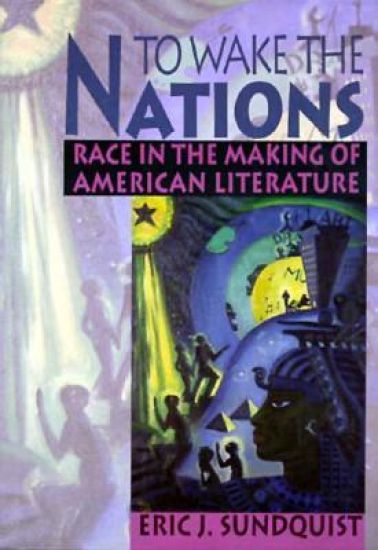
To Wake the Nations

To Wake the Nations

Eric J. Sundquist

The Belknap Press
1998
nidottu
This powerful book argues that white culture in America does not exist apart from black culture. The revolution of the rights of man that established this country collided long ago with the system of slavery, and we have been trying to reestablish a steady course for ourselves ever since. To Wake the Nations is urgent and rousing: we have integrated our buses, schools, and factories, but not the canon of American literature. That is the task Eric Sundquist has assumed in a book that ranges from politics to literature, from Uncle Remus to African American spirituals. But the hallmark of this volume is a sweeping reevaluation of the glory years of American literature—from 1830 to 1930—that shows how white literature and black literature form a single interwoven tradition.By examining African America’s contested relation to the intellectual and literary forms of white culture, Sundquist reconstructs the main lines of American literary tradition from the decades before the Civil War through the early twentieth century. An opening discussion of Nat Turner’s “Confessions,” recorded by a white man, Thomas Gray, establishes a paradigm for the complexity of meanings that Sundquist uncovers in American literary texts. Focusing on Frederick Douglass’s autobiographical books, Herman Melville’s Benito Cereno, Martin Delany’s novel Blake; or the Huts of America, Mark Twain’s Pudd’nhead Wilson, Charles Chesnutt’s fiction, and W. E. B. Du Bois’s The Souls of Black Folk and Darkwater, Sundquist considers each text against a rich background of history, law, literature, politics, religion, folklore, music, and dance. These readings lead to insights into components of the culture at large: slavery as it intersected with postcolonial revolutionary ideology; literary representations of the legal and political foundations of segregation; and the transformation of elements of African and antebellum folk consciousness into the public forms of American literature.
Faulkner

Faulkner

Eric J. Sundquist

Johns Hopkins University Press
1985
pokkari
Faulkner: The House Divided extends Abraham Lincoln's metaphor of a polarized nation to the twentieth-century. Southern psyche and the extraordinary career of its foremost spokeman. Through readings of The Sound and the Fury, As I Lay Dying, Sanctuary, Light in August, Absalom, Absalom!, and Go Down, Moses, Eric Sundquist probes William Faulner's complex attitudes toward the tragedy of the Civil War, toward Jim Crow laws, racial violence, and segregation, toward Black freedom and white fears.Faulkner's novels and their intricate narratice technique express the tragic passions, betrayed human sympathies, and potentially violent pressures for social change that governed the relationships between Blacks and whites. In this detailed and at times controversial study, now available for the first time in paperback, Sundquist examines the novelist's gradual discovery and artistic mastery of the racial problems that make up his own history and that of his country. "The novels that demand our attention now, as they always will," he writes, "are the ones in which the nation's most tragic and defining historical experience found its appropriately convulsive forms of expression and in which Faulkner became the great writer he has always been recognized to be."
The Hammers of Creation

The Hammers of Creation

Eric J. Sundquist

University of Georgia Press
2006
pokkari
In The Hammers of Creation, Eric J. Sundquist analyzes the powerful role played by folk culture in three major African-American novels of the early twentieth century: James Weldon Johnson's The Autobiography of an Ex-Coloured Man, Zora Neale Hurston's Jonah's Gourd Vine, and Arna Bontemps's Black Thunder.Sundquist explains how the survival of cultural traditions originating in Africa and in slavery became a means of historical reflection and artistic creation for modern writers. He goes on to illustrate and compare how the three representative novels use aspects of African-American culture, including the folklore of slavery, black music from spirituals to jazz, black worship and sermonic form, and African-American resistance to slavery and segregation.The Hammers of Creation focuses on the unique narrative form of each of the three novels—Johnson's fictive autobiography, Hurston's ethnographic commentary combined with personal narrative, and Bontemps's historical fiction based on Gabriel's slave rebellion—to illustrate the range of fictional strategies black writers have employed. Through their attempts to gain cultural integrity, Sundquist explains, these writers were able to recover and preserve vital aspects of African-American history.Sundquist argues that by incorporating vernacular culture and the oral tradition into their works, Johnson, Hurston, and Bontemps challenge the primacy of written narrative while creating an African-American literary tradition that links the world of African ancestors and antebellum culture to the world of contemporary letters.
Home as Found

Home as Found

Eric J. Sundquist

Johns Hopkins University Press
2020
pokkari
Originally published in 1979. Eric Sundquist takes four representative writers—James Fenimore Cooper, Henry David Thoreau, Nathaniel Hawthorne, and Herman Melville—and considers the way in which each grapples with the crucial issues of genealogy and authority in his works. From all four a common pattern emerges: the desire to revolt against the past is countered by the need to invoke or even repeat it. Sundquist's approach to the texts is psychoanalytic, but he does not attempt a clinical dissection of each writer; rather, he determines how personal crisis became material for engaging with larger questions of social and literary crisis.
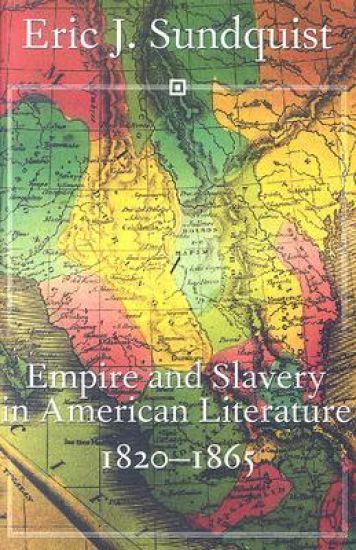
Empire and Slavery in American Literature, 1820-1865

Empire and Slavery in American Literature, 1820-1865

Eric J. Sundquist

University Press of Mississippi
2006
nidottu
The flourishing of pre-Civil War literature known as the American Renaissance occurred in a volatile context of national expansion and sectional strife. Canonical writers such as Herman Melville, Walt Whitman, Emily Dickinson, and Henry David Thoreau, as well as those more recently acclaimed, such as Frederick Douglass and Harriet Beecher Stowe, emerged amidst literature devoted to questions of nationalism, exploration, empire, the frontier, and slavery. This outpouring included some of the most important early works in African American, American Indian, and Chicana/Chicano literature. Empire and Slavery in American Literature, 1820-1865 tells the story of this exceptionally vibrant and wide-ranging multicultural ""renaissance"" of our national literature. Scores of diaries, reports, and memoirs, in addition to a diverse imaginative literature, documented the nation's expansion to its modern continental borders, along with exploration of territory far beyond. Driven by belief in the ""manifest destiny"" of Americans to bring liberty to new lands, narratives of empire ranged from the heroic to the fantastic, and they spawned a popular frontier literature that created some of the most enduring myths of America. At the same time, expansion provoked a corresponding literature of dispossession by American Indians and Mexicans that combined protest with statements of pride and independence. Accompanying expansion was the contentious and ultimately tragic debate over slavery carried out in a voluminous proslavery and antislavery literature that took the form of speeches, pamphlets, autobiography, poetry, and fiction. By juxtaposing the literature of slavery with the literatures of exploration and the frontier, Empire and Slavery traces the formative features of the national image of the United States.