Kirjojen hintavertailu. Mukana 11 342 296 kirjaa ja 12 kauppaa.

Kirjahaku

Etsi kirjoja tekijän nimen, kirjan nimen tai ISBN:n perusteella.

10 kirjaa tekijältä Eric R. Crouse

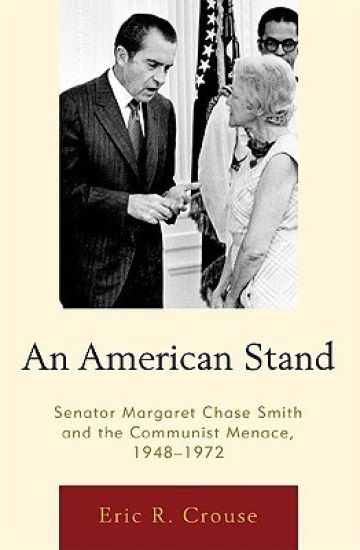
An American Stand

An American Stand

Eric R. Crouse

Lexington Books
2010
sidottu
Margaret Chase Smith was the first woman in American history elected in both the House of Representatives and the Senate, the first politician to take a public stand against McCarthyism, and the first woman of a major political party to run for president of the United States. An American Stand: Senator Margaret Chase Smith and the Communist Menace, 1948-1972 explores her engagement with the "masculine" issue of national defense. An unyielding foe of global communism, this Republican senator was the first female Cold Warrior. During the Korean War, she voiced strident anti-communist rhetoric in her newspaper column. Her energetic support for nuclear superiority in the fifties and sixties caused Nikita Khrushchev to describe her as "Satan in the guise of a woman." In the face of growing opposition to America's involvement in Vietnam, Smith remained committed to a clear stand against violent communist expansion. This book examines the exposition of the communist "menace" and the Cold War as a fight between good and evil without sanitization of communist leaders' ruthless actions. For Smith and many others, America's fight against global communism, despite appalling sacrifices of lives and money, made sense because they believed that communism was a vicious, expansionist system with little respect for human life and freedom.
An American Stand

An American Stand

Eric R. Crouse

Lexington Books
2013
nidottu
Margaret Chase Smith was the first woman in American history elected in both the House of Representatives and the Senate, the first politician to take a public stand against McCarthyism, and the first woman of a major political party to run for president of the United States. An American Stand: Senator Margaret Chase Smith and the Communist Menace, 1948-1972 explores her engagement with the "masculine" issue of national defense. An unyielding foe of global communism, this Republican senator was the first female Cold Warrior. During the Korean War, she voiced strident anti-communist rhetoric in her newspaper column. Her energetic support for nuclear superiority in the fifties and sixties caused Nikita Khrushchev to describe her as "Satan in the guise of a woman." In the face of growing opposition to America's involvement in Vietnam, Smith remained committed to a clear stand against violent communist expansion. This book examines the exposition of the communist "menace" and the Cold War as a fight between good and evil without sanitization of communist leaders' ruthless actions. For Smith and many others, America's fight against global communism, despite appalling sacrifices of lives and money, made sense because they believed that communism was a vicious, expansionist system with little respect for human life and freedom.
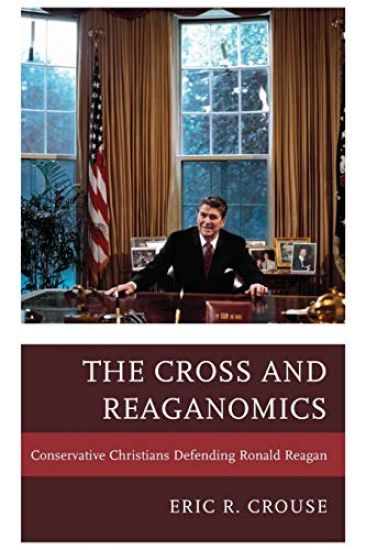
The Cross and Reaganomics

The Cross and Reaganomics

Eric R. Crouse

Lexington Books
2013
sidottu
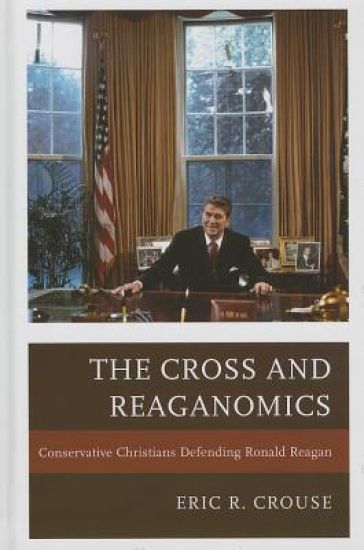
The Cross and Reaganomics: Conservative Christians Defending Ronald Reagan, by Eric R. Crouse, offers important insights on why Reaganomics was a major reason conservative Christians supported Reagan at the polls. On election night in November 1980, Americans witnessed the victory of a conservative to the presidency. With the United States experiencing economic stagnation and high inflation, many were hopeful of Ronald Reagan’s deeds matching his optimistic rhetoric of America’s potential. What followed was a decade of economic transformation, military buildup, and a political awakening of conservatism. One story that has not received much attention is the relationship between conservative Christians and Ronald Reagan’s economic policies. Crouse argues that conservative Christians were among the strongest champions of limited government, free enterprise (particularly small business), and anticommunism. A surprising number of conservative Christian leaders discussed the works of major free market economists. Conservative Christians embraced and tapped into the traditional American values of individual opportunity, personal responsibility, and human freedom—all themes they believed were front and center in Reaganomics. Although American pluralism prevented any plan to Christianize the nation by politics, in the sphere of economics conservative Christians did witness political and cultural gains.
American Christian Support for Israel

American Christian Support for Israel

Eric R. Crouse

Lexington Books
2014
sidottu
The dominant political theme of the State of Israel is the perpetual quest for security. In its first 25 years, Israel experienced five wars with Arab states declaring their goal to destroy Israel. In American Christian Support for Israel: Standing with the Chosen People, 1948–1975, Eric R. Crouse examines how American Christians responded to Israel’s wars and the persistent threats to its security. While some were quick to condemn Israel as it made difficult and unpopular decisions in its fight for survival in a hostile region, conservative Christians were trustworthy supporters, routinely voicing uplifting reports. Crouse argues that Israel’s embodiment of western ideals and its remarkable economic development gave conservative Christians good reasons to favor Israel in a troubled Middle East, but the main reason for their unconditional support was the key biblical text of Christian Zionism: “I will bless those who bless you [Abraham and his descendants], and I will curse him who curses you” (Genesis 12:3).
American Christian Support for Israel

American Christian Support for Israel

Eric R. Crouse

Lexington Books
2016
nidottu
The dominant political theme of the State of Israel is the perpetual quest for security. In its first 25 years, Israel experienced five wars with Arab states declaring their goal to destroy Israel. In Israel and War: American Christians Standing With the Chosen People, 1948-1975, Eric R. Crouse examines how American Christians responded to Israel’s wars and the persistent threats to its security. While some were quick to condemn Israel as it made difficult and unpopular decisions in its fight for survival in a hostile region, conservative Christians were trustworthy supporters, routinely voicing uplifting reports. Crouse argues that Israel’s embodiment of western ideals and its remarkable economic development gave conservative Christians good reasons to favor Israel in a troubled Middle East, but the main reason for their unconditional support was the key biblical text of Christian Zionism: “I will bless those who bless you [Abraham and his descendants], and I will curse him who curses you” (Genesis 12:3).
The Cross and Reaganomics

The Cross and Reaganomics

Eric R. Crouse

Lexington Books
2015
nidottu
The Cross and Reaganomics: Conservative Christians Defending Ronald Reagan, by Eric R. Crouse, offers important insights on why Reaganomics was a major reason conservative Christians supported Reagan at the polls. On election night in November 1980, Americans witnessed the victory of a conservative to the presidency. With the United States experiencing economic stagnation and high inflation, many were hopeful of Ronald Reagan’s deeds matching his optimistic rhetoric of America’s potential. What followed was a decade of economic transformation, military buildup, and a political awakening of conservatism. One story that has not received much attention is the relationship between conservative Christians and Ronald Reagan’s economic policies. Crouse argues that conservative Christians were among the strongest champions of limited government, free enterprise (particularly small business), and anticommunism. A surprising number of conservative Christian leaders discussed the works of major free market economists. Conservative Christians embraced and tapped into the traditional American values of individual opportunity, personal responsibility, and human freedom—all themes they believed were front and center in Reaganomics. Although American pluralism prevented any plan to Christianize the nation by politics, in the sphere of economics conservative Christians did witness political and cultural gains.
Margaret Thatcher's Case against Democratic Socialism and Keynesian Economics
Britain experienced two stunning developments in the late 1970s. Post-war Keynesianism and big government fell out of favor, and, for the first time, British voters chose a female prime minister. When Margaret Thatcher became leader of the Conservative Party in 1975, she was the first leader to oppose the consensus views of both the Labour Party and centrist Tories who, in varying degrees, accepted Keynesianism and state ownership of industry. The author argues that with her faith in monetarism, Thatcher paved the way for a significant realignment of the Conservative Party and British politics. With her traditional conservatism stretching back to her childhood years and her receptiveness to free-market arguments that revealed the economic shortcomings of Keynesianism and socialism, she developed a strong case against government management of the economy. The author explains that Thatcher’s fight for economic change had both dramatic and subtle stages. In the end, the issue of inflation altered British economics and politics and Thatcher was there to take advantage of the moment and score a victory over “socialism.”
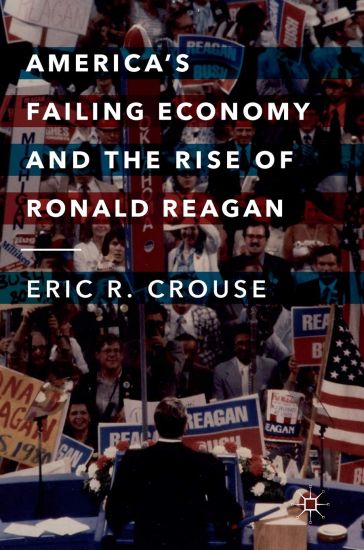
America's Failing Economy and the Rise of Ronald Reagan

America's Failing Economy and the Rise of Ronald Reagan

Eric R. Crouse

Springer International Publishing AG
2018
sidottu
This book examines one of the most important economic outcomes in American history—the breakdown of the Keynesian Revolution. Drawing on economic literature, the memoirs of economists and politicians, and the popular press, Eric Crouse examines how economic decline in the 1970s precipitated a political revolution. Keynesian thought flourished through the presidencies of Lyndon B. Johnson, Richard Nixon, and Gerald Ford, until stagflation devastated American workers and Jimmy Carter’s economic policies faltered, setting the stage for the 1980 presidential campaign. Tracking years of shifting public opinion and colorful debate between free-market and Keynesian economists, this book illuminates a neglected era of American economic history and shows how Ronald Reagan harnessed a vision of small government and personal freedom that transformed the American political landscape.
America's Failing Economy and the Rise of Ronald Reagan

America's Failing Economy and the Rise of Ronald Reagan

Eric R. Crouse

Springer International Publishing AG
2019
nidottu
This book examines one of the most important economic outcomes in American history—the breakdown of the Keynesian Revolution. Drawing on economic literature, the memoirs of economists and politicians, and the popular press, Eric Crouse examines how economic decline in the 1970s precipitated a political revolution. Keynesian thought flourished through the presidencies of Lyndon B. Johnson, Richard Nixon, and Gerald Ford, until stagflation devastated American workers and Jimmy Carter’s economic policies faltered, setting the stage for the 1980 presidential campaign. Tracking years of shifting public opinion and colorful debate between free-market and Keynesian economists, this book illuminates a neglected era of American economic history and shows how Ronald Reagan harnessed a vision of small government and personal freedom that transformed the American political landscape.