Kirjojen hintavertailu. Mukana 11 342 296 kirjaa ja 12 kauppaa.

Kirjahaku

Etsi kirjoja tekijän nimen, kirjan nimen tai ISBN:n perusteella.

10 kirjaa tekijältä Eric R. Kandel

Reductionism in Art and Brain Science

Reductionism in Art and Brain Science

Eric R. Kandel

Columbia University Press
2018
pokkari
Are art and science separated by an unbridgeable divide? Can they find common ground? In this new book, neuroscientist Eric R. Kandel, whose remarkable scientific career and deep interest in art give him a unique perspective, demonstrates how science can inform the way we experience a work of art and seek to understand its meaning. Kandel illustrates how reductionism—the distillation of larger scientific or aesthetic concepts into smaller, more tractable components—has been used by scientists and artists alike to pursue their respective truths. He draws on his Nobel Prize-winning work revealing the neurobiological underpinnings of learning and memory in sea slugs to shed light on the complex workings of the mental processes of higher animals. In Reductionism in Art and Brain Science, Kandel shows how this radically reductionist approach, applied to the most complex puzzle of our time—the brain—has been employed by modern artists who distill their subjective world into color, form, and light. Kandel demonstrates through bottom-up sensory and top-down cognitive functions how science can explore the complexities of human perception and help us to perceive, appreciate, and understand great works of art. At the heart of the book is an elegant elucidation of the contribution of reductionism to the evolution of modern art and its role in a monumental shift in artistic perspective. Reductionism steered the transition from figurative art to the first explorations of abstract art reflected in the works of Turner, Monet, Kandinsky, Schoenberg, and Mondrian. Kandel explains how, in the postwar era, Pollock, de Kooning, Rothko, Louis, Turrell, and Flavin used a reductionist approach to arrive at their abstract expressionism and how Katz, Warhol, Close, and Sandback built upon the advances of the New York School to reimagine figurative and minimal art. Featuring captivating drawings of the brain alongside full-color reproductions of modern art masterpieces, this book draws out the common concerns of science and art and how they illuminate each other.
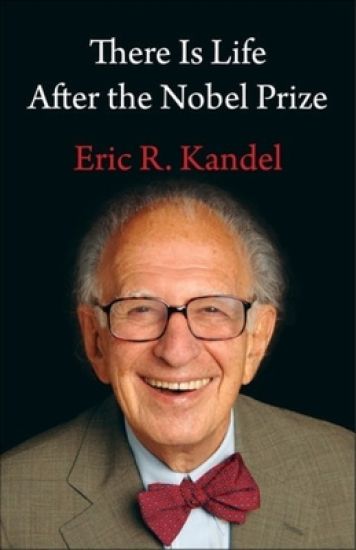
There Is Life After the Nobel Prize

There Is Life After the Nobel Prize

Eric R. Kandel

Columbia University Press
2021
sidottu
One day in 1996, the neuroscientist Eric R. Kandel took a call from his program officer at the National Institute of Mental Health, who informed him that he had been awarded a key grant. Also, the officer said, he and his colleagues thought Kandel would win the Nobel Prize. “I hope not soon,” Kandel’s wife, Denise, said when she heard this. Sociologists had found that Nobel Prize winners often did not contribute much more to science, she explained.In this book, Kandel recounts his remarkable career since receiving the Nobel in 2000—or his experience of proving to his wife that he was not yet “completely dead intellectually.” He takes readers through his lab’s scientific advances, including research into how long-term memory is stored in the brain, the nature of age-related memory loss, and the neuroscience of drug addiction and schizophrenia. Kandel relates how the Nobel Prize gave him the opportunity to reach a far larger audience, which in turn allowed him to discover and pursue new directions. He describes his efforts to promote public understanding of science and to put brain science and art into conversation with each other. Kandel also discusses his return to Austria, which he had fled as a child, and observes Austria’s coming to terms with the Nazi period. Showcasing Kandel’s accomplishments, erudition, and wit, There Is Life After the Nobel Prize is a candid account of the working life of an acclaimed scientist.
Essays on Art and Science

Essays on Art and Science

Eric R. Kandel

Columbia University Press
2024
sidottu
When we view a work of art, we often experience an emotional response, but the causes of our reactions are complex. Our knowledge of why we respond to art as we do is rooted in science—in psychology and biology. Eric R. Kandel traces the origins of this understanding to early twentieth-century Vienna, which gave rise to the concept of the “beholder’s share,” the realization that art is incomplete without the perceptual and emotional involvement of the viewer—that is, without our responses to it.But what causes our response? Our brain is a creativity machine that brings to bear on any image—including a painting—certain innate, universal processes related to sensory perception as well as higher-order processes related to our personal experiences, memories, and emotions. Understanding how these unconscious processes in the brain interact to create the beholder’s share is one of the great challenges currently confronting brain science.The essays on art and science in this book vary widely in subject matter, including the angst-ridden portraits of Soutine, conflicting views of women’s sexuality, Cubism’s challenge to our innate visual processes, and why we react differently to abstract versus figurative art. But each essay focuses on the interaction of art and science. Woven throughout are the many notable scientists, art historians, artists, and others, both Jewish and non-Jewish, who contributed to our understanding of how we experience art.
Essays on Art and Science

Essays on Art and Science

Eric R. Kandel

Columbia University Press
2025
pokkari
When we view a work of art, we often experience an emotional response, but the causes of our reactions are complex. Our knowledge of why we respond to art as we do is rooted in science—in psychology and biology. Eric R. Kandel traces the origins of this understanding to early twentieth-century Vienna, which gave rise to the concept of the “beholder’s share,” the realization that art is incomplete without the perceptual and emotional involvement of the viewer—that is, without our responses to it.But what causes our response? Our brain is a creativity machine that brings to bear on any image—including a painting—certain innate, universal processes related to sensory perception as well as higher-order processes related to our personal experiences, memories, and emotions. Understanding how these unconscious processes in the brain interact to create the beholder’s share is one of the great challenges currently confronting brain science.The essays on art and science in this book vary widely in subject matter, including the angst-ridden portraits of Soutine, conflicting views of women’s sexuality, Cubism’s challenge to our innate visual processes, and why we react differently to abstract versus figurative art. But each essay focuses on the interaction of art and science. Woven throughout are the many notable scientists, art historians, artists, and others, both Jewish and non-Jewish, who contributed to our understanding of how we experience art.
There Is Life After the Nobel Prize

There Is Life After the Nobel Prize

Eric R. Kandel

Columbia University Press
2026
pokkari
One day in 1996, the neuroscientist Eric R. Kandel took a call from his program officer at the National Institute of Mental Health, who informed him that he had been awarded a key grant. Also, the officer said, he and his colleagues thought Kandel would win the Nobel Prize. “I hope not soon,” Kandel’s wife, Denise, said when she heard this. Sociologists had found that Nobel Prize winners often did not contribute much more to science, she explained. In this book, Kandel recounts his remarkable career since receiving the Nobel in 2000—or his experience of proving to his wife that he was not yet “completely dead intellectually.” He takes readers through his lab’s scientific advances, including research into how long-term memory is stored in the brain, the nature of age-related memory loss, and the neuroscience of drug addiction and schizophrenia. Kandel relates how the Nobel Prize gave him the opportunity to reach a far larger audience, which in turn allowed him to discover and pursue new directions. He describes his efforts to promote public understanding of science and to put brain science and art into conversation with each other. Kandel also discusses his return to Austria, which he had fled as a child, and observes Austria’s coming to terms with the Nazi period. Showcasing Kandel’s accomplishments, erudition, and wit, There Is Life After the Nobel Prize is a candid account of the working life of an acclaimed scientist.
The Disordered Mind: What Unusual Brains Tell Us about Ourselves
A Nobel Prize-winning neuroscientist's probing investigation of what brain disorders can tell us about human nature Eric R. Kandel, the winner of the Nobel Prize in Physiology or Medicine for his foundational research into memory storage in the brain, is one of the pioneers of modern brain science. His work continues to shape our understanding of how learning and memory work and to break down age-old barriers between the sciences and the arts. In his seminal new book, The Disordered Mind, Kandel draws on a lifetime of pathbreaking research and the work of many other leading neuroscientists to take us on an unusual tour of the brain. He confronts one of the most difficult questions we face: How does our mind, our individual sense of self, emerge from the physical matter of the brain? The brain's 86 billion neurons communicate with one another through very precise connections. But sometimes those connections are disrupted. The brain processes that give rise to our mind can become disordered, resulting in diseases such as autism, depression, schizophrenia, Parkinson's, addiction, and post-traumatic stress disorder. While these disruptions bring great suffering, they can also reveal the mysteries of how the brain produces our most fundamental experiences and capabilities--the very nature of what it means to be human. Studies of autism illuminate the neurological foundations of our social instincts; research into depression offers important insights on emotions and the integrity of the self; and paradigm-shifting work on addiction has led to a new understanding of the relationship between pleasure and willpower. By studying disruptions to typical brain functioning and exploring their potential treatments, we will deepen our understanding of thought, feeling, behavior, memory, and creativity. Only then can we grapple with the big question of how billions of neurons generate consciousness itself.
The Disordered Mind: What Unusual Brains Tell Us about Ourselves
A Nobel Prize-winning neuroscientist's probing investigation of what brain disorders can tell us about human nature Eric R. Kandel, the winner of the Nobel Prize in Physiology or Medicine for his foundational research into memory storage in the brain, is one of the pioneers of modern brain science. His work continues to shape our understanding of how learning and memory work and to break down age-old barriers between the sciences and the arts. In his seminal new book, The Disordered Mind, Kandel draws on a lifetime of pathbreaking research and the work of many other leading neuroscientists to take us on an unusual tour of the brain. He confronts one of the most difficult questions we face: How does our mind, our individual sense of self, emerge from the physical matter of the brain? The brain's 86 billion neurons communicate with one another through very precise connections. But sometimes those connections are disrupted. The brain processes that give rise to our mind can become disordered, resulting in diseases such as autism, depression, schizophrenia, Parkinson's, addiction, and post-traumatic stress disorder. While these disruptions bring great suffering, they can also reveal the mysteries of how the brain produces our most fundamental experiences and capabilities--the very nature of what it means to be human. Studies of autism illuminate the neurological foundations of our social instincts; research into depression offers important insights on emotions and the integrity of the self; and paradigm-shifting work on addiction has led to a new understanding of the relationship between pleasure and willpower. By studying disruptions to typical brain functioning and exploring their potential treatments, we will deepen our understanding of thought, feeling, behavior, memory, and creativity. Only then can we grapple with the big question of how billions of neurons generate consciousness itself.
In Search of Memory

In Search of Memory

Eric R. Kandel

WW Norton Co
2007
nidottu
Memory binds our mental life together. We are who we are in large part because of what we learn and remember. But how does the brain create memories? Nobel Prize winner Eric R. Kandel intertwines the intellectual history of the powerful new science of the mind—a combination of cognitive psychology, neuroscience, and molecular biology—with his own personal quest to understand memory. A deft mixture of memoir and history, modern biology and behavior, In Search of Memory brings readers from Kandel's childhood in Nazi-occupied Vienna to the forefront of one of the great scientific endeavors of the twentieth century: the search for the biological basis of memory.
The Disordered Mind

The Disordered Mind

Eric R. Kandel

Robinson
2021
nidottu
Neurological and psychiatric disorders have long been regarded as fundamentally different, depending on whether they appear to affect the brain or the mind. In reality, the brain and the mind are inseparable. Both types of disorder can affect every aspect of brain function: from perception, action, memory and emotion to empathy, social interaction, attention and consciousness. It is easy to view brain disorders as simply tragic or frightening. However, studying where these functions go wrong provides a window on the workings of the healthy brain, and makes it more likely that scientists and clinicians will be able to develop effective treatments or preventative strategies. As individuals, and as a society, we are also able to better empathise with people with disorders of the mind.Building on his pioneering research, Eric R. Kandel illustrates how breakthrough studies of brain disruptions can deepen our understanding of thought, feeling, behaviour, memory and creativity, and perhaps in the future will transform medical care and lead to the development of a unified theory of mind.
Psychiatrie, Psychoanalyse und die neue Biologie des Geistes
Dem Nobelpreisträger Eric Kandel gebührt das Verdienst, das bis dahin gänzlich unerkundete Gebiet der Beziehungen zwischen Neurobiologie und Psychoanalyse erschlossen zu haben. Heute ist es eines der spannendsten und zugleich innovativsten Felder der Wissenschaften überhaupt. Die vorliegende Sammlung von Aufsätzen Eric Kandels lädt den Leser zu "einer der wichtigsten, bedeutsamsten und aufregendsten Forschungsreisen unserer Zeit ein" (Stuart C. Yudofsky) - zu einer Erkundung der Funktionsweise des menschlichen Gehirns und der Möglichkeiten, durch die Psychoanalyse und die Psychiatrie auf diese Einfluß zu nehmen. Der Band, den der Protagonist der deutschen Hirnforschungsdebatte, Gerhard Roth, einleitet und der mit einer sehr persönlichen Einführung Eric Kandels beginnt, bietet einen konzisen Überblick dieser Revolution der psychiatrischen Forschung.