Kirjojen hintavertailu. Mukana 11 244 527 kirjaa ja 12 kauppaa.

Kirjahaku

Etsi kirjoja tekijän nimen, kirjan nimen tai ISBN:n perusteella.

8 kirjaa tekijältä Eric Thomas Chester

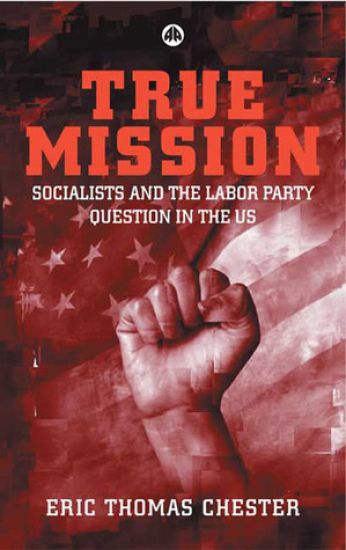
True Mission

True Mission

Eric Thomas Chester

Pluto Press
2004
pokkari
In the election campaign of 2000, Al Gore and Ralph Nader polled many millions more votes than George W. Bush. Yet the US Left lost out, a casualty of the two-party system. This is a pattern which has been repeated many times over the years. The most contentious issues dividing the Left in the United States have been those related to the Democratic Party. This book explores the crucial moments in US history where the stranglehold of the two-party system was nearly broken. Presenting a detailed history of Labor party politics, beginning with Henry George's campaign for mayor of New York City in 1886, proceeding to Robert La Follette's independent presidential campaign of 1924, and the Socialist party's relationship to New York's American Labor Party in the early twentieth century, Eric Chester explores the history of Left in America up to and including the Nader campaign of 2000. Chester identifies key reasons why burgeoning political movements have failed. He examines the part played by trade union-based political parties. He also looks at the inabililty of populist middle-class parties to establish ideological or organisational groundings for a viable third party. Looking to the future, Chester proposes an alternative: drawing on the success of the Socialist Party at the turn of the last century, he lays out ideas for a mass-based socialist party as the only way forward towards genuinely independent politics.
True Mission

True Mission

Eric Thomas Chester

Pluto Press
2004
sidottu
In the election campaign of 2000, Al Gore and Ralph Nader polled many millions more votes than George W. Bush. Yet the US Left lost out, a casualty of the two-party system. This is a pattern which has been repeated many times over the years. The most contentious issues dividing the Left in the United States have been those related to the Democratic Party. This book explores the crucial moments in US history where the stranglehold of the two-party system was nearly broken. Presenting a detailed history of Labor party politics, beginning with Henry George's campaign for mayor of New York City in 1886, proceeding to Robert La Follette's independent presidential campaign of 1924, and the Socialist party's relationship to New York's American Labor Party in the early twentieth century, Eric Chester explores the history of Left in America up to and including the Nader campaign of 2000. Chester identifies key reasons why burgeoning political movements have failed. He examines the part played by trade union-based political parties. He also looks at the inabililty of populist middle-class parties to establish ideological or organisational groundings for a viable third party. Looking to the future, Chester proposes an alternative: drawing on the success of the Socialist Party at the turn of the last century, he lays out ideas for a mass-based socialist party as the only way forward towards genuinely independent politics.
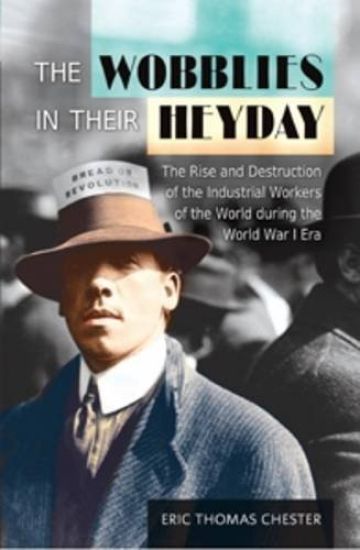
The Wobblies in Their Heyday

The Wobblies in Their Heyday

Eric Thomas Chester

Praeger Publishers Inc
2014
sidottu
During World War I, the Industrial Workers of the World (IWW) rose to prominence as an effective, militant union and then was destroyed by a devastating campaign of repression launched by the federal government. This book documents the rise and fall of this important industrial labor organization.The Industrial Workers of the World—or "Wobblies," as they were known—included legendary figures from U.S. labor history. Joe Hill, "Big Bill" Haywood, and Elizabeth Gurley Flynn have become a part of American popular folklore. In this book, author Eric T. Chester shows just how dynamic a force the IWW was during its heyday during World War I, and how determined the federal government was to crush this union—a campaign of repression that remains unique in U.S. history. This work utilizes a wide array of archival sources, many of them never used before, thereby giving readers a clearer view and better understanding of what actually happened.The book leads with an examination of the three key events in the history of the IWW: the Wheatfield, CA, confrontation; the Bisbee, AZ, deportation; and the strike of copper miners in Butte, MT. The second part of the book deconstructs the IWW's responses to World War I, the coordinated attack by the federal government upon the union, and how the union unraveled under this attack.
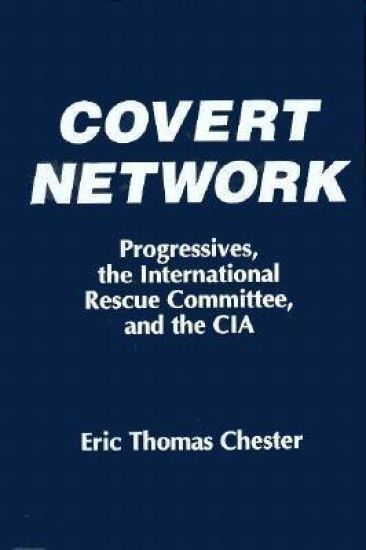
Covert Network

Covert Network

Eric Thomas Chester

M.E. Sharpe
1995
sidottu
This book tells the story of the International Rescue Committee (IRC), the largest nonsectarian refugee relief agency in the world. Founded in the 1930s by socialist militants, the IRC attracted the support of renowned progressives such as Eleanor Roosevelt, Norman Thomas, and Reinhold Niebuhr. But by the 1950s it had been absorbed into the American foreign policy establishment. Throughout the Cold War, the IRC was deeply involved in the volatile confrontations between the two superpowers and participated in an array of sensitive clandestine operations. The IRC thus evolved from a small organization of committed activists to a global operation functioning as one link in the CIA's covert network.
Covert Network

Covert Network

Eric Thomas Chester

M.E. Sharpe
1995
nidottu
This book tells the story of the International Rescue Committee (IRC), the largest nonsectarian refugee relief agency in the world. Founded in the 1930s by socialist militants, the IRC attracted the support of renowned progressives such as Eleanor Roosevelt, Norman Thomas, and Reinhold Niebuhr. But by the 1950s it had been absorbed into the American foreign policy establishment. Throughout the Cold War, the IRC was deeply involved in the volatile confrontations between the two superpowers and participated in an array of sensitive clandestine operations. The IRC thus evolved from a small organization of committed activists to a global operation functioning as one link in the CIA's covert network.
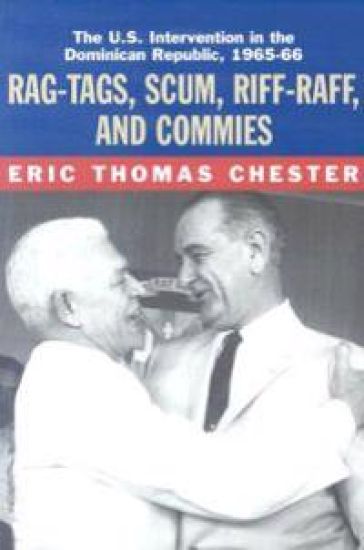
Rag-tags, Scum, Riff-raff and Commies

Rag-tags, Scum, Riff-raff and Commies

Eric Thomas Chester

Monthly Review Press,U.S.
2001
nidottu
In April 1965, a popular rebellion in the Dominican Republic toppled the remnants of the U.S. backed Trujillo dictatorship setting the stage for the master tinkers of America's Cold War machine. In this groundbreaking study, Eric Thomas Chester carefully reconstructs the events that followed into a thriller of historical sweep, and creates a stunning portrait of how the U.S. government--from President Lyndon Johnson on down--used the Dominican Republic as a tool of its imperial arrogance.Eric Thomas Chester explains how the U.S. intervention was in the tradition of gunboat diplomacy as well as a consequence of Cold War ideology, and the Cuban Revolution. After the withdrawal of U.S. troops from Haiti in 1934 and the initiation of Roosevelt's so-called "good neighbor policy," the United States had refrained from sending its own troops to intervene in Latin America. The 1965 invasion broke this pattern and reinitiated an era of direct armed intervention in Latin America. The result was that by early May, with more than thirty thousand troops deployed, there was a greater U.S. military presence in the Dominican Republic than in South Vietnam.In this fascinating account, Chester makes extensive use of recently declassified diplomatic and intelligence documents to offer a nuanced and textured study of the workings of covert as well as diplomatic initiatives and provides a thorough analysis of U.S. Cold War foreign policy in the region.
Rag-tags, Scum, Riff-raff and Commies

Rag-tags, Scum, Riff-raff and Commies

Eric Thomas Chester

Monthly Review Press,U.S.
2001
sidottu
In April 1965, a popular rebellion in the Dominican Republic toppled the remnants of the U.S. backed Trujillo dictatorship setting the stage for the master tinkers of America's Cold War machine. In this groundbreaking study, Eric Thomas Chester carefully reconstructs the events that followed into a thriller of historical sweep, and creates a stunning portrait of how the U.S. government--from President Lyndon Johnson on down--used the Dominican Republic as a tool of its imperial arrogance.Eric Thomas Chester explains how the U.S. intervention was in the tradition of gunboat diplomacy as well as a consequence of Cold War ideology, and the Cuban Revolution. After the withdrawal of U.S. troops from Haiti in 1934 and the initiation of Roosevelt's so-called "good neighbor policy," the United States had refrained from sending its own troops to intervene in Latin America. The 1965 invasion broke this pattern and reinitiated an era of direct armed intervention in Latin America. The result was that by early May, with more than thirty thousand troops deployed, there was a greater U.S. military presence in the Dominican Republic than in South Vietnam.In this fascinating account, Chester makes extensive use of recently declassified diplomatic and intelligence documents to offer a nuanced and textured study of the workings of covert as well as diplomatic initiatives and provides a thorough analysis of U.S. Cold War foreign policy in the region.