Kirjojen hintavertailu. Mukana 11 342 296 kirjaa ja 12 kauppaa.

Kirjahaku

Etsi kirjoja tekijän nimen, kirjan nimen tai ISBN:n perusteella.

6 kirjaa tekijältä Eric Thomas Weber

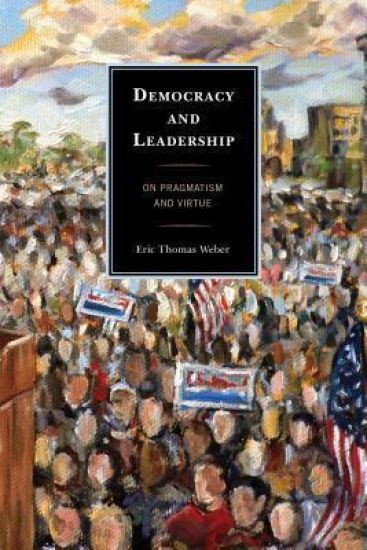
Democracy and Leadership

Democracy and Leadership

Eric Thomas Weber

Lexington Books
2013
sidottu
Democracy and Leadership: On Pragmatism and Virtue presents a theory of leadership drawing on insights from Plato’s Republic, while abandoning his authoritarianism in favor of John Dewey’s democratic thought. The book continues the democratic turn for the study of leadership beyond the incorporation of democratic values into old-fashioned views about leading. The completed democratic turn leaves behind the traditional focus on a class of special people. Instead, leadership is understood as a process of judicious yet courageous guidance, infused with democratic values and open to all people. The book proceeds in three parts, beginning with definitions and an understanding of the nature of leadership in general and of democratic leadership in particular. Then, Part II examines four challenges for a democratic theory of leadership. Finally, in Part III, the theory of democratic leadership is put to the test of addressing problems of poverty, educational frustration, and racial divides, particularly aggravated in Mississippi.
Democracy and Leadership

Democracy and Leadership

Eric Thomas Weber

Lexington Books
2015
nidottu
Democracy and Leadership: On Pragmatism and Virtue presents a theory of leadership drawing on insights from Plato’s Republic, while abandoning his authoritarianism in favor of John Dewey’s democratic thought. The book continues the democratic turn for the study of leadership beyond the incorporation of democratic values into old-fashioned views about leading. The completed democratic turn leaves behind the traditional focus on a class of special people. Instead, leadership is understood as a process of judicious yet courageous guidance, infused with democratic values and open to all people. The book proceeds in three parts, beginning with definitions and an understanding of the nature of leadership in general and of democratic leadership in particular. Then, Part II examines four challenges for a democratic theory of leadership. Finally, in Part III, the theory of democratic leadership is put to the test of addressing problems of poverty, educational frustration, and racial divides, particularly aggravated in Mississippi.
Morality, Leadership, and Public Policy

Morality, Leadership, and Public Policy

Eric Thomas Weber

Bloomsbury Academic USA
2012
nidottu
In Morality, Leadership, and Public Policy, Eric Weber argues for an experimentalist approach to moral theory in addressing practical problems in public policy. The experimentalist approach begins moral inquiry by examining public problems and then makes use of the tools of philosophy and intelligent inquiry to alleviate them. Part I surveys the uses of practical philosophy and answers criticisms - including religious challenges - of the approach, presenting a number of areas in which philosophers' intellectual efforts can prove valuable for resolving public conflicts. Part II presents a new approach to experimentalism in moral theory, based on the insights of John Dewey's pragmatism. Focusing on the elements of good public inquiry and the experimentalist attitude, Weber discusses ways of thinking about the effective construction and reconstruction of particular problems, including practical problems of public policy prioritization.Finally, in Part III the book examines real-world examples in which the experimentalist approach to ethics proves useful, including instances of "bandwidth theft" and the controversies surrounding activist judges in the US Supreme Court.
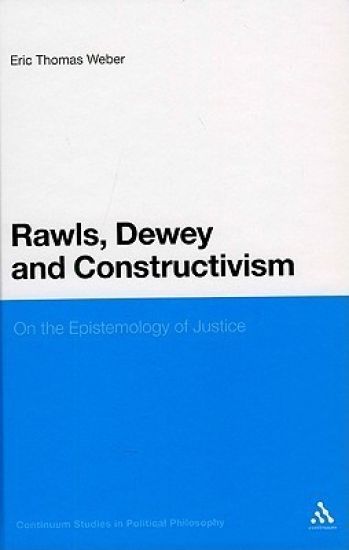
Rawls, Dewey, and Constructivism

Rawls, Dewey, and Constructivism

Eric Thomas Weber

CONTINUUM PUBLISHING CORPORATION
2010
sidottu
In Rawls, Dewey and Constructivism, Eric Weber examines and critiques John Rawls' epistemology and the unresolved tension - inherited from Kant - between Representationalism and Constructivism in Rawls' work. Weber argues that, despite Rawls' claims to be a constructivist, his unexplored Kantian influences cause several problems. In particular, Weber criticises Rawls' failure to explain the origins of conceptions of justice, his understanding of "persons" and his revival of Social Contract Theory. Drawing on the work of John Dewey to resolve these problems, the book argues for a rigorously constructivist approach to the concept of justice and explores the practical implications of such an approach for Education.
Morality, Leadership, and Public Policy

Morality, Leadership, and Public Policy

Eric Thomas Weber

Continuum Publishing Corporation
2011
sidottu
In Morality, Leadership and Public Policy, Eric Weber argues for an experimentalist approach to moral theory in addressing practical problems in public policy. The experimentalist approach begins moral inquiry by examining public problems and then makes use of the tools of philosophy and intelligent inquiry to alleviate them. Part I surveys the uses of practical philosophy and answers criticisms including religious challenges of the approach, presenting a number of areas in which philosophers intellectual efforts can prove valuable for resolving public conflicts. Part II presents a new approach to experimentalism in moral theory, based on the insights of John Dewey s pragmatism. Focusing on the elements of good public inquiry and the experimentalist attitude, Weber discusses ways of thinking about the effective construction and reconstruction of particular problems, including practical problems of public policy prioritization. Finally, in Part III the book examines real-world examples in which the experimentalist approach to ethics proves useful, including instances of bandwidth theft and the controversies surrounding activist judges in the US Supreme Court.
Rawls, Dewey, and Constructivism

Rawls, Dewey, and Constructivism

Eric Thomas Weber

Continuum Publishing Corporation
2012
nidottu
In Rawls, Dewey, and Constructivism, Eric Weber examines and critiques John Rawls' epistemology and the unresolved tension - inherited from Kant - between Representationalism and Constructivism in Rawls' work. Weber argues that, despite Rawls' claims to be a constructivist, his unexplored Kantian influences cause several problems. In particular, Weber criticises Rawls' failure to explain the origins of conceptions of justice, his understanding of "persons" and his revival of Social Contract Theory. Drawing on the work of John Dewey to resolve these problems, the book argues for a rigorously constructivist approach to the concept of justice and explores the practical implications of such an approach for Education.