
Kirjahaku
Etsi kirjoja tekijän nimen, kirjan nimen tai ISBN:n perusteella.
47 kirjaa tekijältä Eric Williams
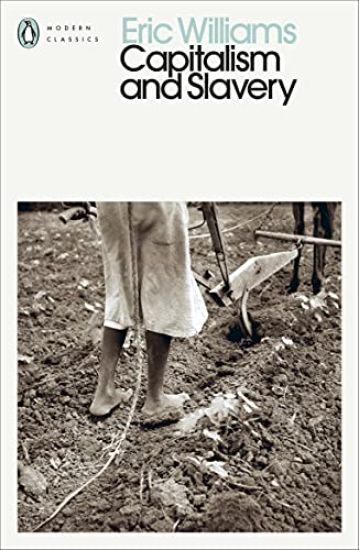
'It's often said that books are compulsory reading, but this book really is compulsory. You cannot understand slavery, or British Empire, without it' Sathnam Sanghera Arguing that the slave trade was at the heart of Britain's economic progress, Eric Williams's landmark 1944 study revealed the connections between capitalism and racism, and has influenced generations of historians ever since.Williams traces the rise and fall of the Atlantic slave trade through the eighteenth and nineteenth centuries to show how it laid the foundations of the Industrial Revolution, and how racism arose as a means of rationalising an economic decision. Most significantly, he showed how slavery was only abolished when it ceased to become financially viable, exploding the myth of emancipation as a mark of Britain's moral progress.'Its thesis is a starting point for a new generation of scholarship' New Yorker

The Essential Student Government Guide: College Edition
Eric Williams
Cinecycle Publishing
2008
nidottu

The Essential Student Government Guide: High School & Middle School Edition
Eric Williams
Cinecycle Publishing
2008
nidottu


Bloody haruspicy as an archeological technique. The violent premier of a film star's lost noir masterpiece. A housekeeper's final job for her late employer. An exhumation to retrieve a poetry manuscript. Ghosts haunting atomic test sites of the American west. The dangers facing podcasters, mud loggers, and rural veterinarians. Landlords and gods and rocks and monsters.Toadstones is a collection of short stories firmly in the tradition of the weird tale. They evoke the sensation of catching an unnerving movement out of the corner of your eye, of hearing a sudden and unidentifiable skittering in the walls, of dreaming about a strange city where you meet someone you would have sworn died long ago. Explore the uncanny shadows occluding what we thought was a mundane world in these sixteen (that's twice eight, or four fours; are you tracking the numerology?) stories.Destined to be an underworld classic, these stories by everyone's favorite anarchocommunist calling upon the aid of Hell will have you believing in the unbelievable-and thinking twice before you let another repair guy in your house.
Mutual Funds: A Comprehensive Guide to Diversify your Investments
Eric Williams
Independently Published
2019
nidottu

Options Trading: A Beginner's Guide- Basics and Tips
Eric Williams
Independently Published
2019
nidottu
Investing in the Stock Market: A Comprehensive Guide for Beginners
Eric Williams
Independently Published
2019
nidottu
What is the Stock Market?A certain friend once had a speculative idea, of the stock market being a center where people screamed all day. He also strongly believed that it was some sort of financial battlefield, where you killed or escaped with bruises. Thanks to the advent of technology, the stock market is technically virtual and physically safe.A stock market is a place for the financially wise and disciplined, who are willing to make investments for a substantial reward. In the subsequent paragraphs, the rudiments of trading on the stock market will be extensively discussed. What it is, the way it works, its history and evolution, and why you need to invest in it. The stock market, also called an equity or share market, can be likened to a globalized market place. But in this case, the goods and services virtual] provided primarily, are termed 'stocks'- stocks are basically, shares of a company. Picture an apple pie, representing a company - each slice translates to a company's share value, a bigger pie promises a generous slice.Stocks, albeit its popularity, are not traded solely on the stock market. Other financial securities are involved. This could be corporate bonds, exchange-traded funds, etc. The perks of owning a share lie in the ability of the company to rake in profits. As stated in the apple pie analogy, buying stocks is a little risk dependent. But, greater risks, guarantees a greater reward.While stocks are said to be the shares in a company's ownership or profits, bonds are a debt owed by the company. Instead of taking a loan directly from a bank, a company being a distinctive legal entity], can borrow from individuals. These individuals are said to have purchased a bond, and bonds pose fewer risks than stocks. A company facing bankruptcy would be forced to sell its assets to repay its debts, while its shareholders come last.The stock market, therefore, is simply a conglomerate of buyers, sellers and intermediaries trading stocks and other financial securities. A booming stock market is essential to overall economic stability as it allows companies to access funds from the masses. A total of about $69 trillion are traded on the stock market a year, surpassing the entire world economy.So, while money makes the world go round, the stock market is the pedestal on which it rotates.

In The Screenwriters Taxonomy, award-winning screenwriter and educator Eric R. Williams offers a new collaborative approach for creative storytellers to recognize, discuss and reinvent storytelling paradigms. Williams presents seven different aspects of storytelling that can be applied to any fictional narrative film—from super genre, macrogenre and microgenre to voice and point of view—allowing writers to analyze existing films and innovate on these structures in their own stories. Moving beyond film theory, Williams describes how this roadmap for creative decision making can relate to classics like Sunset Boulevard, The Wizard of Oz and Butch Cassidy and the Sundance Kid as well as such diverse modern favorites like 12 Years a Slave, Anomalisa and Shrek.

The Epistle of James is all about Faith - real faith, living faith, active faith. Like the apostle Paul, James would have us work out our salvation with fear and trembling. This book endeavors to show just how that is done. According to James' epistle, real faith is based upon certain presuppositions. True faith finds joy in hardship. Faith brings unity in the body; it engenders self control; it benefits the individual and the world at large. Real Faith, Studies In The Epistle Of James will enable you to read the letter of James with fresh eyes and allow you to apply this misunderstood book to your walk of faith. "I am happy to commend D. Eric Williams' studies in the epistle of James. 'Real Faith' is down-to-earth, just like the epistle, and is well-suited to help the reader unpack the kind of practical help that James is known for."Douglas Wilson, Christ Church, Moscow Idaho
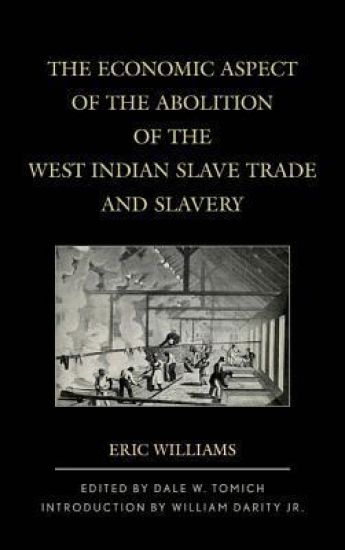
The Economic Aspect of the Abolition of the West Indian Slave Trade and Slavery
Eric Williams
Rowman Littlefield
2014
sidottu
In his influential and widely debated Capitalism and Slavery, Eric Williams examined the relation of capitalism and slavery in the British West Indies. Binding an economic view of history with strong moral argument, his study of the role of slavery in financing the Industrial Revolution refuted traditional ideas of economic and moral progress and firmly established the centrality of the African slave trade in European economic development. He also showed that mature industrial capitalism in turn helped destroy the slave system. Establishing the exploitation of commercial capitalism and its link to racial attitudes, Williams employed a historicist vision that has set the tone for an entire field. Williams’s profound critique became the foundation for studies of imperialism and economic development and has been widely debated since the book’s initial publication in 1944. The Economic Aspect of the Abolition of the West Indian Slave Trade and Slavery now makes available in book form for the first time his dissertation, on which Capitalism and Slavery was based. The significant differences between his two works allow us to rethink questions that were considered resolved and to develop fresh problems and hypotheses. It offers the possibility of a much deeper reconsideration of issues that have lost none of their urgency—indeed, whose importance has increased.
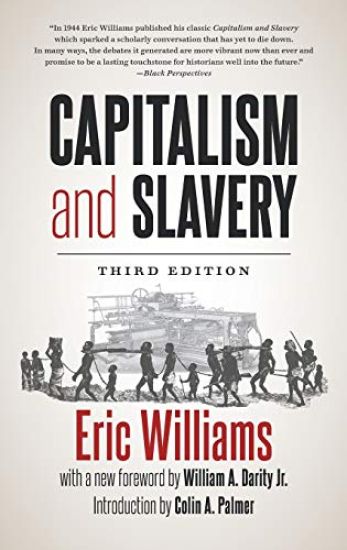
Slavery helped finance the Industrial Revolution in England. Plantation owners, shipbuilders, and merchants connected with the slave trade accumulated vast fortunes that established banks and heavy industry in Europe and expanded the reach of capitalism worldwide. Eric Williams advanced these powerful ideas in Capitalism and Slavery, published in 1944. Years ahead of its time, his profound critique became the foundation for studies of imperialism and economic development. Binding an economic view of history with strong moral argument, Williams's study of the role of slavery in financing the Industrial Revolution refuted traditional ideas of economic and moral progress and firmly established the centrality of the African slave trade in European economic development. He also showed that mature industrial capitalism in turn helped destroy the slave system. Establishing the exploitation of commercial capitalism and its link to racial attitudes, Williams employed a historicist vision that set the tone for future studies.William A. Darity Jr.'s new foreword highlights Williams's insights for a new generation of readers, and Colin Palmer's introduction assesses the lasting impact of Williams's groundbreaking work and analyzes the heated scholarly debates it generated when it first appeared.
Slavery helped finance the Industrial Revolution in England. Plantation owners, shipbuilders, and merchants connected with the slave trade accumulated vast fortunes that established banks and heavy industry in Europe and expanded the reach of capitalism worldwide. Eric Williams advanced these powerful ideas in Capitalism and Slavery, published in 1944. Years ahead of its time, his profound critique became the foundation for studies of imperialism and economic development. Binding an economic view of history with strong moral argument, Williams's study of the role of slavery in financing the Industrial Revolution refuted traditional ideas of economic and moral progress and firmly established the centrality of the African slave trade in European economic development. He also showed that mature industrial capitalism in turn helped destroy the slave system. Establishing the exploitation of commercial capitalism and its link to racial attitudes, Williams employed a historicist vision that set the tone for future studies.William A. Darity Jr.'s new foreword highlights Williams's insights for a new generation of readers, and Colin Palmer's introduction assesses the lasting impact of Williams's groundbreaking work and analyzes the heated scholarly debates it generated when it first appeared.