Kirjojen hintavertailu. Mukana 11 244 527 kirjaa ja 12 kauppaa.

Kirjahaku

Etsi kirjoja tekijän nimen, kirjan nimen tai ISBN:n perusteella.

6 kirjaa tekijältä Erica Bornstein

The Spirit of Development

The Spirit of Development

Erica Bornstein

Stanford University Press
2005
pokkari
Religious NGOs are important sources of humanitarian aid in Africa, entering where the welfare programs of weakened states fail to provide basic services. As collaborators and critics of African states, religious NGOs occupy an important structural and ideological position. They also, however, illustrate a key irony—how economic development, a symbol of science, progress, and this-worldly material improvement, borrows heavily from other-worldly faith. Through a study of two transnational NGOs in Zimbabwe, this book offers a nuanced depiction of development as both liberatory and limiting. Humanitarian effort is not a hopeless task, but behind the liberatory potential of Christian development lurks the sad irony that change can bring its own disappointments. While rapt attention has been given to the supposed role of NGOs in democratizing Africa, few studies engage with the ground operations. Questioning the assumption that economic development is a move away from religious mysticism toward the scientific promise of progress, the author offers a remarkable account of development that is neither defeatist nor comforting.
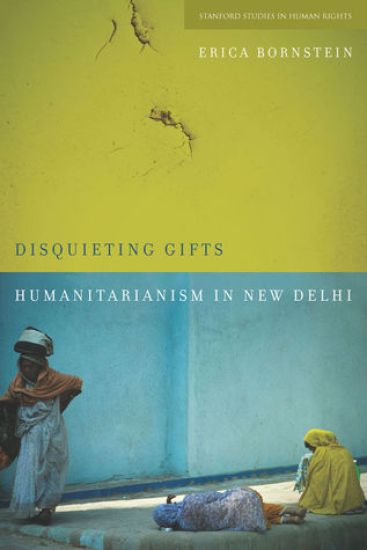
Disquieting Gifts

Disquieting Gifts

Erica Bornstein

Stanford University Press
2012
sidottu
While most people would not consider sponsoring an orphan's education to be in the same category as international humanitarian aid, both acts are linked by the desire to give. Many studies focus on the outcomes of humanitarian work, but the impulses that inspire people to engage in the first place receive less attention. Disquieting Gifts takes a close look at people working on humanitarian projects in New Delhi to explore why they engage in philanthropic work, what humanitarianism looks like to them, and the ethical and political tangles they encounter. Motivated by debates surrounding Marcel Mauss's The Gift, Bornstein investigates specific cases of people engaged in humanitarian work to reveal different perceptions of assistance to strangers versus assistance to kin, how the impulse to give to others in distress is tempered by its regulation, suspicions about recipient suitability, and why the figure of the orphan is so valuable in humanitarian discourse. The book also focuses on vital humanitarian efforts that often go undocumented and ignored and explores the role of empathy in humanitarian work.
Disquieting Gifts

Disquieting Gifts

Erica Bornstein

Stanford University Press
2012
pokkari
While most people would not consider sponsoring an orphan's education to be in the same category as international humanitarian aid, both acts are linked by the desire to give. Many studies focus on the outcomes of humanitarian work, but the impulses that inspire people to engage in the first place receive less attention. Disquieting Gifts takes a close look at people working on humanitarian projects in New Delhi to explore why they engage in philanthropic work, what humanitarianism looks like to them, and the ethical and political tangles they encounter. Motivated by debates surrounding Marcel Mauss's The Gift, Bornstein investigates specific cases of people engaged in humanitarian work to reveal different perceptions of assistance to strangers versus assistance to kin, how the impulse to give to others in distress is tempered by its regulation, suspicions about recipient suitability, and why the figure of the orphan is so valuable in humanitarian discourse. The book also focuses on vital humanitarian efforts that often go undocumented and ignored and explores the role of empathy in humanitarian work.
A Revolution of Rules

A Revolution of Rules

Erica Bornstein

STANFORD UNIVERSITY PRESS
2025
sidottu
What is it about nonprofits that inspires so many to passionately support their agendas and others to adamantly seek their control? In India, laws regulating the nonprofit sector were dramatically reformed between 2010–2020, reconfiguring relationships between corporations, nonprofits, and the government. Thousands of nonprofits, including powerful NGOs, lost their ability to receive foreign funding, and in 2015 dozens more were put on a state-sponsored watch list. While many assume that nonprofits are defined by the causes they champion, A Revolution of Rules demonstrates that the nonprofit form is shaped primarily through its regulation, in a dynamic process of democratic and political negotiation. Erica Bornstein argues that the scrutiny of nonprofits in India must be understood in a wider, global context of political judicialization and regulatory reform. She examines how members of nonprofit organizations are the unsung heroes of democracy as they navigate a shrinking stage for rights-based work and struggle to protect civil society. The protagonists featured in this book include nonprofit workers, lawyers, accountants, philanthropists, and civil servants who conduct their work on the sidelines—at workshops, in modest offices, through report-writing and petitions. To understand nonprofits and their relationship to democracy in the world, Bornstein asserts, one must look to the deceptively unassuming sites of struggle over the nonprofit form and its regulation.
A Revolution of Rules

A Revolution of Rules

Erica Bornstein

STANFORD UNIVERSITY PRESS
2025
pokkari
What is it about nonprofits that inspires so many to passionately support their agendas and others to adamantly seek their control? In India, laws regulating the nonprofit sector were dramatically reformed between 2010–2020, reconfiguring relationships between corporations, nonprofits, and the government. Thousands of nonprofits, including powerful NGOs, lost their ability to receive foreign funding, and in 2015 dozens more were put on a state-sponsored watch list. While many assume that nonprofits are defined by the causes they champion, A Revolution of Rules demonstrates that the nonprofit form is shaped primarily through its regulation, in a dynamic process of democratic and political negotiation. Erica Bornstein argues that the scrutiny of nonprofits in India must be understood in a wider, global context of political judicialization and regulatory reform. She examines how members of nonprofit organizations are the unsung heroes of democracy as they navigate a shrinking stage for rights-based work and struggle to protect civil society. The protagonists featured in this book include nonprofit workers, lawyers, accountants, philanthropists, and civil servants who conduct their work on the sidelines—at workshops, in modest offices, through report-writing and petitions. To understand nonprofits and their relationship to democracy in the world, Bornstein asserts, one must look to the deceptively unassuming sites of struggle over the nonprofit form and its regulation.
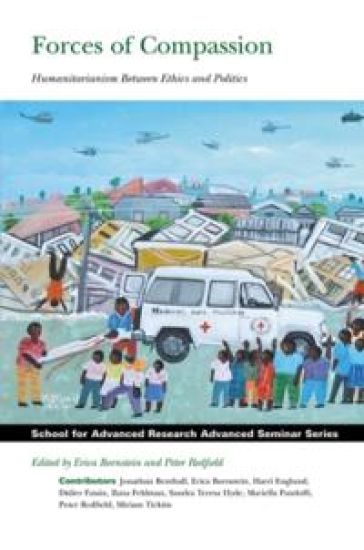
Forces of Compassion

Forces of Compassion

Erica Bornstein

SAR Press
2011
nidottu
Suffering and charity have a long history. Both human sorrows and attempted remedies were familiar features of life in earlier eras and religious traditions, however, during the final decades of the twentieth century, natural disasters and civilian casualties of war transformed into “humanitarian crises.” In these recurring dramas presented by international media, an extensive network of interstate entities and nongovernmental organizations (NGOs) supplies assistance to victims. The contemporary aid world is a mosaic of aid sectors, each skewed slightly toward a particular aspect of need and action. The development sector focuses on alleviating poverty, while the human rights sector aims to rectify identifiable wrongs. Humanitarianism directly addresses physical and psychological suffering. The contributors to Forces of Compassion examine this sector through the lens of anthropology, looking at dominant practices, tensions, and beliefs.