Kirjojen hintavertailu. Mukana 11 627 220 kirjaa ja 12 kauppaa.

Kirjahaku

Etsi kirjoja tekijän nimen, kirjan nimen tai ISBN:n perusteella.

9 kirjaa tekijältä Erica Burman

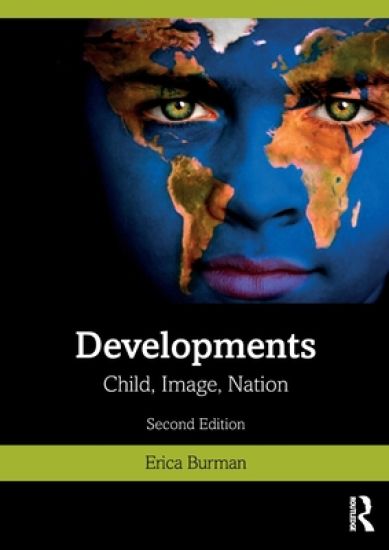
Developments

Developments

Erica Burman

Routledge
2020
nidottu
How does developmental psychology connect with (what used to be called) the developing world? What do cultural representations indicate about the contemporary politics of childhood? How is concern about child sexual exploitation linked to wider securitization anxieties? In other words: what is the political economy of childhood, and how is this affectively organized? This new edition of Developments: Child, Image, Nation, fully updated, is a key conceptual intervention and resource, reflecting further on the contexts and frameworks that tie children to national and international agendas.A companion volume to Burman’s Deconstructing Developmental Psychology (third edition, 2017) this volume helps explain why questions around children and childhood, including their safety, welfare, their interests, abilities, sexualities and their violence, have so preoccupied the late twentieth and twenty-first centuries, showing how the frames for these concerns have extended beyond their Euro-US contexts of origination. In this completely revised edition, Burman explores changing debates and contexts, offering resources for interpreting continuities and shifts in the complex terrain connecting children and development. Through reflection on an increasingly globalised, marketised world, that prolongs previous colonial and gendered dynamics in new and even more insidious ways, Developments analyses the conceptual paradigms shaping how we think about and work with children, and recommends strategies for changing them. Drawing in particular on feminist and post-development literatures, as well as original and detailed engagement with social theory, it illustrates how and why reconceptualising notions of individual and human development, including those informing models of children’s rights and interests, is needed to foster more just and equitable forms of professional practice with children and their families.Burman offers an important contribution to a set of urgent debates engaging theory and method, policy and practice across all the disciplines that work with, or lay claim to, children’s interests. A persuasive set of arguments about childhood, culture and professional practice, Developments is an invaluable resource to teachers and students in psychology, childhood studies, and education as well as researchers in gender studies.
Developments

Developments

Erica Burman

Routledge
2020
sidottu
How does developmental psychology connect with (what used to be called) the developing world? What do cultural representations indicate about the contemporary politics of childhood? How is concern about child sexual exploitation linked to wider securitization anxieties? In other words: what is the political economy of childhood, and how is this affectively organized? This new edition of Developments: Child, Image, Nation, fully updated, is a key conceptual intervention and resource, reflecting further on the contexts and frameworks that tie children to national and international agendas.A companion volume to Burman’s Deconstructing Developmental Psychology (third edition, 2017) this volume helps explain why questions around children and childhood, including their safety, welfare, their interests, abilities, sexualities and their violence, have so preoccupied the late twentieth and twenty-first centuries, showing how the frames for these concerns have extended beyond their Euro-US contexts of origination. In this completely revised edition, Burman explores changing debates and contexts, offering resources for interpreting continuities and shifts in the complex terrain connecting children and development. Through reflection on an increasingly globalised, marketised world, that prolongs previous colonial and gendered dynamics in new and even more insidious ways, Developments analyses the conceptual paradigms shaping how we think about and work with children, and recommends strategies for changing them. Drawing in particular on feminist and post-development literatures, as well as original and detailed engagement with social theory, it illustrates how and why reconceptualising notions of individual and human development, including those informing models of children’s rights and interests, is needed to foster more just and equitable forms of professional practice with children and their families.Burman offers an important contribution to a set of urgent debates engaging theory and method, policy and practice across all the disciplines that work with, or lay claim to, children’s interests. A persuasive set of arguments about childhood, culture and professional practice, Developments is an invaluable resource to teachers and students in psychology, childhood studies, and education as well as researchers in gender studies.
Child as Method

Child as Method

Erica Burman

TAYLOR FRANCIS LTD
2024
nidottu
In this vital volume, Erica Burman presents a synthesis of her work developed over the past decade. Building from her path-breaking critiques of developmental psychology to the strategy of plural developments, her more recent work elaborates a new approach, generated from postcolonial, feminist intersectionality and migration studies: Child as method.This text amplifies the Child as method’s success as a distinct way of exploring the alignments of current ‘new materialist’ or posthumanist approaches with supposedly ‘older’ materialist analyses, including Marxist theory, feminist theory, anticolonial approaches and psychoanalytic perspectives. It assumes that childhood is a material practice, both undertaken by children themselves and by those who live and work with them, as well as by those who define politics, policies and popular culture about children. Key chapters interrogate historical legacies arising from the Eurocentric origins of what are now globalised models of modern childhood and evaluate the problems posed by the structure of emotion and affectivity that surrounds children and childhood – by tracing its evolution and indicating some of its unhelpful current effects in recentring white/Majority world subjectivitiesChild as Method provides key contributions to a range of disciplines and debates including developmental psychology, critical childhood studies, education studies, legal studies, health and social care and literature.
Child as Method

Child as Method

Erica Burman

TAYLOR FRANCIS LTD
2024
sidottu
In this vital volume, Erica Burman presents a synthesis of her work developed over the past decade. Building from her path-breaking critiques of developmental psychology to the strategy of plural developments, her more recent work elaborates a new approach, generated from postcolonial, feminist intersectionality and migration studies: Child as method.This text amplifies the Child as method’s success as a distinct way of exploring the alignments of current ‘new materialist’ or posthumanist approaches with supposedly ‘older’ materialist analyses, including Marxist theory, feminist theory, anticolonial approaches and psychoanalytic perspectives. It assumes that childhood is a material practice, both undertaken by children themselves and by those who live and work with them, as well as by those who define politics, policies and popular culture about children. Key chapters interrogate historical legacies arising from the Eurocentric origins of what are now globalised models of modern childhood and evaluate the problems posed by the structure of emotion and affectivity that surrounds children and childhood – by tracing its evolution and indicating some of its unhelpful current effects in recentring white/Majority world subjectivitiesChild as Method provides key contributions to a range of disciplines and debates including developmental psychology, critical childhood studies, education studies, legal studies, health and social care and literature.
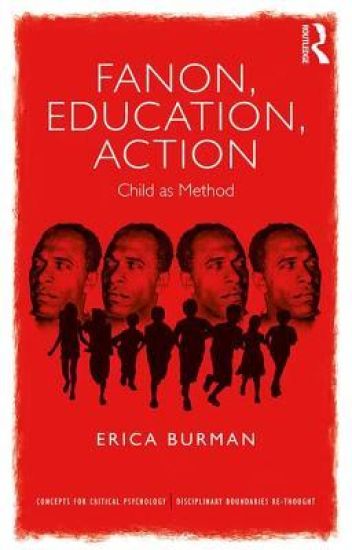
Fanon, Education, Action

Fanon, Education, Action

Erica Burman

Routledge
2018
sidottu
Bridging childhood studies, pedagogy and educational theory, critical psychology, and postcolonial studies, this unique book reads the role and functions of ‘the child’ and childhood as both cultural motif and as embodied life condition through the work of Frantz Fanon. Based on innovative readings of Fanon and postcolonial cultural studies, the book offers new insights for critical pedagogical and transformative practice in forging crucial links not only between the political and the psychological, but between distress, therapy, and (personal and political) learning and transformation. Structured around four indicative and distinct forms of ‘child’ read from Fanon’s texts (Idiotic, Traumatogenic, Therapeutic, Extemic), the author discusses both educational and therapeutic practices. The pedagogical links the political with the personal, and Fanon’s revolutionary psychoaffective account offers vital resources to inform these. Finally the book presents ‘child as method’ as a new analytical approach by which to read the geopolitical, which shows childhood, education, and critical psychological studies to be key to these at the level of theory, method, and practice.By interrogating contemporary modalities of childhood as modern economic and political tropes, the author offers conceptual and methodological resources for practically engaging with and transforming these. This book will be vital and fascinating reading for students and scholars in psychology, psychoanalysis, education and childhood studies, gender studies, postcolonial studies, and mental health.
Fanon, Education, Action

Fanon, Education, Action

Erica Burman

Routledge
2018
nidottu
Bridging childhood studies, pedagogy and educational theory, critical psychology, and postcolonial studies, this unique book reads the role and functions of ‘the child’ and childhood as both cultural motif and as embodied life condition through the work of Frantz Fanon. Based on innovative readings of Fanon and postcolonial cultural studies, the book offers new insights for critical pedagogical and transformative practice in forging crucial links not only between the political and the psychological, but between distress, therapy, and (personal and political) learning and transformation. Structured around four indicative and distinct forms of ‘child’ read from Fanon’s texts (Idiotic, Traumatogenic, Therapeutic, Extemic), the author discusses both educational and therapeutic practices. The pedagogical links the political with the personal, and Fanon’s revolutionary psychoaffective account offers vital resources to inform these. Finally the book presents ‘child as method’ as a new analytical approach by which to read the geopolitical, which shows childhood, education, and critical psychological studies to be key to these at the level of theory, method, and practice.By interrogating contemporary modalities of childhood as modern economic and political tropes, the author offers conceptual and methodological resources for practically engaging with and transforming these. This book will be vital and fascinating reading for students and scholars in psychology, psychoanalysis, education and childhood studies, gender studies, postcolonial studies, and mental health.
Deconstructing Developmental Psychology
In this completely revised and updated edition, Deconstructing Developmental Psychology interrogates the assumptions and practices surrounding the psychology of child development, providing a critical evaluation of the role and contribution of developmental psychology within social practice. Since the second edition was published, there have been many major changes. This book addresses how shifts in advanced capitalism have produced new understandings of children, and a new (and more punitive) range of institutional responses to children. It engages with the paradoxes of childhood in an era when young adults are increasingly economically dependent on their families, and in a political context of heightened insecurity. The new edition includes an updated review of developments in psychological theory (in attachment, evolutionary psychology, theory of mind, cultural-historical approaches), as well as updating and reflecting upon the changed focus on fathers and fathering. It offers new perspectives on the connections between Piaget and Vygotsky and now connects much more closely with discussions from the sociology of childhood and critical educational research. Coverage has been expanded to include more material on child rights debates, and a new chapter addresses practice dilemmas around child protection, which engages even more with the "raced" and gendered effects of current policies involving children.This engaging and accessible text provides key resources to inform better professional practice in social work, education and health contexts. It offers critical insights into the politics and procedures that have shaped developmental psychological knowledge. It will be essential reading for anyone working with children, or concerned with policies around children and families. It was also be of interest to students at undergraduate and postgraduate levels across a range of professional and practitioner groups, as well as parents and policy makers.
Deconstructing Developmental Psychology
In this completely revised and updated edition, Deconstructing Developmental Psychology interrogates the assumptions and practices surrounding the psychology of child development, providing a critical evaluation of the role and contribution of developmental psychology within social practice. Since the second edition was published, there have been many major changes. This book addresses how shifts in advanced capitalism have produced new understandings of children, and a new (and more punitive) range of institutional responses to children. It engages with the paradoxes of childhood in an era when young adults are increasingly economically dependent on their families, and in a political context of heightened insecurity. The new edition includes an updated review of developments in psychological theory (in attachment, evolutionary psychology, theory of mind, cultural-historical approaches), as well as updating and reflecting upon the changed focus on fathers and fathering. It offers new perspectives on the connections between Piaget and Vygotsky and now connects much more closely with discussions from the sociology of childhood and critical educational research. Coverage has been expanded to include more material on child rights debates, and a new chapter addresses practice dilemmas around child protection, which engages even more with the "raced" and gendered effects of current policies involving children.This engaging and accessible text provides key resources to inform better professional practice in social work, education and health contexts. It offers critical insights into the politics and procedures that have shaped developmental psychological knowledge. It will be essential reading for anyone working with children, or concerned with policies around children and families. It was also be of interest to students at undergraduate and postgraduate levels across a range of professional and practitioner groups, as well as parents and policy makers.
Psychoanalysis from the Indian Terroir

Psychoanalysis from the Indian Terroir

Erica Burman

Lexington Books
2018
sidottu
In Psychoanalysis from the Indian Terroir, Manasi Kumar, Anup Dhar, and Anurag Mishra discuss the synergies and diachronic thought that is emblematic of the current psychoanalytic narrative in India and examine what psychoanalysis in India could become. The contributors to this edited collection connect problems around culture, family, traditions, and the burgeoning political changes in the Indian landscape in order to provide critical rejoinders to the maternal-feminine thematic in India’s cultural psyche. Specifically, the contributors examine issues surrounding ethnic violence, therapists’ gender and political identities, narratives of illness, and spiritual and traditional approaches to healing.