Kirjojen hintavertailu. Mukana 11 699 587 kirjaa ja 12 kauppaa.

Kirjahaku

Etsi kirjoja tekijän nimen, kirjan nimen tai ISBN:n perusteella.

8 kirjaa tekijältä Erica Fudge

Perceiving Animals

Perceiving Animals

Erica Fudge

University of Illinois Press
2002
nidottu
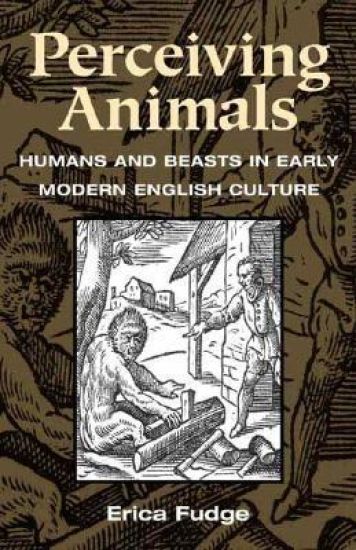
The boundaries between human and beast forged a rugged philosophical landscape across early modern England. Spectators gathered in London's Bear Garden to watch the callous and brutal baiting of animals. A wave of "new" scientists performed vivisections on live animals to learn more about the human body. In Perceiving Animals, the British scholar Erica Fudge traces the dangers and problems of anthropocentrism in texts written from 1558 to 1649. Meticulous examinations of scientific, legal, political, literary, and religious writings offer unique and fascinating depictions of human perceptions about the natural world. Views carried over from bestiaries--medieval treatises on animals-- posited animals as nonsentient beings whose merits were measured solely by what provisions they afforded humans: food, medicine, clothing, travel, labor, scientific knowledge. Without consciences or faith, animals were deemed far inferior to humans. While writings from the period asserted an enormous biological superiority, Fudge contends actual human behavior and logic worked, sometimes accidentally, to close the alleged gap. In the Bear Garden, even a man of the lowest social rank had power over a tortured animal, sinking him, though, below the beasts. The beast fable itself fails to show a true understanding of animals, as it merely attributes human characteristics to beasts in an attempt to teach humanist ideals. Scholars and writers continually turned to the animal world for reflection. Despite this, scientists of the period used animals for empirical and medical knowledge, recognizing biological and spiritual similarities but refusing to renege human superiority. Including an insightful reexamination of Ben Jonson's Volpone and fascinating looks at works by Francis Bacon, Edward Coke, and Richard Overton, among others, Fudge probes issues of animal ownership and biological and spiritual superiority in early modern England that resonate with philosophical quandaries still relevant in contemporary society.
Brutal Reasoning

Brutal Reasoning

Erica Fudge

Cornell University Press
2006
sidottu
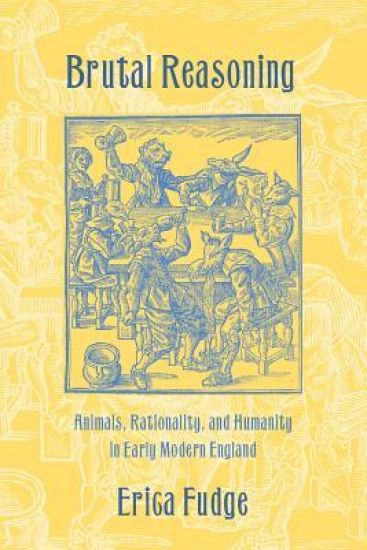
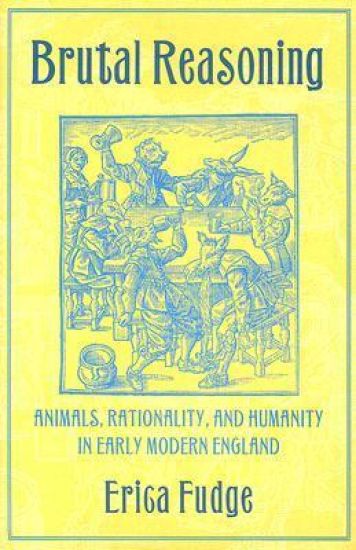
Early modern English thinkers were fascinated by the subject of animal rationality, even before the appearance of Descartes's Discourse on the Method (1637) and its famous declaration of the automatism of animals. But as Erica Fudge relates in Brutal Reasoning, the discussions were not as straightforward—or as reflexively anthropocentric—as has been assumed. Surveying a wide range of texts-religious, philosophical, literary, even comic-Fudge explains the crucial role that reason played in conceptualizations of the human and the animal, as well as the distinctions between the two. Brutal Reasoning looks at the ways in which humans were conceptualized, at what being "human" meant, and at how humans could lose their humanity. It also takes up the questions of what made an animal an animal, why animals were studied in the early modern period, and at how people understood, and misunderstood, what they saw when they did look. From the influence of classical thinking on the human-animal divide and debates surrounding the rationality of women, children, and Native Americans to the frequent references in popular and pedagogical texts to Morocco the Intelligent Horse, Fudge gives a new and vital context to the human perception of animals in this period. At the same time, she challenges overly simplistic notions about early modern attitudes to animals and about the impact of those attitudes on modern culture.
Pets

Pets

Erica Fudge

Routledge
2016
sidottu
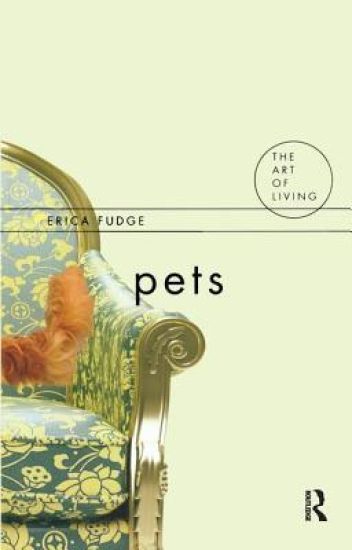
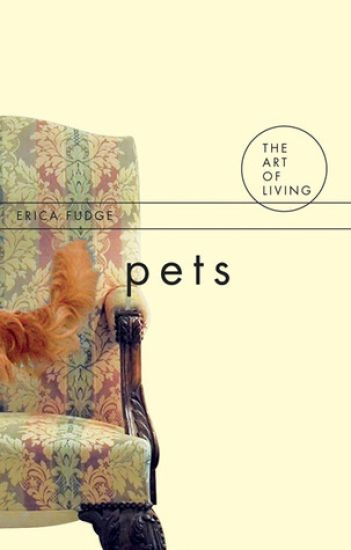
'When I play with my cat, who knows if I am not a pastime to her more than she is to me?' - Michel de Montaigne. Why do we live with pets? Is there something more to our relationship with them than simply companionship? What is it we look for in our pets and what does this say about us as human beings? In this fascinating book, Erica Fudge explores the nature of this most complex of relationships and the difficulties of knowing what it is that one is living with when one chooses to share a home with an animal. Fudge argues that our capacity for compassion and ability to live alongside others is evident in our relationships with our pets, those paradoxical creatures who give us a sense of comfort and security while simultaneously troubling the categories human and animal. For what is a pet if it isn't a fully-fledged member of the human family? This book proposes that by crossing over these boundaries pets help construct who it is we think we are. Drawing on the works of modern writers, such as J. M. Coetzee, Elizabeth Marshall Thomas and Jacques Derrida, Fudge shows how pets have been used to think with and to undermine our easy conceptions of human, animal and home. Indeed, "Pets" shows our obsession with domestic animals that reveals many of the paradoxes, contra - dictions and ambiguities of life. Living with pets provides thought-provoking perspectives on our notions of possession and mastery, mutuality and cohabitation, love and dominance. We might think of pets as simply happy, loved additions to human homes but as this captivating book reveals perhaps it is the pets that make the home and without pets perhaps we might not be the humans we think we are. For anyone who has ever wondered, like Montaigne, what their cat is thinking, it will be illuminating reading.
Quick Cattle and Dying Wishes

Quick Cattle and Dying Wishes

Erica Fudge

Cornell University Press
2018
sidottu
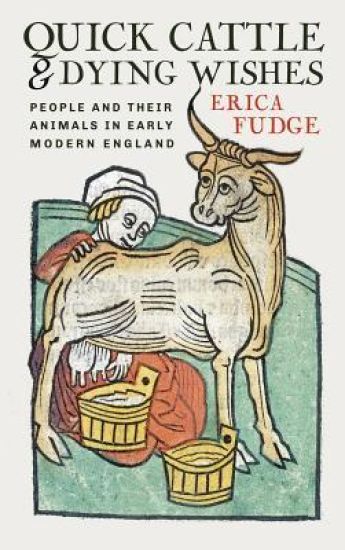
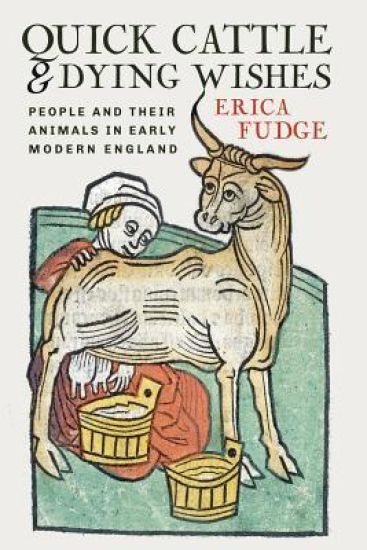
What was the life of a cow in early modern England like? What would it be like to milk that same cow, day-in, day-out, for over a decade? How did people feel about and toward the animals that they worked with, tended, and often killed? With these questions, Erica Fudge begins her investigation into a lost aspect of early modern life: the importance of the day-to-day relationships between humans and the animals with whom they worked. Such animals are and always have been, Fudge reminds us, more than simply stock; they are sentient beings with whom one must negotiate. It is the nature, meaning, and value of these negotiations that this study attempts to recover. By focusing on interactions between people and their livestock, Quick Cattle and Dying Wishes restores animals to the central place they once had in the domestic worlds of early modern England. In addition, the book uses human relationships with animals—as revealed through agricultural manuals, literary sources, and a unique dataset of over four thousand wills—to rethink what quick cattle meant to a predominantly rural population and how relationships with them changed as more and more people moved to the city. Offering a fuller understanding of both human and animal life in this period, Fudge innovatively expands the scope of early modern studies and how we think about the role that animals played in past cultures more broadly.
Quick Cattle and Dying Wishes

Quick Cattle and Dying Wishes

Erica Fudge

Cornell University Press
2018
pokkari
What was the life of a cow in early modern England like? What would it be like to milk that same cow, day-in, day-out, for over a decade? How did people feel about and toward the animals that they worked with, tended, and often killed? With these questions, Erica Fudge begins her investigation into a lost aspect of early modern life: the importance of the day-to-day relationships between humans and the animals with whom they worked. Such animals are and always have been, Fudge reminds us, more than simply stock; they are sentient beings with whom one must negotiate. It is the nature, meaning, and value of these negotiations that this study attempts to recover. By focusing on interactions between people and their livestock, Quick Cattle and Dying Wishes restores animals to the central place they once had in the domestic worlds of early modern England. In addition, the book uses human relationships with animals—as revealed through agricultural manuals, literary sources, and a unique dataset of over four thousand wills—to rethink what quick cattle meant to a predominantly rural population and how relationships with them changed as more and more people moved to the city. Offering a fuller understanding of both human and animal life in this period, Fudge innovatively expands the scope of early modern studies and how we think about the role that animals played in past cultures more broadly.
Brutal Reasoning

Brutal Reasoning

Erica Fudge

Cornell University Press
2019
pokkari
Early modern English thinkers were fascinated by the subject of animal rationality, even before the appearance of Descartes's Discourse on the Method (1637) and its famous declaration of the automatism of animals. But as Erica Fudge relates in Brutal Reasoning, the discussions were not as straightforward—or as reflexively anthropocentric—as has been assumed. Surveying a wide range of texts-religious, philosophical, literary, even comic-Fudge explains the crucial role that reason played in conceptualizations of the human and the animal, as well as the distinctions between the two. Brutal Reasoning looks at the ways in which humans were conceptualized, at what being "human" meant, and at how humans could lose their humanity. It also takes up the questions of what made an animal an animal, why animals were studied in the early modern period, and at how people understood, and misunderstood, what they saw when they did look. From the influence of classical thinking on the human-animal divide and debates surrounding the rationality of women, children, and Native Americans to the frequent references in popular and pedagogical texts to Morocco the Intelligent Horse, Fudge gives a new and vital context to the human perception of animals in this period. At the same time, she challenges overly simplistic notions about early modern attitudes to animals and about the impact of those attitudes on modern culture.
Pets

Pets

Erica Fudge

Acumen Publishing Ltd
2008
nidottu
'When I play with my cat, who knows if I am not a pastime to her more than she is to me?' - Michel de Montaigne. Why do we live with pets? Is there something more to our relationship with them than simply companionship? What is it we look for in our pets and what does this say about us as human beings? In this fascinating book, Erica Fudge explores the nature of this most complex of relationships and the difficulties of knowing what it is that one is living with when one chooses to share a home with an animal. Fudge argues that our capacity for compassion and ability to live alongside others is evident in our relationships with our pets, those paradoxical creatures who give us a sense of comfort and security while simultaneously troubling the categories human and animal. For what is a pet if it isn't a fully-fledged member of the human family? This book proposes that by crossing over these boundaries pets help construct who it is we think we are. Drawing on the works of modern writers, such as J. M. Coetzee, Elizabeth Marshall Thomas and Jacques Derrida, Fudge shows how pets have been used to think with and to undermine our easy conceptions of human, animal and home. Indeed, "Pets" shows our obsession with domestic animals that reveals many of the paradoxes, contra - dictions and ambiguities of life. Living with pets provides thought-provoking perspectives on our notions of possession and mastery, mutuality and cohabitation, love and dominance. We might think of pets as simply happy, loved additions to human homes but as this captivating book reveals perhaps it is the pets that make the home and without pets perhaps we might not be the humans we think we are. For anyone who has ever wondered, like Montaigne, what their cat is thinking, it will be illuminating reading.
Animal

Animal

Erica Fudge

Reaktion Books
2002
nidottu
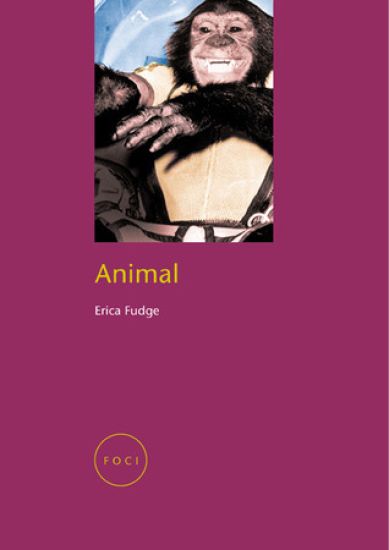
From the pet that we live with and care for, to news items such as animal cloning, and the use of various creatures in film, television and advertising, animals are a constant presence in our lives.Animal is a timely overview of the many ways in which we live with animals, and assesses many of the paradoxes of our relationships with them: for example, why is the pet that sits by the dinner table never for eating? Examining novels such as Charlotte's Web, films such as Old Yeller and Babe, science and advertising, fashion and philosophy, Animal also evaluates the ways in which we think about animals and challenges a number of the assumptions we hold. Why is it, for example, that animals are such a constant presence in children's literature? And what does it mean to wear fake fur? Is fake fur an ethical avoidance of animal suffering, or merely a sanitized version of the unacceptable use of animals as clothing?Neither evangelical nor proselytizing, Animal invites the reader to think beyond the boundaries of a subject that has a direct effect on our day-to-day lives.