Kirjojen hintavertailu. Mukana 11 717 486 kirjaa ja 12 kauppaa.

Kirjahaku

Etsi kirjoja tekijän nimen, kirjan nimen tai ISBN:n perusteella.

3 kirjaa tekijältä Erica L. Ball

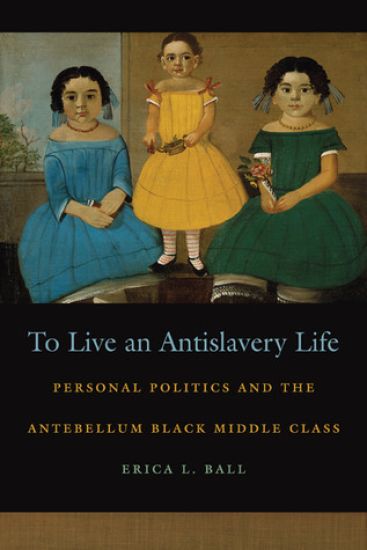
To Live an Antislavery Life

To Live an Antislavery Life

Erica L. Ball

University of Georgia Press
2012
sidottu
In this study of antebellum African American print culture in transnational perspective, Erica L. Ball explores the relationship between antislavery discourse and the emergence of the northern black middle class.Through innovative readings of slave narratives, sermons, fiction, convention proceedings, and the advice literature printed in forums like Freedom’s Journal, the North Star, and the Anglo-African Magazine, Ball demonstrates that black figures such as Susan Paul, Frederick Douglass, and Martin Delany consistently urged readers to internalize their political principles and to interpret all their personal ambitions, private familial roles, and domestic responsibilities in light of the freedom struggle. Ultimately, they were admonished to embody the abolitionist agenda by living what the fugitive Samuel Ringgold Ward called an “antislavery life.”Far more than calls for northern free blacks to engage in what scholars call “the politics of respectability,” African American writers characterized true antislavery living as an oppositional stance rife with radical possibilities, a deeply personal politics that required free blacks to transform themselves into model husbands and wives, mothers and fathers, self-made men, and transnational freedom fighters in the mold of revolutionary figures from Haiti to Hungary. In the process, Ball argues, antebellum black writers crafted a set of ideals—simultaneously respectable and subversive—for their elite and aspiring African American readers to embrace in the decades before the Civil War.Published in association with the Library Company of Philadelphia’s Program in African American History. A Sarah Mills Hodge Fund Publication.
To Live an Antislavery Life

To Live an Antislavery Life

Erica L. Ball

University of Georgia Press
2012
pokkari
In this study of antebellum African American print culture in transnational perspective, Erica L. Ball explores the relationship between antislavery discourse and the emergence of the northern black middle class.Through innovative readings of slave narratives, sermons, fiction, convention proceedings, and the advice literature printed in forums like Freedom’s Journal, the North Star, and the Anglo-African Magazine, Ball demonstrates that black figures such as Susan Paul, Frederick Douglass, and Martin Delany consistently urged readers to internalize their political principles and to interpret all their personal ambitions, private familial roles, and domestic responsibilities in light of the freedom struggle. Ultimately, they were admonished to embody the abolitionist agenda by living what the fugitive Samuel Ringgold Ward called an “antislavery life.”Far more than calls for northern free blacks to engage in what scholars call “the politics of respectability,” African American writers characterized true antislavery living as an oppositional stance rife with radical possibilities, a deeply personal politics that required free blacks to transform themselves into model husbands and wives, mothers and fathers, self-made men, and transnational freedom fighters in the mold of revolutionary figures from Haiti to Hungary. In the process, Ball argues, antebellum black writers crafted a set of ideals—simultaneously respectable and subversive—for their elite and aspiring African American readers to embrace in the decades before the Civil War.Published in association with the Library Company of Philadelphia’s Program in African American History. A Sarah Mills Hodge Fund Publication.
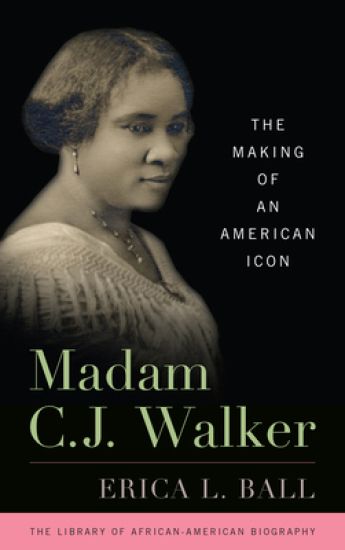
Madam C. J. Walker

Madam C. J. Walker

Erica L. Ball

Rowman Littlefield
2021
sidottu
Madam C. J. Walker—reputed to be America’s first self-made woman millionaire—has long been celebrated for her rags-to-riches story. Born to former slaves in the Louisiana Delta in the aftermath of the Civil War, married at fourteen, and widowed at twenty, Walker spent the first decades of her life as a laundress, laboring in conditions that paralleled the lives of countless poor and working-class African American women. By the time of her death in 1919, however, Walker had refashioned herself into one of the most famous African American figures in the nation: the owner and president of a hair-care empire and a philanthropist wealthy enough to own a country estate near the Rockefellers in the prestigious New York town of Irvington-on-Hudson. In this biography, Erica Ball places this remarkable and largely forgotten life story in the context of Walker’s times. Ball analyzes Walker’s remarkable acts of self-fashioning, and explores the ways that Walker (and the Walker brand) enabled a new generation of African Americans to bridge the gap between a nineteenth-century agrarian past and a twentieth-century future as urban-dwelling consumers.