Kirjojen hintavertailu. Mukana 11 627 220 kirjaa ja 12 kauppaa.

Kirjahaku

Etsi kirjoja tekijän nimen, kirjan nimen tai ISBN:n perusteella.

4 kirjaa tekijältä Erica Marat

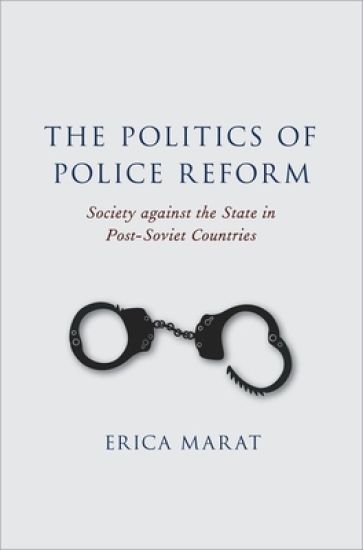
The Politics of Police Reform

The Politics of Police Reform

Erica Marat

Oxford University Press Inc
2018
sidottu
There is a Russian saying that "police mirror society." The gist of this is that every society is policed to the extent that it allows itself to be policed. Centralized in control but decentralized in their reach, the police are remarkably similar in structure, chain of command, and their relationships with the political elite across post-Soviet nations--they also remain one of the least reformed post-communist institutions. As a powerful state organ, the Soviet-style militarized police have resisted change despite democratic transformations in the overall political context, including rounds of competitive elections and growing civil society. While consensus between citizens and the state about reform may be possible in democratic nations, it is considerably more difficult to achieve in authoritarian states. Across post-Soviet countries, such discussions most often occur between political elites and powerful non-state actors, such as criminal syndicates and nationalistic ethnic groups, rather than the wider citizenry. Even in countries where one or more rounds of democratic elections have taken place since 1991, empowered citizens and politicians have not renegotiated the way states police and coerce society. On the contrary, in many post-Soviet countries, police functions have expanded to serve the interests of the ruling political elites. What does it take to reform a post-Soviet police force? This book explores the conditions in which a meaningful transformation of the police is likely to succeed and when it will fail. Departing from the conventional interpretation of the police as merely an institution of coercion, this book defines it as a medium for state-society consensus on the limits of the state's legitimate use of violence. It thus considers policing not as a way to measure the state's capacity to coerce society, but rather as a reflection of a complex society bound together by a web of casual interactions and political structures. The book compares reform efforts in Ukraine, Georgia, Kyrgyzstan, Kazakhstan, and Tajikistan, finding that bottom-up public mobilization is likely to emerge in the aftermath of transformative violence--an incident when the usual patterns of policing are interrupted with unprecedented brutality against vulnerable individuals. Ultimately, The Politics of Police Reform examines the various pathways to transforming how the state relates to society through policing.
Transformative Violence

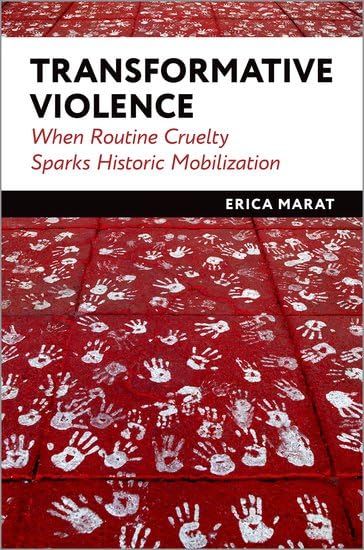
Transformative Violence

Erica Marat

OXFORD UNIVERSITY PRESS INC
2024
sidottu
In patterns of violence across the world, some victims attract strong public support and propel historic levels of collective action, but the vast majority suffer in silence. Why are some violent acts more galvanizing than others? In Transformative Violence, Erica Marat examines the mobilization following the gang rape of a 23-year-old student in New Delhi in 2012 and the disappearance of 43 students in Mexico in 2014 to explain how certain violent acts can trigger unprecedented levels of mobilization in defense of the victims. While such events--transformative violence--emerge from complex networks of causal mechanisms, they all draw sharp moral contrasts between the typical victims and repressors in a society. More specifically, Marat shows that cases of violence that spark large public reaction share a similar set of traits. They include mobilization of both grassroots and national-level activists, a type of victim that resonates with the broader public, and a visual narrative of the victim's suffering. While all three occur independently, it is the union of these events that captures the attention of the public at large, prompts it to act, and eventually leads to policy changes. If any of these three events are missing, the chances that an act of violence will be transformative diminishes as well. Marat also identifies patterns of violence in societies and incidents of civic activism before and after events of transformative violence. By understanding the factors leading to social mobilization in the name of specific victims, we can explain what social structures, processes, and institutions move the political realm toward more inclusive representation. Transformative Violence thus explores the dynamics of violence in the contemporary world--how a society interconnected by vibrant conversations and instant visuals rises against structural violence.
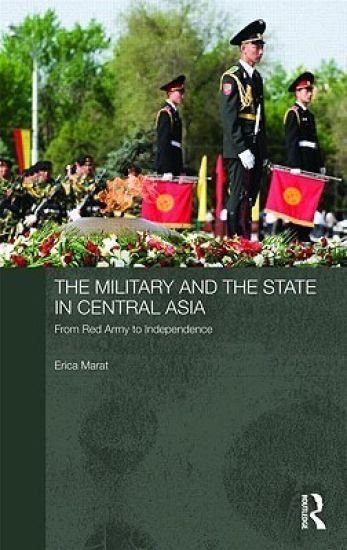
The Military and the State in Central Asia
The military played a pivotal role in the political development, state functions, foreign policy and the daily lives of the people in the Central Asian states from the early twentieth century until the present. This book is the first major, in-depth study of the military institutions in Central Asian states. It examines their hidden story, the different stages of their development from the early twentieth century until the present, and the influence they had on the state and society. It effectively combines history, sociology of the military and political science and provides deeper insights into how recently formed states function. By concentrating extensively on the military, this book is an important and a timely contribution to a wide range of disciplines including Central Asian studies, and post-colonial state and nation-building studies.
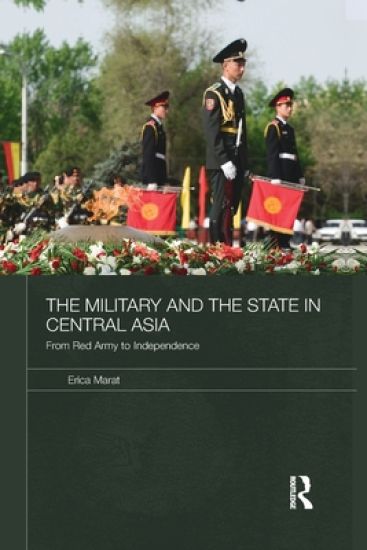
The Military and the State in Central Asia
The military played a pivotal role in the political development, state functions, foreign policy and the daily lives of the people in the Central Asian states from the early twentieth century until the present. This book is the first major, in-depth study of the military institutions in Central Asian states. It examines their hidden story, the different stages of their development from the early twentieth century until the present, and the influence they had on the state and society. It effectively combines history, sociology of the military and political science and provides deeper insights into how recently formed states function. By concentrating extensively on the military, this book is an important and a timely contribution to a wide range of disciplines including Central Asian studies, and post-colonial state and nation-building studies.