Kirjahaku
Etsi kirjoja tekijän nimen, kirjan nimen tai ISBN:n perusteella.
150 kirjaa tekijältä Erich Kästner

Ein Buch zum Schmökern, ein Einstieg für diejenigen, die sich dem deutschen Lyriker und Erzähler bisher noch nicht genähert haben: handlich, kurzweilig, bissig und immer treffend. Das Beste und Gültigste von Erich Kästner aus den Gedichten, der Kleinen Prosa und den Epigrammen.

Königs Erläuterungen: Fabian. Die Geschichte eines Moralisten von Erich Kästner.
Erich Kästner
Bange C. GmbH
2015
nidottu

Erich Kästner erzählt: Till Eulenspiegel, Der gestiefelte Kater, Münchhausen
Erich Kästner
Atrium Verlag
2024
sidottu

Erich Kästner erzählt: Till Eulenspiegel, Der gestiefelte Kater, Münchhausen
Erich Kästner
Atrium Verlag
2024
cd


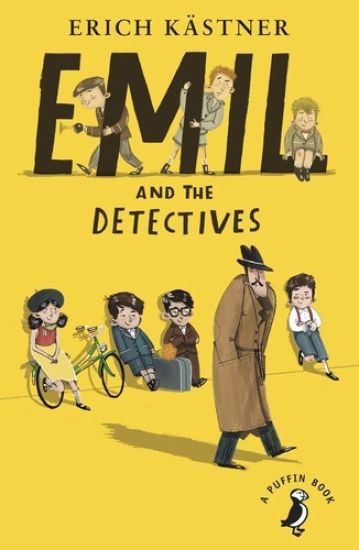
EMIL AND THE DETECTIVES by Erich Kastner has been in print ever since it was first published in 1928.Young Emil is robbed on his first real railway journey of money entrusted to him by his hard-working mother for the relatives he is to stay with in Berlin. A gang of boys about his own age come to his aid, and a thrilling adventure full of surprises ensues as they use their wits to devise a wonderfully simple but practical trick to capture the thief.With every detail clearly drawn - from the tiresome business of getting into best clothes for the journey, down to the final anxiety as to what shall be done with a gloriously unexpected reward - this is a story all young readers will enjoy.Reissued in the 'A Puffin Book' series of children's modern classics.
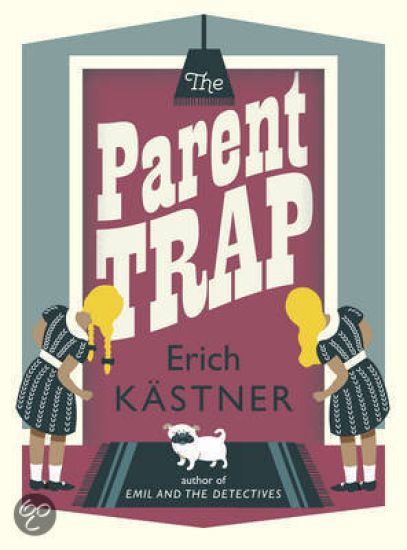
'Walter Trier's deceptively innocent drawings are as classic as Kästner's words; I never tire of them' Quentin Blake Luise has ringlets. Lottie has braids. Apart from that they look exactly the same. But they are sure that they have never set eyes on each other in their lives. When the two girls meet at a summer camp and discover the secret behind their similarity, they decide to switch places. Everyone is fooled (apart from the dog) and, despite a few mistakes and misadventures, everything goes to plan for Luise as Lottie and Lottie as Luise - until their father meets a young, beautiful woman and things start to unravel... Funny, moving, affectionate and improbable, The Parent Trap has twice been adapted for film - but the book remains one of the great classics of German children's literature. Erich Kästner, writer, poet and journalist, was born in Dresden in 1899. His first children's book, Emil and the Detectives, was published in 1929 and has since sold millions of copies around the world and been translated into around 60 languages. After the Nazis took power in Germany, Kästner's books were burnt and he was excluded from the writers' guild. He won many awards, including the prestigious Hans Christian Andersen Award in 1960. He died in 1974. Walter Trier was born in Prague in 1880. In 1910 he moved to Berlin, where he would later be introduced to Kästner, and began his career drawing cartoons for the Berliner Illustrated. He also contributed to the satirical weekly Simplicissimus, where during the 1920s, despite great personal risk, he ridiculed Hitler and the Nazi Party in a series of cartoons. In 1936 he fled to London, where he was involved in producing anti-Nazi leaflets and political propaganda drawings. He would go on to have a rich career, producing around 150 covers for the humorous magazine Lilliput. He died in 1951 in Ontario, Canada. Anthea Bell is an award-winning translator. Having studied English at Oxford University, she has had a long and successful career, translating works from French, German and Danish. She is best known for her translations of the much-loved Asterix books, Stefan Zweig and W.G. Sebald.
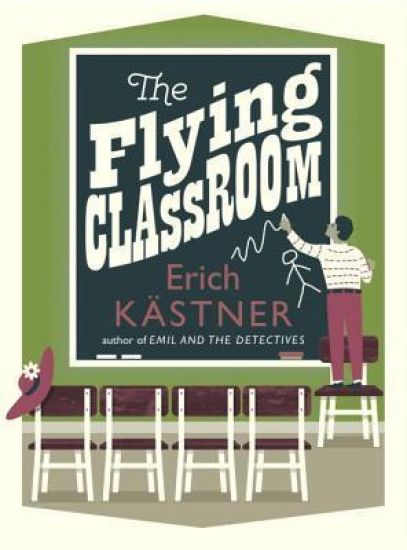
'Walter Trier's deceptively innocent drawings are as classic as Kästner's words; I never tire of them' Quentin Blake Martin's school is no ordinary school. There are snowball fights, kidnappings, cakes, a parachute jump, a mysterious man called 'No-Smoking' who lives in a railway carriage and a play about a flying classroom. As the Christmas holidays draw near, Martin and his friends - nervous Uli, cynical Sebastian, Johnny, who was rescued by a sea captain, and Matthias, who is always hungry (particularly after a meal) - are preparing for the end-of-term festivities. But there are surprises, sadness and trouble on the way - and a secret that changes everything. The Flying Classroom is a magical, thrilling and bittersweet story about friendship, fun and being brave when you are at your most scared. (It also features a calf called Eduard, but you will have to read it to find out why.) Erich Kästner, writer, poet and journalist, was born in Dresden in 1899. His first children's book, Emil and the Detectives, was published in 1929 and has since sold millions of copies around the world and been translated into around 60 languages. After the Nazis took power in Germany, Kästner's books were burnt and he was excluded from the writers' guild. He won many awards, including the prestigious Hans Christian Andersen Award in 1960. He died in 1974. Walter Trier was born in Prague in 1880. In 1910 he moved to Berlin, where he would later be introduced to Kästner, and began his career drawing cartoons for the Berliner Illustrated. He also contributed to the satirical weekly Simplicissimus, where during the 1920s, despite great personal risk, he ridiculed Hitler and the Nazi Party in a series of cartoons. In 1936 he fled to London, where he was involved in producing anti-Nazi leaflets and political propaganda drawings. He would go on to have a rich career, producing around 150 covers for the humorous magazine Lilliput. He died in 1951 in Ontario, Canada. Anthea Bell is an award-winning translator. Having studied English at Oxford University, she has had a long and successful career, translating works from French, German and Danish. She is best known for her translations of the much-loved Asterix books, Stefan Zweig and W.G. Sebald.
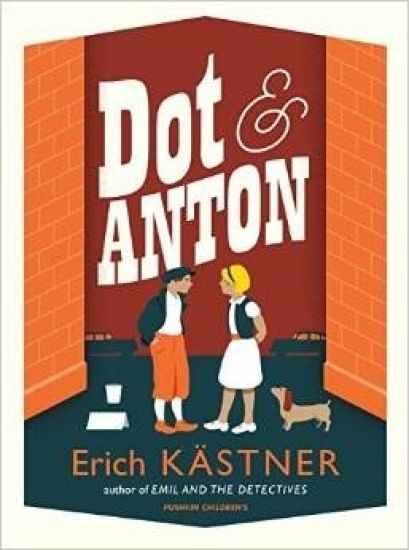
'Gadzooks!' said Dot ... 'The things that boy can do!' Dot loves play-acting, dressing up her pet dachshund Piefke and making up words like 'splentastic'. Her best friend is Anton, who lives in a little apartment and looks after his mother. They share a secret - every night, when their parents think they are asleep, they sell matches and shoelaces on the streets of Berlin with Dot's grumpy governess. But why? The answers involve a villain called 'Robert the Devil', a club-wielding maid, a wobbly tooth, a pair of silver shoes and a policeman dancing the tango, as Dot and Anton get into all sorts of scrapes and even solve a crime in this delightful, touching and hilarious adventure story.
Dot loves play-acting, dressing up her pet dachshund Piefke and making up words like 'splentastic'. Her best friend is Anton, who lives in a little apartment and looks after his mother. They share a secret - every night, when their parents think they are asleep, they sell matches and shoelaces on the streets of Berlin with Dot's grumpy governess. But why? The answers involve a villain called 'Robert the Devil', a club-wielding maid, a wobbly tooth, a pair of silver shoes and a policeman dancing the tango, as Dot and Anton get into all sorts of scrapes and even solve a crime in this delightful, touching and hilarious adventure story.
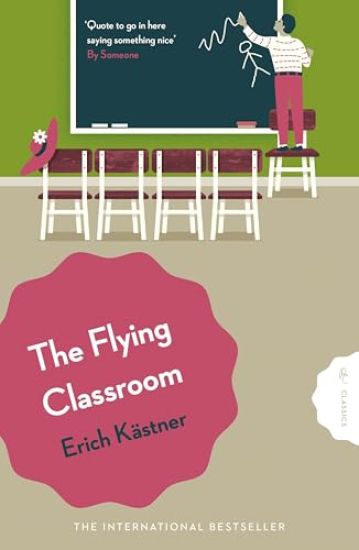
Martin's school is no ordinary school. There are snowball fights, kidnappings, cakes, a parachute jump, a mysterious man called 'No-Smoking' who lives in a railway carriage and a play about a flying classroom. As the Christmas holidays draw near, Martin and his friends - nervous Uli, cynical Sebastian, Johnny, who was rescued by a sea captain, and Matthias, who is always hungry (particularly after a meal) - are preparing for the end-of-term festivities. But there are surprises, sadness and trouble on the way - and a secret that changes everything. The Flying Classroom is a magical, thrilling and bittersweet story about friendship, fun and being brave when you are at your most scared. (It also features a calf called Eduard, but you will have to read it to find out why.)
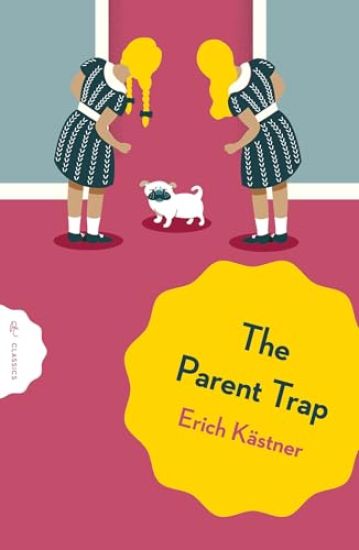
'A wonderful story brilliantly translated' Julia Eccleshare 'Warmly recommended' Irish Times Luise has ringlets. Lottie has braids. Apart from that they look exactly the same. But they have never set eyes on each other before. When the two girls meet at a summer camp and discover the secret behind their similarity, they decide to switch places. Luise will go home as Lottie, and Lottie as Luise. Everyone is fooled (apart from the dog) and the plan seems to be working - until a beautiful young woman sets her sights on Luise's father. Will the girls come clean in order to avert disaster? Funny, moving, affectionate and improbably, The Parent Trap has twice been adapted for film, and endures as one of the great classics of children's literature. Part of the new Pushkin Children's Classics series of thrilling, magical and inspiring stories from around the world, which young readers will return to time and again. Translated by Anthea Bell Erich Kästner, writer, poet and journalist, was born in Dresden in 1899. His first children's book, Emil and the Detectives, was published in 1929 and has since sold millions of copies around the world and been translated into around 60 languages. After the Nazis took power in Germany, Kästner's books were burnt and he was excluded from the writers' guild. He won many awards, including the prestigious Hans Christian Andersen Award in 1960. He died in 1974. Walter Trier was born in Prague in 1880. After moving to Berlin, he became an acclaimed cartoonist and illustrator, and Kästner's collaborator on more than a dozen children's books. Forced to emigrate under Nazi rule, he died in 1951 in Ontario, Canada. Anthea Bell was born in Suffolk in 1936. An illustrious, award-winning translator, she was best known for her translations of the much-loved Asterix books and the work of Zweig and Sebald. She died in 2018.
Alors qu'il prend le train seul pour la première fois, Émile se fait voler l'argent que sa maman lui a confié. Heureusement, il rencontre très vite de nouveaux copains à Berlin, qui ont le génie de l'organisation. Entre l'infortuné voyageur et ses amis, c'est le début d'une drôle d'aventure : le voleur ne sait pas ce qui l'attend !