Kirjojen hintavertailu. Mukana 11 244 527 kirjaa ja 12 kauppaa.

Kirjahaku

Etsi kirjoja tekijän nimen, kirjan nimen tai ISBN:n perusteella.

37 kirjaa tekijältä Erich Neumann

The Essays of Erich Neumann, Volume 3

The Essays of Erich Neumann, Volume 3

Erich Neumann

Princeton University Press
2017
pokkari
The Israeli analytical psychologist Erich Neumann, whom C. G. Jung regarded as one of his most gifted students, devoted much of his later writing to the theme of creativity. This is the third volume of Neumann's essays on that subject. Neumann found his examples not only in the work of writers and artists--William Blake, Goethe, Rilke, Kafka, Klee, Chagall, Picasso, Trakl--but as well in that of physicists, biologists, psychiatrists, and philosophers. Confronting the problem of portraying men and women as creative beings, Neumann expanded the concepts of Jungian psychology with a more comprehensive definition of the archetype and a new concept--"unitary reality." Whether or not humanity can be restored to health from its present situation as a self-endangered species depends, according to Neumann, on whether we can experience ourselves as truly creative, in touch with our own being and the world's being. The six essays comprising this volume--"The Psyche and the Transformation of the Reality Planes," "The Experience of the Unitary Reality," "Creative Man and the 'Great Experience,'" "Man and Meaning," "Peace as the Symbol of Life," and "The Psyche as the Place of Creation"--all originated as lectures at the Eranos Conferences in the years 1952 to 1960. Originally published in 1989. The Princeton Legacy Library uses the latest print-on-demand technology to again make available previously out-of-print books from the distinguished backlist of Princeton University Press. These editions preserve the original texts of these important books while presenting them in durable paperback and hardcover editions. The goal of the Princeton Legacy Library is to vastly increase access to the rich scholarly heritage found in the thousands of books published by Princeton University Press since its founding in 1905.
The Essays of Erich Neumann, Volume 2

The Essays of Erich Neumann, Volume 2

Erich Neumann

Princeton University Press
2017
pokkari
This selection of essays by one of C. G. Jung's favorite and most creative students explores important connections between analytical psychology and the study of literature and art. Originally published in 1982. The Princeton Legacy Library uses the latest print-on-demand technology to again make available previously out-of-print books from the distinguished backlist of Princeton University Press. These editions preserve the original texts of these important books while presenting them in durable paperback and hardcover editions. The goal of the Princeton Legacy Library is to vastly increase access to the rich scholarly heritage found in the thousands of books published by Princeton University Press since its founding in 1905.
The Essays of Erich Neumann, Volume 3

The Essays of Erich Neumann, Volume 3

Erich Neumann

Princeton University Press
2017
sidottu
The Israeli analytical psychologist Erich Neumann, whom C. G. Jung regarded as one of his most gifted students, devoted much of his later writing to the theme of creativity. This is the third volume of Neumann's essays on that subject. Neumann found his examples not only in the work of writers and artists--William Blake, Goethe, Rilke, Kafka, Klee, Chagall, Picasso, Trakl--but as well in that of physicists, biologists, psychiatrists, and philosophers. Confronting the problem of portraying men and women as creative beings, Neumann expanded the concepts of Jungian psychology with a more comprehensive definition of the archetype and a new concept--"unitary reality." Whether or not humanity can be restored to health from its present situation as a self-endangered species depends, according to Neumann, on whether we can experience ourselves as truly creative, in touch with our own being and the world's being. The six essays comprising this volume--"The Psyche and the Transformation of the Reality Planes," "The Experience of the Unitary Reality," "Creative Man and the 'Great Experience,'" "Man and Meaning," "Peace as the Symbol of Life," and "The Psyche as the Place of Creation"--all originated as lectures at the Eranos Conferences in the years 1952 to 1960. Originally published in 1989. The Princeton Legacy Library uses the latest print-on-demand technology to again make available previously out-of-print books from the distinguished backlist of Princeton University Press. These editions preserve the original texts of these important books while presenting them in durable paperback and hardcover editions. The goal of the Princeton Legacy Library is to vastly increase access to the rich scholarly heritage found in the thousands of books published by Princeton University Press since its founding in 1905.
The Essays of Erich Neumann, Volume 2

The Essays of Erich Neumann, Volume 2

Erich Neumann

PRINCETON UNIVERSITY PRESS
2017
sidottu
This selection of essays by one of C. G. Jung's favorite and most creative students explores important connections between analytical psychology and the study of literature and art. Originally published in 1982. The Princeton Legacy Library uses the latest print-on-demand technology to again make available previously out-of-print books from the distinguished backlist of Princeton University Press. These editions preserve the original texts of these important books while presenting them in durable paperback and hardcover editions. The goal of the Princeton Legacy Library is to vastly increase access to the rich scholarly heritage found in the thousands of books published by Princeton University Press since its founding in 1905.
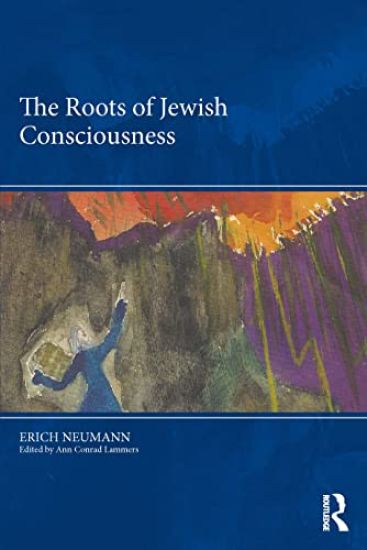
The Roots of Jewish Consciousness (2 Volume set)
The Roots of Jewish Consciousness, Volume One: Revelation and Apocalypse is the first volume, fully annotated, of a major, previously unpublished, two-part work by Erich Neumann (1905-1960). It was written between 1934 and 1940, after Neumann, then a young philosopher and physician and freshly trained as a disciple of Jung, fled Berlin to settle in Tel Aviv. He finished the second volume of this work at the end of World War Two. Although he never published either volume, he kept them the rest of his life. The Roots of Jewish Consciousness, Volume Two: Hasidism is the second volume, fullyannotated, of a major, previously unpublished, two-part work by Erich Neumann (1905-1960). It was written between 1940 and 1945, after Neumann, then a young philosopher and physician and freshly trained as a disciple of Jung, fled Berlin to settle in Tel Aviv. He finished this work at the end of World War Two. Although he never published it, he kept it the rest of his life.These volumes anticipate Neumann’s later works, including Depth Psychology and a New Ethic, The Origins and History of Consciousness, and The Great Mother. His signature contribution to analytical psychology, the concept of the ego-Self axis, arises indirectly in Volume One, folded into Neumann’s theme of the tension between earth and YHWH. In Volume Two, Hasidism, his concept of the ego-Self axis is developed in clearly psychological terms. Four previously unpublished essays, appended to Volume Two, illustrate Neumann’s developmental psychology, including his theme of primary and secondary personalisation. This unique work will appeal to Jungian analysts and psychotherapists in training and in practice, historians of psychology, Jewish scholars, biblical historians, teachers of comparative religion, as well as academics and students.
The Child

The Child

Erich Neumann

Routledge
2019
sidottu
The Child is an examination of the structure and dynamics of the earliest developments of ego and individuality. In it we progress from the primal relationship of a child and mother through to the emergence of the ego-Self constellation, via the child's relationship to its own body, its Self, the Thou and being-in-the-world. We move from t
Amor And Psyche

Amor And Psyche

Erich Neumann

Routledge
1999
sidottu
First Published in 1999.This is Volume V of twelve in the Analytical Psychology series. Written in 1956, this text provides the tale of Amor and Psyche from the Metamorphoses or Golden Ass of Lucius Apuleius with a commentary on the psychic development of the feminine.
Amor And Psyche

Amor And Psyche

Erich Neumann

Routledge
2013
nidottu
First Published in 1999.This is Volume V of twelve in the Analytical Psychology series. Written in 1956, this text provides the tale of Amor and Psyche from the Metamorphoses or Golden Ass of Lucius Apuleius with a commentary on the psychic development of the feminine.
Amor and Psyche

Amor and Psyche

Erich Neumann

Princeton University Press
1971
pokkari
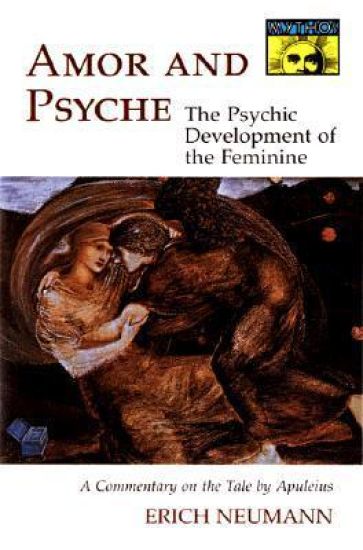
The renowned tale of Amor and Psyche, from Apuleius's second-century Latin novel The Golden Ass, is one of the most charming fragments of classical literature. Neumann chose it as the exemplar of an unusual study of feminine psychology. Unfolding the spiritual and mythical background of the pagan narrative, he shows how the contest between the mortal maid Psyche and the great goddess Aphrodite over the god Amor--Aphrodite's son, Psyche's husband--yields surprising and valuable insights into the psychic life of women.
The Fear of the Feminine

The Fear of the Feminine

Erich Neumann

Princeton University Press
1994
pokkari
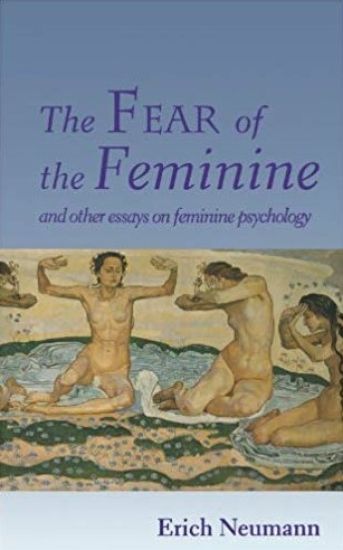
These essays by the famous analytical psychologist and student of creativity Erich Neumann belong in the context of the depth psychology of culture and reveal a prescient concern about the one-sidedness of patriarchal Western civilization. Neumann recommended a "cultural therapy" that he thought would redress a "fundamental ignorance" about feminine and masculine psychology, and he looked for societal healing to a "matriarchal consciousness" that forms the bridge between the feminine and the creative. Brought together here for the first time, the essays in the book discuss the psychological stages of woman's development, the moon and matriarchal consciousness, Mozart's Magic Flute, the meaning of the earth archetype for modern times, and the fear of the feminine. In Mozart's fantastic world, Neumann saw a true Auseinandersetzung--the conflict and coming-to-terms with each other of the matriarchal and the patriarchal worlds. Developing such a synthesis of the feminine and the masculine in the psychic reality of the individual and of the collective was, he argued, one of the fundamental, future-oriented tasks of both the society and the individual.
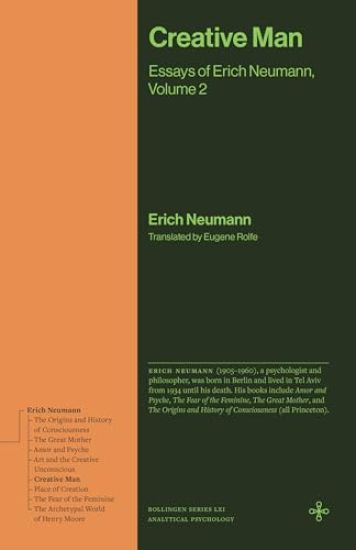
Creative Man

Creative Man

Erich Neumann

PRINCETON UNIVERSITY PRESS
2026
sidottu
An essential exploration of creativity by one of the twentieth century’s foremost Jungian psychologistsThough said to be C. G. Jung’s favorite and most innovative student, Erich Neumann provoked controversy within the Jungian community. While his work presents a wealth of material illustrating Jung’s ideas, his interpretations go far beyond those ideas to open important avenues between analytical psychology and the study of literature and art. This landmark book brings together five of his most illuminating essays on creativity. Written over a span of years about diverse personalities—Franz Kafka, Marc Chagall, Georg Trakl, Sigmund Freud, and Jung—these essays share a common theme: the relationship between the personal and the transpersonal, the ego and the archetype. An engaging analysis of the psyche as the source of religious and artistic creation, Creative Man asks how creativity can best be fostered, how the feminine stimulates creativity in men as well as women, and how artistic creation, but also the history of human consciousness more broadly, reflect this ongoing creative movement.
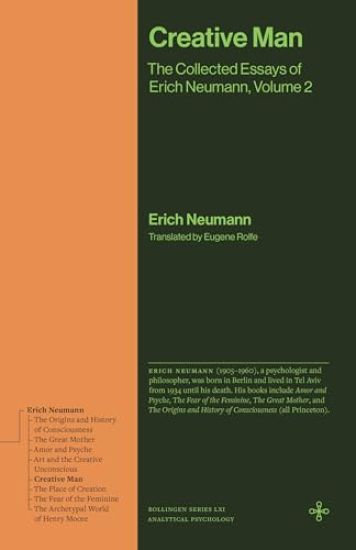
Creative Man

Creative Man

Erich Neumann

PRINCETON UNIVERSITY PRESS
2026
pokkari
An essential exploration of creativity by one of the twentieth century’s foremost Jungian psychologistsThough said to be C. G. Jung’s favorite and most innovative student, Erich Neumann provoked controversy within the Jungian community. While his work presents a wealth of material illustrating Jung’s ideas, his interpretations go far beyond those ideas to open important avenues between analytical psychology and the study of literature and art. This landmark book brings together five of his most illuminating essays on creativity. Written over a span of years about diverse personalities—Franz Kafka, Marc Chagall, Georg Trakl, Sigmund Freud, and Jung—these essays share a common theme: the relationship between the personal and the transpersonal, the ego and the archetype. An engaging analysis of the psyche as the source of religious and artistic creation, Creative Man asks how creativity can best be fostered, how the feminine stimulates creativity in men as well as women, and how artistic creation, but also the history of human consciousness more broadly, reflect this ongoing creative movement.
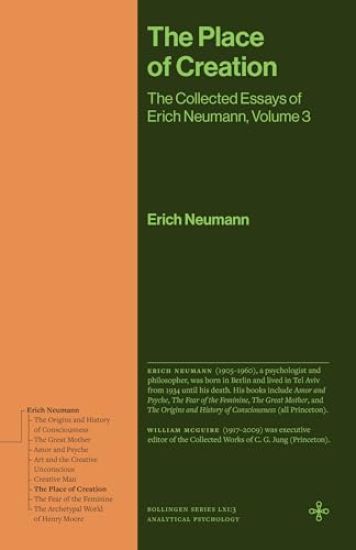
The Place of Creation

The Place of Creation

Erich Neumann

PRINCETON UNIVERSITY PRESS
2026
sidottu
Six essays on creativity from one of the twentieth century’s foremost Jungian psychologistsErich Neumann, whom C. G. Jung regarded as one of his most gifted students, devoted much of his later writing to the theme of creativity. This landmark book brings together six of Neumann's groundbreaking essays on the subject. He finds his examples not only in the work of writers and artists—William Blake, Johann Wolfgang von Goethe, Rainer Maria Rilke, Franz Kafka, Paul Klee, Marc Chagall, Pablo Picasso, Georg Trakl—but also in that of physicists, biologists, psychiatrists, and philosophers. Confronting the problem of portraying men and women as creative beings, Neumann expands the concepts of Jungian psychology with a more comprehensive definition of the archetype as well as a new concept—unitary reality. The Place of Creation shows how our future as a species depends on whether we can experience ourselves as truly creative, in touch with our own being and that of the world.
The Place of Creation

The Place of Creation

Erich Neumann

PRINCETON UNIVERSITY PRESS
2026
pokkari
Six essays on creativity from one of the twentieth century’s foremost Jungian psychologistsErich Neumann, whom C. G. Jung regarded as one of his most gifted students, devoted much of his later writing to the theme of creativity. This landmark book brings together six of Neumann's groundbreaking essays on the subject. He finds his examples not only in the work of writers and artists—William Blake, Johann Wolfgang von Goethe, Rainer Maria Rilke, Franz Kafka, Paul Klee, Marc Chagall, Pablo Picasso, Georg Trakl—but also in that of physicists, biologists, psychiatrists, and philosophers. Confronting the problem of portraying men and women as creative beings, Neumann expands the concepts of Jungian psychology with a more comprehensive definition of the archetype as well as a new concept—unitary reality. The Place of Creation shows how our future as a species depends on whether we can experience ourselves as truly creative, in touch with our own being and that of the world.
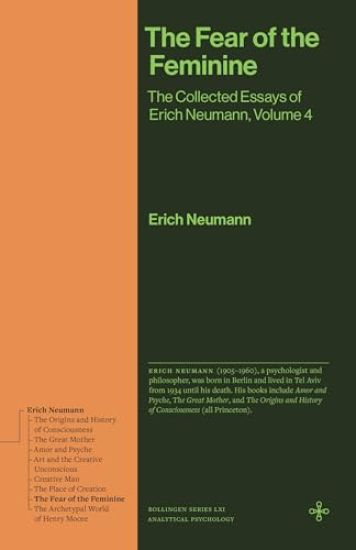
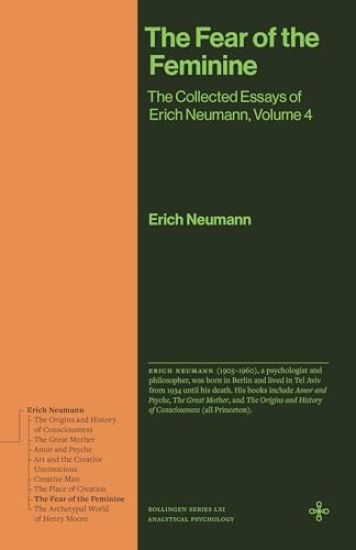
The Fear of the Feminine

The Fear of the Feminine

Erich Neumann

PRINCETON UNIVERSITY PRESS
2026
sidottu
An insightful exploration of the unconscious fear of the feminine by a pioneering Jungian psychologistErich Neumann was one of C. G. Jung’s most brilliant students and a renowned practitioner of analytical psychology in his own right. This landmark book brings together five of his most illuminating essays on feminine psychology. Neumann discusses the psychological stages of woman’s development, the moon and matriarchal consciousness, Mozart’s Magic Flute, the meaning of the earth archetype for modern times, and the fear of the feminine. He sees in Mozart’s fantastical realm a clash and true coming to terms of the matriarchal and patriarchal worlds. Reflecting a timely concern about the one-sidedness of patriarchal Western civilization, The Fear of the Feminine explains why a synthesis of the feminine and the masculine in the psychic reality of both the individual and the collective is one of the fundamental tasks of contemporary society.
The Fear of the Feminine

The Fear of the Feminine

Erich Neumann

PRINCETON UNIVERSITY PRESS
2026
pokkari
An insightful exploration of the unconscious fear of the feminine by a pioneering Jungian psychologistErich Neumann was one of C. G. Jung’s most brilliant students and a renowned practitioner of analytical psychology in his own right. This landmark book brings together five of his most illuminating essays on feminine psychology. Neumann discusses the psychological stages of woman’s development, the moon and matriarchal consciousness, Mozart’s Magic Flute, the meaning of the earth archetype for modern times, and the fear of the feminine. He sees in Mozart’s fantastical realm a clash and true coming to terms of the matriarchal and patriarchal worlds. Reflecting a timely concern about the one-sidedness of patriarchal Western civilization, The Fear of the Feminine explains why a synthesis of the feminine and the masculine in the psychic reality of both the individual and the collective is one of the fundamental tasks of contemporary society.