Kirjojen hintavertailu. Mukana 11 515 878 kirjaa ja 12 kauppaa.

Kirjahaku

Etsi kirjoja tekijän nimen, kirjan nimen tai ISBN:n perusteella.

4 kirjaa tekijältä Erick D. Langer

Expecting Pears from an Elm Tree

Expecting Pears from an Elm Tree

Erick D. Langer

Duke University Press
2009
sidottu
Missions played a vital role in frontier development in Latin America throughout the nineteenth and twentieth centuries. They were key to the penetration of national societies into the regions and indigenous lands that the nascent republics claimed as their jurisdictions. In Expecting Pears from an Elm Tree, Erick D. Langer examines one of the most important Catholic mission systems in republican-era Latin America, the Franciscan missions among the Chiriguano Indians in southeastern Bolivia. Using that mission system as a model for understanding the relationship between indigenous peoples and missionaries in the post-independence period, Langer explains how the missions changed over their lifespan and how power shifted between indigenous leaders and the missionaries in an ongoing process of negotiation. Expecting Pears from an Elm Tree is based on twenty years of research, including visits to the sites of nearly every mission discussed and interviews with descendants of mission Indians, Indian chiefs, Franciscan friars, mestizo settlers, and teachers. Langer chronicles how, beginning in the 1840s, the establishment of missions fundamentally changed the relationship between the Chiriguano villages and national society. He looks at the Franciscan missionaries’ motives, their visions of ideal missions, and the realities they faced. He also examines mission life from the Chiriguano point of view, considering their reasons for joining missions and their resistance to conversion, as well as the interrelated issues of Indian acculturation and the development of the mission economy, particularly in light of the relatively high rates of Indian mortality and outmigration. Expanding his focus, Langer delves into the complex interplay of Indians, missionaries, frontier society, and the national government until the last remaining missions were secularized in 1949. He concludes with a comparative analysis between colonial and republican-era missions throughout Latin America.
Expecting Pears from an Elm Tree

Expecting Pears from an Elm Tree

Erick D. Langer

Duke University Press
2009
pokkari
Missions played a vital role in frontier development in Latin America throughout the nineteenth and twentieth centuries. They were key to the penetration of national societies into the regions and indigenous lands that the nascent republics claimed as their jurisdictions. In Expecting Pears from an Elm Tree, Erick D. Langer examines one of the most important Catholic mission systems in republican-era Latin America, the Franciscan missions among the Chiriguano Indians in southeastern Bolivia. Using that mission system as a model for understanding the relationship between indigenous peoples and missionaries in the post-independence period, Langer explains how the missions changed over their lifespan and how power shifted between indigenous leaders and the missionaries in an ongoing process of negotiation. Expecting Pears from an Elm Tree is based on twenty years of research, including visits to the sites of nearly every mission discussed and interviews with descendants of mission Indians, Indian chiefs, Franciscan friars, mestizo settlers, and teachers. Langer chronicles how, beginning in the 1840s, the establishment of missions fundamentally changed the relationship between the Chiriguano villages and national society. He looks at the Franciscan missionaries’ motives, their visions of ideal missions, and the realities they faced. He also examines mission life from the Chiriguano point of view, considering their reasons for joining missions and their resistance to conversion, as well as the interrelated issues of Indian acculturation and the development of the mission economy, particularly in light of the relatively high rates of Indian mortality and outmigration. Expanding his focus, Langer delves into the complex interplay of Indians, missionaries, frontier society, and the national government until the last remaining missions were secularized in 1949. He concludes with a comparative analysis between colonial and republican-era missions throughout Latin America.
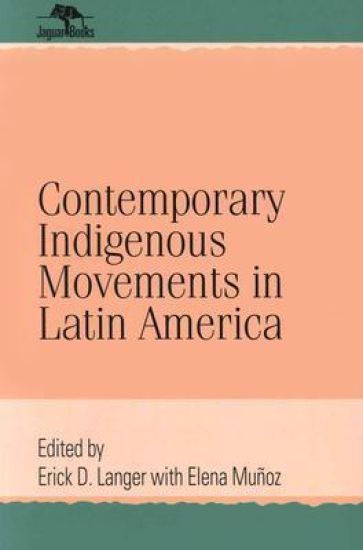
Contemporary Indigenous Movements in Latin America

Contemporary Indigenous Movements in Latin America

Erick D. Langer

Rowman Littlefield
2003
nidottu
The efforts of Indians in Latin America have gained momentum and garnered increasing attention in the last decade as they claim rights to their land and demand full participation in the political process. This issue is of rising importance as ecological concerns and autochtonous movements gain a foothold in Latin America, transforming the political landscape into one in which multiethnic democracies hold sway. In some cases, these movements have led to violent outbursts that severely affected some nations, such as the 1992 and 1994 Indian uprisings in Ecuador. In most cases, however, grassroots efforts have realized success without bloodshed. An Aymara Indian, head of an indigenous-rights political party, became Vice President of Bolivia. Brazilian lands are being set aside for indigenous groups not as traditional reservations where the government attempts to "civilize" the hunters and gatherers, but where the government serves only to keep loggers, gold miners, and other interlopers out of tribal lands. Contemporary Indigenous Movements in Latin America is a collection of essays compiled by Professor Erick D. Langer that brings together-for the first time-contributions on indigenous movements throughout Latin America from all regions. Focusing on the 1990s, Professor Langer illustrates the range and increasing significance of the Indian movements in Latin America. The volume addresses the ways in which Indians have confronted the political, social, and economic problems they face today, and shows the diversity of the movements, both in lowlands and in highlands, tribal peoples, and peasants. The book presents an analytical overview of these movements, as well as a vision of how and why they have become so important in the late twentieth century. Contemporary Indigenous Movements in Latin America is important for those interested in Latin American studies, including Latin American civilization, Latin American anthropology, contemporary issues in Latin America, and ethnic studies.