Kirjojen hintavertailu. Mukana 11 244 527 kirjaa ja 12 kauppaa.

Kirjahaku

Etsi kirjoja tekijän nimen, kirjan nimen tai ISBN:n perusteella.

3 kirjaa tekijältä Erick Jones

Reshore

Reshore

Erick Jones

Bookbaby
2025
sidottu
This book is my attempt to answer that question. It's a story about supply chains, but it's also a story about how we think. How do we balance speed with resilience? Efficiency with equity? Certainty with uncertainty? As I've learned, the answers to these questions lie not just in technology or policy but in trust.
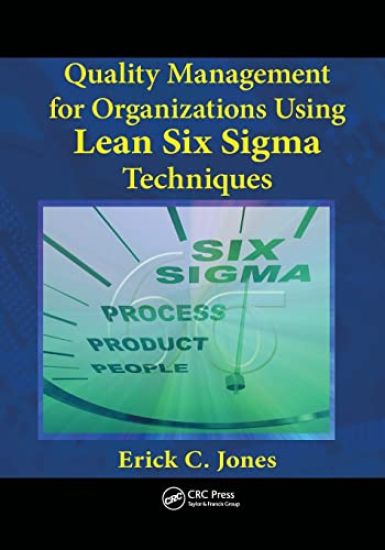
Quality Management for Organizations Using Lean Six Sigma Techniques
The next step in the evolution of the organizational quality field, Lean Six Sigma (LSS) has come of age. However, many challenges to using LSS in lieu of, in conjunction with, or integrated with other quality initiatives remain. An update on the current focus of quality management, Quality Management for Organizations Using Lean Six Sigma Techniques covers the concepts and principles of Lean Six Sigma and its origins in quality, total quality management (TQM), and statistical process control (SPC), and then explores how it can be integrated into manufacturing, logistics, and healthcare operations. The book presents the background on quality and Lean Six Sigma (LSS) techniques and tools, previous history of LSS in manufacturing, and current applications of LSS in operations such as logistics and healthcare. It provides a decision model for choosing whether to use LSS or other quality initiatives, which projects should be selected and prioritized, and what to do with non-LSS projects. The author also details an integration model for integrating and developing integrated LSS and other quality initiatives, and common mathematical techniques that you can use for performing LSS statistical calculations. He describes methods to attain the different Six Sigma certifications, and closes with discussion of future directions of Lean Six Sigma and quality.Case studies illustrate the integration of LSS principles into other quality initiatives, highlighting best practices as well as successful and failed integrations. This guide gives you a balanced description of the good, bad, and ugly in integrating LSS into modern operations, giving you the understanding necessary to immediately apply the concepts to your quality processes.
Quality Management for Organizations Using Lean Six Sigma Techniques
The next step in the evolution of the organizational quality field, Lean Six Sigma (LSS) has come of age. However, many challenges to using LSS in lieu of, in conjunction with, or integrated with other quality initiatives remain. An update on the current focus of quality management, Quality Management for Organizations Using Lean Six Sigma Techniques covers the concepts and principles of Lean Six Sigma and its origins in quality, total quality management (TQM), and statistical process control (SPC), and then explores how it can be integrated into manufacturing, logistics, and healthcare operations. The book presents the background on quality and Lean Six Sigma (LSS) techniques and tools, previous history of LSS in manufacturing, and current applications of LSS in operations such as logistics and healthcare. It provides a decision model for choosing whether to use LSS or other quality initiatives, which projects should be selected and prioritized, and what to do with non-LSS projects. The author also details an integration model for integrating and developing integrated LSS and other quality initiatives, and common mathematical techniques that you can use for performing LSS statistical calculations. He describes methods to attain the different Six Sigma certifications, and closes with discussion of future directions of Lean Six Sigma and quality.Case studies illustrate the integration of LSS principles into other quality initiatives, highlighting best practices as well as successful and failed integrations. This guide gives you a balanced description of the good, bad, and ugly in integrating LSS into modern operations, giving you the understanding necessary to immediately apply the concepts to your quality processes.