Kirjojen hintavertailu. Mukana 12 390 323 kirjaa ja 12 kauppaa.

Kirjahaku

Etsi kirjoja tekijän nimen, kirjan nimen tai ISBN:n perusteella.

11 kirjaa tekijältä Erika Dyck

Psychedelics

Psychedelics

Erika Dyck

MIT PRESS LTD
2024
nidottu
A gorgeously illustrated journey through psychedelics and their global history that explores how psychedelic visions have inspired and given meaning to humans throughout time.Interest in psychedelics has grown considerably in recent years—one might even say psychedelics are experiencing a renaissance. But these mind-altering plants have always been with us. They have a rich and controversial history, in fact: plumbed from the depths of ancient Greek culture, infused with Christian symbols of sacrament, enriched by Buddhist philosophies, protected through Indigenous ceremonies, and, by the latter part of the twentieth century, catapulted into cultural consciousness through science, music, posters, blotter art, and fashion. In Psychedelics: A Visual Odyssey, Erika Dyck takes readers on an epic visual trip through some of the diverse ways that our fascination with psychedelics have been imagined throughout history.Blending academic rigor with rich imagery from around the globe, Psychedelics goes beyond the expected terrain of describing hallucinations. It reveals not only how psychedelic plants have been illustrated and understood, but also how these plants and chemical synthetics have inspired visual representations of health, fear, peace, colonial resistance, creativity, and more. A stunningly beautiful and comprehensive deep dive into the world of psychedelics, Psychedelics: A Visual Odyssey will inspire everyone from the curious general reader to the seasoned psychonaut.

Psychedelic Psychiatry

Psychedelic Psychiatry

Erika Dyck

Johns Hopkins University Press
2008
sidottu
LSD's short but colorful history in North America carries with it the distinct cachet of counterculture and government experimentation. The truth about this mind-altering chemical cocktail is far more complex-and less controversial-than generally believed. Psychedelic Psychiatry is the tale of medical researchers working to understand LSD's therapeutic properties just as escalating anxieties about drug abuse in modern society laid the groundwork for the end of experimentation at the edge of psychopharmacology. Historian Erika Dyck deftly recasts our understanding of LSD to show it as an experimental substance, a medical treatment, and a tool for exploring psychotic perspectives-as well as a recreational drug. She recounts the inside story of the early days of LSD research in small-town, prairie Canada, when Humphry Osmond and Abram Hoffer claimed incredible advances in treating alcoholism, understanding schizophrenia and other psychoses, and achieving empathy with their patients. In relating the drug's short, strange trip, Dyck explains how concerns about countercultural trends led to the criminalization of LSD and other so-called psychedelic drugs-concordantly opening the way for an explosion in legal prescription pharmaceuticals-and points to the recent re-emergence of sanctioned psychotropic research among psychiatric practitioners. This challenge to the prevailing wisdom behind drug regulation and addiction therapy provides a historical corrective to our perception of LSD's medical efficacy.
Facing Eugenics

Facing Eugenics

Erika Dyck

University of Toronto Press
2013
pokkari
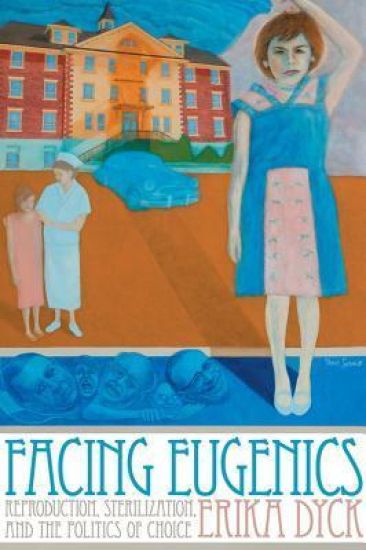
Facing Eugenics is a social history of sexual sterilization operations in twentieth-century Canada. Looking at real-life experiences of men and women who, either coercively or voluntarily, participated in the largest legal eugenics program in Canada, it considers the impact of successive legal policies and medical practices on shaping our understanding of contemporary reproductive rights. The book also provides deep insights into the broader implications of medical experimentation, institutionalization, and health care in North America. Erika Dyck uses a range of historical evidence, including medical files, court testimony, and personal records to place mental health and intelligence at the centre of discussions regarding reproductive fitness. Examining acts of resistance alongside heavy-handed decisions to sterilize people considered “unfit,” Facing Eugenics illuminates how reproductive rights fit into a broader discussion of what constitutes civil liberties, modern feminism, and contemporary psychiatric survivor and disability activism.
Facing Eugenics

Facing Eugenics

Erika Dyck

University of Toronto Press
2013
sidottu
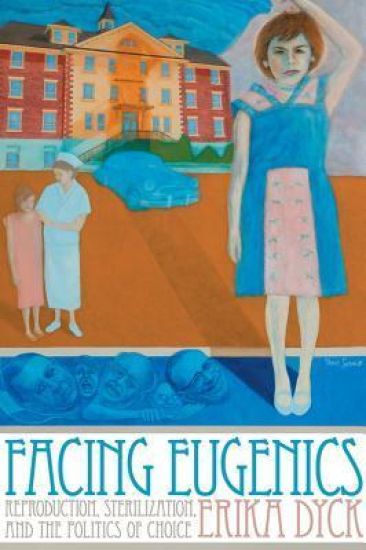
Facing Eugenics is a social history of sexual sterilization operations in twentieth-century Canada. Looking at real-life experiences of men and women who, either coercively or voluntarily, participated in the largest legal eugenics program in Canada, it considers the impact of successive legal policies and medical practices on shaping our understanding of contemporary reproductive rights. The book also provides deep insights into the broader implications of medical experimentation, institutionalization, and health care in North America. Erika Dyck uses a range of historical evidence, including medical files, court testimony, and personal records to place mental health and intelligence at the centre of discussions regarding reproductive fitness. Examining acts of resistance alongside heavy-handed decisions to sterilize people considered “unfit,” Facing Eugenics illuminates how reproductive rights fit into a broader discussion of what constitutes civil liberties, modern feminism, and contemporary psychiatric survivor and disability activism.
Challenging Choices

Challenging Choices

Erika Dyck; Maureen Lux

McGill-Queen's University Press
2020
sidottu
Between the decriminalization of contraception in 1969 and the introduction of the Charter of Rights and Freedoms in 1982, a landmark decade in the struggle for women's rights, public discourse about birth control and family planning was transformed. At the same time, a transnational conversation about the "population bomb" that threatened global famine caused by overpopulation embraced birth control technologies for a different set of reasons, revisiting controversial ideas about eugenics, heredity, and degeneration. In Challenging Choices Erika Dyck and Maureen Lux argue that reproductive politics in 1970s Canada were shaped by competing ideologies on global population control, poverty, personal autonomy, race, and gender. For some Canadians the 1970s did not bring about an era of reproductive liberty but instead reinforced traditional power dynamics and paternalistic structures of authority. Dyck and Lux present case studies of four groups of Canadians who were routinely excluded from progressive, reformist discourse: Indigenous women and their communities, those with intellectual and physical disabilities, teenage girls, and men. In different ways, each faced new levels of government regulation, scrutiny, or state intervention as they negotiated their reproductive health, rights, and responsibilities in the so-called era of sexual liberation. While acknowledging the reproductive rights gains that were made in the 1970s, the authors argue that the legal changes affected Canadians differently depending on age, social position, gender, health status, and cultural background. Illustrating the many ways to plan a modern family, these case studies reveal how the relative merits of life and choice were pitted against each other to create a new moral landscape for evaluating classic questions about population control.
Challenging Choices

Challenging Choices

Erika Dyck; Maureen Lux

McGill-Queen's University Press
2020
nidottu
Between the decriminalization of contraception in 1969 and the introduction of the Charter of Rights and Freedoms in 1982, a landmark decade in the struggle for women's rights, public discourse about birth control and family planning was transformed. At the same time, a transnational conversation about the "population bomb" that threatened global famine caused by overpopulation embraced birth control technologies for a different set of reasons, revisiting controversial ideas about eugenics, heredity, and degeneration. In Challenging Choices Erika Dyck and Maureen Lux argue that reproductive politics in 1970s Canada were shaped by competing ideologies on global population control, poverty, personal autonomy, race, and gender. For some Canadians the 1970s did not bring about an era of reproductive liberty but instead reinforced traditional power dynamics and paternalistic structures of authority. Dyck and Lux present case studies of four groups of Canadians who were routinely excluded from progressive, reformist discourse: Indigenous women and their communities, those with intellectual and physical disabilities, teenage girls, and men. In different ways, each faced new levels of government regulation, scrutiny, or state intervention as they negotiated their reproductive health, rights, and responsibilities in the so-called era of sexual liberation. While acknowledging the reproductive rights gains that were made in the 1970s, the authors argue that the legal changes affected Canadians differently depending on age, social position, gender, health status, and cultural background. Illustrating the many ways to plan a modern family, these case studies reveal how the relative merits of life and choice were pitted against each other to create a new moral landscape for evaluating classic questions about population control.
Managing Madness

Managing Madness

Erika Dyck; Alexander Deighton

University of Manitoba Press
2017
nidottu
The Saskatchewan Mental Hospital at Weyburn has played a significant role in the history of psychiatric services, mental health research, and providing care in the community. Its history provides a window to the changing nature of mental health services over the 20th century.Built in 1921, Saskatchewan Mental Hospital was considered the last asylum in North America and the largest facility of its kind in the British Commonwealth. A decade later the Canadian Committee for Mental Hygiene cited it as one of the worst facilities in the country, largely due to extreme overcrowding. In the 1950s the Saskatchewan Mental Hospital again attracted international attention for engaging in controversial therapeutic interventions, including treatments using LSD. In the 1960s, sweeping healthcare reforms took hold in the province and mental health institutions underwent dramatic changes as they began transferring patients into communities. As the patient and staff population shrunk, the once palatial building fell into disrepair, the asylum’s expansive farmland went out of cultivation, and mental health services folded into a complicated web of social and correctional services.Erika Dyck’s Managing Madness examines an institution that housed people we struggle to understand, help, or even try to change.
The Acid Room

The Acid Room

Jesse Donaldson; Erika Dyck

Anvil Press Publishers Inc
2022
nidottu
From the street, New Westminster's Hollywood Hospital didn't look like much - just a rambling white mansion, mostly obscured behind the holly trees from which it took its name. But, between 1957 and 1968, it was the site of more than 6000 supervised acid trips, as part of the burgeoning (and controversial) field of psychedelic psychiatry. Under the care of Medical Director J Ross MacLean, and ex-spy/researcher Al "Captain Trips" Hubbard, it became a mecca for alcoholics, anxiety patients, and unhappy couples (as well as celebrities like Andy Williams), its unorthodox methods boasting a success rate of nearly 80%. But the same media attention that brought the hospital to prominence also assured its downfall, as prohibition forces drove their work underground for more than 50 years. Written by 49.2 regular Jesse Donaldson and academic historian Erika Dyck, The Acid Room takes readers into the hospital's inner sanctum, charting its meteoric rise and fall as it opened up brave new worlds in medicine, and put Canada at the forefront of a movement that is only now being fully explored.