Kirjojen hintavertailu. Mukana 11 342 296 kirjaa ja 12 kauppaa.

Kirjahaku

Etsi kirjoja tekijän nimen, kirjan nimen tai ISBN:n perusteella.

14 kirjaa tekijältä Erika Rummel

The Confessionalization of Humanism in Reformation Germany

The Confessionalization of Humanism in Reformation Germany

Erika Rummel

Oxford University Press Inc
2000
sidottu
A great deal has been written about the influence of humanism on the Reformation. The present study reverses the question, asking: how did the Reformation affect humanism? Although it is true that humanism influenced the course of the Reformation, says Erika Rummel, the dynamics of the relationship are better described by saying that humanism was co-opted, perhaps even exploited, in the religious debate. Both Reformers and Catholic reactionaries took from humanism what was useful for the advancement of their cause and suppressed what was unsuited to their purpose.
The Case Against Johann Reuchlin

The Case Against Johann Reuchlin

Erika Rummel

University of Toronto Press
2002
sidottu
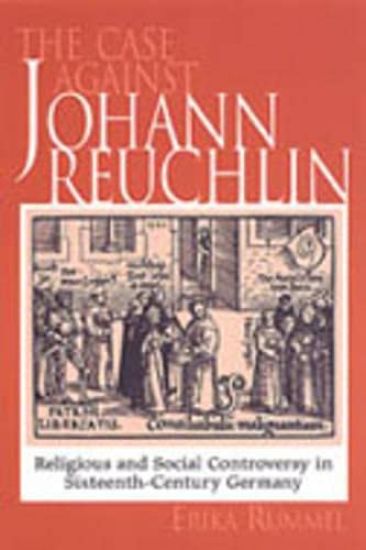
The case of Johann Reuchlin, one of the best-known controversies of the 16th century, has been interpreted in many ways: as a case of anti-Semitism, a controversy between humanists and scholastics, or a case foreshadowing the Reformation debate. The last interpretation was facilitated by Luther himself, who repeatedly linked his case with that of the biblical humanists Lefevre, Erasmus, and Reuchlin. In this lively critical analysis, Erika Rummel describes how the second interpretation, which was promoted in the 19th century, was replaced after WWII by a new sensitivity toward the anti-Semitic elements of the affair. More recently, however, the favoured approach is a more nuanced interpretation, acknowledging that the controversy is informed by a combination of social and intellectual currents and reflects both anti-Semitism and academic strife. The section containing the analysis is followed by documents illustrating the case, some of them translated for the first time into English.
The Case Against Johann Reuchlin

The Case Against Johann Reuchlin

Erika Rummel

University of Toronto Press
2002
pokkari
The case of Johann Reuchlin, one of the best-known controversies of the 16th century, has been interpreted in many ways: as a case of anti-Semitism, a controversy between humanists and scholastics, or a case foreshadowing the Reformation debate. The last interpretation was facilitated by Luther himself, who repeatedly linked his case with that of the biblical humanists Lefevre, Erasmus, and Reuchlin. In this lively critical analysis, Erika Rummel describes how the second interpretation, which was promoted in the 19th century, was replaced after WWII by a new sensitivity toward the anti-Semitic elements of the affair. More recently, however, the favoured approach is a more nuanced interpretation, acknowledging that the controversy is informed by a combination of social and intellectual currents and reflects both anti-Semitism and academic strife. The section containing the analysis is followed by documents illustrating the case, some of them translated for the first time into English.
Scheming Papists and Lutheran Fools

Scheming Papists and Lutheran Fools

Erika Rummel

Fordham University Press
1993
sidottu
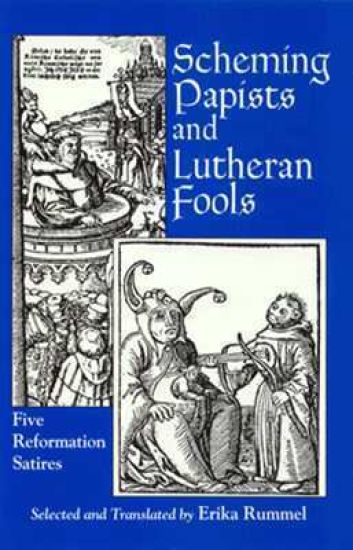
This volume is a collection of five satires from the Reformation period, written between 1517 and 1526. In her Introduction to the work, Rummel explains that the battle between reformers and champions of the old faith was waged on many fronts, "not only by preachers thundering from the pulpits, theologians facing each other in acrimonious disputations, and church authorities issuing censures and condemnations." This collection focuses on the impact and importance of a supporting cast of satirists whose ad hoc productions reached a wider audience, in a more visceral manner, than the rational approach which typified scholarly theological arguments. Rummel explains: "Satire, a genre that requires finely honed language skills, was the preferred weapon of the humanists, who by and large sympathizes with the reformers." The humanists and reformers were often so closely associated in the reading public's mind that the earliest phase of the Reformation was sometimes interpreted as a quarrel between philogists and theologians, a manifestation of professional jealousies. Thus Erasmus claimed that the debates of his time were the result of antagonism between the faculties of Arts and Theology. Three of the selections contained in the volume represent the Reformers, and two support the Catholics, the "Papists" of the title. These satirical essays, circulated widely among educated laypersons, use wit and biting humor to ridicule and discredit their adversaries and belong to a genre which was part of a larger body of sixteenth-century satire. The proliferation of satires became a concern of authorities who moved to suppress what they called "hate-mongering." Officials banned the publication of anonymously authored writings, effectively ending the publication of the satires, which were largely published either anonymously or carried only the name of the publisher. As a result, many of the pieces did not survive to the present day, many more are only known to us through obscure references in other literature. This volume brings to light five of these satiric pieces, written in the pivotal period when the Reformation ceased to be a protest and organized itself as a full-fledged movement. The topical issues featured in each satire are brought into historical context by a headnote explaining the circumstances surrounding its publication and giving bibliographical information about the satire's author. The witty style makes this collection entertaining reading and the impact of these writings sheds new light on the history of the Reformation.
Scheming Papists and Lutheran Fools

Scheming Papists and Lutheran Fools

Erika Rummel

Fordham University Press
1993
pokkari
This volume is a collection of five satires from the Reformation period, written between 1517 and 1526. In her Introduction to the work, Rummel explains that the battle between reformers and champions of the old faith was waged on many fronts, "not only by preachers thundering from the pulpits, theologians facing each other in acrimonious disputations, and church authorities issuing censures and condemnations." This collection focuses on the impact and importance of a supporting cast of satirists whose ad hoc productions reached a wider audience, in a more visceral manner, than the rational approach which typified scholarly theological arguments. Rummel explains: "Satire, a genre that requires finely honed language skills, was the preferred weapon of the humanists, who by and large sympathizes with the reformers." The humanists and reformers were often so closely associated in the reading public's mind that the earliest phase of the Reformation was sometimes interpreted as a quarrel between philogists and theologians, a manifestation of professional jealousies. Thus Erasmus claimed that the debates of his time were the result of antagonism between the faculties of Arts and Theology. Three of the selections contained in the volume represent the Reformers, and two support the Catholics, the "Papists" of the title. These satirical essays, circulated widely among educated laypersons, use wit and biting humor to ridicule and discredit their adversaries and belong to a genre which was part of a larger body of sixteenth-century satire. The proliferation of satires became a concern of authorities who moved to suppress what they called "hate-mongering." Officials banned the publication of anonymously authored writings, effectively ending the publication of the satires, which were largely published either anonymously or carried only the name of the publisher. As a result, many of the pieces did not survive to the present day, many more are only known to us through obscure references in other literature. This volume brings to light five of these satiric pieces, written in the pivotal period when the Reformation ceased to be a protest and organized itself as a full-fledged movement. The topical issues featured in each satire are brought into historical context by a headnote explaining the circumstances surrounding its publication and giving bibliographical information about the satire's author. The witty style makes this collection entertaining reading and the impact of these writings sheds new light on the history of the Reformation.
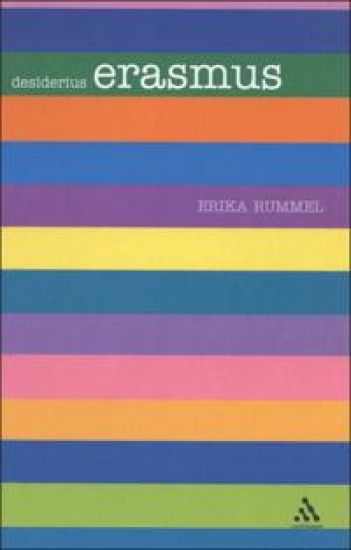
Erasmus

Erasmus

Erika Rummel

Continuum International Publishing Group Ltd.
2006
nidottu
Desiderius Erasmus was one of the most influential writers of his time and widely acclaimed as the principal Northern humanist. He was, however, not only a man of letters but also a shrewd observer of society, a sharp critic of the institutional church, and a scholar on the cutting edge of biblical studies. Although not a systematic philosopher or theologian, he left his stamp on the intellectual milieu of his time and was regarded by Catholic apologists as the inspirational source of the Lutheran reformation. In this book, Erika Rummel introduces readers to Erasmus' ideas on education, piety, social order, and the epistemology underpinning his thought. The educational programme proposed by Erasmus aims at creating a Christian humanist, speaking with Ciceronian eloquence and breathing the spirit of the gospel. The perfect piety envisaged by Erasmus involves a progression from the observance of rites to inner devotion and a love of Christ that guides every action. The ideal social order, according to Erasmus, is hierarchical. He depicts the three estates arranged in concentric circles around Christ, with the clergy closest to him, followed by the nobility and the common people. The Christian prince reflects the qualities of God, whose steward he is. A father-figure to his people, the ruler dispenses justice and provides spiritual leadership. Erasmus' magnum opus, his pioneering edition of the Greek New
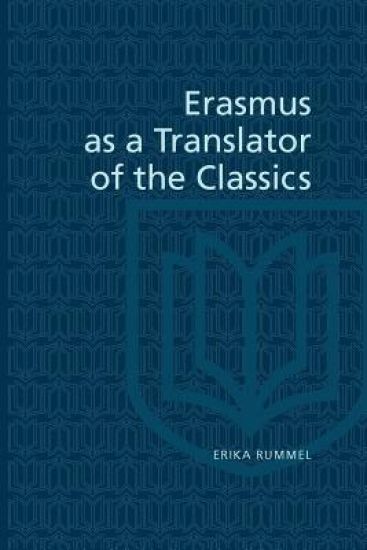
Erasmus As a Translator of the Classics

Erasmus As a Translator of the Classics

Erika Rummel

University of Toronto Press
1985
pokkari
This first full-length study of Erasmus’ translations of classical literature examines his approach to translation and, more generally, his role as a transmitter of the classics. It traces in chronological order the progress of his Greek studies and the publication history of his translations from Greek into Latin; these included selections from the works of Libanius, Euripides, Plutarch, Lucian, Galen, Isocrates and Xenophon. It also illustrates Erasmus’ methods with appropriate examples from his own texts and from those of his predecessors and contemporaries. In so doing it provides an overview of the state of Greek literature in the Renaissance. Erasmus shifted from literal translation to a more liberal approach – a change in attitude that was accompanied by a redefinition of his role as translator. In his early work he had pursued private goals, regarding his versions from secular authors as private pieces for his magnum opus, the New Testament. In later years his approach became more reader-oriented. He saw his work in terms of a service to scholarship – making Greek literature accessible to Latin readers and acting as their guide to classical thought. He was concerned not only with the mechanics of conveying the factual contents and literary qualities of the original, but also with the applicability of its moral content to Christian philosophy. This book includes a chapter on Erasmus’ New Testament version; by allowing a fuller evaluation of Erasmus’ contribution to philology, this subject adds an important dimension to the book. Erasmus’ translations of Greek texts reflect two concerns that dominated his life. As an educator he wanted to see classical philology firmly established in the curriculum of schools; as a Christian humanist he wanted to convince biblical scholars that it was an indispensable tool of their profession.
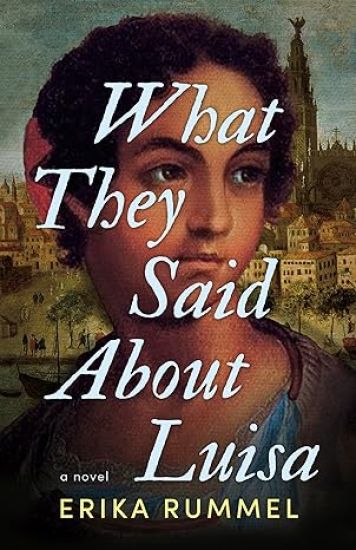
What They Said About Luisa

What They Said About Luisa

Erika Rummel

THE DUNDURN GROUP
2024
pokkari
An enchanting tale of the complex and fascinating life of Luisa Abrego of Seville, an emancipated woman who forges a new future for herself in colonial Mexico and gets caught in the Spanish Inquisition.Luisa Abrego, an enslaved woman in Seville, is impregnated by her master, then set free upon his death. With limited options for her future, Luisa agrees to marry a white man who wants to take her with him to Mexico, even though it means leaving her infant son behind in the care of nuns. The couple set off on a dangerous sea voyage and a perilous trek across unconquered territory, and when the settlers’ caravan is attacked by Indigenous warriors, Luisa is forced to kill a man in self-defence. Years later, still wracked with guilt and convinced she must atone for her sin, Luisa confesses to having made a promise of marriage to another man long before, in Spain. By the laws of the church this makes her a bigamist, a criminal who must be tried by the fearsome Inquisition.Based on sixteenth-century trial records of the real Luisa, this novel is not just one woman’s life in fragments but a carefully researched imagining, told in the vivid, distinct voices of the Europeans who came into contact with her.
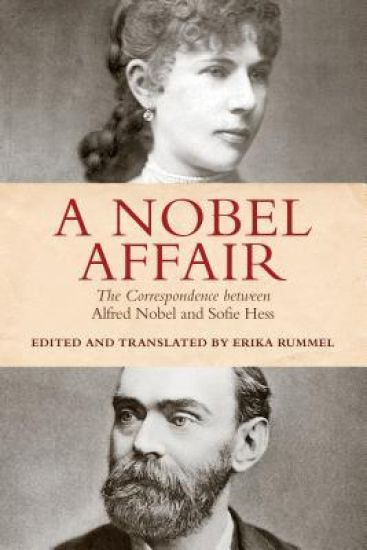
A Nobel Affair

A Nobel Affair

Erika Rummel

University of Toronto Press
2017
sidottu
Alfred Nobel made his name as an inventor and successful entrepreneur and left a legacy as a philanthropist and promoter of learning and social progress. The correspondence between Nobel and his Viennese mistress, Sofie Hess, shines a light on his private life and reveals a personality that differs significantly from his public image. The letters show him as a hypochondriac and workaholic and as a paranoid, jealous, and patriarchal lover. Indeed, the relationship between the aging Alfred Nobel and the carefree, spendthrift Sofie Hess will strike readers as dysfunctional and worthy of Freudian analysis. Erika Rummel’s masterful translation and annotations reveal the value of the letters as commentary on 19th century social mores: the concept of honour and reputation, the life of a "kept" woman, the prevalence of antisemitism, the importance of spas as health resorts and entertainment centres, the position of single mothers, and more generally the material culture of a rich bourgeois gentleman. A Nobel Affair is the first translation into English of the complete correspondence between Alfred Nobel and Sofie Hess.
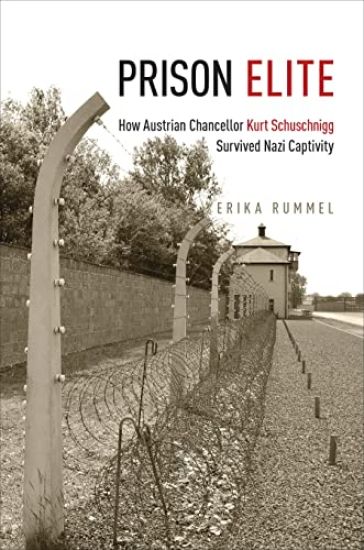
Prison Elite

Prison Elite

Erika Rummel

University of Toronto Press
2021
sidottu
After the Anschluss (annexation) in 1938, the Nazis forced Austrian Chancellor Kurt Schuschnigg to resign and kept him imprisoned for seven years, until his rescue by the Allies in 1945. Schuschnigg’s privileged position within the concentration camp system allowed him to keep a diary and to write letters which were smuggled out to family members. Drawing on these records, Prison Elite paints a picture of a little-known aspect of concentration camp history: the life of a VIP prisoner. Schuschnigg, who was a devout Catholic, presents his memoirs as a "confession," expecting absolution for any political missteps and, more specifically, for his dictatorial regime in the 1930s. As Erika Rummel reveals in fascinating detail, his autobiographical writings are frequently unreliable. Prison Elite describes the strategies Schuschnigg used to survive his captivity emotionally and intellectually. Religion, memory of better days, friendship, books and music, and maintaining a sense of humour allowed him to cope. A comparison with the memoirs of fellow captives reveals these tactics to be universal. Studying Schuschnigg’s writing in the context of contemporary prison memoirs, Prison Elite provides unique insight into the life of a VIP prisoner.
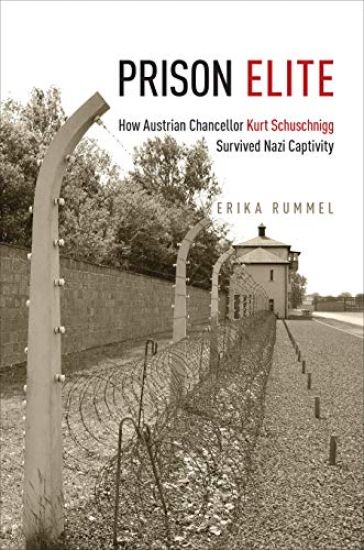
Prison Elite

Prison Elite

Erika Rummel

University of Toronto Press
2021
pokkari
After the Anschluss (annexation) in 1938, the Nazis forced Austrian Chancellor Kurt Schuschnigg to resign and kept him imprisoned for seven years, until his rescue by the Allies in 1945. Schuschnigg’s privileged position within the concentration camp system allowed him to keep a diary and to write letters which were smuggled out to family members. Drawing on these records, Prison Elite paints a picture of a little-known aspect of concentration camp history: the life of a VIP prisoner. Schuschnigg, who was a devout Catholic, presents his memoirs as a "confession," expecting absolution for any political missteps and, more specifically, for his dictatorial regime in the 1930s. As Erika Rummel reveals in fascinating detail, his autobiographical writings are frequently unreliable. Prison Elite describes the strategies Schuschnigg used to survive his captivity emotionally and intellectually. Religion, memory of better days, friendship, books and music, and maintaining a sense of humour allowed him to cope. A comparison with the memoirs of fellow captives reveals these tactics to be universal. Studying Schuschnigg’s writing in the context of contemporary prison memoirs, Prison Elite provides unique insight into the life of a VIP prisoner.
Erasmus' Annotations on the New Testament

Erasmus' Annotations on the New Testament

Erika Rummel

University of Toronto Press
1986
pokkari
Without the notes, Erasmus said, the texts of the Scripture were 'naked and defenceless,' open to criticism by uncomprehending readers and corruption by careless printers. The Annotations represent not only Erasmus' defence of the New Testament against such abuss, but also a reflection of his own philosophy, objectives, and working methods. In establishing the text and defending it against his opponents, Erasmus drew on manuscript sources, classical literature, patristic writings, scholastic exegesis, and the work of his immediate forerunners, Valla and Lefevre. He did not hesitate to point out the errors of illustrious writers like Jerome and established medieval authorities like Peter Lombard. In general he was appreciative of the early church Fathers and contemptuous of medieval commentators. As well as discussing the contents and aims of the Annotations, Erika Rummel investigates Erasmus' development from philologist to theologian and traces the prepublication history of the New Testament. She examines the critical reaction of conservative theologians to Erasmus' work and his replies, incorporated in later editions of the Annotations. The book ends by suggesting a wider field of research: the relationship between the Annotations and the corpus of Erasmian apologetic works.
The Effects of Isolation on the Brain

The Effects of Isolation on the Brain

Erika Rummel

Inanna Publications and Education Inc.
2016
pokkari
Fiction. Women's Studies. California Interest. There are many forms of isolation, and Ellie is becoming an expert on them: unloved and ignored as a child in Vienna, up against cultural barriers in Canada, holed up in a cabin in the north. What are the effects of isolation on the brain? Is it loneliness and boredom that makes Ellie take risks and say yes to Vera, her glamorous but deeply disturbed friend? Vera has been abused as a child and is now putting her trust in a charlatan healer. Together they entangle Ellie in a murderous game of fantasy and revenge. Marooned on the shores of a frozen lake, Ellie must make her way out of the Canadian bush and the wilderness of her own soul. It is a journey through hostile territory neglect, deceit, confusion, betrayal but Ellie is a fighter. All she needs to survive is a soulmate. Don't we all?"
The Loneliness of the Time Traveller

The Loneliness of the Time Traveller

Erika Rummel

Inanna Publications and Education Inc.
2022
pokkari
A thrilling time-slip novel set in contemporary Los Angeles and 18th century LondonIt is a dreadful thing to be possessed, to be invaded by a spirit woman who commands your body and soul and looks out at the world through your eyes. It happened to me in 1778. Pray it will never happen to you. Adele's diary tells the story of her domination by an incubus Lynne, a serving girl in a London ale house who died a violent death and commandeered Adele's body for eight years. Can Adele be held responsible for Lynne's crimes? Will the evil spirit return and renew her tyranny over Adele's mind? Lynne has moved on into the 21st century, but the transmigration has left her emotions flat. Lynne is eager to go back to her first life and experience once more the passion she felt for her lover, Jack. To do so, she needs a channel to the past: the manuscript of Adele's diary, if only she can find it. A time-slip novel set in contemporary Los Angeles and 18th century London, THE LONELINESS OF THE TIME TRAVELLER is a story of love, crime, and adventure combined with fantasy, a little bit of Jane Austen-style irony, and a healthy serving of social criticism.Fiction.