Kirjojen hintavertailu. Mukana 12 459 402 kirjaa ja 12 kauppaa.

Kirjahaku

Etsi kirjoja tekijän nimen, kirjan nimen tai ISBN:n perusteella.

25 kirjaa tekijältä Eriko Sato

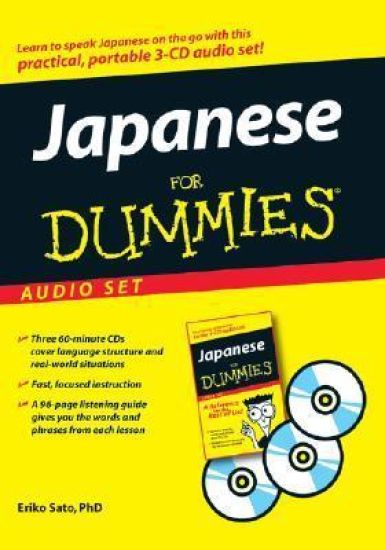
Japanese For Dummies Audio Set

Japanese For Dummies Audio Set

Eriko Sato

John Wiley Sons Inc
2008
cd
Want to speak Japanese? Don’t have a lot of time? Japanese For Dummies Audio Set is designed to help you learn quickly and easily at home or on the road. From basic greetings and expressions to grammar and conversations, you’ll grasp the essentials and start communicating right away. This completely practical, portable learning system lets you set your own pace and skip around to explore topics that interest. Three one-hour CDs introduce the basics of Japanese, get you familiar with the languages structure, and prepare you to use the language in real-world situations. You can play them on any car or home stereo, copy them to your computer, and load the pre-converted files onto your mp3 to play them wherever and whenever you want. A 96-page compact guide helps you find your way around the CDs and handy Japanese/English dictionary for quick reference on the go. You’ll discover how to: Begin communicating in Japanese on a basic levelHandle greetings and introductionsAsk questions and understand the answersBuild your vocabularyTalk about numbers, time, and the calendarAsk for directionsOrder a meal at a restaurantUnderstand Japanese parts of speechForm complete sentences and converse in Japanese If you’re ready to start speaking Japanese, Japanese For Dummies Audio Set is the most effective, convenient, and friendliest tool you can use.
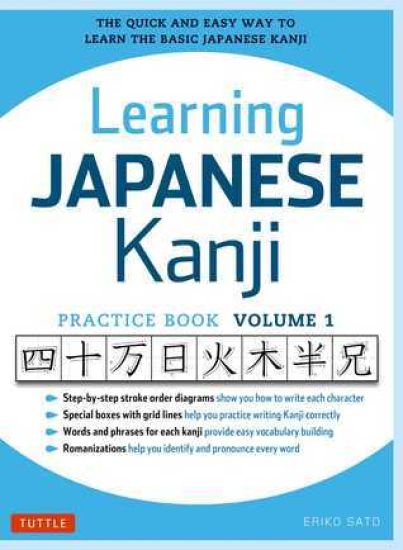
Learning Japanese Kanji Practice Book Volume 1
The quick and easy way to learn the basic Japanese kanji!Learning Japanese Kanji Practice Book is intended for beginning students or experienced speakers who need to practice their written Japanese. Kanji are an essential part of the Japanese language and together with kana (hiragana and katakana) comprise written Japanese. This book presents the most commonly used kanji characters. All the kanji and related vocabulary words in this book are those that students are expected to know for Level 5 of the Japanese Language Proficiency Test. (JLPT). Characters that appear in the AP Japanese Language and Culture Exam are flagged. Readings, meanings, and common compounds are presented. The correct method of writing each character is indicated and practice boxes with strokes that can be traced are provided, along with empty boxes for freehand writing practice. Lots of exercises are included to give students the opportunity to practice writing sentences containing the Kanji. Indexes at the back allow you to look up the characters by their readings and English meanings.This kanji book includes: Step-by-step stroke order diagrams for each character. Individual boxes with grid lines to practice writing characters. Extra printable practice grids Words and phrases using each kanji. Romanizations (romanji) to help identify and pronounce every word.
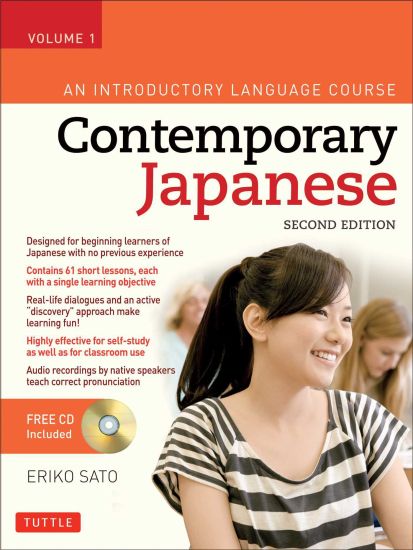
Contemporary Japanese Textbook Volume 1
This Japanese language book contains 61 short lessons grouped into 14 chapters—each of which presents a wide variety of activities and exercises and yet is designed to be covered in a single session.This "daily multivitamin" approach to learning Japanese makes it easy to track your progress and to review later! Access to companion audio online comes free with the book, providing native speaker recordings giving correct pronunciations for the dialogs and vocabulary in each lesson. Contemporary Japanese is a textbook series for beginning students of Japanese at the college or high school level. It is intended for classroom use as well as self-study. Each lesson in the book is very short and has a single, clearly-defined objective. All lessons make use of the "active discovery" approach which encourages rapid learning through "guess and try" problem-solving and participation as opposed to rote memorization. This highly effective method uses real-life conversations that make learning fun by involving you in a conversation with your peers. It also removes the fear of saying something wrong! Key Features of This Japanese language textbook include: Basic sounds, words, phrases and kana Describing the property of people and things Identifying things and people Requesting Description Expressing what you have Using numbers and katakana Talking about the past Coming and going Relating states and events Describing daily-life activities Talking about the present Location of people and things Expressing the characteristics of people and thingsAvailable separately is Contemporary Japanese Workbook Volume 1. This accompanying Japanese workbook serves as a supplementary material as well as a standalone comprehensive workbook for practicing and reviewing the language. Audio recordings containing drills, dialogs and listening comprehension exercises for most activities accompanies the workbook.All media content is accessible on the Tuttle Publishing website.
Contemporary Japanese Workbook Volume 1
This Japanese language workbook was created as supplementary material for Contemporary Japanese.A workbook which is best used for reviewing and reinforcing the concepts and learning materials introduced in the textbook, it is also designed to function as a standalone comprehensive workbook. Some of the features included for this purpose are (a) presentation of a brief note on the concept tested before every question, (b) providing of vocabulary and kanji glossaries on unfamiliar words, and (c) an audio input by native speakers. This workbook also offers materials in the business, traveling and daily life contexts, in addition to the college life context featured greatly in the textbook. Contemporary Japanese Workbook series comes in two volumes, consisting of 26 chapters (Chapter One to Fourteen in Volume 1 and Chapter Fifteen to Twenty-Six in Volume Two) in all. It integrates all the information provided in the textbook. Each chapter in the workbook has specific objectives and includes the following six sections: Kanjia and vocabularyGrammar. Conversation and Usage. Listening Comprehension. Writing. New Vocabulary Reference List.In Contemporary Japanese Workbook Volume One, hiragana characters are introduced in Chapter One in the form of questions along with audio recordings and are used in subsequent chapters without ruby, in this case in romanji. Katakana characters are introduced in Chapter Four, also in the form of questions, and are used in subsequent chapters without ruby. Kanji characters are introduced in the form of questions, accompanied by detailed information such as meanings, component equations, remembering guides, stroke order, and usage examples. The required kanji characters in every chapter are introduced without ruby. When they appear again in the following chapters, ruby is sparingly provided, wherever it is thought to be helpful, and the use of this pronunciation guide is gradually reduced. Non-required kanji characters occasionally appear with ruby to help learners get accustomed to kanji and thus, able to see the phrase boundaries in a sentence easily.All media content is accessible on the Tuttle Publishing website.
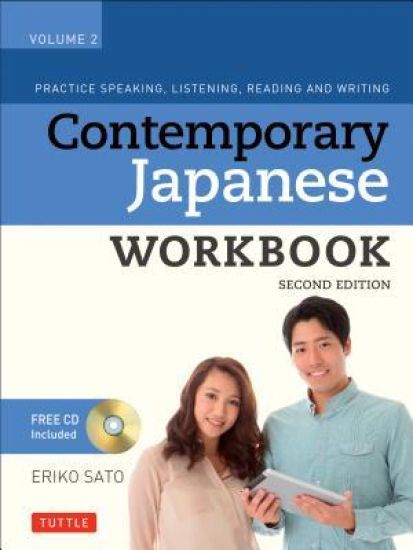
Contemporary Japanese Workbook Volume 2

Contemporary Japanese Workbook Volume 2

Eriko Sato

Tuttle Publishing
2019
nidottu
This Japanese language workbook is a supplementary resource for Contemporary Japanese. Self-studiers can also use it as a standalone workbook for practicing and learning Japanese on their own. It focuses on the four necessary language skills of speaking, listening, reading and writing and contains worksheets and activities covering vocabulary, grammar, and conversations in the context of daily school life, business, and travel. An included audio CD contains drills, dialogs, and listening comprehension exercises for activities in the workbook. Contemporary Japanese is a textbook series for beginning students of Japanese at the college or high school level. It is intended for classroom use as well as self-study. Each lesson in the books is concise and has a single, clearly-defined objective. All lessons make use of the active discovery approach which encourages rapid learning through guess and try problem-solving and participation as opposed to rote memorization. This highly efficient method uses real-life conversations that make learning fun by involving you in discussion with your peers. It also removes the fear of saying something wrong!
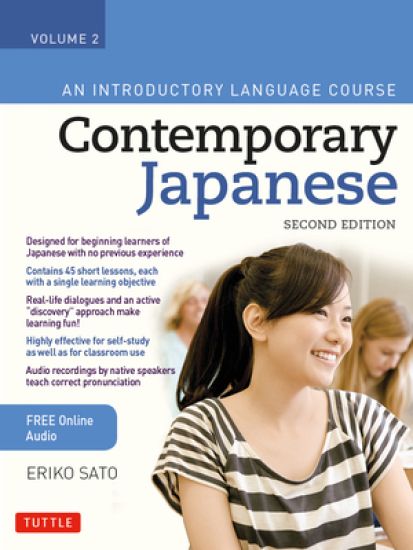
Contemporary Japanese Textbook Volume 2

Contemporary Japanese Textbook Volume 2

Eriko Sato

TUTTLE PUBLISHING
2023
nidottu
Contemporary Japanese is a textbook series for beginning students of Japanese at the college or high school level. It is intended for classroom use as well as self-study.Each lesson in the books is very short—meant to be covered in just an hour—and has a single, clearly-defined objective. All lessons make use of the "active discovery" approach which encourages rapid learning through "guess and try" problem-solving and participation as opposed to rote memorization. This highly effective method uses real-life conversations that make learning fun by involving you in a conversation with your peers. It also removes the fear of saying something wrong!This book, the second volume in the series, contains 45 short lessons grouped into 12 chapters—each of which presents a wide variety of activities and exercises and yet is designed to be covered in a single session. This "daily multivitamin" approach to language learning makes it easy to track your progress and to review later! Free online audio files can be downloaded, providing native speaker recordings and giving correct pronunciations for the dialogs and vocabulary in each lesson.In this book you'll learn more about:Kanji and their meaningsJapanese verb formsComparison and stating preferencesUsing common set phrases and making requestsEvaluating facts and expressing opinionsSightseeing, food cravings and tastesInsights into Japanese cultureAccompanying the textbook is Contemporary Japanese Workbook Volume 2—it serves as a supplementary material as well as a standalone comprehensive workbook for practicing and reviewing the language.
Japanese Demystified, Premium

Japanese Demystified, Premium

Eriko Sato

McGraw-Hill Education
2016
nidottu
Publisher's Note: Products purchased from Third Party sellers are not guaranteed by the publisher for quality, authenticity, or access to any online entitlements included with the product.Say sayonara to your fears of learning Japanese with the updated premium edition of this fast, painless guideThe updated third edition of Japanese DeMYSTiFieD provides you with the comprehensive, step-by-step educational experience that has made the DeMYSTiFieD language series such a success. This established, unintimidating approach to speaking, reading, and writing a new language takes the mystery and menace out of the learning process, whether in class or at home. Hundreds of quiz and test questions, chapter-opening objectives, and specific recommendations for difficult subtopics and individual weaknesses help you learn basic grammar structures and verb tenses, pronunciation, essential vocabulary, and how to communicate with confidence. In addition to DeMYSTiFieD’s time-tested strategies, this edition features 70 minutes of streaming audio recordings and chapter review quizzes via the unique McGraw-Hill Language Lab app, so you can enhance your study via mobile or online, at home, in class, or on the go.
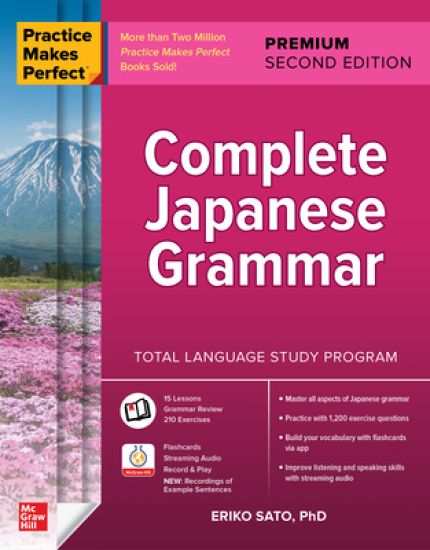
Practice Makes Perfect: Complete Japanese Grammar, Premium Second Edition
Publisher's Note: Products purchased from Third Party sellers are not guaranteed by the publisher for quality, authenticity, or access to any online entitlements included with the product.The most hands-on, practical workbook for learning to read, write and speak Japanese flawlesslyPractice, practice, practice—and improve your ability to read, write and speak Japanese as it’s really used. Practice Makes Perfect: Complete Japanese Grammar, Premium Second Edition has everything you need to progress from beginning to advanced fluency, from clear explanations and practical examples to all the practice required for language mastery.This updated, new edition boasts audio support online and via mobile app, ensuring you’ll speak the language as well as you write and speak it. The answers to more than 100 exercises in the book have been recorded and are available via the McGraw-Hill Language Lab app, and you can also (depending on your mobile device’s capabilities) record your own answers to compare with native speakers. • 200 exercises in 15 units covering all aspects of Japanese grammar, with explanations that include useful/helpful comparisons with English grammar—including hiragana, katakana, and kanji script • Author has a proven teaching record, with extensive experience as an educator and curriculum developer• All example sentences are written in Japanese script, with Romanization alongside to help pronunciation• Exercises for use either in the classroom use or for individual study• New to this edition: recordings of answers to many exercises throughout book
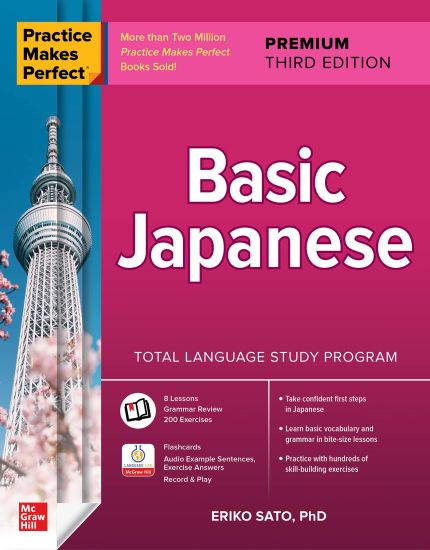
Practice Makes Perfect: Basic Japanese, Premium Third Edition
Everything you need to master first-year Japanese language essentials—clear explanations, tons of practice exercises, and NEW audio to improve your speaking and listening skillsThe most effective way to learn any new language is to practice, practice, and practice some more. In Practice Makes Perfect: Basic Japanese, you'll find all the practice you need to complete your first year of study. Based on the proven success of the Practice Makes Perfect series, this bestselling workbook offers easily digested short sections (each taking about 10 to 15 minutes to complete), clear explanations of grammar, and a solid grounding in basic vocabulary.Supported by the McGraw Hill Language Lab app, Practice Makes Perfect: Basic Japanese also offers comprehensive digital support, with extensive audio recordings that provide the answer key for many exercises, so you can build your confidence in speaking and listening to the language by following the model of native Japanese speakers. With the instruction, explanations, and extensive practice in this book, you'll acquire all the knowledge and skills a first-year student is expected to master.Short sections with key grammatical concepts and core vocabulary provide easy, bite-size lessons for your busy scheduleIdeal for both self-study learners and to complement a first-year classSupported by extensive audio recordings, available via McGraw Hill's exclusive Language Lab app, including answers to 80 exercises from the bookNEW: Recordings of example sentences throughout the book
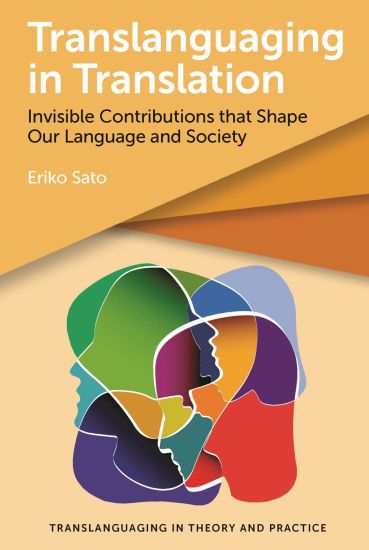
Translanguaging in Translation

Translanguaging in Translation

Eriko Sato

MULTILINGUAL MATTERS
2022
nidottu
This book brings applied linguistics and translation studies together through an analysis of literary texts in Chinese, Hindi, Japanese and Korean and their translations. It examines the traces of translanguaging in translated texts with special focus on the strategic use of scripts, morphemes, words, names, onomatopoeias, metaphors, puns and other contextualized linguistic elements. As a result, the author draws attention to the long-term, often invisible contributions of translanguaging performed by translators to the development of languages and society. The analysis sheds light on the problems caused by monolingualizing forces in translation, teaching and communicative contexts in modern societies, as well as bringing a new dimension to the burgeoning field of translanguaging studies.
Translanguaging in Translation

Translanguaging in Translation

Eriko Sato

MULTILINGUAL MATTERS
2022
sidottu
This book brings applied linguistics and translation studies together through an analysis of literary texts in Chinese, Hindi, Japanese and Korean and their translations. It examines the traces of translanguaging in translated texts with special focus on the strategic use of scripts, morphemes, words, names, onomatopoeias, metaphors, puns and other contextualized linguistic elements. As a result, the author draws attention to the long-term, often invisible contributions of translanguaging performed by translators to the development of languages and society. The analysis sheds light on the problems caused by monolingualizing forces in translation, teaching and communicative contexts in modern societies, as well as bringing a new dimension to the burgeoning field of translanguaging studies.
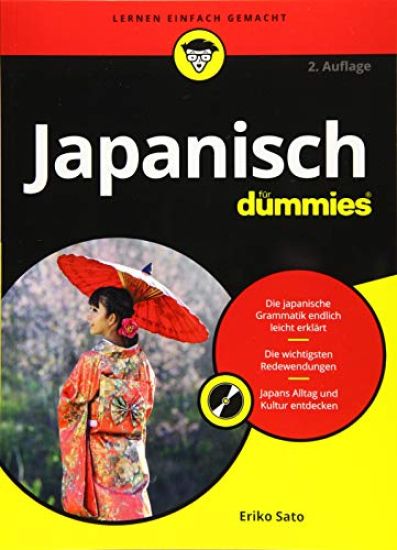
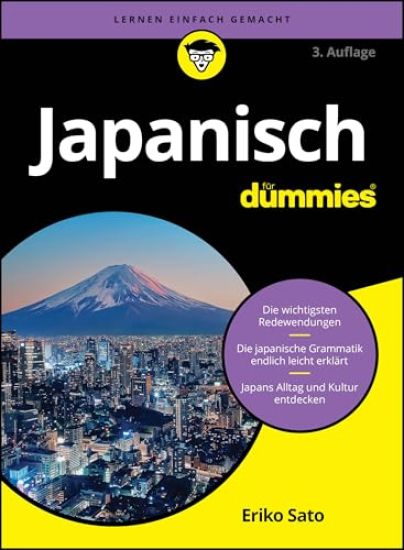
Japanisch für Dummies

Japanisch für Dummies

Eriko Sato

Wiley-VCH Verlag GmbH
2019
muu
Sie haben angefangen, Japanisch zu lernen, haben regelmäßig Kontakt zu japanischen Geschäftspartnern oder wollen Ihren Urlaub in Japan verbringen? In diesem Buch erfahren Sie alles über die Besonderheiten der Sprache, erhalten eine kurze Einführung in Betonung und Grammatik und lernen anhand von vielen typischen Alltagssituationen Japanisch zu sprechen. So können Sie sich nicht nur auf Japanisch vorstellen und Small Talk betreiben, sondern bekommen auch beim Einkaufen und im Restaurant das, was Sie wollen. Mit der CD zum Buch können Sie viele Sprachübungen anhören und nachsprechen.
Japanisch für Dummies

Japanisch für Dummies

Eriko Sato

Wiley-VCH Verlag GmbH
2024
nidottu
Von Konnichiwa bis Ja, mata Mit diesem Buch lernen Sie Japanisch. Neben der Betonung und der Grammatik lernen Sie Begriffe und Redewendungen, mit denen Sie Alltagssituationen meistern: sich auf Japanisch vorstellen, Small Talk betreiben, über die Familie reden oder einen Tisch in einem Restaurant reservieren. Nebenbei erfahren Sie Interessantes über die japanische Kultur. Gleichzeitig bekommen Sie Tipps für das Leben in Japan und dazu, wie Sie sich als Gast im Land verhalten sollten. Übersichtliche Verbtabellen und ein Miniwörterbuch runden diesen Band ab. Mit den Audiodateien zum Buch können Sie viele Sprachübungen anhören und nachsprechen. Sie erfahren Welche Besonderheiten der Sprache Sie kennen solltenWas Sie bei der Aussprache und Betonung beachten solltenWie Sie auf Japanisch telefonieren
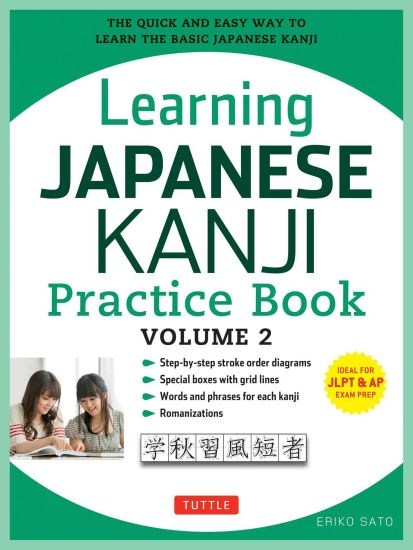
Learning Japanese Kanji Practice Book Volume 2
This is an invaluable study guide and practice book for learning basic Japanese kanji.Learning Japanese Kanji Practice Book is intended for beginning students or experienced speakers who need to practice their written Japanese. Kanji are an essential part of the Japanese language and together with kana (hiragana and katakana) comprise written Japanese. This book presents the kanji characters that are most commonly used. All the kanji and related vocabulary words in this book are those that students are expected to know for Level 4 of the Japanese Language Proficiency Test (JLPT). Characters that appear in the AP Japanese Language and Culture Exam are flagged. Readings, meanings, and common compounds are presented. The correct method of writing each character is clearly indicated, and practice boxes with strokes that can be traced are provided, along with empty boxes for freehand writing practice. Lots of exercises are included to give students the opportunity to practice writing sentences containing the kanji. Indexes at the back allow you to look up the characters by their readings and English meanings.This kanji book includes: Step-by-step stroke order diagrams for each character. Special boxes with grid lines to practice writing characters. Words and phrases using each kanji. Romanizations (romanji) to help identify and pronounce every word.
Reading & Writing Japanese: A Workbook for Self-Study
The easy way to learn the Japanese writing system! In this beginner's workbook, students of Japanese will learn to read and write the Hiragana and Katakana alphabets, as well as 50 basic Kanji characters. A step-by-step approach moves from tracing letters to reading and writing complete words quickly and effectively. This book gives you all the tools you need to learn to pronounce, read and write Japanese:A thorough overview of the hiragana and katakana alphabets.Audio recordings to improve your pronunciation and comprehension.A step-by-step approach to writing words and then sentences.Practice exercises featuring everyday activities and situations.An introduction to 50 key kanji characters.Free downloadable flash cards to aid memorization of the characters.Instead of dealing with separate Hiragana and Katakana workbooks, as is common, this comprehensive guide provides an efficient way to learn both with the help of one book.
Contemporary Japanese Workbook Volume 2
Contemporary Japanese Workbook, Volume 2 was created as a supplementary material for Contemporary Japanese: An Introductory Textbook for College Students. A workbook which is best used for reviewing and reinforcing the concepts and learning materials introduced in the textbook, it is also designed to function as a standalone comprehensive workbook. Some of the features included for this purpose are (a) presentation of a brief note on the concept tested before every question, (b) providing of vocabulary and kanji glossaries on unfamiliar words, and (c) an audio input by native speakers. This workbook also offers materials in the business, traveling and daily life contexts, in addition to the college life context featured greatly in the textbook. Contemporary Japanese Workbook series comes in two volumes, consisting of 26 chapters (Chapter One to Fourteen in Volume 1 and Chapter Fifteen to Twenty–Six in Volume Two) in all. It integrates all the information provided in the textbook. Each chapter in the workbook has specific objectives and includes the following six sections: Kanjia and vocabulary Grammar. Conversation and Usage. Listening Comprehension. Writing. New Vocabulary Reference List. In Contemporary Japanese Workbook Volume One, hiragana characters are introduced in Chapter One in the form of questions along with audio recordings, and are used in subsequent chapters without ruby, in this case in romanji. Katakana characters are introduced in Chapter Four, also in the form of questions, and are used in subsequent chapters without ruby. Kanji characters are introduced in the form of questions, accompanied by detailed information such as meanings, component equations, remembering guides, stroke order, and usage examples. The required kanji characters in every chapter are introduced without ruby. When they appear again in the following chapters, ruby is sparingly provided, wherever it is thought to be helpful, and the use of this pronunciation guide is gradually reduced. Non–required kanji characters occasionally appear with ruby to help learners get accustomed to kanji and thus, able to see the phrase boundaries in a sentence easily. All disc content is alternatively accessible on tuttlepublishing.com/downloadable-content.
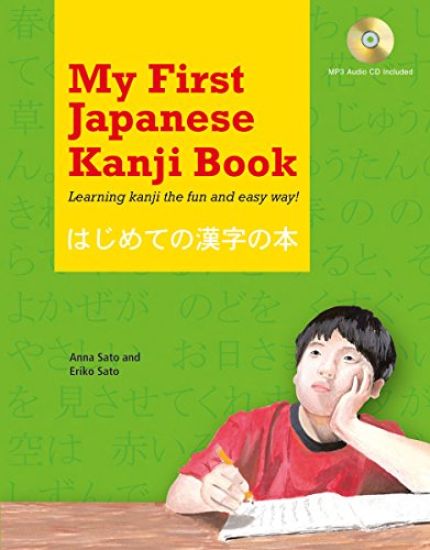
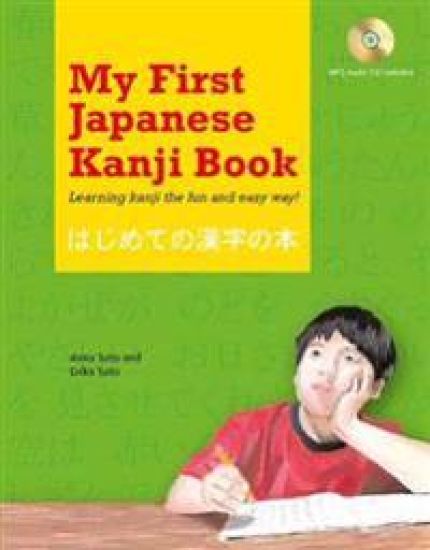
My First Japanese Kanji Book

My First Japanese Kanji Book

Eriko Sato; Anna Sato

TUTTLE PUBLISHING
2025
muu
My First Japanese Kanji Book is an inventive and unique introduction to kanji for children.Written by the mother-daughter team of Eriko and Anna Sato, this lovely book introduces 109 kanji characters to children with poems and illustrations. It includes all the Japanese Government-specified first-grade level kanji characters and a sprinkling of simple second to sixth-grade characters.The kanji are introduced in the context of 36 colorful paintings and poems by 14-year-old Anna Sato, herself a kanji learner. Each of the poems is presented in both Japanese and English, and all kanji are accompanied by furigana (small hiragana letters), stroke-order diagrams, sample vocabulary and boxes for writing practice.A charming and educational volume, My First Japanese Kanji Book can be used as a self-study text, a supplementary material in Japanese language schools or a gift book for family or friends. Companion audio reinforces learning and ensures correct pronunciation.All media content is accessible on the Tuttle Publishing website.
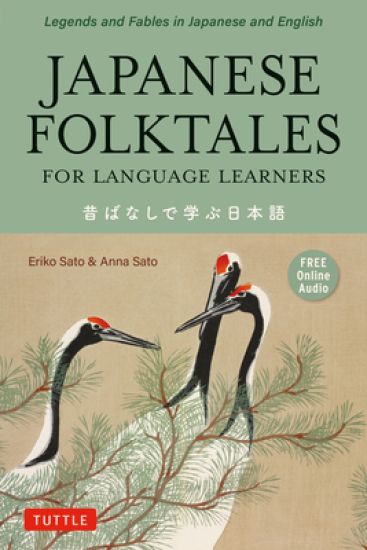
Japanese Folktales for Language Learners

Japanese Folktales for Language Learners

Eriko Sato; Anna Sato

TUTTLE PUBLISHING
2022
nidottu
Learn about Japanese culture while improving your language skills!Japanese Folktales for Language Learners presents 22 traditional stories in parallel Japanese and English versions on facing pages, with detailed notes and exercises aimed at beginning to intermediate learners. This book can be used as a language reader and will be of great interest to anyone wishing to learn more about Japanese culture and folklore.The stories in this collection gradually increase in length and complexity as the book progresses. They include:"The Candy-Buying Ghost" - A female ghost mysteriously buys candy every night from a small village shop, until one night she reveals her true identity and her tragic story. "The Old Man Who Made Trees Blossom" - Regarded as one of the five greatest Japanese folktales, this touching story tells of a kind old man who uses his magical powers for good. "The Abandoned Mother" - An elderly woman is abandoned at the top of a mountain by her own son, a reference to the old practice of senicide in Japan. Vocabulary lists, cultural notes, exercises and discussion questions help to reinforce an understanding of the stories and bolster language skills. Free online recordings of all the stories are provided.
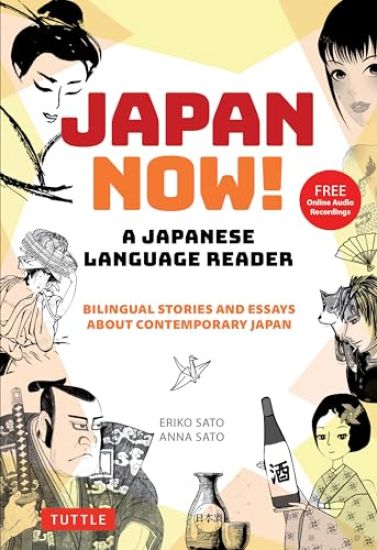
Japan Now! A Japanese Language Reader

Japan Now! A Japanese Language Reader

Eriko Sato; Anna Sato

TUTTLE PUBLISHING
2025
nidottu
Learn about contemporary Japan while improving your language skills!JAPAN NOW! A Japanese Language Reader contains 17 fascinating stories and essays about contemporary Japanese society in parallel Japanese and English versions on facing pages. The stories are written by a number of experienced commentators on Japan, each with a distinctive style and point of view.Vocabulary lists, notes, exercises and discussion questions make this a great course book for classroom use or self-study, and the wide range of fascinating topics make it equally appealing for general readers. The topics covered include:LBGTQ Rights in Japan — Eriko and Anna Sato explain how the Japanese courts have recently declared bans on same-sex marriage unconstitutional. Is Japanese society finally becoming more inclusive?Japan's Underground Tattoo Culture — Brian Ashcraft, author of Japanese Tattoos, takes a deep dive into the world of Japanese tattooing, an art traditionally practiced mainly by yakuza gangsters.Japan's High Suicide Rate — Eriko and Anna Sato ask whether Japan's suicide rate has always been high? Is this due to the traditions of seppuku and kamikaze or to the stigma around seeking therapy in Japan? Or are other factors at work?Why I Love Japan Even More Since the Earthquake — journalist David McNeill, a longtime Japan resident, explores the aftereffects of the devastating 2011 earthquake, tsunami and nuclear meltdown on Japanese society.The Origin of Sake — bestselling sake experts Nancy Matsumoto and Michael Tremblay look at the history of the Japanese drink that has gained huge popularity worldwide.Illustrated with 25 black-and-white photographs, and accompanied by free online audio recordings, this volume provides unique insights into life in 21st century Japan for students and anyone interested in Japanese culture!
My First Japanese Kanji Book

My First Japanese Kanji Book

Eriko Sato; Anna Sato

Tuttle Publishing
2017
muu
My First Japanese Kanji Book is an inventive and unique introduction to kanji for children. Written by the mother-daughter team of Eriko and Anna Sato, this lovely book introduces 109 kanji characters to children with poems and illustrations. It includes all the Japanese Government-specified first-grade level kanji characters and a sprinkling of simple second to sixth-grade characters. The kanji are introduced in the context of 36 colorful paintings and poems by 14-year-old Anna Sato, herself a kanji learner. Each of the poems is presented in both Japanese and English, and all kanji are accompanied by furigana (small hiragana letters), stroke-order diagrams, sample vocabulary and boxes for writing practice. A charming and educational volume, My First Japanese Kanji Book can be used as a self-study text, a supplementary material in Japanese language schools or a gift book for family or friends. Companion audio reinforces learning and ensures correct pronunciation. All media content is accessible on the Tuttle Publishing website.