
Kirjahaku
Etsi kirjoja tekijän nimen, kirjan nimen tai ISBN:n perusteella.
6 kirjaa tekijältä Erna Brodber
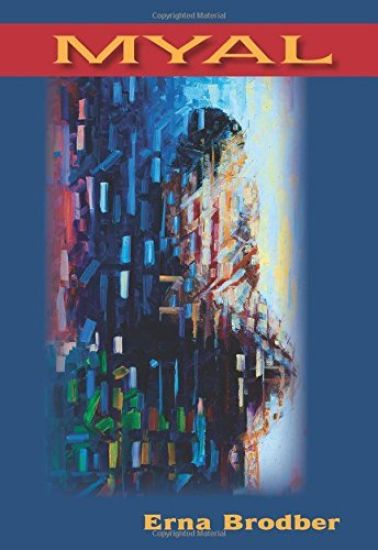
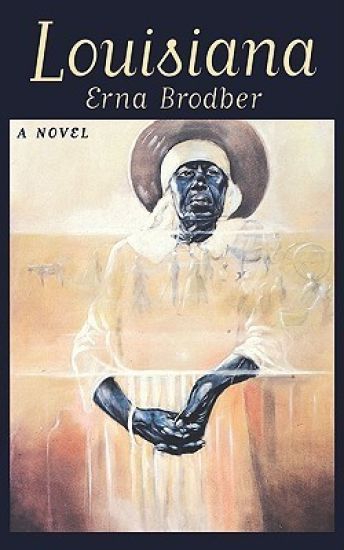
This is the first American publication of Brodber's eagerly awaited third novel. In Louisiana: A Novel she explores her continuing fascination with the power of the past to live in the present.Here, Ella Townsend, a young African American anthropologist whose roots are Caribbean, researches Louisiana folk life and discovers not only the world of voodoo and carnival but also the mystical connection of the living and the dead. With her tape recorder she explores the rich heritage of Creole Louisiana, but Mammy, Ella's primary informant, dies during the project. Then from beyond the grave she continues to transmit messages. Although the academically minded Ella is dubious about the authenticity of the medium, gradually, as she confronts her prejudices, the tapes convey enriching mysteries about the past lives of Mammy and her friend Lowly. From this supernatural experience, Ella learns much about herself and her background. Louisiana celebrates the magico-religious culture of hoodoo, conjure, obeah, and myal. Like Brodber's previous works, Myal: A Novel and Jane and Louisa Will Soon Come Home, Louisiana reveals the author's fascinating gift of myth-making. The Louisiana of her title represents two places sharing the same name---the American state and Brodber's native parish in Jamaica. Through this blending of localities, Brodber shows how elements from the African diaspora are kept alive in the Creole culture of the Americas.
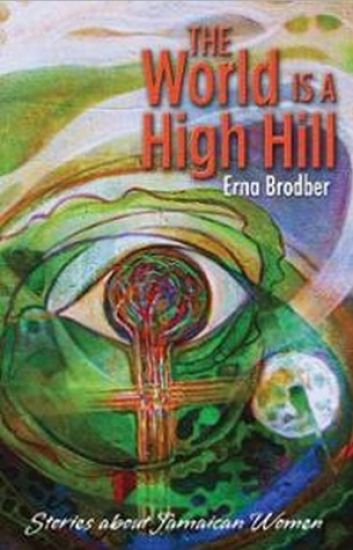
Fair-skinned Beverley is ridiculed in Jamaica but has the last laugh when she returns as the wife of a diplomat. Kishwana is from the inner city but is the beneficiary of uptown benevolence. Lily’s life changes when her boyfriend leaves her for a white woman. Rosa gets a dream that she should take care of Zackie; and Valerie, with little education, turns to domestic work to eke out a living. These are just some of the characters who inhabit Erna Brodber’s collection of short stories about Jamaican women. Engaging and absorbing, yet at once both sobering and triumphant, The World is a High Hill, demonstrates the multifaceted nature of the Jamaican woman, faced with all the trials the high hill of the world presents, at times a steeper climb for some more than for others. The stories are preceded with an enlightening foreword by Professor Verene Shepherd and close with an equally instructive interview with the author by Professor Carolyn Cooper. In this collection Brodber departs from her usual long form novel. She remains however, an uncompromising and empowering voice in Caribbean and black literature.
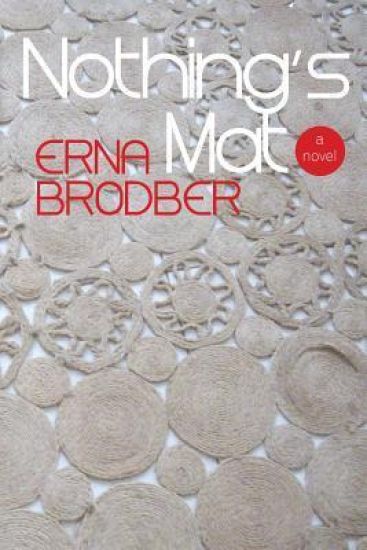
This story is told by a black British teenager – ‘every black girl’ – for she has no name until the very last chapters when she is teasingly called ‘Princess’ by her husband. Somewhere in the 1950s Princess, London-based, is allowed to complete her 6th form final exams by writing a long paper on the ‘West Indian family’ instead of sitting an exam. She thinks this a ‘god-send’ and that all she has to do is to interview her parents. Her father tries to help her with his side but they both find that their kin will not fit into the standard anthropological template. Her father thinks it a good time for her to go to Jamaica and meet her grandparents who can better help her with her study. Her mother thinks the change would be good for her health for she is asthmatic and it is the time of the year when London fog makes her ill.In Jamaica, much as her grandparents, middle class black Jamaicans and her parents in England, might not have liked it, Princess meets and spends time with her obscure Cousin Nothing, called Conut. She introduces her to the flora of Jamaica and in particular, to one plant which obeys certain divine principles and which is available to humans to make artifacts for their comfort. Accordingly they begin to make a mat and as they twist straw and bend it into intricate shapes, Conut tells her the family history so that their creation becomes for her a mat of anthropological template. The resulting shape presented to her teacher, earns her an ‘A’ and the comment that she has managed to project the West Indian family as a fractal rather than fractured as the published literature sees it.‘Every girl’ gets a scholarship to a London University but asks to be allowed to take it up in Jamaica. Here she completes graduate work and gets an assistant lectureship but more, she inherits an old house from Conut, from which she commutes to the university in Kingston. Under-stimulated by the academy, she chooses to continue the family study which she had done as her end of high school project and to do so by crafting the information into the mat, which mat becomes for her a shield against spiritual and physical evil. Making the mat of ancestors takes her into the history of young English men kidnapped and transported to Jamaica for illicit sexual activity, of Jamaican women launderers in Panama, of a African Jamaican/African American marriage in Panama which produces children brought up in Virginia USA, and who become ‘the first Negroes to…’; of two females who escape Governor Eyre’s violence in Morant Bay and re-settle in a ‘free village’ in St Ann.This work is not only a fictional family history but is also a comment on anthropological methodology, and African systems of thought.
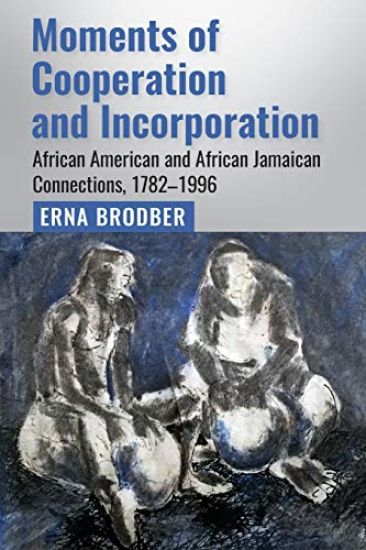
Moments of Cooperation and Incorporation
Erna Brodber
University of the West Indies Press
2019
nidottu
Moments of Cooperation and Incorporation is a set of six essays showcasing moments between 1782 and 1996 when the Jamaican and American people of the African diaspora have cooperated with each other in the socio-geographic spaces of each. For both groups, this was a period defined by slavery, resistance, struggles for freedom, decolonization and civil rights. Brodber’s work relates the long connections between black Jamaicans and blacks in the United States from the late eighteenth century well into the twentieth century and aims to foster understanding and self-respect among these people brought without their permission to the Americas.This work makes a vital contribution to the history of the African diaspora and is essential reading for students and scholars of the New World. Brodber employs a variety of disciplinary methods – historical and anthropological, most notably – in presenting and interpreting this long history, and her skill as a novelist makes this scholarly work equally compelling for the general reader.