Kirjojen hintavertailu. Mukana 11 342 296 kirjaa ja 12 kauppaa.

Kirjahaku

Etsi kirjoja tekijän nimen, kirjan nimen tai ISBN:n perusteella.

415 kirjaa tekijältä Ernest Hemingway

The Letters of Ernest Hemingway: Volume 1, 1907–1922

The Letters of Ernest Hemingway: Volume 1, 1907–1922

Ernest Hemingway

Cambridge University Press
2011
sidottu
With the first publication, in this edition, of all the surviving letters of Ernest Hemingway (1899–1961), readers will for the first time be able to follow the thoughts, ideas and actions of one of the great literary figures of the twentieth century in his own words. This first volume encompasses his youth, his experience in World War I and his arrival in Paris. The letters reveal a more complex person than Hemingway's tough guy public persona would suggest: devoted son, affectionate brother, infatuated lover, adoring husband, spirited friend and disciplined writer. Unguarded and never intended for publication, the letters record experiences that inspired his art, afford insight into his creative process and express his candid assessments of his own work and that of his contemporaries. The letters present immediate accounts of events and relationships that profoundly shaped his life and work. A detailed introduction, notes, chronology, illustrations and index are included.
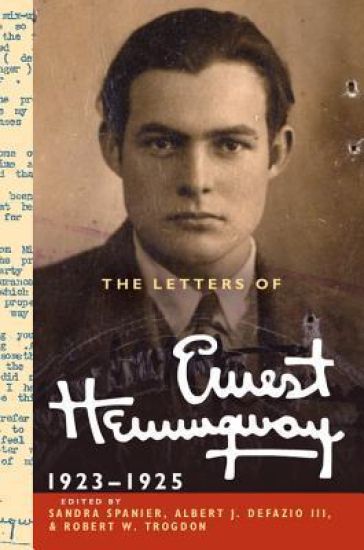
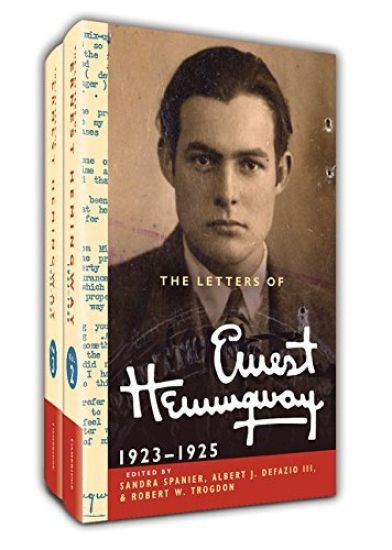
The Letters of Ernest Hemingway: Volume 2, 1923–1925

The Letters of Ernest Hemingway: Volume 2, 1923–1925

Ernest Hemingway

Cambridge University Press
2013
sidottu
The Letters of Ernest Hemingway documents the life and creative development of a gifted artist and outsized personality whose work would both reflect and transform his times. Volume 2 (1923–1925) illuminates Hemingway's literary apprenticeship in the legendary milieu of expatriate Paris in the 1920s. We witness the development of his friendships with the likes of Sylvia Beach, F. Scott Fitzgerald, and John Dos Passos. Striving to 'make it new', he emerges from the tutelage of Ezra Pound and Gertrude Stein to forge a new style, gaining recognition as one of the most formidable talents of his generation. In this period, Hemingway publishes his first three books, including In Our Time (1925), and discovers a lifelong passion for Spain and the bullfight, quickly transforming his experiences into fiction as The Sun Also Rises (1926). The volume features many previously unpublished letters and a humorous sketch that was rejected by Vanity Fair.
The Letters of Ernest Hemingway: Volume 3, 1926–1929

The Letters of Ernest Hemingway: Volume 3, 1926–1929

Ernest Hemingway

Cambridge University Press
2015
sidottu
The Letters of Ernest Hemingway, Volume 3: 1926–1929, featuring many previously unpublished letters, follows a rising star as he emerges from the literary Left Bank of Paris and moves into the American mainstream. Maxwell Perkins, legendary editor at Scribner's, nurtured the young Hemingway's talent, accepting his satirical novel Torrents of Spring (1926) in order to publish what would become a signature work of the twentieth century: The Sun Also Rises (1926). By early 1929 Hemingway had completed A Farewell to Arms. Hemingway's letters of this period also reflect landmark events in his personal life, including the dissolution of his first marriage, his remarriage, the birth of his second son, and the suicide of his father. As the volume ends in April 1929, Hemingway is setting off from Key West to return to Paris and standing on the cusp of celebrity as one of the major writers of his time.
The Letters of Ernest Hemingway: Volume 4, 1929–1931

The Letters of Ernest Hemingway: Volume 4, 1929–1931

Ernest Hemingway

Cambridge University Press
2017
sidottu
The Letters of Ernest Hemingway, Volume 4, spanning April 1929 through 1931, featuring many previously unpublished letters, records the establishment of Ernest Hemingway as an author of international renown following the publication of A Farewell to Arms. Breaking new artistic ground in 1930, Hemingway embarks upon his first and greatest non-fiction work, his treatise on bullfighting, Death in the Afternoon. Hemingway, now a professional writer, demonstrates a growing awareness of the literary marketplace, successfully negotiating with publishers and agents and responding to fan mail. In private we see Hemingway's generosity as he provides for his family, offers support to friends and colleagues, orchestrates fishing and hunting expeditions, and sees the birth of his third son. Despite suffering injuries to his writing arm in a car accident in November 1930, Hemingway writes and dictates an avalanche of letters that record in colorful and eloquent prose the eventful life and achievements of an enormous personality.
The Letters of Ernest Hemingway: Volume 5, 1932–1934

The Letters of Ernest Hemingway: Volume 5, 1932–1934

Ernest Hemingway

Cambridge University Press
2020
sidottu
The Letters of Ernest Hemingway, Volume 5, spanning 1932 through May 1934, traces the completion and publication of Death in the Afternoon and Winner Take Nothing. During this intensely active period, Hemingway hunts in Arkansas and Wyoming, fishes the waters off Key West and Cuba, revisits Madrid and Paris, and undertakes a long-anticipated African safari. He witnesses transitions at home and abroad: the deepening Great Depression, Prohibition-era rumrunning, revolution in Cuba, and political unrest in Spain. His readership and celebrity continue to expand as he begins writing for the new men's magazine Esquire. As the volume ends, Hemingway has just acquired his beloved boat, Pilar. The letters detail these events as well as his relationships with his family, friends, publishers, critics and literary contemporaries including editor Maxwell Perkins, Archibald MacLeish, John Dos Passos, Ezra Pound, and F. Scott Fitzgerald. Together the letters paint an intimate self-portrait of this multi-faceted, self-confident, energetic artist in his prime.
The Letters of Ernest Hemingway: Volume 6, 1934–1936

The Letters of Ernest Hemingway: Volume 6, 1934–1936

Ernest Hemingway

Cambridge University Press
2024
sidottu
The Letters of Ernest Hemingway, Volume 6 (June 1934–June 1936) traces the completion and publication of Hemingway's experimental nonfiction book Green Hills of Africa and work on stories including 'The Short Happy Life of Francis Macomber' and 'The Snows of Kilimanjaro.' In more than twenty pieces in Esquire, he relates his hunting and fishing exploits, discusses writing and writers, and becomes more politically vocal, addressing topical concerns. During this period he immerses himself in big game fishing off Key West, Cuba, and Bimini, gathering specimens for scientific study and making record catches, as well as taking on boxing challengers. He maintains longstanding literary friendships, advises and helps aspiring writers and contemporary artists, and makes public his disdain of critics. Volume 6 also features for the first time an Appendix of Earlier Letters (1918–1934) that have come to light since publication of previous volumes. Writing his epistolary autobiography, Hemingway himself reveals the many and sometimes contradictory facets of his wide-ranging genius.
The Letters of Ernest Hemingway Hardback Set Volumes 2 and 3: Volume 2-3
The Letters of Ernest Hemingway document the life and creative development of a gifted artist and legendary personality whose work would both reflect and transform his times. Volume 2 (1923–1925) follows Hemingway's literary apprenticeship in expatriate Paris and the experiences that forged his earliest works, including the landmark novel The Sun also Rises (1926). It features a never-before-published short story that was rejected by Vanity Fair. Volume 3 (1926–1929) shows a rising star as he emerges from the literary Left Bank of Paris and moves into the American mainstream. As this collection of volumes ends, Hemingway is setting off from Key West to return to Paris and standing on the cusp of celebrity as one of the major writers of his time.
The Letters of Ernest Hemingway Hardback Set Volumes 1-3: Volume 1-3
The Letters of Ernest Hemingway document the life and creative development of a gifted artist and legendary personality whose work would both reflect and transform his times. Volume 1 (1907–1922) encompasses his youth, his experience in World War I and his arrival in Paris. Volume 2 (1923–1925) follows Hemingway's literary apprenticeship in expatriate Paris and the experiences that forged his earliest works, including the landmark novel The Sun Also Rises (1926). It features a never-before-published short story that was rejected by Vanity Fair. Volume 3 (1926–1929) shows a rising star as he emerges from the literary Left Bank of Paris and moves into the American mainstream. As this collection of volumes ends, Hemingway is setting off from Key West to return to Paris and standing on the cusp of celebrity as one of the major writers of his time.
The Letters of Ernest Hemingway: Volume 2, 1923–1925

The Letters of Ernest Hemingway: Volume 2, 1923–1925

Ernest Hemingway

Cambridge University Press
2013
erikoissidos
The Letters of Ernest Hemingway documents the life and creative development of a gifted artist and outsized personality whose work would both reflect and transform his times. Volume 2 (1923–1925) illuminates Hemingway's literary apprenticeship in the legendary milieu of expatriate Paris in the 1920s. We witness the development of his friendships with the likes of Sylvia Beach, F. Scott Fitzgerald, and John Dos Passos. Striving to 'make it new', he emerges from the tutelage of Ezra Pound and Gertrude Stein to forge a new style, gaining recognition as one of the most formidable talents of his generation. In this period, Hemingway publishes his first three books, including In Our Time (1925), and discovers a lifelong passion for Spain and the bullfight, quickly transforming his experiences into fiction as The Sun Also Rises (1926). The volume features many previously unpublished letters and a humorous sketch that was rejected by Vanity Fair.
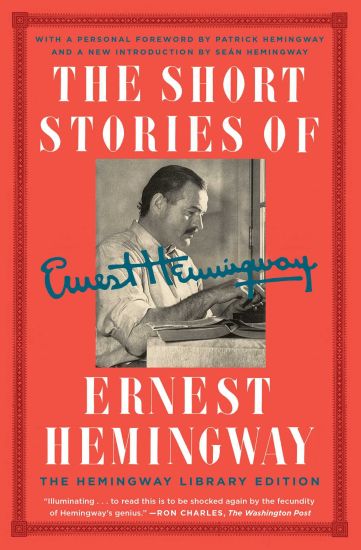
The Short Stories of Ernest Hemingway: The Hemingway Library Collector's Edition
The fourth in the series of new annotated editions of Ernest Hemingway's work, edited by the author's grandson Se n and introduced by his son Patrick, this "illuminating" (The Washington Post) collection includes the best of the well-known classics as well as unpublished stories, early drafts, and notes that "offer insight into the mind and methods of one of the greatest practitioners of the story form" (Kirkus Reviews). Ernest Hemingway is a cultural icon--an archetype of rugged masculinity, a romantic ideal of the intellectual in perpetual exile--but, to his countless readers, Hemingway remains a literary force much greater than his image. Of all of Hemingway's canonical fictions, perhaps none demonstrate so forcefully the power of the author's revolutionary style as his short stories. In classics like "Hills like White Elephants," "The Butterfly in the Tank," and "The Short Happy Life of Francis Macomber," Hemingway shows us great literature compressed to its most potent essentials. We also see, in Hemingway's short fiction, the tales that created the legend: these are stories of men and women in love and in war and on the hunt, stories of a lost generation born into a fractured time. The Short Stories of Ernest Hemingway presents many of Hemingway's most famous classics alongside rare and unpublished material: Hemingway's early drafts and correspondence, his dazzling out-of-print essay on the art of the short story, and two marvelous examples of his earliest work--his first published story, "The Judgment of Manitou," which Hemingway wrote when still a high school student, and a never-before-published story, written when the author was recovering from a war injury in Milan after WWI. This work offers vital insight into the artistic development of one of the twentieth century's greatest writers. It is a perfect introduction for a new generation of Hemingway readers, and it belongs in the collection of any true Hemingway fan.
The Short Stories of Ernest Hemingway: The Hemingway Library Collector's Edition
The fourth in the series of new annotated editions of Ernest Hemingway's work, edited by the author's grandson Se n and introduced by his son Patrick, this "illuminating" (The Washington Post) collection includes the best of the well-known classics as well as unpublished stories, early drafts, and notes that "offer insight into the mind and methods of one of the greatest practitioners of the story form" (Kirkus Reviews). Ernest Hemingway is a cultural icon--an archetype of rugged masculinity, a romantic ideal of the intellectual in perpetual exile--but, to his countless readers, Hemingway remains a literary force much greater than his image. Of all of Hemingway's canonical fictions, perhaps none demonstrate so forcefully the power of the author's revolutionary style as his short stories. In classics like "Hills like White Elephants," "The Butterfly in the Tank," and "The Short Happy Life of Francis Macomber," Hemingway shows us great literature compressed to its most potent essentials. We also see, in Hemingway's short fiction, the tales that created the legend: these are stories of men and women in love and in war and on the hunt, stories of a lost generation born into a fractured time. The Short Stories of Ernest Hemingway presents many of Hemingway's most famous classics alongside rare and unpublished material: Hemingway's early drafts and correspondence, his dazzling out-of-print essay on the art of the short story, and two marvelous examples of his earliest work--his first published story, "The Judgment of Manitou," which Hemingway wrote when still a high school student, and a never-before-published story, written when the author was recovering from a war injury in Milan after WWI. This work offers vital insight into the artistic development of one of the twentieth century's greatest writers. It is a perfect introduction for a new generation of Hemingway readers, and it belongs in the collection of any true Hemingway fan.
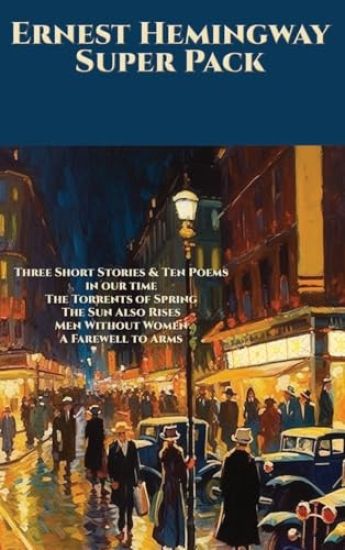
Ernest Hemingway Super Pack

Ernest Hemingway Super Pack

Ernest Hemingway

Wilder Publications
2025
pokkari
Ernest Hemingway was one of the most influential writers of the 20th century, known for his distinctive prose style and his exploration of the human condition. His literary journey began during World War I, where he served as an ambulance driver for the Red Cross. The war profoundly impacted him, shaping his worldview and informing much of his later work. Hemingway is often associated with the "Lost Generation," a term coined by Gertrude Stein to describe a group of American expatriates who felt disillusioned by the devastation of World War I.In Paris during the 1920s, Hemingway became a central figure in the expatriate literary scene, mingling with other luminaries such as Gertrude Stein, who became a mentor and a significant influence on his writing. Stein's avant-garde ideas and her salon gatherings provided a fertile ground for Hemingway's artistic development. Her encouragement helped him refine his minimalist style, which would later define his most celebrated works such as A Farewell to Arms.Hemingway's early books all explore the disillusionment of the lost generation in the aftermath of World War One. His breath taking economical style shook up the literary field and made him a giant of literature. Included in this omnibus collection are Three Short Stories & Ten Poems, In Our Time, The Torrents of Spring, The Sun Also Rises, Men Without Women, and A Farewell to Arms.
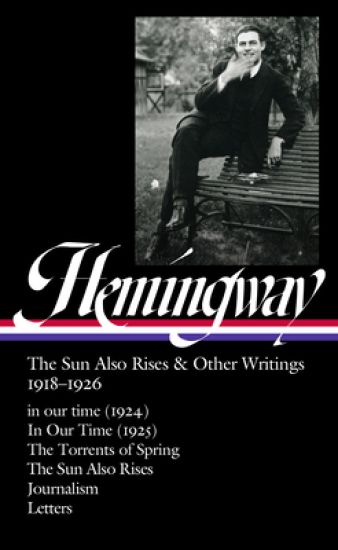
Ernest Hemingway: The Sun Also Rises & Other Writings 1918-1926 (Loa #334): In Our Time (1924) / In Our Time (1925) / The Torrents of Spring / The Sun
Library of America launches its long-awaited Hemingway edition with a landmark collection of writings from his breakthrough years, in newly edited, authoritative texts. With a letter of introduction from Sherwood Anderson, Ernest Hemingway travelled to Paris in 1921. There, he ame into contact with Gertrude Stein, F. Scott Fitzgerald, Pablo Picasso, James Joyce, and other expatriate writers and artists integral to his rapid development as a writer. This volume brings together work from the extraordinary period of 1918 to 1926, in which Hemingway's famous prose style became fully formed. It includes his work for the Toronto Star and Hearst's International News Service, the indelible stories of In Our Time (1925), The Torrents of Spring (1925), and his masterpiece, The Sun Also Rises (1926). Edited by Hemingway scholar Robert W. Trogdon, this volume features newly edited, corrected texts of In Our Time, The Torrents of Spring and The Sun Also Rises, fixing errors and restoring Hemingway's original punctuation. It presents the 1924 edition of in our time issued by Three Mountains Press as a modernist masterpiece in its own right, apart from the subsequent versions published by Boni & Liveright and Scribners. It includes the story "Up in Michigan," one of only a few stories dating from the period before 1923 that was not lost in Hemingway's suitcase in the Gare de Lyon and that was originally intended as the opening story of In Our Time, and the hard-to-find, previously uncollected story "A Divine Gesture." Also here are a selection of Hemingway's letters from the period, which cast light on his breakthrough years and at the extraordinary international modernist moment of which he was a crucial part.
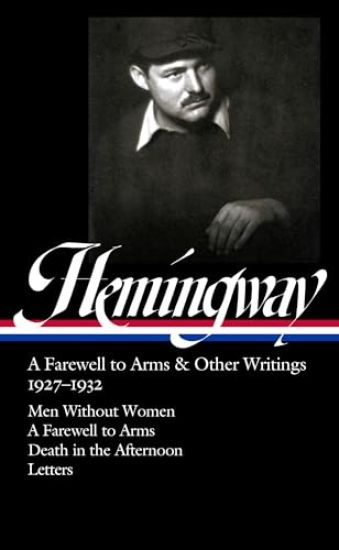
Ernest Hemingway: A Farewell to Arms & Other Writings 1927-1932 (Loa #384): Men Without Women / A Farewell to Arms / Death in the Afternoon / Letters
The Library of America's definitive Hemingway edition continues with three classic works, all presented in new, corrected texts. This much anticipated second volume in Library of America's edition of the collected writings of Ernest Hemingway brings together 3 of the author's classic works from the late 1920s and early 1930s, all presented in new, corrected texts prepared by Hemingway scholar Robert W. Trogdon. Reinstating expletives redacted by Hemingway's editor Maxwell Perkins, fixing numerous errors, and restoring Hemingway's preferred American spellings, these texts bring us closer than ever before to Hemingway's intentions for his books. Here for the first time in one volume are: Men Without Women (1927), Hemingway's second short story collection, which includes such classic stories as "In Another Country," "The Killers," "Ten Indians," and "Hills Like White Elephants"A Farewell to Arms (1929), Hemingway's heartbreaking novel of love and warDeath in the Afternoon (1932), his grand meditation on bullfighting, mortality, and writing. For this deluxe edition, all 81 of the book's photographs of bullfights and bullfighters have been reproduced from the original prints and postcards gathered by the author, bringing them vividly to life as never before.The volume also includes a selection of Hemingway's letters from 1927 to 1932 that cast light on his life, artistic aims, and publishing activities during this period. A detailed chronology of the author's life, explanatory notes, and a textual essay bring added value for readers.
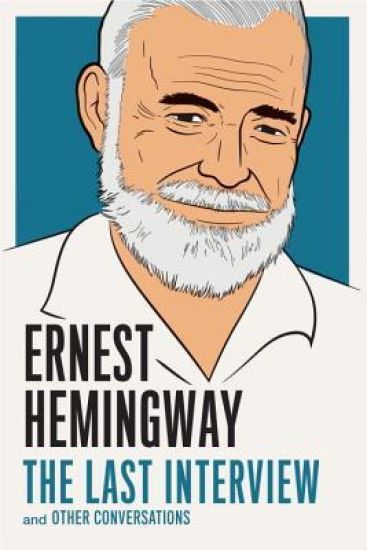
Ernest Hemingway: The Last Interview

Ernest Hemingway: The Last Interview

Ernest Hemingway

Melville House Publishing
2015
nidottu
An extraordinary collection of pugnacious, charming, and revealing interviews with the Nobel Prize-winning author who defined and transformed American literature. Hemingway was not only known for his understated style, but for his public image as America's greatest author and journalist--and for the grand, expansive, adventurous way he lived his life. The prickly wit and fierce dedication to his craft that defined Hemingway's life and work shine through in this unprecedented collection of interviews
Ernest Hemingway

Ernest Hemingway

Ernest Hemingway

BENEDICTION CLASSICS
2023
pokkari
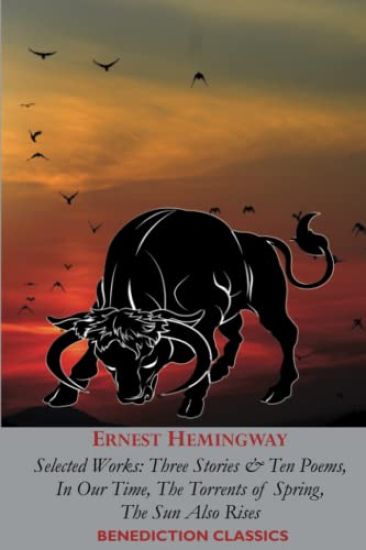
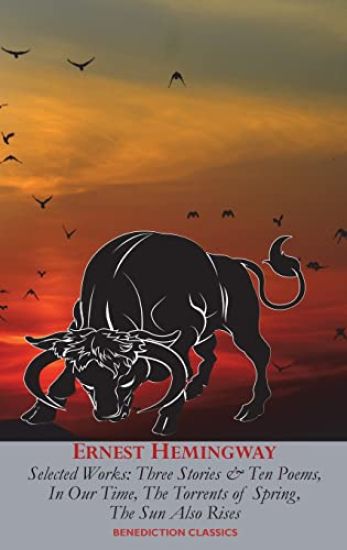
"He is strikingly original, and in the dry compressed little vignettes of In Our Time hasalmost invented a form of his own." - Edmund Wilson."The Sun Also Rises is Hemingway's first and best novel." - Robert McCrum, The Guardian."The delightful entertainment of The Torrents of Spring... is full-blooded comedy, with a sting of satire." - The New York Times."Hemingway remodelled American short fiction." - Michael Reynolds (Hemingway biographer) Ernest Hemingway: Selected Works is a brilliantly varied collection. Three Stories and Ten Poems was Hemingway's first book; critic Edmund Wilson describes the writing as of "the first distinction;" biographer James Mellow considers it one of Hemingway's early masterpieces. Hemingway remodelled American short fiction; In Our Time is one of the most important twentieth-century collections of short stories. The Sun Also Rises, perhaps Hemingway's best novel, perfectly captures the period between World War I and the Great Depression. It made Hemingway a celebrity. Young women began to emulate Brett, the heroine, while male students at Ivy League universities wanted to become "Hemingway heroes." The Torrents of Spring, a comedy, sets out to amuse, and this it does. Ernest Miller Hemingway (July 21, 1899 - July 2, 1961) was an American journalist, novelist, short-story writer, and hunter. He was awarded the 1954 Nobel Prize in Literature for "his mastery of the art of narrative ... and for the influence that he has exerted on contemporary style." His economical and understated style-using what he termed "the iceberg theory" or "the theory of omission"-has had a strong influence on twentieth-century fiction. Many of his novels are considered classics of American literature. Writer Richard Ford calls Fitzgerald, Hemingway, and Faulkner "the Three Kings who set the measure for every writer since."
Ernest Hemingway Selected Works

Ernest Hemingway Selected Works

Ernest Hemingway

BENEDICTION CLASSICS
2023
sidottu
"He is strikingly original, and in the dry compressed little vignettes of In Our Time hasalmost invented a form of his own." - Edmund Wilson."The Sun Also Rises is Hemingway's first and best novel." - Robert McCrum, The Guardian."The delightful entertainment of The Torrents of Spring... is full-blooded comedy, with a sting of satire." - The New York Times."Hemingway remodelled American short fiction." - Michael Reynolds (Hemingway biographer) Ernest Hemingway: Selected Works is a brilliantly varied collection. Three Stories and Ten Poems was Hemingway's first book; critic Edmund Wilson describes the writing as of "the first distinction;" biographer James Mellow considers it one of Hemingway's early masterpieces. Hemingway remodelled American short fiction; In Our Time is one of the most important twentieth-century collections of short stories. The Sun Also Rises, perhaps Hemingway's best novel, perfectly captures the period between World War I and the Great Depression. It made Hemingway a celebrity. Young women began to emulate Brett, the heroine, while male students at Ivy League universities wanted to become "Hemingway heroes." The Torrents of Spring, a comedy, sets out to amuse, and this it does. Ernest Miller Hemingway (July 21, 1899 - July 2, 1961) was an American journalist, novelist, short-story writer, and hunter. He was awarded the 1954 Nobel Prize in Literature for "his mastery of the art of narrative ... and for the influence that he has exerted on contemporary style." His economical and understated style-using what he termed "the iceberg theory" or "the theory of omission"-has had a strong influence on twentieth-century fiction. Many of his novels are considered classics of American literature. Writer Richard Ford calls Fitzgerald, Hemingway, and Faulkner "the Three Kings who set the measure for every writer since."
The Sun Also Rises by Ernest Hemingway (Annotated)
The Sun Also Rises is a literary masterwork of classic literature.Widely considered by audiences and literary critics to be The Great American Novel.As relevant today as it was almost 100 years ago What literary movement did Hemingway belong to?the modernist literary movement Hemingway was also among the leaders of the modernist literary movement, which took place after World War I. Modernist writers, including Gertrude Stein, William Faulkner, Marianne Moore, John Dos Passos, F. Scott Fitzgerald, e.e. cummings, Virginia Woolf, and William Carlos Williams, often experimented with language.Why was Ernest Hemingway important in history?He was noted both for the intense masculinity of his writing and for his adventurous and widely publicized life. His lucid and succinct prose style exerted a powerful influence on British and american fiction in the 20th century.What did Hemingway contribute to Literature?His prolific literary contributions also include collections of stories that are short, many of which have appeared in textbooks and anthologies. He also published essays, memoirs, and nonfiction, often about hunting, fishing, and bullfighting, all activities long associated with Hemingway's career and life.What are two facts about Ernest Hemingway?Little Known Facts about Ernest Hemingway He survived back-to-back plane crashes 1 day apart....He dedicated a book to each of his 4 wives....An expert fisherman, he set a world record in 1938 when he caught 7 marlins in 1 day.