Kirjojen hintavertailu. Mukana 12 459 402 kirjaa ja 12 kauppaa.

Kirjahaku

Etsi kirjoja tekijän nimen, kirjan nimen tai ISBN:n perusteella.

2 kirjaa tekijältä Ernest John

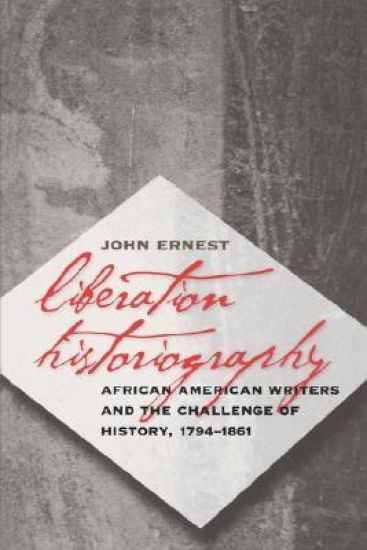
Liberation Historiography

Liberation Historiography

Ernest John

The University of North Carolina Press
2004
nidottu
As the story of the United States was recorded in pages written by white historians, early-nineteenth-century African American writers faced the task of piecing together a counterhistory: an approach to history that would present both the necessity of and the means for the liberation of the oppressed. In Liberation Historiography, John Ernest demonstrates that African Americans created a body of writing in which the spiritual, the historical, and the political are inextricably connected. Their literature serves not only as historical recovery but also as historical intervention. Ernest studies various cultural forms including orations, books, pamphlets, autobiographical narratives, and black press articles. He shows how writers such as Martin R. Delany, David Walker, Frederick Douglass, William Wells Brown, and Harriet Jacobs crafted their texts in order to resituate their readers in a newly envisioned community of faith and moral duty. Antebellum African American historical representation, Ernest concludes, was both a reading of source material on black lives and an unreading of white nationalist history through an act of moral imagination.
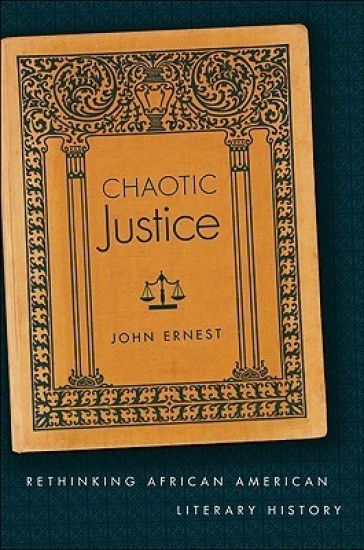
Chaotic Justice

Chaotic Justice

Ernest John

The University of North Carolina Press
2009
nidottu
What is African American about African American literature? Why identify it as a distinct tradition? John Ernest contends that too often scholars have relied on naive concepts of race, superficial conceptions of African American history, and the marginalization of important strains of black scholarship. With this book, he creates a new and just retelling of African American literary history that neither ignores nor transcends racial history. Ernest revisits the work of nineteenth-century writers and activists such as Henry 'Box' Brown, Frederick Douglass, Harriet Wilson, William Wells Brown, and Sojourner Truth, demonstrating that their concepts of justice were far more radical than those imagined by most white sympathizers. He sheds light on the process of reading, publishing, studying, and historicizing this work during the twentieth century. Looking ahead to the future of the field, Ernest offers new principles of justice that grant fragmented histories, partial recoveries, and still-unprinted texts the same value as canonized works. His proposal is both a historically informed critique of the field and an invigorating challenge to present and future scholars.