Kirjojen hintavertailu. Mukana 11 518 949 kirjaa ja 12 kauppaa.

Kirjahaku

Etsi kirjoja tekijän nimen, kirjan nimen tai ISBN:n perusteella.

6 kirjaa tekijältä Ernest Samuels

Bernard Berenson

Bernard Berenson

Ernest Samuels

The Belknap Press
1979
nidottu
Critic, arbiter of taste, renowned authority on Renaissance painting, and oracle to millionaire art collectors, Bernard Berenson was the most formidable presence in the Anglo-American art world for more than thirty years. His Villa I Tatti near Florence was a magnet for European and American intellectuals; he was able to say, late in life, that most of the Italian paintings that had come to the United States had “my visa on their passport.” Twenty years after his death he remains a paradoxical figure—fit challenge for a Pulitzer Prize–winning biographer.The story of the making of the connoisseur spans four decades, from Berenson’s childhood in Lithuania and in an immigrant enclave in Boston to the triumphant tour of the United States that confirmed his international reputation. Ernest Samuels interweaves with great skill the many threads of the narrative. No less fascinating than Berenson’s own development, and the accidents that shaped his career, are his relations with an extraordinary cast of characters whose lives impinged on his—among them George Santayana, William James, Bertrand Russell, Logan Pearsall Smith, Norman and Hutchins Hapgood, Oscar Wilde, Vernon Lee, the Michael Fields, Gertrude Stein, Edith Wharton, Roger Fry, and, most notably, the fabled Mrs. Jack Gardner. His relationship with Mary Smith Costelloe, who left her husband and children for him and eventually became his wife, was so close that the book is almost as much her story as his.Drawing on the thousands of letters B.B. and Mary wrote and the diaries she kept, Samuels is able to convey Berenson’s thoughts and impressions as well as the outward events of these crucial years of his life. He blends sympathy and irony in his many-faceted portrayal of a complex man and a remarkable career. It is a compelling book.
Henry Adams

Henry Adams

Ernest Samuels

The Belknap Press
1995
nidottu
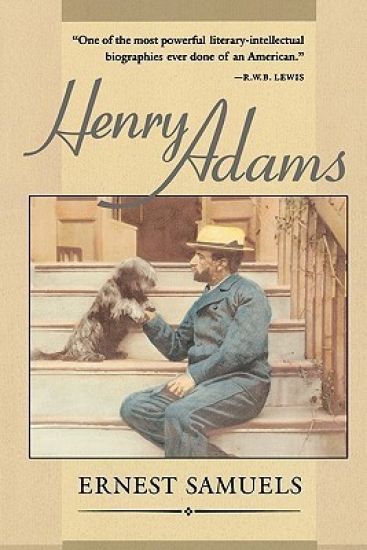
Henry Adams sought, late in life, to thwart prospective biographers by writing his own biography. Published soon after his death in 1918, The Education of Henry Adams was rightly greeted as a masterpiece. Not until thirty years later, with the appearance of the first volume of Ernest Samuels’s biography, did it become apparent how much the story had been colored by Adams’s singular philosophy of history and how great was the disparity between the protagonist of the Education and Adams as he actually was. Upon its completion in 1964, Samuels’s life of Henry Adams was hailed as “one of the great biographical achievements of our time”; its laurels included a Pulitzer Prize.Ernest Samuels has now distilled his ample narrative into a single absorbing volume. We see Adams as a lively undergraduate, in contrast to the jaded young man of the Education; as budding writer, newspaper correspondent, eager participant in political maneuverings in Washington and at the American embassy in London; as teacher at Harvard and editor of the North American Review; settled in Washington, as scholar, biographer, historian, novelist; as insatiable traveler; as friend and adviser to statesmen; as elderly cosmopolite spending half of each year abroad; and always as witty chronicler of the social scene and trenchant commentator on the events of his time. We are drawn into the personal drama of Adams’s middle years: his married life with Clover; the halcyon period in Washington in the early 1880s, catastrophically terminated by Clover’s depression and suicide; his growing passion for Elizabeth Cameron; and his flight to the South Seas. Throughout the book we follow the genesis and progress of his writings, from his muck-raking journalism in President Grant’s Washington, through the social and political criticism of his novels, his biographies, and his great History, to the classic Mont Saint Michel and Chartres, the daring theories of the Education, and his last essays.Few biographies have so broad a canvas—sixty years of American political, social, and intellectual life, from the pre–Civil War years to the First World War. And few offer so revealing a portrait of a complex human being and an extraordinary career.
Bernard Berenson

Bernard Berenson

Ernest Samuels

Harvard University Press
1987
sidottu
Controversy swirls around Bernard Berenson today as it did in his middle years, before and between two world wars. Who was this man, this supreme connoisseur of Italian Renaissance painting? How did he support his elegant estate near Florence, his Villa I Tatti? What exactly were his relations with the art dealer Joseph Duveen? What part did his wife, Mary, play in his scholarly work and professional career? The answers are to be found in the day-to-day record of his life as he lived it--as reported at first hand in his and Mary's letters and diaries and reflected in the countless personal and business letters they received. His is one of the most fully documented lives of this century. Ernest Samuels, having spent twenty years studying the thousands of letters and other manuscripts, presents his story in absorbing detail. Berenson helped Isabella Stewart Gardner build her great collection and performed similar though lesser services for other wealthy Americans. It was merely an avocation and a useful source of income; his vocation was scholarship. But after 1904, when the book opens, his expertise was in ever-greater demand: a purchaser's only assurance of the authorship of an Italian painting was the opinion of an expert, and in this field Berenson was pre-eminent. Increasingly he was drawn into the lucrative world of the art dealers; inevitably Joseph Duveen found it essential to enlist his services, at first ad hoc, then by contractual agreement. Samuels charts the course of Berenson's long association with Duveen Brothers, detailing the financial arrangements, the humdrum chores and major contested attributions, the periodic clashes between the stubborn scholar and the arrogant entrepreneur. The portrayal of Berenson's relationship with Mary is especially intriguing: a union of opposites in all but brains and wit, bonded--despite love affairs, jealousies, recriminations--no longer by passion but by shared concerns. Impinging on their lives are those of a huge circle of friends and acquaintances in America and the beau monde of Europe. Both as biography and as a chapter of social and cultural history, it is a compelling book.
Henry Adams

Henry Adams

Ernest Samuels

HARVARD UNIVERSITY PRESS
1958
sidottu
"Education had ended in 1871, life was complete in 1890." With this paradoxical statement from "The Education of Henry Adams," Adams apparently dismissed from the record twenty of the most interesting and active years of his career. Those two decades embraced the first great productive season of his literary genius and the most significant years of his emotional life. Opening on the highest note of expectation and closing with his desperate flight to the South Seas in 1890, a divided and lonely figure, that season of fulfillment and inner growth is the subject of this book. The relationship between Adams' life and writings grew steadily richer as his literary artistry matured, and with that process as his main concern, Mr. Samuels has written a book equally rewarding as a biography and as a critical study. Perhaps the greatest achievement biographically is a definitive and absorbing account of the true relationship between Henry Adams and his wife and an introduction to the grand passion for Elizabeth Cameron which was to affect the rest of his life. The whole intense inner drama of his feelings is really opened up for the first time, as often as possible in his own words, to the tragedy of his wife's suicide, the embittered years of work concluding the great History, and, finally, the escape to the South Seas in an effort to overcome the intolerable intensity of his love for Mrs. Cameron. Through detailed analyses of Adams' writings, Mr. Samuels shows how all this drama had its counterpoint in his literary activities and eventually became transformed into works of literary art. Equally interesting is the way in which the ideas for his biographical and historical writing emerged from the wide sources of his reading, were tested in the remarkable give and take of his circle, and finally adapted to the themes of his writing. This is the most exhaustive biographical and critical study of Adams' middle years ever made, and probably answers, so far as it is humanly possible, every unanswered question about Adams' life and the writing of his books. From the wealth of family papers deposited with the Massachusetts Historical Society and numerous other sources, Mr. Samuels has unveiled an increasingly complex personality - a brilliant mind in the grip of many prejudices and contradictions, yet one so terrifyingly honest that it more than ever defies explanation in any ordinary terms. The mass of fresh materials used includes letters from correspondents around the world and admits us to the other side of the enormous dialogue which Adams carried on with the members of his circle. Certain finds have revealed some invaluable sidelights including a striking fragment of Adams' diary for 1888-1889; a sheaf of his sonnets to Elizabeth Cameron, and the unpublished remainder of his letters to his wife. Much untouched material has also come to light in newspapers, magazines, public archives, court records, memoirs, and biographies. This is the second of three volumes of Mr. Samuels' definitive study of Henry Adams. The other two are "The Young Henry Adams and Henry Adams: The Major Phase."