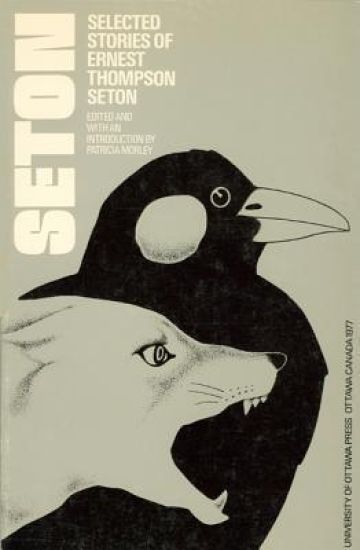
In the late 19th century, the impact of the Canadian wilderness on writers led to the formation of a new and uniquely Canadian genre, the realistic animal story. This collection of Ernest Thompson Seton's short stories reflects his talents as writer, naturalist, and artist.
Ernest Thompson Seton (August 14, 1860 - October 23, 1946) was an author (published in the United Kingdom, Canada, and the US), wildlife artist, founder of the Woodcraft Indians in 1902 (renamed Woodcraft League of America) and one of the founding pioneers of the Boy Scouts of America (BSA) in 1910. Seton also influenced Lord Baden-Powell, the founder of Scouting. His notable books related to Scouting include The Birch Bark Roll and the Boy Scout Handbook. He is responsible for the appropriation and incorporation of what he believed to be American Indian elements into the traditions of the BSA.
Ernest Thompson Seton (August 14, 1860 - October 23, 1946) was an author (published in the United Kingdom, Canada, and the US), wildlife artist, founder of the Woodcraft Indians in 1902 (renamed Woodcraft League of America) and one of the founding pioneers of the Boy Scouts of America (BSA) in 1910. Seton also influenced Lord Baden-Powell, the founder of Scouting. His notable books related to Scouting include The Birch Bark Roll and the Boy Scout Handbook. He is responsible for the appropriation and incorporation of what he believed to be American Indian elements into the traditions of the BSA.Ernest Thompson Seton, born Ernest Evan Thompson in South Shields, County Durham (now part of South Tyneside, Tyne and Wear), England of Scottish parents. Seton's family emigrated to Canada in 1866. Most of his childhood was spent in Toronto, Ontario. As a youth, he retreated to the woods to draw and study animals as a way of avoiding his abusive father. He won a scholarship in art to the Royal Academy in London, England.On his twenty-first birthday, Seton's father presented him with an invoice for all the expenses connected with his childhood and youth, including the fee charged by the doctor who delivered him. He paid the bill, but never spoke to his father again
Ernest Thompson Seton (August 14, 1860 - October 23, 1946) was an author (published in the United Kingdom, Canada, and the US), wildlife artist, founder of the Woodcraft Indians in 1902 (renamed Woodcraft League of America) and one of the founding pioneers of the Boy Scouts of America (BSA) in 1910. Seton also influenced Lord Baden-Powell, the founder of Scouting. His notable books related to Scouting include The Birch Bark Roll and the Boy Scout Handbook. He is responsible for the appropriation and incorporation of what he believed to be American Indian elements into the traditions of the BSA.Ernest Thompson Seton, born Ernest Evan Thompson in South Shields, County Durham (now part of South Tyneside, Tyne and Wear), England of Scottish parents. Seton's family emigrated to Canada in 1866. Most of his childhood was spent in Toronto, Ontario. As a youth, he retreated to the woods to draw and study animals as a way of avoiding his abusive father. He won a scholarship in art to the Royal Academy in London, England.On his twenty-first birthday, Seton's father presented him with an invoice for all the expenses connected with his childhood and youth, including the fee charged by the doctor who delivered him. He paid the bill, but never spoke to his father again
Ernest Thompson Seton (August 14, 1860 - October 23, 1946) was an author (published in the United Kingdom, Canada, and the US), wildlife artist, founder of the Woodcraft Indians in 1902 (renamed Woodcraft League of America) and one of the founding pioneers of the Boy Scouts of America (BSA) in 1910. Seton also influenced Lord Baden-Powell, the founder of Scouting. His notable books related to Scouting include The Birch Bark Roll and the Boy Scout Handbook. He is responsible for the appropriation and incorporation of what he believed to be American Indian elements into the traditions of the BSA.Ernest Thompson Seton, born Ernest Evan Thompson in South Shields, County Durham (now part of South Tyneside, Tyne and Wear), England of Scottish parents. Seton's family emigrated to Canada in 1866. Most of his childhood was spent in Toronto, Ontario. As a youth, he retreated to the woods to draw and study animals as a way of avoiding his abusive father. He won a scholarship in art to the Royal Academy in London, England.On his twenty-first birthday, Seton's father presented him with an invoice for all the expenses connected with his childhood and youth, including the fee charged by the doctor who delivered him. He paid the bill, but never spoke to his father again
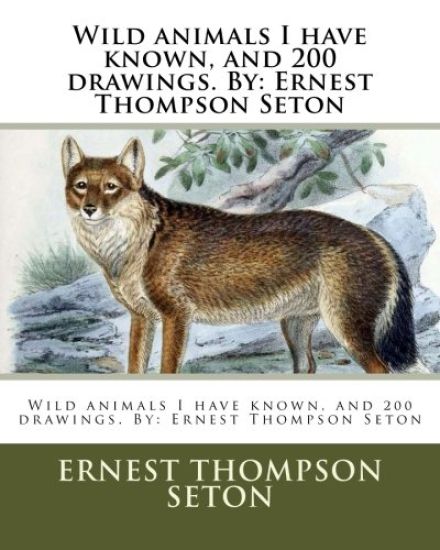
This collection of eight engrossing stories by a noted Canadian naturalist, illustrator, and painter initially appeared to critical and popular acclaim 1898. More than a century later, Seton's masterful blend of scientific observation and romanticism continues to delight readers. Memorable characters include Old Lobo, the leader of a wolfpack; Silverspot, a wise old crow; Raggylug, a young cottontail; Bingo, an errant hound; and four other remarkable creatures. 200 engaging b/w illus. by the author.
Trieste Publishing has a massive catalogue of classic book titles. Our aim is to provide readers with the highest quality reproductions of fiction and non-fiction literature that has stood the test of time. The many thousands of books in our collection have been sourced from libraries and private collections around the world.The titles that Trieste Publishing has chosen to be part of the collection have been scanned to simulate the original. Our readers see the books the same way that their first readers did decades or a hundred or more years ago. Books from that period are often spoiled by imperfections that did not exist in the original. Imperfections could be in the form of blurred text, photographs, or missing pages. It is highly unlikely that this would occur with one of our books. Our extensive quality control ensures that the readers of Trieste Publishing's books will be delighted with their purchase. Our staff has thoroughly reviewed every page of all the books in the collection, repairing, or if necessary, rejecting titles that are not of the highest quality. This process ensures that the reader of one of Trieste Publishing's titles receives a volume that faithfully reproduces the original, and to the maximum degree possible, gives them the experience of owning the original work.We pride ourselves on not only creating a pathway to an extensive reservoir of books of the finest quality, but also providing value to every one of our readers. Generally, Trieste books are purchased singly - on demand, however they may also be purchased in bulk. Readers interested in bulk purchases are invited to contact us directly to enquire about our tailored bulk rates.
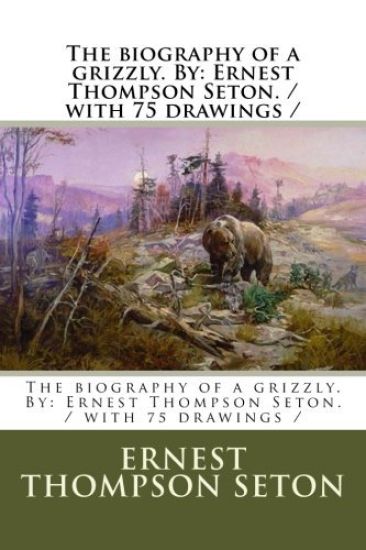
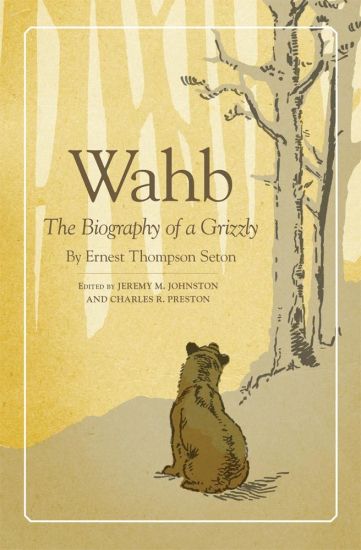
First published more than a century ago, The Biography of a Grizzly recounts the life of a fictitious bear named Wahb who lived and died in the Greater Yellowstone region. This new edition combines Ernest Thompson Seton's classic tale and original illustrations with historical and scientific context for Wahb's story, providing a thorough understanding of the setting, cultural connections, biology, and ecology of Seton's best-known book. By the time The Biography of a Grizzly was published in 1900, grizzly bears had been hunted out of much of their historical range in North America. The characterization of Wahb, along with Seton's other anthropomorphic tales of American wildlife, helped to change public perceptions and promote conservation. As editors Jeremy M. Johnston and Charles R. Preston remind us, however, Seton's approach to writing about animals put him at the center of the ""Nature-Faker"" controversy of the early twentieth century, when John Burroughs and Theodore Roosevelt, among others, denounced sentimental representations of wildlife. The editors address conservation scientists' continuing concerns about inaccurate depictions of nature in popular culture. Despite its anthropomorphism, Seton's paradoxical book imparts a good deal of insightful and accurate natural history, even as its exaggerations shaped early-twentieth-century public opinion on conservation in often counterproductive ways. By complicating Seton's enthralling tale with scientific observations of grizzly behavior in the wild, Johnston and Preston evaluate the story's accuracy and bring the story of Yellowstone grizzlies into the present day. Preserving the 1900 edition's original design and illustrations, Wahb brings new understanding to an American classic, updating the book for current and future generations.
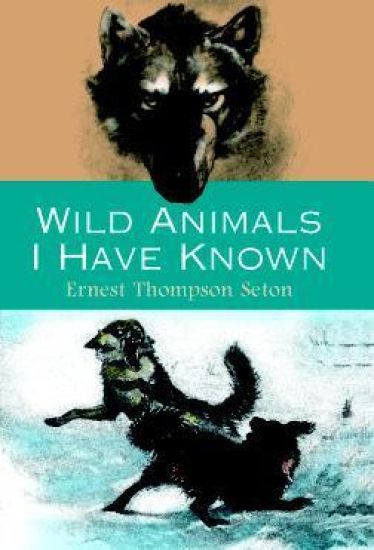
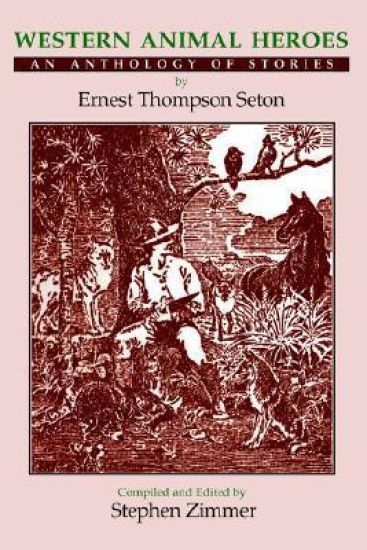
Naturalist Ernest Thompson Seton created a new literary form when he began writing stories about his adventures with wild animals in the 1890s. His first stories were compiled in the book, "Wild Animals I Have Known," that became popular throughout the United States and Canada. The stories are spellbinding chronicles of wild animal courage, intelligence, and endurance as they valiantly attempt to escape the traps, poisons, guns, and lariats of their human pursuers. Seton was renowned for his scientific studies of American wildlife. His stories about wild animals, however, were a mix of fact and fiction that heightened the drama of each animal's life or death struggle. During the 1890s Seton traveled to the American West and from his experiences wrote the thrilling tales contained in this collection. The exploits of Lobo (wolf), The Pacing Mustang, Tito (coyote), Monarch (grizzly), Coaly-Bay (horse), Johnny Bear, and Badlands Billy (wolf) are presented in their entirety along with many of Seton's drawings.Stephen Zimmer was Director of the Seton Memorial Library at Philmont Scout Ranch at Cimarron, New Mexico for twenty years. For this collection he contributed a biographical introduction of Ernest Thompson Seton and the historical background for each story.
Ernest Thompson Seton (born Ernest Evan Thompson August 14, 1860 - October 23, 1946) was an author, wildlife artist, founder of the Woodcraft Indians in 1902 (renamed Woodcraft League of America), and one of the founding pioneers of the Boy Scouts of America (BSA) in 1910. Seton also influenced Lord Baden-Powell, the founder of one of the first Scouting organizations. His writings were published in the United Kingdom, Canada, the US, and the USSR; his notable books related to Scouting include The Birch Bark Roll and the Boy Scout Handbook. He is responsible for the appropriation and incorporation of what he believed to be American Indian elements into the traditions of the BSA.
Ernest Thompson Seton (born Ernest Evan Thompson August 14, 1860 - October 23, 1946) was an author, wildlife artist, founder of the Woodcraft Indians in 1902 (renamed Woodcraft League of America), and one of the founding pioneers of the Boy Scouts of America (BSA) in 1910. Seton also influenced Lord Baden-Powell, the founder of one of the first Scouting organizations. His writings were published in the United Kingdom, Canada, the US, and the USSR; his notable books related to Scouting include The Birch Bark Roll and the Boy Scout Handbook. He is responsible for the appropriation and incorporation of what he believed to be American Indian elements into the traditions of the BSA.
Ernest Thompson Seton (born Ernest Evan Thompson August 14, 1860 - October 23, 1946) was an author, wildlife artist, founder of the Woodcraft Indians in 1902 (renamed Woodcraft League of America), and one of the founding pioneers of the Boy Scouts of America (BSA) in 1910. Seton also influenced Lord Baden-Powell, the founder of one of the first Scouting organizations. His writings were published in the United Kingdom, Canada, the US, and the USSR; his notable books related to Scouting include The Birch Bark Roll and the Boy Scout Handbook. He is responsible for the appropriation and incorporation of what he believed to be American Indian elements into the traditions of the BSA.
Ernest Thompson Seton (born Ernest Evan Thompson August 14, 1860 - October 23, 1946) was an author, wildlife artist, founder of the Woodcraft Indians in 1902 (renamed Woodcraft League of America), and one of the founding pioneers of the Boy Scouts of America (BSA) in 1910. Seton also influenced Lord Baden-Powell, the founder of one of the first Scouting organizations. His writings were published in the United Kingdom, Canada, the US, and the USSR; his notable books related to Scouting include The Birch Bark Roll and the Boy Scout Handbook. He is responsible for the appropriation and incorporation of what he believed to be American Indian elements into the traditions of the BSA.