Kirjojen hintavertailu. Mukana 11 699 587 kirjaa ja 12 kauppaa.

Kirjahaku

Etsi kirjoja tekijän nimen, kirjan nimen tai ISBN:n perusteella.

14 kirjaa tekijältä Ernesto Cardenal

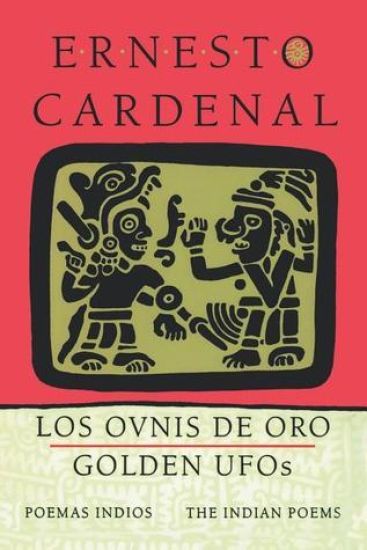
Golden UFOs: the Indian Poems

Golden UFOs: the Indian Poems

Ernesto Cardenal

Indiana University Press
1992
pokkari
In 1898 Tahirassawichi went to Washington "only to speak about religion" (as he told the American government) only to preserve the prayers. And the Capitol did not impress him." —from "Tahirassawichi in Washington" Ernesto Cardenal, Nicaraguan poet, priest, and revolutionary, foresees a new order for humanity. Here in his Indian poems, Father Cardenal interweaves myth, legend, history, and contemporary reality to speak to many subjects, including the assaults on the Iroquois Nation, the political and cultural life of ancient Mexico, the Ghost Dance movement, the disappearance of the buffalo, U.S. policy during the Vietnam War, and human rights in Central America. Each text is rich with history, poetry, and spiritual insight. This bilingual edition is the only complete collection of Father Cardenal's Indian poems in either Spanish or English. Cardenal has checked and approved the translations and the glossary of cultural and historical referents. "Of epic proportions . . . The literal translation conveys the epigrammic style and didactic, political message. . . . Of timely interest." —Library Journal "Priest and Nicaraguan revolutionary as well as poet, Cardenal epitomizes what makes literature live in Central America today. His poems are both sonorous and accessible, political and mystical." —Booklist " . . . a spectacular work . . ." —Books of the South West
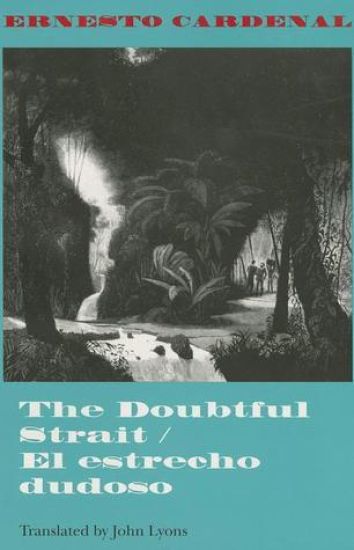
The Doubtful Strait / El Estrecho Dudoso

The Doubtful Strait / El Estrecho Dudoso

Ernesto Cardenal

Indiana University Press
1995
pokkari
" . . . very well translated . . . Cardenal merits praise for presenting, on such an ambitious scale, a passionate alternative history of the Spanish encounter with Central America." —Booklist "Combining hsitory with poetry, Cardenal exposes the violence, treachery, injustice, and exploitation that are so much a part of [Central America and Mexico's] past and present." —World Literature Today "Explore this dense, beautiful poem and you will be rewarded with riches that 'delight and hurt not'." —Nicaragua Update ". . . a remarkable text. . . . El estrecho dudoso is a masterful and compelling poetic account of early colonial Central America, and the translation is likewise masterful." —Colonial Latin American Historical Review In this book-length poem, Nicaraguan priest and revolutionary Ernesto Cardenal tells the story of the Spanish conquest of Central America from the "discovery" of the American continent to recent historical events. A remarkable achievement and an engrossing narrative, the poem is published here in both Spanish and English.
Apocalypse and Other Poems

Apocalypse and Other Poems

Ernesto Cardenal

NEW DIRECTIONS PUBLISHING CORPORATION
1971
nidottu
Apocalypse and Other Poems by Nicaragua's revolutionist poet-priest, Ernesto Cardenal, is the author's second book, the first of poetry, to be published by New Directions. The editors of this volume, Robert Pring-Mill and Donald D. Walsh, have chosen a representative selection of Cardenal's shorter protest poems, epigrams, religious, and Amerindian verse. Also included are two of Cardenal's most impressive longer works: the haunting and melodic elegy, "Coplas on the Death of Merton," and the title poem, "Apocalypse," in which the theme of an ever-threatening nuclear holocaust is the core of a modern rendering of the Book of Revelations. At Our Lady of Solentiname, his religious community on an island in Lake Nicaragua, living and working in the manner of the early Christians, Father Cardenal embodies what he professes: "Now in Latin America, to practice religion is to make revolution." An informative introduction has been contributed by Robert Pring-Mill of Oxford University. The translations are by Thomas Merton, Robert Pring-Mill, Kenneth Rexroth and Mireya Jaimes-Freyre, and Donald D. Walsh, who also translated In Cuba, Cardenal's assessment of Fidel Castro's revolutionary society, published by New Directions in 1974.
Zero Hour and Other Documentary Poems

Zero Hour and Other Documentary Poems

Ernesto Cardenal

NEW DIRECTIONS PUBLISHING CORPORATION
1980
nidottu
Zero Hour and Other Documentary Poems brings together in English translation eight of the longer poems by Nicaragua's impassioned Marxist priest, Ernesto Cardenal, described in the Times Literary Supplement as "the outstanding socially committed poet of his generation in Spanish America." His work, like Pablo Neruda's, is unabashedly political; like Ezra Pound's, his poems demonstrate history on an epic scale--but the voice is all his own and speaks from the heart of a land sunk for generations in poverty, oppression, and turmoil. As both activist and contemplative, Cardenal maintained strong ties with the Sandinist guerillas while at the same time living a form of primitive Christianity at his religious settlement of Our Lady of Solentiname on an island in Lake Nicaragua. In late 1977, amid increasing civil violence, the Nicaraguan National Guard utterly destroyed the Solentiname community, and Cardenal fled to neighboring Costa Rica, where he continued his efforts on behalf of the revolutionary movement. With the final collapse of the Somoza dictatorship in 1979, he returned to Nicaragua as his country's new Minister of Culture. Spanning a quarter century, the poems in Zero Hour constitute a vivid record of continuous struggle against flagrant exploitation and brutal indifference to common humanity.
Pluriverse

Pluriverse

Ernesto Cardenal

New Directions Publishing Corporation
2009
nidottu
Pluriverse: New and Selected Poems charts the life-work of the celebrated poet Ernesto Cardenal—“one of the world’s major poets” (Choice) and “the preeminent poet of Central America today” (Library Journal). Follow Cardenal’s poetic development across six decades, from the early exteriorismo poems and romantic epigrams of the early 1950s, to the increasingly spiritual and political verse he wrote as priest and activist (including his classic revolutionary documentary poem “Zero Hour”) to the shorter victory and ecology poems, and elegies to fallen Sandinistas, and on to the cosmic-mystical-scientific dimensions of his later work. “Here they are—” editor Jonathan Cohen writes in his Introduction, “to gladden your heart and enrich your soul.”
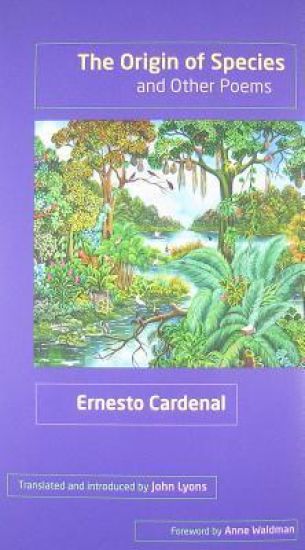
The Origin of Species and Other Poems

The Origin of Species and Other Poems

Ernesto Cardenal

Texas Tech Press,U.S.
2011
sidottu
Ernesto Cardenal, widely acknowledged as Latin America's greatest living poet, continues to craft works of striking beauty, as demonstrated in this collection’s title poem, an exquisite meditation on Charles Darwin’s theory of evolution. Among the twenty new poems included here are many appearing for the first time in English, some for the first time anywhere. Cardenal has also added new cantigas, or cantos, to supplement his book-length masterpiece, Cosmic Canticle.
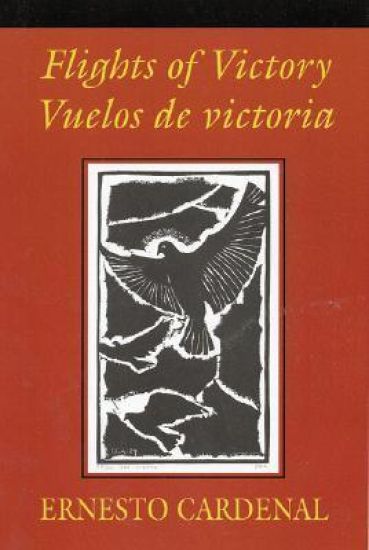
Flights of Victory/Vuelos de Victoria

Flights of Victory/Vuelos de Victoria

Ernesto Cardenal

Curbstone Press,U.S.
1995
nidottu
In this bilingual edition, Ernesto Cardenal celebrates his country's successful revolution against the Somoza regime. Recognized world-wide as a major poetic voice from Latin America, he also has long been an activist fighting for political freedom, and he served as Nicaragua's Minister of Culture from 1979-1988. In Flights of Victory, Ernesto Cardenal reflects on events of recent Nicaraguan history with poems about the insurrection against Somoza, the triumph of the popular movement, and the reconstruction of the country, from the unique perspective of a poet-participant.
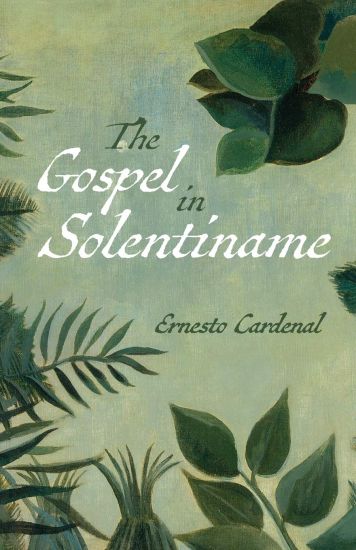
The Gospel in Solentiname

The Gospel in Solentiname

Ernesto Cardenal

Wipf Stock Publishers
2020
pokkari
In Solentiname, a remote archipelago in Lake Nicaragua, the people gathered each Sunday to reflect together on the Gospel reading. From recordings of their dialogue, this extraordinary document of faith in the midst of struggle was composed. First published in four volumes, The Gospel in Solentiname was immediately acclaimed as a classic of liberation theology--a radical reading of the good news of Jesus from the perspective of the poor and the oppressed. (It was also banned by the Somoza dictatorship.) Forty years later The Gospel in Solentiname retains its freshness and power. Though times may have changed, the message of Jesus--as heard by these peasants--continues to challenge the rulers of our age and to inspire the poor with the hope of a different world.
Das Buch von der Liebe

Das Buch von der Liebe

Ernesto Cardenal

Peter Hammer Verlag GmbH
2004
nidottu
"Das Buch von der Liebe" versammelt Meditationen, die Ernesto Cardenal im Kloster Gethsemani/Kentucky geschrieben hat und die zu seinen schönsten Texten gehören. Übersetzt in 18 Sprachen wurde das Buch ein Klassiker moderner Meditationsliteratur.
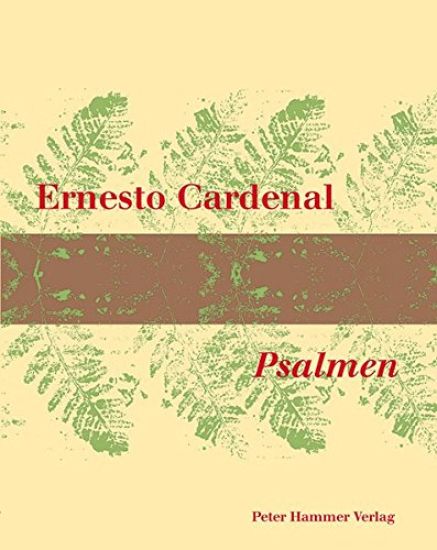
Psalmen

Psalmen

Ernesto Cardenal

Peter Hammer Verlag GmbH
2008
nidottu
Die Psalmen, das berühmteste Werk Ernesto Cardenals, haben nichts von ihrer Aktualität, nichts von ihrer Leuchtkraft eingebüßt: Aus der schöpferischen Spannung zwischen dem Bestehenden, das es zu verändern gilt, und der Vision einer menschlichen Welt für die Menschen erwächst der Reichtum und die Weite der Dichtung des Priesters von Solentiname. Die Psalmen erheben eindrucksvoll Anklage gegen Ungerechtigkeit, Unterdrückung und Lüge. Unerbittlich stellen sie Entfremdung und Entmenschlichung der Gesellschaft dar, die zur Zerstörung der Welt führen - darin sind sie heute so treffend wie bei ihrem ersten Erscheinen in den 60er Jahren.
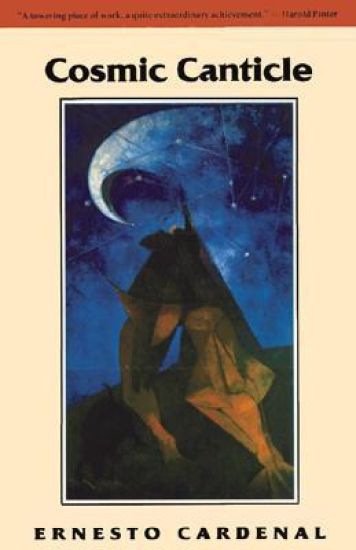
Cosmic Canticle

Cosmic Canticle

Ernesto Cardenal

Curbstone Press,U.S.
2002
nidottu
In this epic poem, Cardenal explores Latin American history by relating the evolution of the universe to the development of human understanding. Throughout, Cardenal blends the visible and the invisible, science and poetry, religion and nature, in 43 autonomous yet integrated cantos.