Kirjojen hintavertailu. Mukana 11 717 486 kirjaa ja 12 kauppaa.

Kirjahaku

Etsi kirjoja tekijän nimen, kirjan nimen tai ISBN:n perusteella.

7 kirjaa tekijältä Errol C Friedberg

Sydney Brenner: A Biography

Sydney Brenner: A Biography

Errol C Friedberg

Cold Spring Harbor Laboratory Press,U.S.
2010
sidottu
Over his long and inspiring career, the Nobel Laureate Sydney Brenner has made some of the most significant and game-changing discoveries in the field of molecular biology. But Brenner's reach has extended well beyond his own research to inspire new generations of young scientists and to promote the development of science and biotechnology around the world. Based on his personal recollections, with contributions and correspondence from his close friends and colleagues, this book tells the lively story, not only of Brenner himself, but of what came to be known as the "golden age" of biology. About the author: Errol C. Friedberg, M.D., is the Senator Betty and Dr. Andy Andujar Distinguished Professor and Chair at the Department of Pathology, University of Texas Southwestern Medical Center at Dallas. A Fellow of the Royal College of Pathologists and recipient of the Rous Whipple Award from the American Society for Investigative Pathology, Friedberg also serves as Editor-in-Chief of the journal DNA Repair. Friedberg is the author of Cancer Answers, Correcting the Blueprint of Life: An Historical Account of the Discovery of DNA Repair Mechanisms, The Writing Life of James D. Watson, and From Rags to Riches: The Phenomenal Rise of The University of Texas Southwestern Medical Center at Dallas. He is also senior author of the textbook DNA Repair & Mutagenesis, and has edited and annotated a series of interviews published as Sydney Brenner: My Life in Science.
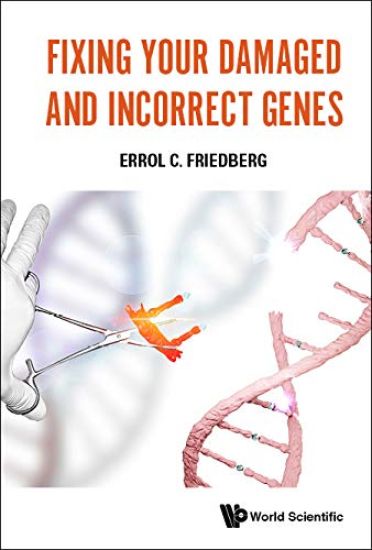
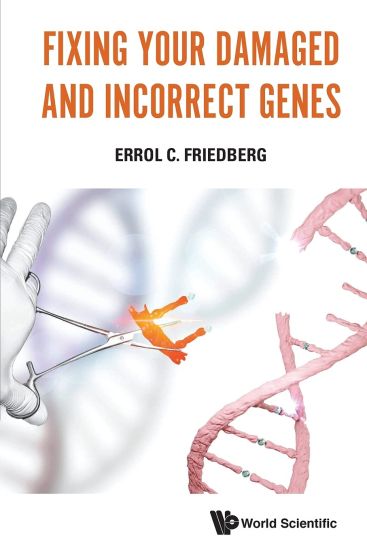
Fixing Your Damaged And Incorrect Genes

Fixing Your Damaged And Incorrect Genes

Errol C Friedberg

World Scientific Publishing Co Pte Ltd
2019
sidottu
Fixing Your Damaged and Incorrect Genes is a book about a well-established biological process called DNA REPAIR. The book describes the multiple and varied biochemical strategies by which damaged or incorrect nucleotides are removed from DNA or are corrected. The book includes multiple figures of notable past and present scientists in the field. The book is uniquely focused on an audience of non-biologists and is written in simple language with minimal use of technical terms. It contains an extensive glossary that provides explanations of key words that readers are encouraged to refer to as they read. Fixing Your Damaged and Incorrect Genes is unique, there being no previously published books for non-biologists on the topic of DNA repair.
Fixing Your Damaged And Incorrect Genes

Fixing Your Damaged And Incorrect Genes

Errol C Friedberg

World Scientific Publishing Co Pte Ltd
2019
nidottu
Fixing Your Damaged and Incorrect Genes is a book about a well-established biological process called DNA REPAIR. The book describes the multiple and varied biochemical strategies by which damaged or incorrect nucleotides are removed from DNA or are corrected. The book includes multiple figures of notable past and present scientists in the field. The book is uniquely focused on an audience of non-biologists and is written in simple language with minimal use of technical terms. It contains an extensive glossary that provides explanations of key words that readers are encouraged to refer to as they read. Fixing Your Damaged and Incorrect Genes is unique, there being no previously published books for non-biologists on the topic of DNA repair.
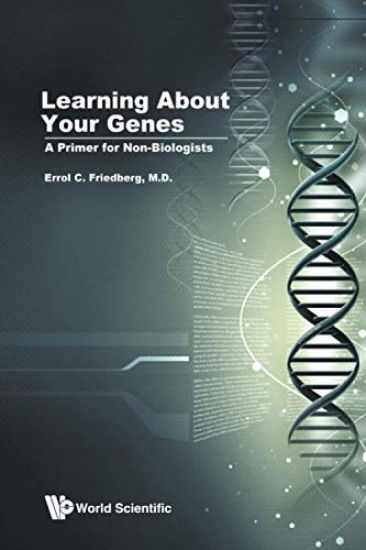
Learning About Your Genes: A Primer For Non-biologists

Learning About Your Genes: A Primer For Non-biologists

Errol C Friedberg

World Scientific Publishing Co Pte Ltd
2018
nidottu
Genes were unknowingly discovered in the 19th century by Gregor Mendel, a Czechoslovakian monk. It was later established that genes are made of DNA, a biological compound found in tiny thread-like structures called chromosomes that are located in the nuclei of all cells in our bodies. DNA consists of chains of entities called bases of which there are four in nature. DNA consists of long chains of bases (sometimes referred to as DNA sequences) that are joined in any order, but the precise order and length of which constitute different genes.Many (but not all) genes carry a code called the genetic code, a code that instructs the synthesis (manufacture) of the many hundreds of proteins that we require to survive and execute the many functions of life. The genetic code was deciphered in relatively recent years and is considered one of the most significant discoveries in the history of biology.Genes that encode instructions for the synthesis of proteins and those that regulate the manufacture of proteins comprise a mere two percent of our DNA. Despite our extensive knowledge of biology and the sub-discipline of molecular biology (the study of biology at the molecular level), the function (if any) of the rest of the DNA in our cells is unknown.Research about genes and DNA has in recent years spawned an endeavor referred to as the Human Genome Project, an international collaboration that has successfully determined, stored, and rendered publicly available the sequences of almost all the genetic content of the chromosomes of the human organism, otherwise known as the human genome.DNA sequences that are unique to every person on earth have been discovered (DNA fingherprints) and are now used for identifying criminals. The book relates a specific example of identifying a criminal who murdered two women.This is the first and only book that we are aware of that educates non-biologists about genes. It is written in a style and uses a vocabulary that can be comprehended by the average reader who knows very little if anything about genes.
Learning About Your Genes: A Primer For Non-biologists

Learning About Your Genes: A Primer For Non-biologists

Errol C Friedberg

World Scientific Publishing Co Pte Ltd
2018
sidottu
Genes were unknowingly discovered in the 19th century by Gregor Mendel, a Czechoslovakian monk. It was later established that genes are made of DNA, a biological compound found in tiny thread-like structures called chromosomes that are located in the nuclei of all cells in our bodies. DNA consists of chains of entities called bases of which there are four in nature. DNA consists of long chains of bases (sometimes referred to as DNA sequences) that are joined in any order, but the precise order and length of which constitute different genes.Many (but not all) genes carry a code called the genetic code, a code that instructs the synthesis (manufacture) of the many hundreds of proteins that we require to survive and execute the many functions of life. The genetic code was deciphered in relatively recent years and is considered one of the most significant discoveries in the history of biology.Genes that encode instructions for the synthesis of proteins and those that regulate the manufacture of proteins comprise a mere two percent of our DNA. Despite our extensive knowledge of biology and the sub-discipline of molecular biology (the study of biology at the molecular level), the function (if any) of the rest of the DNA in our cells is unknown.Research about genes and DNA has in recent years spawned an endeavor referred to as the Human Genome Project, an international collaboration that has successfully determined, stored, and rendered publicly available the sequences of almost all the genetic content of the chromosomes of the human organism, otherwise known as the human genome.DNA sequences that are unique to every person on earth have been discovered (DNA fingherprints) and are now used for identifying criminals. The book relates a specific example of identifying a criminal who murdered two women.This is the first and only book that we are aware of that educates non-biologists about genes. It is written in a style and uses a vocabulary that can be comprehended by the average reader who knows very little if anything about genes.
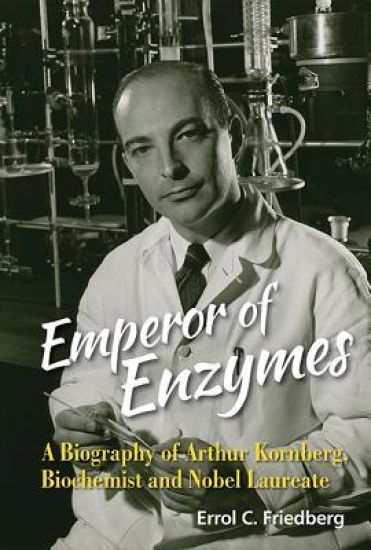
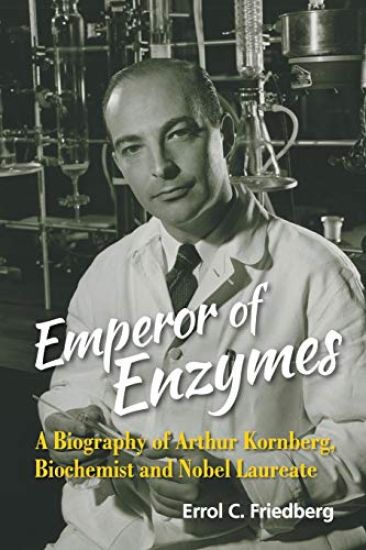
Emperor Of Enzymes: A Biography Of Arthur Kornberg, Biochemist And Nobel Laureate

Emperor Of Enzymes: A Biography Of Arthur Kornberg, Biochemist And Nobel Laureate

Errol C Friedberg

World Scientific Publishing Co Pte Ltd
2016
sidottu
This book chronicles the life and work of the late Arthur Kornberg, one of the premier biochemists in the world, who discovered the enzyme DNA polymerase, a key enzyme required for the biosynthesis of DNA.The book provides readers with a view of the personality and character of one of the great biochemists of the late 20th century, as well as insights into the origin and growth of the discipline of nucleic acid biochemistry, especially the biosynthesis of DNA.The book consists of 17 chapters that trace the life and work of Arthur Kornberg.
Emperor Of Enzymes: A Biography Of Arthur Kornberg, Biochemist And Nobel Laureate

Emperor Of Enzymes: A Biography Of Arthur Kornberg, Biochemist And Nobel Laureate

Errol C Friedberg

World Scientific Publishing Co Pte Ltd
2016
nidottu
This book chronicles the life and work of the late Arthur Kornberg, one of the premier biochemists in the world, who discovered the enzyme DNA polymerase, a key enzyme required for the biosynthesis of DNA.The book provides readers with a view of the personality and character of one of the great biochemists of the late 20th century, as well as insights into the origin and growth of the discipline of nucleic acid biochemistry, especially the biosynthesis of DNA.The book consists of 17 chapters that trace the life and work of Arthur Kornberg.