Kirjojen hintavertailu. Mukana 12 016 292 kirjaa ja 12 kauppaa.

Kirjahaku

Etsi kirjoja tekijän nimen, kirjan nimen tai ISBN:n perusteella.

6 kirjaa tekijältä Erwin C. Hargrove

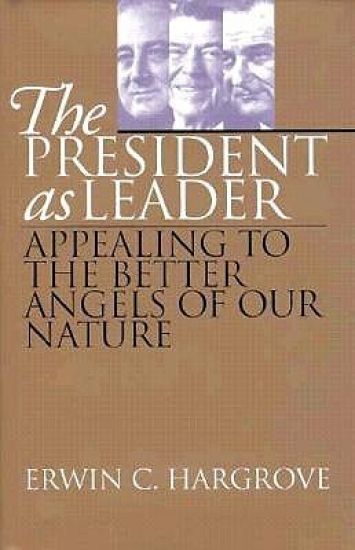
The President as Leader

The President as Leader

Erwin C. Hargrove

University Press of Kansas
1998
sidottu
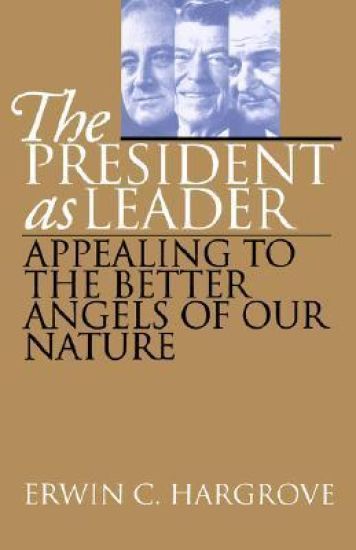
Few issues have clung to the presidency in recent years as tenaciously as that of moral leadership. This book is based on a lifetime of personal observation by the author and it examines the politics of ideals to propose that, just as moral purpose without political craft is weak, political acumen without moral appeal is futile. Looking back to political theory as old as Aristotle and Machiavelli, Erwin C. Hargrove asks how presidents can most effectively combine political arts and skills with intellectual and moral leadership. He draws on his own scholarly history and synthesizes critical thinking about leadership - especially the point-counterpoint perspectives of Richard Neustadt and James MacGregor Burns. Hargrove shows how effective leadership demands a judicious balance of commitment to the public good and the ability to discern the possibilities for political action at any moment. Hargrove argues that political leadership must contain a moral element if it is to be fully effective, and that a successful president must provide leadership in accord with the ideals embedded in American culture. To demonstrate this, he proposes a model with which to analyze, compare and evaluate political leaders: he then assesses the presidencies of Franklin Roosevelt, Lyndon Johnson and Ronald Reagan according to the normative implications of his model. By examining the three presidents in terms of skill, character, cultural leadership and other qualities, he extends his analysis beyond individuals to generate keen insights about leadership in general. This book clearly shows that craft dissolves into cleverness without a clear sense of moral purpose, and that truth-telling, empowerment and altruism in politics are not only desirable but achievable. It synthesizes years of obervation about issues that occupy the thoughts of many Americans. In harking back to Lincoln's evocation of the better angels of our nature, Hargrove reminds us that we may, even as leaders, be better versions of ourselves.
The President as Leader

The President as Leader

Erwin C. Hargrove

University Press of Kansas
1998
nidottu
This text argues that successful presidents are those who combine political skills with intellectual and moral leadership. Erwin C. Hargrove examines three distinctively different presidencies - Franklin Roosevelt, Lyndon Johnson and Ronald Reagan - in revealing profiles.
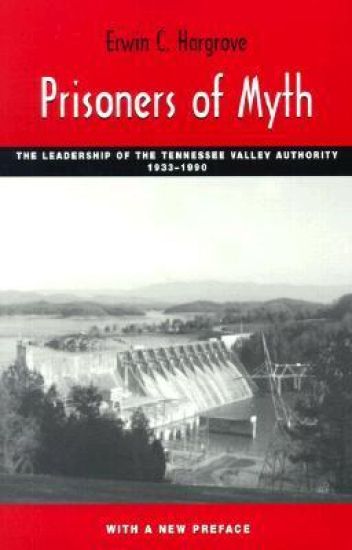
Prisoners Of Myth

Prisoners Of Myth

Erwin C. Hargrove

University of Tennessee Press
2001
nidottu
“This book is a must for anyone interested in public policy studies, the changing roles of government in modern America, and twentieth-century southern history. It is important as a study of government at its best and worst.”—Bruce D. Wheeler, University of Tennessee, Knoxville“This is an excellent study of the agency’s leadership and major policy developments, and it is sure to rank as the best introduction for anyone interested in the Tennessee Valley Authority.”—American Historical ReviewIn Prisoners of Myth, Erwin Hargrove analyzes the organizational culture of the Tennessee Valley Authority by looking at the actions of its leaders over six decades. His probing narrative ranges from the heroic years of the New Deal and World War II through the postwar period of consolidation and growth to the time of the troubles from 1970 onward, when the TVA ran afoul of environmental legislation, built a massive nuclear power plant it could not control, and sought new missions for which there were no constituencies.Hargrove shows how the TVA’s founding myth of multipurpose regional development was inappropriately pursued in the 1970s and 1980s by leaders who became “prisoners of myth” in their efforts to keep the agency heroic. Based on rich interview materials and historical documents from TVA archives, this study provides penetrating insights into the ways in which bureacratic institutions perform in the face of historical change. In a preface written especially for this new paperback edition, Hargrove discusses the responses the book received upon its initial publication in 1994 and the theory of organizational leadership that emerged from his research into the TVA.The Author: Erwin C. Hargrove is professor of political science at Vanderbilt University and the author, most recently, of The President as Leader: Appealing to the Better Angels of Our Nature.
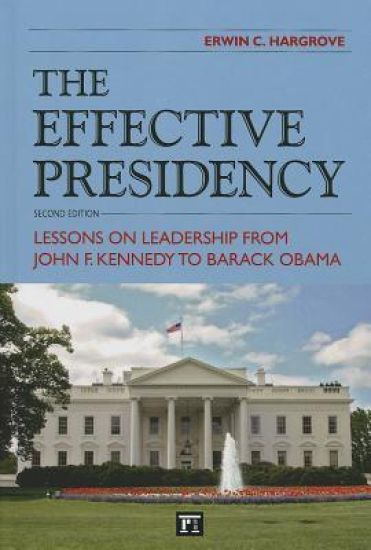
Effective Presidency

Effective Presidency

Erwin C. Hargrove

Paradigm
2013
sidottu
The second edition of this classic work adds a new chapter on Barack Obama and updates coverage of the end of the George W. Bush administration. Presidential scholar Erwin C. Hargrove extends his analytical framework of presidential effectiveness to show how Obama combines eventful leadership with pragmatism to move the nation forward in an intensely polarized partisan environment.Features of the textbook:Uses an analytical framework to assess historical context, personal skills and attributes, and the ability to "make a difference" in each of ten presidencies. Four presidents are judged to be "event-making" leaders: Johnson, Nixon, Reagan, and George W. Bush. Six presidents are assessed as "eventful" leaders: JFK, Ford, Carter, George H. W. Bush, Clinton, and Obama. As much a study of leadership as an analysis of ten presidencies, this book adds to our understanding in political science, history, and public administration and management.
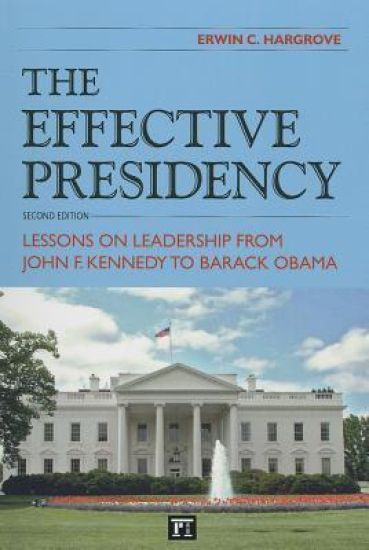
Effective Presidency

Effective Presidency

Erwin C. Hargrove

Paradigm
2014
nidottu
The second edition of this classic work adds a new chapter on Barack Obama and updates coverage of the end of the George W. Bush administration. Presidential scholar Erwin C. Hargrove extends his analytical framework of presidential effectiveness to show how Obama combines eventful leadership with pragmatism to move the nation forward in an intensely polarized partisan environment.Features of the textbook:Uses an analytical framework to assess historical context, personal skills and attributes, and the ability to "make a difference" in each of ten presidencies. Four presidents are judged to be "event-making" leaders: Johnson, Nixon, Reagan, and George W. Bush. Six presidents are assessed as "eventful" leaders: JFK, Ford, Carter, George H. W. Bush, Clinton, and Obama. As much a study of leadership as an analysis of ten presidencies, this book adds to our understanding in political science, history, and public administration and management.