Interpreting The Constitution doesn't fit neatly into the extensive literature on judicial review and constitutional interpretation that reconciles judicial review with democracy defined as majority rule. Indeed, Chemerinsky criticizes this method of interpretation and contends that the Constitution exists to protect political minorities and fundamental rights from majority rule. Chapter by chapter, he keenly defends this unique method of interpretation, challenges the general approach, and offers thorough, expert coverage.
A leading legal scholar explores how the constitutional right to seek justice has been restricted by the Supreme Court The Supreme Court’s decisions on constitutional rights are well known and much talked about. But individuals who want to defend those rights need something else as well: access to courts that can rule on their complaints. And on matters of access, the Court’s record over the past generation has been almost uniformly hostile to the enforcement of individual citizens’ constitutional rights. The Court has restricted who has standing to sue, expanded the immunity of governments and government workers, limited the kinds of cases the federal courts can hear, and restricted the right of habeas corpus. Closing the Courthouse Door, by the distinguished legal scholar Erwin Chemerinsky, is the first book to show the effect of these decisions: taken together, they add up to a growing limitation on citizens’ ability to defend their rights under the Constitution. Using many stories of people whose rights have been trampled yet who had no legal recourse, Chemerinsky argues that enforcing the Constitution should be the federal courts’ primary purpose, and they should not be barred from considering any constitutional question.
Why originalism is a flawed, incoherent, and dangerously ideological method of constitutional interpretation “Chemerinsky . . . offers a concise, point-by-point refutation of the theory [of originalism]. He argues that it cannot deliver what it promises—and if it could, no one would want what it is selling.”—David Cole, New York Review of Books Originalism, the view that the meaning of a constitutional provision is fixed when it is adopted, was once the fringe theory of a few extremely conservative legal scholars but is now a well-accepted mode of constitutional interpretation. Three of the Supreme Court’s nine justices explicitly embrace the originalist approach, as do increasing numbers of judges in the lower courts. Noted legal scholar Erwin Chemerinsky gives a comprehensive analysis of the problems that make originalism unworkable as a method of constitutional interpretation. He argues that the framers themselves never intended constitutional interpretation to be inflexible and shows how it is often impossible to know what the “original intent” of any particular provision was. Perhaps worst of all, though its supporters tout it as a politically neutral and objective method, originalist interpretation tends to disappear when its results fail to conform to modern conservative ideology.
Federalism—the division of power between national and state governments—has been a divisive issue throughout American history. Conservatives argued in support of federalism and states' rights to oppose the end of slavery, the New Deal, and desegregation. In the 1990s, the Rehnquist Court used federalism to strike down numerous laws of public good, including federal statutes requiring the clean up of nuclear waste and background checks for gun ownership. Now the Roberts Court appears poised to use federalism and states' rights to limit federal power even further. In this book, Erwin Chemerinsky passionately argues for a different vision: federalism as empowerment. He analyzes and criticizes the Supreme Court's recent conservative trend, and lays out his own challenge to the Court to approach their decisions with the aim of advancing liberty and enhancing effective governance. While the traditional approach has been about limiting federal power, an alternative conception would empower every level of government to deal with social problems. In Chemerinsky's view, federal power should address national problems like environmental protection and violations of civil rights, while state power can be strengthened in areas such as consumer privacy and employee protection. The challenge for the 21st century is to reinvent American government so that it can effectively deal with enduring social ills and growing threats to personal freedom and civil liberties. Increasing the chains on government—as the Court and Congress are now doing in the name of federalism—is exactly the wrong way to enter the new century. But, an empowered federalism, as Chemerinsky shows, will profoundly alter the capabilities and promise of U.S. government and society.
Federalism—the division of power between national and state governments—has been a divisive issue throughout American history. Conservatives argued in support of federalism and states' rights to oppose the end of slavery, the New Deal, and desegregation. In the 1990s, the Rehnquist Court used federalism to strike down numerous laws of public good, including federal statutes requiring the clean up of nuclear waste and background checks for gun ownership. Now the Roberts Court appears poised to use federalism and states' rights to limit federal power even further. In this book, Erwin Chemerinsky passionately argues for a different vision: federalism as empowerment. He analyzes and criticizes the Supreme Court's recent conservative trend, and lays out his own challenge to the Court to approach their decisions with the aim of advancing liberty and enhancing effective governance. While the traditional approach has been about limiting federal power, an alternative conception would empower every level of government to deal with social problems. In Chemerinsky's view, federal power should address national problems like environmental protection and violations of civil rights, while state power can be strengthened in areas such as consumer privacy and employee protection. The challenge for the 21st century is to reinvent American government so that it can effectively deal with enduring social ills and growing threats to personal freedom and civil liberties. Increasing the chains on government—as the Court and Congress are now doing in the name of federalism—is exactly the wrong way to enter the new century. But, an empowered federalism, as Chemerinsky shows, will profoundly alter the capabilities and promise of U.S. government and society.
This work will become the defining text on progressive constitutionalism -- a parallel to Thomas Picketty's contribution but for all who care deeply about constitutional law. Beautifully written and powerfully argued, this is a masterpiece. --Lawrence Lessig, Harvard Law School, and author of Free Culture Worried about what a super conservative majority on the Supreme Court means for the future of civil liberties? From gun control to reproductive health, a conservative court will reshape the lives of all Americans for decades to come. The time to develop and defend a progressive vision of the U.S. Constitution that protects the rights of all people is now. University of California Berkeley Dean and respected legal scholar Erwin Chemerinsky expertly exposes how conservatives are using the Constitution to advance their own agenda that favors business over consumers and employees, and government power over individual rights. But exposure is not enough. Progressives have spent too much of the last forty-five years trying to preserve the legacy of the Warren Court's most important rulings and reacting to the Republican-dominated Supreme Courts by criticizing their erosion of rights--but have not yet developed a progressive vision for the Constitution itself. Yet, if we just look to the promise of the Preamble--liberty and justice for all--and take seriously its vision, a progressive reading of the Constitution can lead us forward as we continue our fight ensuring democratic rule, effective government, justice, liberty, and equality. Includes the Complete Constitution and Amendments of the United States of America
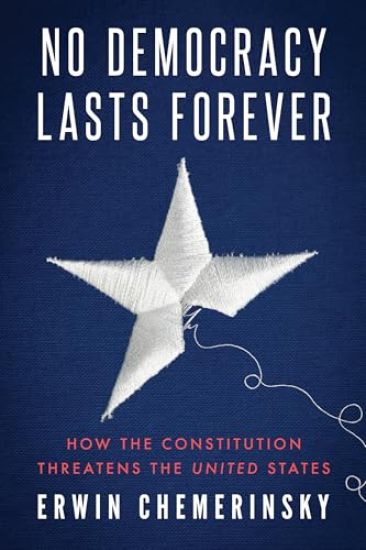
Deeply troubled by the US Constitution’s inherent flaws, Erwin Chemerinsky, the renowned dean of Berkeley law school, came to the sobering conclusion that the nearly 250-year-old founding document is responsible for the crisis now facing American democracy. Pointing out that just fifteen of the 11,848 amendments proposed since 1789 have passed, Chemerinsky contends that the very nature of our polarisation results from the Constitution’s “bad bones”, which have created a government that no longer works or has the confidence of the public. Yet political armageddon can still be avoided, Chemerinsky writes, if a new constitutional convention is empowered to replace the Constitution of 1787, much as the Founding Fathers replaced the outdated Articles of Confederation. If this isn’t possible, Americans must give serious thought to forms of secession—including a United States structured like the European Union—based on a recognition that what divides the United States is, in fact, greater than what unites it.
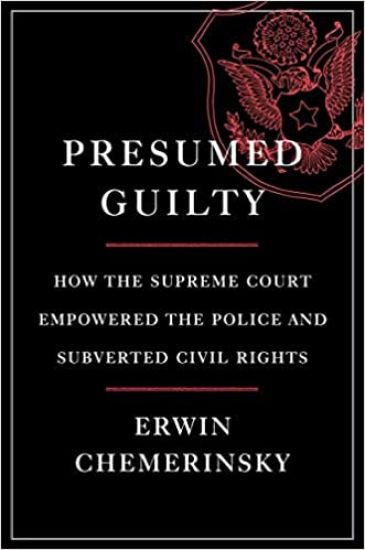
Police are nine times more likely to kill African-American men than they are other Americans--in fact, nearly one in every thousand will die at the hands, or under the knee, of an officer. As eminent constitutional scholar Erwin Chemerinsky powerfully argues, this is no accident, but the horrific result of an elaborate body of doctrines that allow the police and, crucially, the courts to presume that suspects--especially people of color--are guilty before being charged. Today in the United States, much attention is focused on the enormous problems of police violence and racism in law enforcement. Too often, though, that attention fails to place the blame where it most belongs, on the courts, and specifically, on the Supreme Court. A "smoking gun" of civil rights research, Presumed Guilty presents a groundbreaking, decades-long history of judicial failure in America, revealing how the Supreme Court has enabled racist practices, including profiling and intimidation, and legitimated gross law enforcement excesses that disproportionately affect people of color.For the greater part of its existence, Chemerinsky shows, deference to and empowerment of the police have been the modi operandi of the Supreme Court. From its conception in the late eighteenth century until the Warren Court in 1953, the Supreme Court rarely ruled against the police, and then only when police conduct was truly shocking. Animating seminal cases and justices from the Court's history, Chemerinsky--who has himself litigated cases dealing with police misconduct for decades--shows how the Court has time and again refused to impose constitutional checks on police, all the while deliberately gutting remedies Americans might use to challenge police misconduct.Finally, in an unprecedented series of landmark rulings in the mid-1950s and 1960s, the pro-defendant Warren Court imposed significant constitutional limits on policing. Yet as Chemerinsky demonstrates, the Warren Court was but a brief historical aberration, a fleeting liberal era that ultimately concluded with Nixon's presidency and the ascendance of conservative and "originalist" justices, whose rulings--in Terry v. Ohio (1968), City of Los Angeles v. Lyons (1983), and Whren v. United States (1996), among other cases--have sanctioned stop-and-frisks, limited suits to reform police departments, and even abetted the use of lethal chokeholds. Written with a lawyer's knowledge and experience, Presumed Guilty definitively proves that an approach to policing that continues to exalt "Dirty Harry" can be transformed only by a robust court system committed to civil rights. In the tradition of Richard Rothstein's The Color of Law, Presumed Guilty is a necessary intervention into the roiling national debates over racial inequality and reform, creating a history where none was before--and promising to transform our understanding of the systems that enable police brutality.
The American Constitution has become a threat to American democracy. Due to its inherent flaws Erwin Chemerinsky, has concluded that the nearly 250-year-old founding document can no longer hold. One might expect that amending the Constitution would solve the problem, yet only fifteen of the 11,848 amendments proposed since 1789 have passed. Chemerinsky contends that without major changes, the Constitution is beyond redemption in that it has created a government that can no longer deal with the urgent issues that threaten America and the world. Despite these troubles, Chemerinsky looks to the past and finds hope that change can happen. Political Armageddon can be avoided, Chemerinsky writes, if the Constitution is rewritten from start to finish.
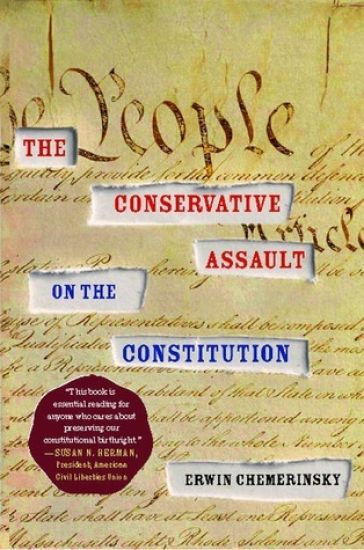
Over the last few decades, the Supreme Court and the federal appellate courts have undergone a dramatic shift to the right, the result of a determined effort by right-wing lawmakers and presidents to reinterpret the Constitution by reshaping the judiciary. Conservative activist justices have narrowed the scope of the Constitution, denying its protections to millions of Americans, exactly as the lawmakers who appointed and confirmed these jurists intended. Basic long-standing principles of constitutional law have been overturned by the Rehnquist and Roberts courts. As distinguished law professor and constitutional expert Erwin Chemerinsky demonstrates in this invaluable book, these changes affect the lives of every American. As a result of political pressure from conservatives and a series of Supreme Court decisions, our public schools are increasingly separate and unequal, to the great disadvantage of poor and minority students. Right-wing politicians and justices are dismantling the wall separating church and state, allowing ever greater government support for religion. With the blessing of the Supreme Court, absurdly harsh sentences are being handed down to criminal defendants, such as life sentences for shoplifting and other petty offenses. Even in death penalty cases, defendants are being denied the right to competent counsel at trial, and as a result innocent people have been convicted and sentenced to death. Right-wing politicians complain that government is too big and intrusive while at the same time they are only too happy to insert the government into the most intimate aspects of the private lives of citizens when doing so conforms to conservative morality. Conservative activist judges say that the Constitution gives people an inherent right to own firearms but not to make their own medical decisions. In some states it is easier to buy an assault rifle than to obtain an abortion. Nowhere has the conservative assault on the Constitution been more visible or more successful than in redefining the role of the president. From Richard Nixon to George W. Bush, conservatives have sought to significantly increase presidential power. The result in recent years has been unprecedented abuses, including indefinite detentions, illegal surveillance, and torture of innocent people. Finally, access to the courts is being restricted by new rulings that deny legal protections to ordinary Americans. Fewer lawsuits alleging discrimination in employment are heard; fewer people are able to sue corporations or governments for injuries they have suffered; and even when these cases do go to trial, new restrictions limit damages that plaintiffs can collect. The first step in reclaiming the protections of the Constitution, says Chemerinsky, is to recognize that right-wing justices are imposing their personal prejudices, not making neutral decisions about the scope of the Constitution, as they claim, or following the "original meaning" of the Constitution. Only then do we stand a chance of reclaiming our constitutional liberties from a rigid ideological campaign that has transformed our courts and our laws. Only then can we return to a constitutional law that advances freedom and equality.
Presumed Guilty, like the best-selling The Color of Law, is a "smoking gun" of civil rights research, a troubling history that reveals how the Supreme Court enabled racist policing and sanctioned law enforcement excesses. The fact that police are nine times more likely to kill Black men than other Americans is no accident; it is the result of an elaborate body of doctrines that allow the police and courts to presume that suspects are guilty before being charged.Demonstrating how the prodefendant Warren Court was a brief historical aberration, Erwin Chemerinsky shows how this more liberal era ended with Nixon's presidency and the ascendance of conservative justices, whose rulings--like Terry v. Ohio and Los Angeles v. Lyons--have permitted stops and frisks, limited suits to reform police departments, and even abetted the use of chokeholds. Presumed Guilty concludes that an approach to policing that continues to exalt "Dirty Harry" can be transformed only by a robust court system committed to civil rights.
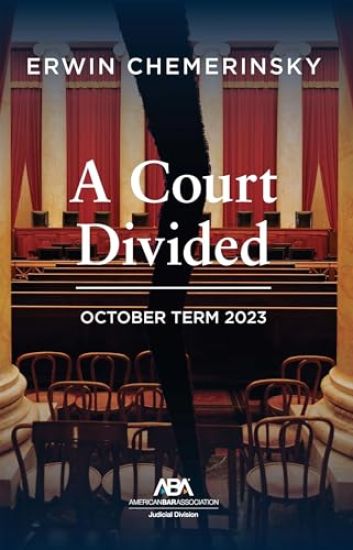
The Supreme Court’s October 2023 Term was filled with blockbuster decisions that will have a dramatic effect on the law and on people’s lives. The Court created broad immunity from criminal prosecution for official acts taken by a president, dramatically limited the power of federal administrative agencies, clarified the meaning of the Second Amendment, and empowered cities to use the criminal law against the unhoused. This concise book reviews the key decisions of October Term 2022 and their implications.
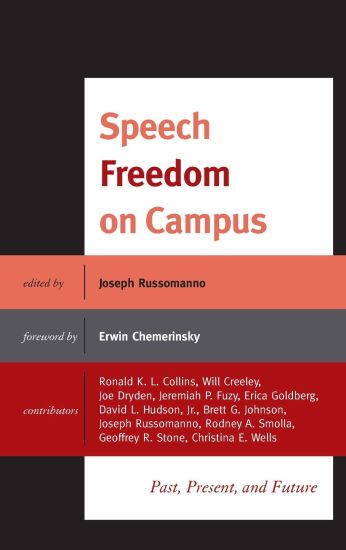
Traditionally, the university or college is thought to be the ultimate location for the discovery and sharing of knowledge. After all, on these campuses are some of the great minds across all fields, as well as students who are not only eager to learn, but who often contribute to our shared wisdom. For those ideals to be achieved, however, ideas require access to some kind of virtual marketplace from which people can sample and consider them, discuss and debate them. Restricting the expression of those ideas for whatever reason is the enemy of not only this process, but also of knowledge discovery. Speech freedom on our college and university campuses, like everywhere else, is fragile. There are those who wish to suppress it, more often than not when the words express ideas, opinions, and even facts that conflict with their beliefs. Why does an effort so completely at odds with the foundational values of this country happen? This topic explored in Speech Freedom on Campus: Past, Present and Future is multi-layered, and its analysis is best accomplished through multiple perspectives. Joseph Russomanno’s edited collection does precisely that, utilizing 10 different scholars to examine various aspects and issues related to speech freedom on campus.
Traditionally, the university or college is thought to be the ultimate location for the discovery and sharing of knowledge. After all, on these campuses are some of the great minds across all fields, as well as students who are not only eager to learn, but who often contribute to our shared wisdom. For those ideals to be achieved, however, ideas require access to some kind of virtual marketplace from which people can sample and consider them, discuss and debate them. Restricting the expression of those ideas for whatever reason is the enemy of not only this process, but also of knowledge discovery. Speech freedom on our college and university campuses, like everywhere else, is fragile. There are those who wish to suppress it, more often than not when the words express ideas, opinions, and even facts that conflict with their beliefs. Why is this effort, so completely at odds with the foundational values of this country, made? This topic explored in Speech Freedom on Campus: Past, Present and Future is multi-layered, and its analysis is best accomplished through multiple perspectives. Joseph Russomanno’s edited collection does precisely that, utilizing 10 different scholars to examine various aspects and issues related to speech freedom on campus.
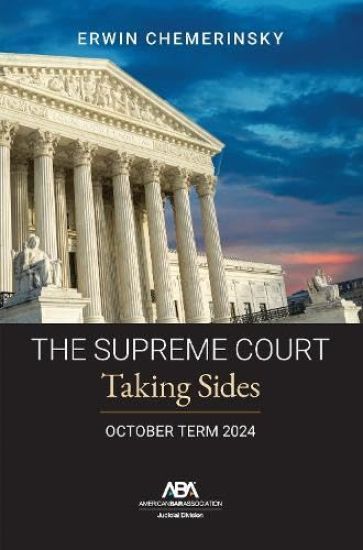
The Supreme Court’s October 2024 Term was filled with blockbuster decisions that will have a dramatic effect on the law and on people’s lives. This concise book reviews the key decisions of October Term 2024 and their implications. Table of Contents: Introduction Administrative Law Business Law Cases Civil Procedure and Federal Jurisdiction Civil Rights Criminal Law and Procedure Environmental Law Equal Protection First Amendment: Religion First Amendment: Speech Guns Immigration Law Presidential Power Looking Ahead
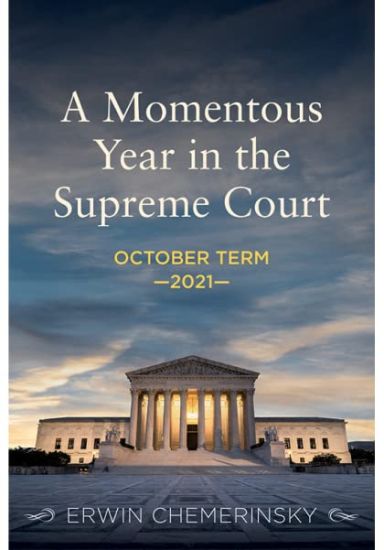
This review of the Supreme Court's October 2021 Term looks back at the major cases addressed by the Court and provides a valuable focus on the implications of these decisions. Written by Erwin Chemerinsky, Dean of the University of California at Berkeley School of Law, the book takes a neutral tone, neither praising nor criticizing the decisions, and organizes the case essays by topic.