Kirjojen hintavertailu. Mukana 11 342 296 kirjaa ja 12 kauppaa.

Kirjahaku

Etsi kirjoja tekijän nimen, kirjan nimen tai ISBN:n perusteella.

12 kirjaa tekijältä Euan Cameron

Enchanted Europe

Enchanted Europe

Euan Cameron

Oxford University Press
2010
sidottu
Since the dawn of history people have used charms and spells to try to control their environment, and forms of divination to try to foresee the otherwise unpredictable chances of life. Many of these techniques were called 'superstitious' by educated elites. For centuries religious believers used 'superstition' as a term of abuse to denounce another religion that they thought inferior, or to criticize their fellow-believers for practising their faith 'wrongly'. From the Middle Ages to the Enlightenment, scholars argued over what 'superstition' was, how to identify it, and how to persuade people to avoid it. Learned believers in demons and witchcraft, in their treatises and sermons, tried to make 'rational' sense of popular superstitions by blaming them on the deceptive tricks of seductive demons. Every major movement in Christian thought, from rival schools of medieval theology through to the Renaissance, the Reformation, and the Enlightenment, added new twists to the debates over superstition. Protestants saw Catholics as superstitious, and vice versa. Enlightened philosophers mocked traditional cults as superstitions. Eventually, the learned lost their worry about popular belief, and turned instead to chronicling and preserving 'superstitious' customs as folklore and ethnic heritage. Enchanted Europe offers the first comprehensive, integrated account of western Europe's long, complex dialogue with its own folklore and popular beliefs. Drawing on many little-known and rarely used texts, Euan Cameron constructs a compelling narrative of the rise, diversification, and decline of popular 'superstition' in the European mind.
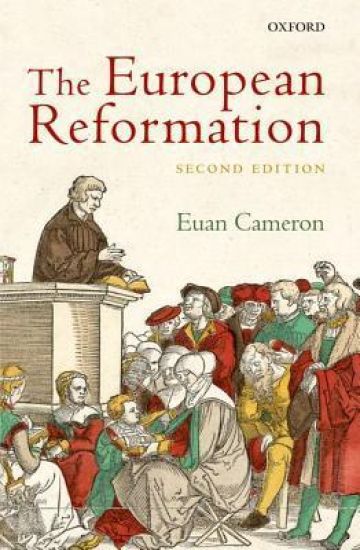
The European Reformation

The European Reformation

Euan Cameron

Oxford University Press
2012
nidottu
Since its first appearance in 1991, The European Reformation has offered a clear, integrated, and coherent analysis and explanation of how Christianity in Western and Central Europe from Iceland to Hungary, from the Baltic to the Pyrenees splintered into separate Protestant and Catholic identities and movements. Catholic Christianity at the end of the Middle Ages was not at all a uniformly 'decadent' or corrupt institution: it showed clear signs of cultural vigour and inventiveness. However, it was vulnerable to a particular kind of criticism, if ever its claims to mediate the grace of God to believers were challenged. Martin Luther proposed a radically new insight into how God forgives human sin. In this new theological vision, rituals did not 'purify' people; priests did not need to be set apart from the ordinary community; the church needed no longer to be an international body. For a critical 'Reformation moment', this idea caught fire in the spiritual, political, and community life of much of Europe. Lay people seized hold of the instruments of spiritual authority, and transformed religion into something simpler, more local, more rooted in their own community. So were born the many cultures, liturgies, musical traditions and prayer lives of the countries of Protestant Europe. This new edition embraces and responds to developments in scholarship over the past twenty years. Substantially re-written and updated, with both a thorough revision of the text and fully updated references and bibliography, it nevertheless preserves the distinctive features of the original, including its clearly thought-out integration of theological ideas and political cultures, helping to bridge the gap between theological and social history, and the use of helpful charts and tables that made the original so easy to use.
Enchanted Europe

Enchanted Europe

Euan Cameron

Oxford University Press
2011
nidottu
Since the dawn of history people have used charms and spells to try to control their environment, and forms of divination to try to foresee the otherwise unpredictable chances of life. Many of these techniques were called 'superstitious' by educated elites. For centuries religious believers used 'superstition' as a term of abuse to denounce another religion that they thought inferior, or to criticize their fellow-believers for practising their faith 'wrongly'. From the Middle Ages to the Enlightenment, scholars argued over what 'superstition' was, how to identify it, and how to persuade people to avoid it. Learned believers in demons and witchcraft, in their treatises and sermons, tried to make 'rational' sense of popular superstitions by blaming them on the deceptive tricks of seductive demons. Every major movement in Christian thought, from rival schools of medieval theology through to the Renaissance, the Reformation, and the Enlightenment, added new twists to the debates over superstition. Protestants saw Catholics as superstitious, and vice versa. Enlightened philosophers mocked traditional cults as superstitions. Eventually, the learned lost their worry about popular belief, and turned instead to chronicling and preserving 'superstitious' customs as folklore and ethnic heritage. Enchanted Europe is the first comprehensive, integrated account of western Europe's long, complex dialogue with its own folklore and popular beliefs. Drawing on many little-known and rarely used texts, Euan Cameron constructs a compelling narrative of the rise, diversification, and decline of popular 'superstition' in the European mind.
Waldenses

Waldenses

Euan Cameron

Blackwell Publishers
2000
sidottu
This is the first one-volume scholarly account in English of the Waldenses - a movement comprising various forms of religious dissidence and self-expression that was founded in the late twelfth century.
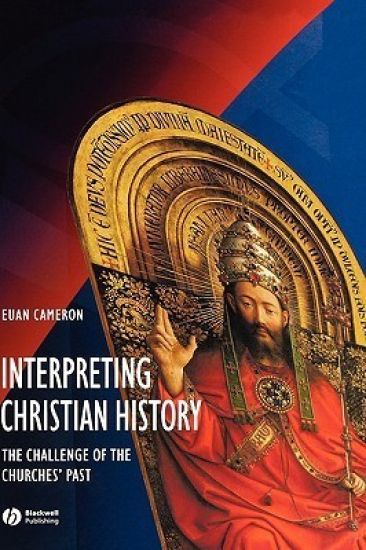
Interpreting Christian History

Interpreting Christian History

Euan Cameron

Blackwell Publishers
2005
sidottu
This book explores the theological lessons to be learnt from 2000 years of Christian Church history. An exploration of the theological lessons to be learnt from the difficult history of the Christian churches over the past 2,000 years Opens with an introductory essay on the whole of Church history, making the book suitable for lay readers as well as students Combines historical, historiographical and theological analysis Reunites the disciplines of theology and Church history Concludes that we can only ever perceive a facet of Christianity given our historical and cultural conditioning Written by a distinguished Church historian.
Interpreting Christian History

Interpreting Christian History

Euan Cameron

Blackwell Publishers
2005
nidottu
This book explores the theological lessons to be learnt from 2000 years of Christian Church history. An exploration of the theological lessons to be learnt from the difficult history of the Christian churches over the past 2,000 years Opens with an introductory essay on the whole of Church history, making the book suitable for lay readers as well as students Combines historical, historiographical and theological analysis Reunites the disciplines of theology and Church history Concludes that we can only ever perceive a facet of Christianity given our historical and cultural conditioning Written by a distinguished Church historian.
Waldenses

Waldenses

Euan Cameron

Blackwell Publishers
2000
nidottu
This is the first one-volume scholarly account in English of the Waldenses - a movement comprising various forms of religious dissidence and self-expression that was founded in the late twelfth century.
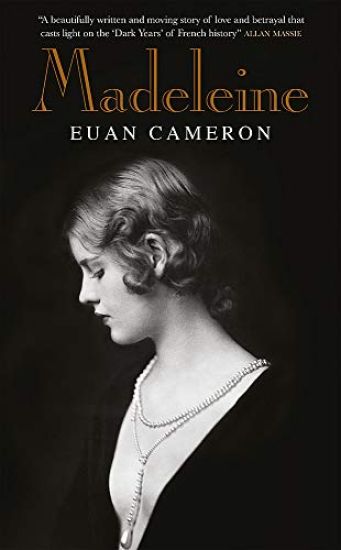
Madeleine

Madeleine

Euan Cameron

MacLehose Press
2019
sidottu
"Immersive, nuanced, impeccably researched" IAN RANKIN"Beautifully written and moving" ALLAN MASSIE"Poignant, nostalgic and redolent of the smell of France" SIMON BRETTFamily history has always been a mystery to Will Latymer. His father flatly refused to talk about it, and with no other relatives to consult, it seems that a mystery it shall always remain. Until of course, Will meets Ghislaine, his beautiful French cousin, in a chance encounter that introduces him to his grandmother, Madeleine, shut away in a quiet Breton manor with her memories and secrets.Before long, Will has been plunged headlong into the life of Madeleine's great love, his longlost grandfather, Henry Latymer. Reading Henry's old letters and diaries for the first time, Will discovers an idealistic young man, full of hopes and optimism - an optimism that will gradually be crushed as the realities of life under the Vichy regime become glaringly clear.But the more Will delves into Madeleine and Henry's past, and into France's troubled history, the darker the secrets he discovers become, and the more he has cause to wonder if sometimes, the past should remain buried.
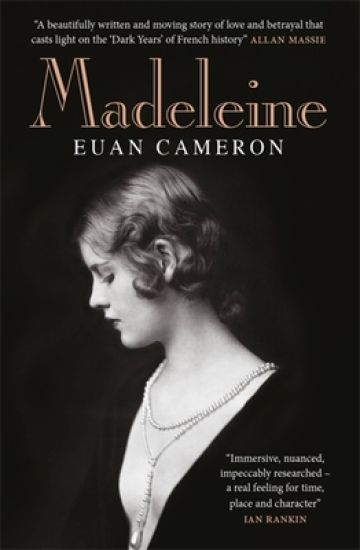
Madeleine

Madeleine

Euan Cameron

MacLehose Press
2020
pokkari
"Immersive, nuanced, impeccably researched" IAN RANKIN"Beautifully written and moving" ALLAN MASSIE"Poignant, nostalgic and redolent of the smell of France" SIMON BRETTFamily history has always been a mystery to Will Latymer. His father flatly refused to talk about it, and with no other relatives to consult, it seems that a mystery it shall always remain. Until of course, Will meets Ghislaine, his beautiful French cousin, in a chance encounter that introduces him to his grandmother, Madeleine, shut away in a quiet Breton manor with her memories and secrets.Before long, Will has been plunged headlong into the life of Madeleine's great love, his longlost grandfather, Henry Latymer. Reading Henry's old letters and diaries for the first time, Will discovers an idealistic young man, full of hopes and optimism - an optimism that will gradually be crushed as the realities of life under the Vichy regime become glaringly clear.But the more Will delves into Madeleine and Henry's past, and into France's troubled history, the darker the secrets he discovers become, and the more he has cause to wonder if sometimes, the past should remain buried.