Kirjojen hintavertailu. Mukana 11 244 527 kirjaa ja 12 kauppaa.

Kirjahaku

Etsi kirjoja tekijän nimen, kirjan nimen tai ISBN:n perusteella.

24 kirjaa tekijältä Eugene Goodheart

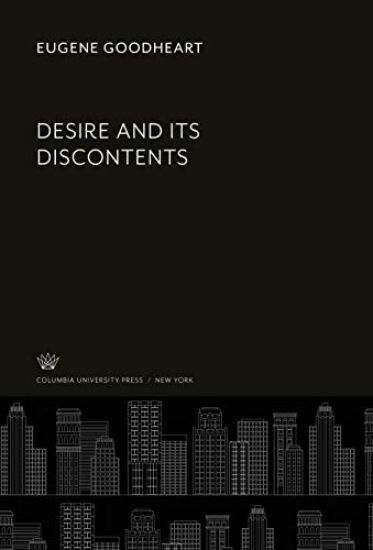
Desire and Its Discontents

Desire and Its Discontents

Eugene Goodheart

Columbia University Press
1992
sidottu
Challenging the imperialism of desire in contemporary academic discourse Goodheart confronts a crucial strain of utopianism in modern thought and literature. This utopianism is the position of desire in modern culture. Goodheart argues that the classic moderns (Proust, Durkheim, Mann, and Lawrence) appreciated desire for its potential to liberate the imagination, but also understood its tendencies toward destructiveness. Since the "cultural revolution" of the 1950s and 1960s, modern thoerists have forgotten or ignored the wise ambivalence of the classic moderns and their respect for boundaries, however fluid, between the writing life and life itself. In Desire and Its Discontents Goodheart engages in a discourse with both the academy and general culture in an effort to discriminate among the discourses of desire: between Marcuse's "rationalism of desire" and Lacan's celebration of tragedy, and between early and late Foucault.
The Reign of Ideology

The Reign of Ideology

Eugene Goodheart

Columbia University Press
1996
pokkari
In The Reign of Ideology Goodheart presents a powerful, tenacious critique of the prevailing fixation on ideology in literary theory. Exposing the debilitating effects of much "ideology critique" -which seeks to reveal the effects of power, privilege, and interest underlying critical approaches to works of art- whether practiced by feminists, neo-Marxists, Foucauldians, New Historicists, or post-colonialists, he argues for a new kind of criticism that will reintroduce the pleasures of literature. Goodheart cedes nothing to the alarmist conservative or neo-conservative positions. He offers instead a genre of criticism that is neither purely aesthetic nor deterministic, but one opposed to all forms of dogma: "Genuine thinking is an activity against the grain of ideological formulas that petrify the mind," he writes. With chapters on the New York intellectuals, Kenneth Burke, Primo Levi and Jean Amry, and Richard Rorty, Goodheart appreciates a wide variety of writing. The Reign of Ideology will speak to historians, sociologists, political theorists, and thos interested in cultural studies.
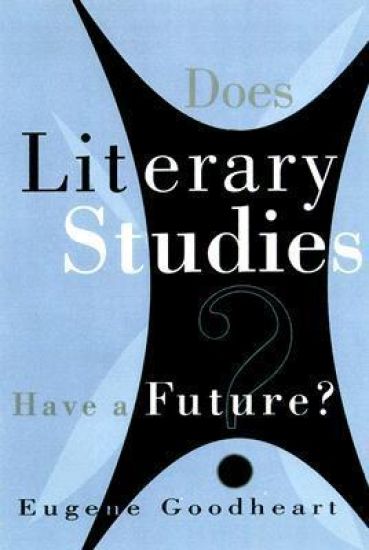
Does Literary Studies Have a Future?

Does Literary Studies Have a Future?

Eugene Goodheart

University of Wisconsin Press
1999
nidottu
An assessment of the current state and future of literary studies in the United States, this text challenges the view that literary classics must be relevant to our immediate concerns. It also addresses the question of objectivity in humanistic study.
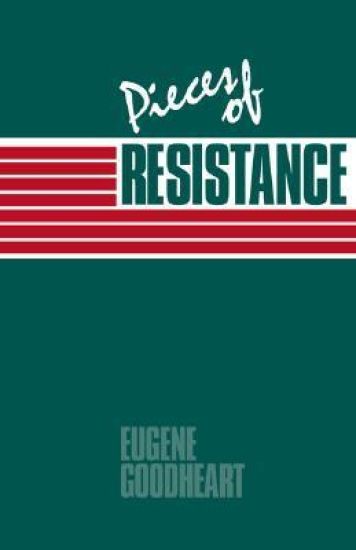
Pieces of Resistance

Pieces of Resistance

Eugene Goodheart

Cambridge University Press
2005
pokkari
Pieces of Resistance is a 1988 collection of Eugene Goodheart's essays and reviews written between 1960 and 1985. The book responds to the political, cultural, and literary changes expressed during this period by novelists, critics, and journalists. Goodheart's book is divided into three parts. The first section discusses critics Trilling, Rahv, Leslie Fiedler, Geoffrey Hartman, David Bleich, and Susan Sontag - to name a few. The second part devotes itself to contemporary culture and includes essays on journals such as The New York Review of Books, Commentary, and The Evergreen Review, which in the 1960s and early 1970s provided a well-lit playground for various political, cultural, and literary themes. Finally, Goodheart examines the work of many modern writers with essays on Isaac Bashevis Singer, Daniel Fuchs, Ralph Ellison, Nadine Gordimer, V. S. Naipaul, Bernard Malamud, William Styron, Donald Barthelme, Raymond Carver, and Saul Bellow. Goodheart does not pretend to impersonal objectivity; his commitment to evaluative criticism is a deliberate response to increasingly specialized forms of criticism.
Pieces of Resistance

Pieces of Resistance

Eugene Goodheart

Cambridge University Press
1987
sidottu
Pieces of Resistance is a 1988 collection of Eugene Goodheart's essays and reviews written between 1960 and 1985. The book responds to the political, cultural, and literary changes expressed during this period by novelists, critics, and journalists. Goodheart's book is divided into three parts. The first section discusses critics Trilling, Rahv, Leslie Fiedler, Geoffrey Hartman, David Bleich, and Susan Sontag - to name a few. The second part devotes itself to contemporary culture and includes essays on journals such as The New York Review of Books, Commentary, and The Evergreen Review, which in the 1960s and early 1970s provided a well-lit playground for various political, cultural, and literary themes. Finally, Goodheart examines the work of many modern writers with essays on Isaac Bashevis Singer, Daniel Fuchs, Ralph Ellison, Nadine Gordimer, V. S. Naipaul, Bernard Malamud, William Styron, Donald Barthelme, Raymond Carver, and Saul Bellow. Goodheart does not pretend to impersonal objectivity; his commitment to evaluative criticism is a deliberate response to increasingly specialized forms of criticism.
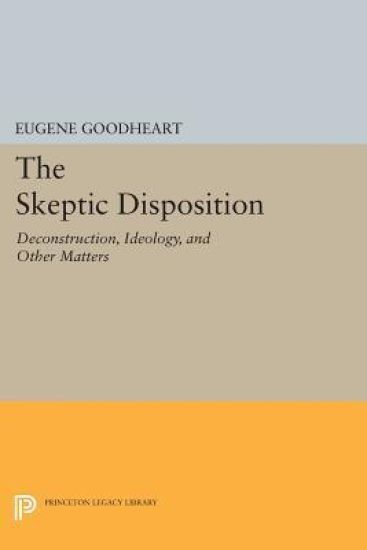
The Skeptic Disposition

The Skeptic Disposition

Eugene Goodheart

Princeton University Press
2014
pokkari
Eugene Goodheart examines the skeptic disposition that has informed advanced literary discourse over the past generation, arguing that the targets of deconstructive suspicion are fundamental humanistic values. "[This book] is a fair-minded, generous critique of the deconstructionist theories of Jacques Derrida, Paul de Man, and their followers. These writers have argued that language is so inherently slippery it can never express a speaker's intended meaning. The critic's role, in their view, is to explore the contradictions, subtexts, and metaphorical byways of works that may be most radically deceptive when they appear simple. Critics have castigated this language-centered skepticism as a form of nihilism geared to multiply numbingly similar readings of already familiar texts. Mr. Goodheart's objection is more subtle. He suggests that the philosophical orientation of deconstructive critics leads them to overemphasize the tricky propositional sense of words at the expense of the broader impact of literature--its power to wound, thrill, or transform us."--Morris Dickstein, The New York Times Book Review Originally published in 1991. The Princeton Legacy Library uses the latest print-on-demand technology to again make available previously out-of-print books from the distinguished backlist of Princeton University Press. These editions preserve the original texts of these important books while presenting them in durable paperback and hardcover editions. The goal of the Princeton Legacy Library is to vastly increase access to the rich scholarly heritage found in the thousands of books published by Princeton University Press since its founding in 1905.
The Skeptic Disposition In Contemporary Criticism

The Skeptic Disposition In Contemporary Criticism

Eugene Goodheart

Princeton University Press
2014
pokkari
Eugene Goodheart's remarkably compact and penetrating analysis examines the skeptic disposition that has informed advanced literary discourse over the past generation. Originally published in 1985. The Princeton Legacy Library uses the latest print-on-demand technology to again make available previously out-of-print books from the distinguished backlist of Princeton University Press. These editions preserve the original texts of these important books while presenting them in durable paperback and hardcover editions. The goal of the Princeton Legacy Library is to vastly increase access to the rich scholarly heritage found in the thousands of books published by Princeton University Press since its founding in 1905.
The Skeptic Disposition

The Skeptic Disposition

Eugene Goodheart

Princeton University Press
2016
sidottu
Eugene Goodheart examines the skeptic disposition that has informed advanced literary discourse over the past generation, arguing that the targets of deconstructive suspicion are fundamental humanistic values. "[This book] is a fair-minded, generous critique of the deconstructionist theories of Jacques Derrida, Paul de Man, and their followers. These writers have argued that language is so inherently slippery it can never express a speaker's intended meaning. The critic's role, in their view, is to explore the contradictions, subtexts, and metaphorical byways of works that may be most radically deceptive when they appear simple. Critics have castigated this language-centered skepticism as a form of nihilism geared to multiply numbingly similar readings of already familiar texts. Mr. Goodheart's objection is more subtle. He suggests that the philosophical orientation of deconstructive critics leads them to overemphasize the tricky propositional sense of words at the expense of the broader impact of literature--its power to wound, thrill, or transform us."--Morris Dickstein, The New York Times Book Review Originally published in 1991. The Princeton Legacy Library uses the latest print-on-demand technology to again make available previously out-of-print books from the distinguished backlist of Princeton University Press. These editions preserve the original texts of these important books while presenting them in durable paperback and hardcover editions. The goal of the Princeton Legacy Library is to vastly increase access to the rich scholarly heritage found in the thousands of books published by Princeton University Press since its founding in 1905.
The Skeptic Disposition In Contemporary Criticism

The Skeptic Disposition In Contemporary Criticism

Eugene Goodheart

Princeton University Press
2016
sidottu
Eugene Goodheart's remarkably compact and penetrating analysis examines the skeptic disposition that has informed advanced literary discourse over the past generation. Originally published in 1985. The Princeton Legacy Library uses the latest print-on-demand technology to again make available previously out-of-print books from the distinguished backlist of Princeton University Press. These editions preserve the original texts of these important books while presenting them in durable paperback and hardcover editions. The goal of the Princeton Legacy Library is to vastly increase access to the rich scholarly heritage found in the thousands of books published by Princeton University Press since its founding in 1905.
Novel Practices

Novel Practices

Eugene Goodheart

Transaction Publishers
2003
sidottu
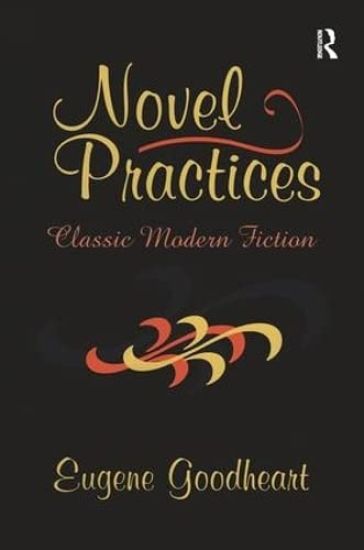
An important debate in modern literary criticism concerns the exact relationship between the ancient epic and the novel. Both the epic and the most ambitious modern novels are large-scale attempts to present a comprehensive view of the world through the experience of a representative hero. However, in the older tradition the hero stood for the aspirations and highest ideals of his society. The protagonist of the modern novel is usually at odds with that society, whether as exile, active rebel, or antagonistic critic. In Novel Practices, the distinguished literary scholar Eugene Goodheart surveys a representative selection of modern novelists tracing how the epic impulse has been reshaped under the conditions of modernity.Goodheart describes how George Eliot and James Joyce's comprehensive artistic creation enabled them to demonstrate a mastery of the world unattainable to their thwarted, flawed, or feckless heroes and heroines. Works such as Middlemarch and Ulysses, encyclopedic in their inclusiveness, share an ambitious scope that is virtually synonymous with epic. Goodheart shows that even in shorter works, such as James's The Beast in the Jungle and Ford Maddox Ford's The Good Soldier, the standard of the epic hero acts as an ironic subtext. A chapter on Thomas Mann provides a European perspective, enacting conflict between self and society through a dramatized contest of ideas. Goodheart explores ambiguities of point of view as characteristic of modern uncertainty: how much authority or reliability should the reader concede to the narrator? What is the relationship between the narrator and the author? These and related questions are addressed in chapters on Lawrence, James, Bellow, Woolf, and Roth, which also deal with the place of literary biography in understanding fiction.Goodheart's approach centers on fiction, and although he takes cognizance of the critical theory of the past several decades, he nevertheless emphasizes the centrality of the author and authorial intention. Novel Practices will be essential reading for students of literature, culture, and intellectual history.
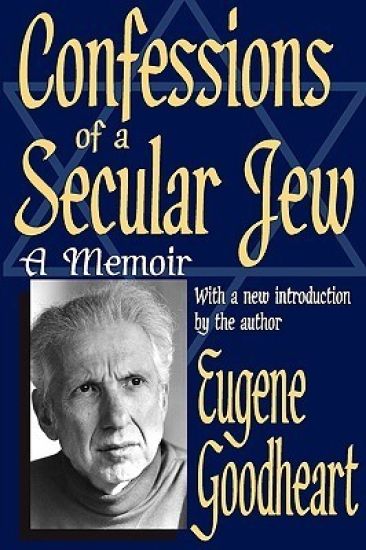
Confessions of a Secular Jew

Confessions of a Secular Jew

Eugene Goodheart

Transaction Publishers
2004
nidottu
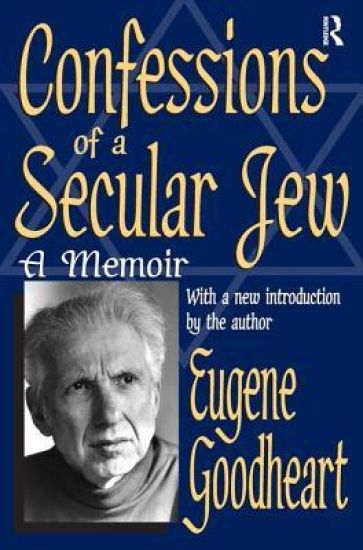
What it means to be a Jew lies at the very heart of Confessions of a Secular Jew, a provocative memoir and a thoughtful speculation on the nature of Jewish identity and experience in an increasingly secular world.The legacy bequeathed to Eugene Goodheart was a "progressive" secular Yiddish education which identified Jewish struggles against oppression with working class struggles against exploitation. In the vanguard was the Soviet Union. Goodheart's heroes were Moses, Bar Kochbah, Judah Maccabee, Karl Marx and that strange honorary Jew, Joseph Stalin, whose anti-Semitism would later become known to the world. Confessions of a Secular Jew is the story of Goodheart's disillusionment with the naive, even false, progressivism of that education. At the same time, it is an attempt to rescue and come to grips with the positive remains of that education and heritage.In the introduction to the new Transaction edition of his memoir, Goodheart addresses the themes of social justice, Zionism, chosenness, messianism, and alienation from a secular Jewish perspective. The memoir takes the reader from Goodheart's coming of age in Brooklyn to his higher education at Columbia College in the early fifties and beyond to his varied career as university teacher and literary critic. The memoir provides memorable characterizations of writers whom he knew, among them Lionel Trilling (his teacher), Saul Bellow, Richard Wright (whom he met in Paris), Hannah Arendt, and Philip Rahv.
Modernism and the Critical Spirit

Modernism and the Critical Spirit

Eugene Goodheart

Transaction Publishers
2000
nidottu
Complaints about the decline of critical standards in literature and culture in general have been voiced for much of the twentieth century. These have extended from F.R. Leavis's laments for a "lost center of intelligence and urbane spirit," to current opposition to the predominance of radical critical theory in contemporary literature departments. Humanist criticism, which has as its object the quality of life as well as works of art, may well lack authority in the contemporary world. Even amid the disruptions of the industrial revolution, nineteenth-century humanists such as Matthew Arnold, John Ruskin, and Thomas Carlyle could assume a positive order of value and shared habits of imaginative perception and understanding between writers and readers. Eugene Goodheart argues that, by contrast, contemporary criticism is infused with the skepticism of modernist aesthetics. It has willfully rejected the very idea of moral authority.Goodheart starts from the premise that questions about the moral authority of literature and criticism often turn upon a prior question of what happens when the sacred disappears or is subjected to the profane. He focuses on contending spiritual views, in particular the dialectic between the Protestant-inspired, largely English humanist tradition of Carlyle, Ruskin, Arnold, and D.H. Lawrence and the decay of Catholicism represented by James Joyce and T.S. Eliot. Goodheart argues that literary modernism, in distancing itself from natural and social vitality, tends to render suspect all privileged positions. It thereby undermines the critical act, which assumes the priority of a particular set of values. Goodheart makes his case by analyzing the work of a variety of novelists, poets, and critics, nineteenth century and contemporary. He blends literary theory and practical criticism.
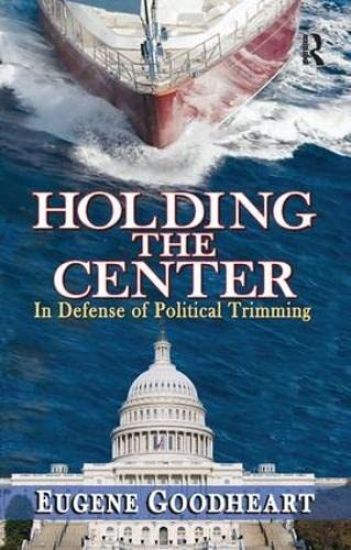
Holding the Center

Holding the Center

Eugene Goodheart

Routledge
2017
nidottu
Politicians and pundits often scorn polarization and compromise the intransigence of the former and the feebleness of the latter without suggesting an alternative way. Polarization, when opposing forces are equal or close to equal in strength, leads to stalemate. Compromise threatens to betray one's conviction about what is essential. Ideally, a leader must combine conviction about what ought to be done with an open-minded awareness of unintended consequences.The social sciences are or should be based, largely, on the premise that people are historical and social beings. Holding the Center follows this tradition, while focusing on the "trimming" aspect. In nautical terms, trimming indicates an adjustment of one's vessel to accommodate one's environment. In politics, it is to find common ground between extremes, not for the sake of compromise, but because reason does not have a single location on the political spectrum.The twelve chapters in this book are brought together by Goodheart's argument that the Whig trimming tradition is the heart and soul of politics in the West, and that both democracy and democratic culture depend upon the trimming tradition's advocacy of toleration. What is needed now, he notes, is a transformation in our political culture in which humility and the admission of error enter the list of political virtues. Non-parliamentary democracy with its separation of powers depends for its proper functioning on compromise, especially in a time like ours of crisis and divided government.
Mostly Grave Thoughts

Mostly Grave Thoughts

Eugene Goodheart

Routledge
2017
nidottu
In this new collection, Eugene Goodheart, scholar of English literature, essayist, and public intellectual, reveals himself in a way that will interest readers already familiar with his expansive body of work as well as those new to his writing.Rising above the particular, the essays focus on themes of universal importance. The opening essay, "Whistling in the Dark," is a meditation on the gravest of subjects: aging and mortality. The chapters that follow are a series of reflections on teaching, retirement, illness, marriage, fatherhood, friendship, regret, indignation, sports, and writing activities that make up a life. The book wrestles with the question of what constitutes the reality of the self in the present when many writers view the self as an illusion.Each essay alludes to writers of the past and present who have addressed the question of what constitutes the self. Looming largest is Montaigne, the inventor of the modern personal essay. This book focuses on universally important subjects, including an individual's place in a community, family, fatherhood, growing older, being Jewish, and friendship. Written in a vividly accessible manner, this book reaches out to a general audience.
Novel Practices

Novel Practices

Eugene Goodheart

Routledge
2018
nidottu
An important debate in modern literary criticism concerns the exact relationship between the ancient epic and the novel. Both the epic and the most ambitious modern novels are large-scale attempts to present a comprehensive view of the world through the experience of a representative hero. However, in the older tradition the hero stood for the aspirations and highest ideals of his society. The protagonist of the modern novel is usually at odds with that society, whether as exile, active rebel, or antagonistic critic. In Novel Practices, the distinguished literary scholar Eugene Goodheart surveys a representative selection of modern novelists tracing how the epic impulse has been reshaped under the conditions of modernity.Goodheart describes how George Eliot and James Joyce's comprehensive artistic creation enabled them to demonstrate a mastery of the world unattainable to their thwarted, flawed, or feckless heroes and heroines. Works such as Middlemarch and Ulysses, encyclopedic in their inclusiveness, share an ambitious scope that is virtually synonymous with epic. Goodheart shows that even in shorter works, such as James's The Beast in the Jungle and Ford Maddox Ford's The Good Soldier, the standard of the epic hero acts as an ironic subtext. A chapter on Thomas Mann provides a European perspective, enacting conflict between self and society through a dramatized contest of ideas. Goodheart explores ambiguities of point of view as characteristic of modern uncertainty: how much authority or reliability should the reader concede to the narrator? What is the relationship between the narrator and the author? These and related questions are addressed in chapters on Lawrence, James, Bellow, Woolf, and Roth, which also deal with the place of literary biography in understanding fiction.Goodheart's approach centers on fiction, and although he takes cognizance of the critical theory of the past several decades, he nevertheless emphasizes the centrality of the author and authorial intention. Novel Practices will be essential reading for students of literature, culture, and intellectual history.
Confessions of a Secular Jew

Confessions of a Secular Jew

Eugene Goodheart

Routledge
2017
sidottu
What it means to be a Jew lies at the very heart of Confessions of a Secular Jew, a provocative memoir and a thoughtful speculation on the nature of Jewish identity and experience in an increasingly secular world.The legacy bequeathed to Eugene Goodheart was a "progressive" secular Yiddish education which identified Jewish struggles against oppression with working class struggles against exploitation. In the vanguard was the Soviet Union. Goodheart's heroes were Moses, Bar Kochbah, Judah Maccabee, Karl Marx and that strange honorary Jew, Joseph Stalin, whose anti-Semitism would later become known to the world. Confessions of a Secular Jew is the story of Goodheart's disillusionment with the naive, even false, progressivism of that education. At the same time, it is an attempt to rescue and come to grips with the positive remains of that education and heritage.In the introduction to the new Transaction edition of his memoir, Goodheart addresses the themes of social justice, Zionism, chosenness, messianism, and alienation from a secular Jewish perspective. The memoir takes the reader from Goodheart's coming of age in Brooklyn to his higher education at Columbia College in the early fifties and beyond to his varied career as university teacher and literary critic. The memoir provides memorable characterizations of writers whom he knew, among them Lionel Trilling (his teacher), Saul Bellow, Richard Wright (whom he met in Paris), Hannah Arendt, and Philip Rahv.
D.H. Lawrence

D.H. Lawrence

Eugene Goodheart

Routledge
2017
sidottu
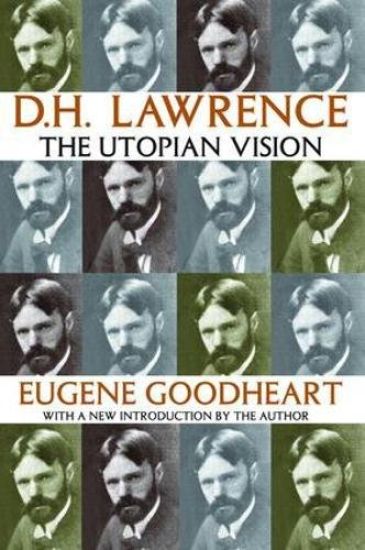
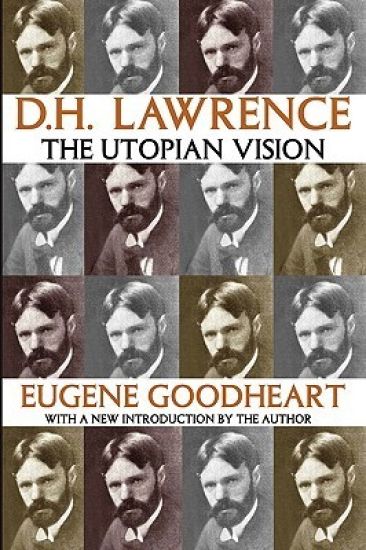
The dominant view of D.H. Lawrence's work has long been that of F. R. Leavis, who confined Lawrence within an exclusively ethical and artistic tradition. In D.H. Lawrence: The Utopian Vision, Eugene Goodheart widens the context in which Lawrence should be understood to include European as well as English writers - Blake, Nietzsche, Rilke, and Freud among others.Goodheart shows that the characteristic impulse of Lawrence's principal discovery was the bodily or physical life that he believed man had once possessed in his pre-civilized past and must now fully recover if future civilized life is possible. Goodheart's argument fully engages the paradoxes of Lawrence's writing. He is at once the last great representative of the moral tradition of the English novel and of the English Protestant imagination and a novelist without precedent, a diabolist in the service of the dark gods. He rejects the claims of society, while simultaneously lamenting the thwarting of the societal instinct. The oppositions and paradoxes in the work are the expression of a single, not always coherent, revolutionary imagination. D.H. Lawrence: The Utopian Vision provides a rigorous and critical analysis of the ideological character of Lawrence's novels and essays, in particular the effect of his utopianism on his views of nature, myth, and religious experience, while responding to his aesthetic achievement. Goodheart's Lawrence is a prophetic artist whose vision is at once inspiring and dangerous.In the new introduction to the book, Goodheart reflects upon the vicissitudes of Lawrence's reputation since the sixties when the book first appeared and his relevance to the concerns of our own time.
Modernism and the Critical Spirit

Modernism and the Critical Spirit

Eugene Goodheart

Routledge
2018
sidottu
Complaints about the decline of critical standards in literature and culture in general have been voiced for much of the twentieth century. These have extended from F.R. Leavis's laments for a "lost center of intelligence and urbane spirit," to current opposition to the predominance of radical critical theory in contemporary literature departments. Humanist criticism, which has as its object the quality of life as well as works of art, may well lack authority in the contemporary world. Even amid the disruptions of the industrial revolution, nineteenth-century humanists such as Matthew Arnold, John Ruskin, and Thomas Carlyle could assume a positive order of value and shared habits of imaginative perception and understanding between writers and readers. Eugene Goodheart argues that, by contrast, contemporary criticism is infused with the skepticism of modernist aesthetics. It has willfully rejected the very idea of moral authority.Goodheart starts from the premise that questions about the moral authority of literature and criticism often turn upon a prior question of what happens when the sacred disappears or is subjected to the profane. He focuses on contending spiritual views, in particular the dialectic between the Protestant-inspired, largely English humanist tradition of Carlyle, Ruskin, Arnold, and D.H. Lawrence and the decay of Catholicism represented by James Joyce and T.S. Eliot. Goodheart argues that literary modernism, in distancing itself from natural and social vitality, tends to render suspect all privileged positions. It thereby undermines the critical act, which assumes the priority of a particular set of values. Goodheart makes his case by analyzing the work of a variety of novelists, poets, and critics, nineteenth century and contemporary. He blends literary theory and practical criticism.
D.H. Lawrence

D.H. Lawrence

Eugene Goodheart

AldineTransaction
2005
nidottu
The dominant view of D.H. Lawrence's work has long been that of F. R. Leavis, who confined Lawrence within an exclusively ethical and artistic tradition. In D.H. Lawrence: The Utopian Vision, Eugene Goodheart widens the context in which Lawrence should be understood to include European as well as English writers - Blake, Nietzsche, Rilke, and Freud among others.Goodheart shows that the characteristic impulse of Lawrence's principal discovery was the bodily or physical life that he believed man had once possessed in his pre-civilized past and must now fully recover if future civilized life is possible. Goodheart's argument fully engages the paradoxes of Lawrence's writing. He is at once the last great representative of the moral tradition of the English novel and of the English Protestant imagination and a novelist without precedent, a diabolist in the service of the dark gods. He rejects the claims of society, while simultaneously lamenting the thwarting of the societal instinct. The oppositions and paradoxes in the work are the expression of a single, not always coherent, revolutionary imagination. D.H. Lawrence: The Utopian Vision provides a rigorous and critical analysis of the ideological character of Lawrence's novels and essays, in particular the effect of his utopianism on his views of nature, myth, and religious experience, while responding to his aesthetic achievement. Goodheart's Lawrence is a prophetic artist whose vision is at once inspiring and dangerous.In the new introduction to the book, Goodheart reflects upon the vicissitudes of Lawrence's reputation since the sixties when the book first appeared and his relevance to the concerns of our own time.