
Kirjahaku
Etsi kirjoja tekijän nimen, kirjan nimen tai ISBN:n perusteella.
5 kirjaa tekijältä Eugene K Garber
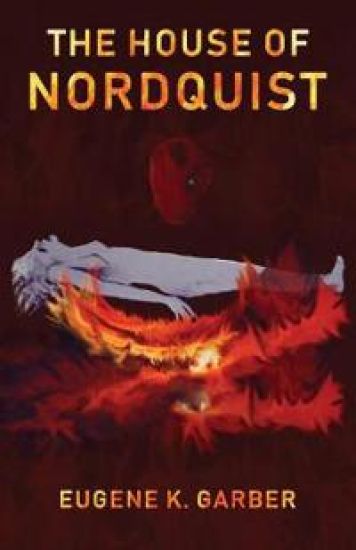
In The House of Nordquist, the final novel of The Eroica Trilogy, Eugene K. Garber creates his most demonic character of the series. Deep in the infernal regions of the bizarre house of his mad father, the Faustian Eric Nordquist conducts an atrocious experiment. He will extract from the body of a Holocaust victim sounds for a world-changing symphony.Day after day he stands at his synthesizer transforming the sounds of a maimed body into appalling skeins of lachrymose reverberations. But his theft of the life force of his subject is not his only transgression. He sucks everyone around him into the vortex of his mad dream of a cleansing cataclysm. His most devoted follower Paul Albright not only assists in the experiment but becomes infected with unholy powers.Now, years later, the House of Nordquist burned to the ground by an unknown arsonist, Eric is on the loose with the score of his abysmal symphony. Paul is in pursuit. Can Paul find Eric and the sinister score? If he does, what will he do?The novels of The Eroica Trilogy share the common strategy of "genre iconoclasm." In The House of Nordquist the conventions of Gothic fiction and mystery novels are radically skewed by the deflections of metafiction and indeterminacy.

O Amazonas Escuro, second in Eugene K. Garber's Eroica Trilogy, has earned the praise of noted anthropologist Gary Gossen: "Fasten your seatbelts for a wild ride In this extraordinary book, Eugene Garber juxtaposes a parody version of an Indiana Jones-type adventure among Amazonian Indians (the Other) with a profound reflection on several great themes in Western philosophy (Ourselves)."Exactly. Who would have expected to hear the voices of such as Jung, Luce Irigaray and Nietzsche resounding with those of howler monkeys in the forests of Amazonia?Myth, botany, theology, sexual shapeshifting, all jostle against each other in this wildly imaginative novel. K, the hero of the novel, a scientific anthropologist, is hell bent on bringing rational order to his descriptions of the culture of a tribe of Amazonian indigenes. But the tribe will not have it so, persisting in its mythological treatments of sky, river, animals and self. Nor will outside visitors to the tribal compound, bringing with them botanical passions, wounds of war, erotic obsession, and cinematographic exploitation. Meanwhile, looming over the entire enterprise are spirits of clashing ideals, resonant voices of western thinkers from Plato to Derrida. And if these disruptions were not enough to shatter K's project, there is Korakama, the tribal magus, master of enchantments, curses, spellbinding rhetoric and potent violence.And so the novel plays out its intense conflicts, K doggedly rational, the world around him rife with irrationality. Inevitably there comes in the final chapter an eruption as memorable as any in recent fiction.