

Kirjahaku
Etsi kirjoja tekijän nimen, kirjan nimen tai ISBN:n perusteella.
110 kirjaa tekijältä Eugene O'Neill
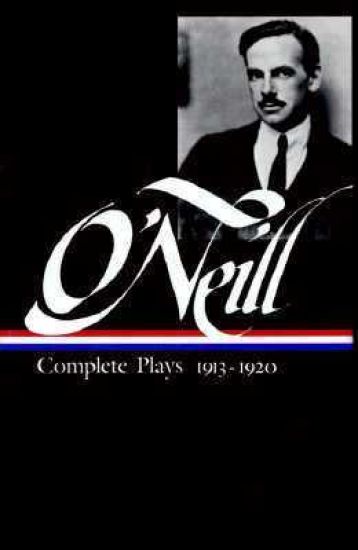
Eugene O'Neill: Complete Plays Vol. 1 1913-1920 (LOA #40)
Eugene O'Neill
The Library of America
1988
sidottu
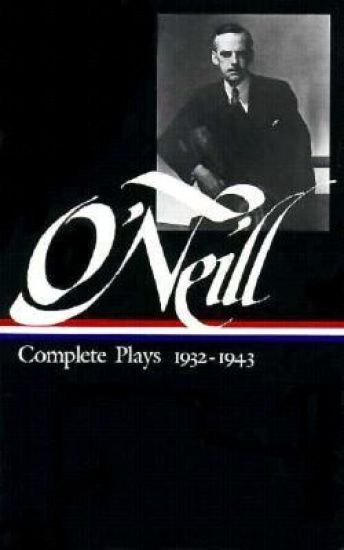
Eugene O'Neill: Complete Plays Vol. 3 1932-1943 (LOA #42)
Eugene O'Neill
The Library of America
1988
sidottu
The third and final volume of the first complete collection of Eugene O'Neill's dramatic writings (available exclusively from The Library of America) contains eight plays written between 1932 and 1943, when illness forced him to stop writing. They represent the crowning achievements of his career. O'Neill described Ah, Wilderness as "the way I would have liked my boyhood to have been." Set in the summer of 1906, it affectionately depicts the warm, close family of sixteen-year-old Richard Miller and the innocence with which he faces the trials of first love, strong drink, and sexual temptation. John Loving, hero of Days Without End, is split by his lack of faith into two selves: John and his Mephistophelian double Loving, who wears John's death mask and plots his destruction. Burdened by guilt but desperately wanting to love, John struggles with Loving's nihilistic hatred in what O'Neill termed his "modern miracle play." In A Touch of the Poet, Irish tavern-keeper Con Melody is drawn by his proud past as a Byronic cavalry hero of the Napoleonic Wars toward a fatal confrontation with his wealthy Yankee neighbors, the Harfords. Throughout More Stately Mansions, the idealistic yet cunning Simon Harford, his wife, Sara Melody Harford, and his mother, Deborah, continually shift roles and alliances as they engage in an eerie psychological and sexual battle for possession of each other and their own maddeningly elusive dreams. This volume presents the never-before-published complete text of the revised typescript for this unfinished play. The derelict inhabitants of Harry Hope's saloon in The Iceman Cometh find solace in their comradeship until their drifting calm is destroyed by the visiting salesman Theodore Hickey, who insists that they abandon all "pipe dreams" and face the truth about their lives. O'Neill carefully orchestrates the voices of over a dozen characters to form a chorus of overwhelming despair and surprising compassion. Hughie is a one-act dialogue between a reminiscing gambler and a weary hotel night clerk about the promise and loneliness of city life. Long Day's Journey into Night unsparingly dissects the pain, rage, guilt, and love that drive a wounded family apart and bind it together. In their summer home the four Tyrones--James, a proud actor haunted by poverty, his devout, morphine-addicted wife, Mary, and their sons, Jamie, a cynical drunkard, and Edmund, an aspiring poet--slowly unveil the truth about their lives until they can no longer hope either to save or to escape one another. Published and produced posthumously, it won O'Neill his fourth Pulitzer Prize. In its elegiac coda, A Moon for the Misbegotten, Jamie Tyrone seeks the peace that has long eluded him in the arms of sharp-tongued Josie Hogan. The volume concludes with "Tomorrow" (1917), O'Neill's only published short story. LIBRARY OF AMERICA is an independent nonprofit cultural organization founded in 1979 to preserve our nation's literary heritage by publishing, and keeping permanently in print, America's best and most significant writing. The Library of America series includes more than 300 volumes to date, authoritative editions that average 1,000 pages in length, feature cloth covers, sewn bindings, and ribbon markers, and are printed on premium acid-free paper that will last for centuries.

The Plays Of Eugene O'neill Including Anna Christie, Beyond The Horizon, Emperor Jones, The Hairy Ape And Days Without End
Eugene O'Neill
Kessinger Pub
2004
pokkari
The Plays of Eugene O'neill Including Anna Christie, Beyond the Horizon, Emperor Jones, the Hairy Ape and Days Without End
Eugene O'Neill
Kessinger Pub
2004
sidottu

Short Plays of Eugene O'Neill: The Dreamy Kid; Before Breakfast; Gold; Diff'rent; And the Straw
Eugene O'Neill
Literary Licensing, LLC
2014
nidottu

The Plays Of Eugene O'Neill: Including Anna Christie, Beyond The Horizon, Emperor Jones, The Hairy Ape And Days Without End
Eugene O'Neill
Literary Licensing, LLC
2014
nidottu
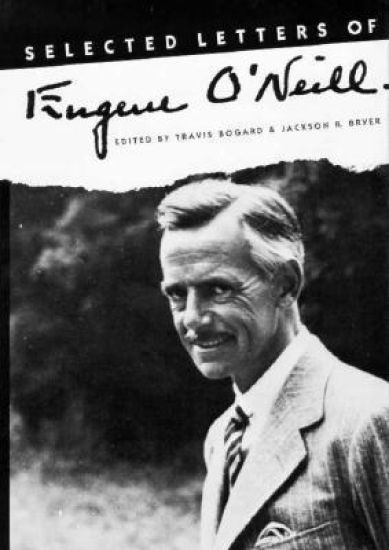
This book--published on the centenary of Eugene O’Neill’s birth--contains the only comprehensive collection of his letters. Providing a representative selection of O’Neill’s voluminous correspondence written over a fiftyyear period to intimate friends and family as well as to literary and theatrical personalities, the distinguished O’Neill scholars Travis Bogard and Jackson R. Bryer here offer through O’Neill’s letters new and revealing insights into the highly private life and thoughts of America’s greatest playwright.

Eugene O’Neill has long been celebrated as America’s greatest playwright. This year, in the centennial of his birth, Yale University Press takes pride in bringing out an edition of O’Neill’s little-known works of the imagination and his principal critical statements, most of which have not hitherto been published. Edited and introduced by eminent O’Neill scholar Travis Bogard, the pieces—mostly early works—shed valuable light on O’Neill’s artistic development.Contained here are a four-act tragedy, “The Personal Equation”; the original version of Marco Millions; a dramatic adaptation of Coleridge’s “The Rime of the Ancient Mariner”; a scenario “The Reckoning,” and Bolton O’Neill; the fourth act of “The Ole Davil,” which became, with some alteration of tone, “Anna Christie”; and two short stories, “Tomorrow” and “S.O.S.” Also included are an unpublished love poem and several critical and occasional pieces, composition of Mourning Becomes Electra and “The Last Will and Testament of Silverdene Emblem O’Neill,” written on behalf of his Dalmatian, Blemie. “There is here no undiscovered masterwork,” says Bogard in his foreword, “but much here foreshadows what was to come as ‘Tomorrow,’ written in 1917, explores the ground on which The Iceman Cometh was to be created. In some of the writing, O’Neill is struggling to learn his craft: the scenario of ‘The Reckoning,’ for example, shows him in the process of forming a lifelong habit of detailing a play in a long narrative account. In the poem to Jane Caldwell and the memorial for Blemie, glimpses of a gentle, private man can be caught. In the critical pieces, O’Neill attempts an uncharacteristic but interesting articulation of his theatrical principles. In all the fugitive works gathered here, the O’Neill voice sounds clear…. It remains worth hearing.” “An important work about an unknown O’Neill that will reveal this fascinating personality to the general public.” –Paul ShyreTravis Bogard, emeritus professor of dramatic art at the University of California, Berkeley, has edited many works and papers of O’Neill, including, with Jackson R. Bryer, “The Theatre We Worked For”: The Letters of Eugene O’Neill to Kenneth Macgowan.
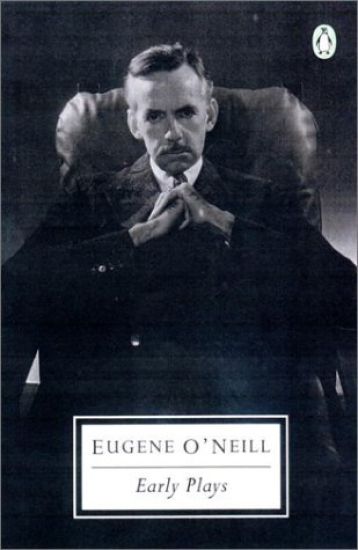
A selection of early work--including two Pulitzer Prize-winning plays--from Eugene O'Neill, winner of the Nobel Prize in Literature A Penguin Classic Included in this volume are seven one-act plays (The Moon of the Caribbees, Bound East for Cardiff, In the Zone, The Long Voyage Home, Ile, Where the Cross Is Made, and The Rope), and five full-length plays (Beyond the Horizon, The Straw, Anna Christie, and the classics The Emperor Jones and The Hairy Ape), all written between 1914 and 1921 and produced for the stage between 1916 and 1922. The majority of these plays are heavily influenced by German expressionism--Freud, Nietzsche, Strindberg, and the radical leftist politics in which O'Neill was involved during his youth. Also included in this unique collection is the little-known and highly autobiographical play The Straw, which draws on O'Neill's confinement in the Gaylord Farm Sanatorium.

More Stately Mansions represents the first printing of the complete and unexpurgated version of Eugene O'Neill's play, prepared from the original typescript housed at the Beinecke Rare Book and Manuscript Library at Yale University. The sixth in a line of eleven plays O'Neill planned but never finished, the play was part of a cycle he called A Tale Possessors Self-Dispossessed. The cycle would have spanned several generations and traced the Harford family's pursuit of material gain from 1755-1932. O'Neill completed and published only one other cycle play, A Touch of the Poet. Arguing that the 1964 edition of More Stately Mansions, prepared after the playwright's death, was missing a substantial amount of material that O'Neill intended for inclusion, Martha Bower presents an entirely new edition of the play with this material - dialogue, character description, an entire scene, the epilogue, and large parts of other scenes - restored. Written in 1939, and set in the 1830s and 1840s, the play is still of contemporary importance in its frank exposure of the devious intrigues of an American family's exploitation of a business opportunity. O'Neill's enlightened vision fostered the creation of two strong, intelligent women characters and the candid portrayal of a family dominated by love, hate, and jealousy. Reflecting the playwright's own unresolved family and sexual tensions, Bower holds that More Stately Mansions is, in fact, more true to the reality of his own essential pain than the so-called autobiographical plays. This restored and complete edition of More Stately Mansions will stand as an important contribution to O'Neill scholarship.

Set in New England just after the end of the Civil War, Mourning Becomes Electra is O'Neill's three part reworking of themes from Greek tragedy. This adaptation of Aeschylus' Oresteia by one of America's greatest playwrights is a landmark in the history of theatre.

Long Day's Journey into Night was written in 1940 but not staged until 1956, after O'Neill's death. Unashamedly autobiographical, it is, as he puts it himself in the dedicatory note, 'a play of old sorrow, written in tears and blood', a harrowing attempt to understand himself and his family.
Winner of the 1957 Pulitzer Prize in Drama "The definitive edition."--Boston Globe Eugene O'Neill's autobiographical play Long Day's Journey into Night is regarded as his finest work. First published by Yale University Press in 1956, it won the Pulitzer Prize in 1957 and has since sold more than one million copies. This edition includes a Foreword by Harold Bloom, in which he writes: "By common consent, Long Day's Journey into Night is Eugene O'Neill's masterpiece. . . . The helplessness of family love to sustain, let alone heal, the wounds of marriage, of parenthood, and of sonship, have never been so remorselessly and so pathetically portrayed, and with a force of gesture too painful ever to be forgotten by any of us."
A Touch of the Poet and More Stately Mansions are regarded as two of Eugene O'Neill's finest plays. Companion pieces, linked by characters and themes, they form part of a projected series of eleven interconnected plays in which the playwright intended to give a psychological and economic account of American life. Now these works, the only surviving plays in O'Neill's "Cycle," are brought together for the first time in a paperback volume. The version of More Stately Mansions presented here is O'Neill's unexpurgated text, scrupulously edited by Martha Gilman Bower, which restores the playwright's original opening scene, a crucial epilogue, and other material essential to our understanding of the play.
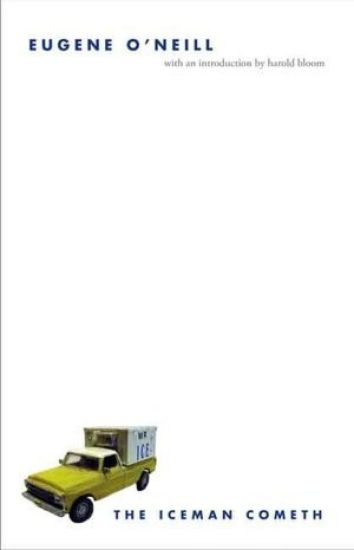
Eugene O'Neill's darkest and most nihilistic play, with a foreword by Harold Bloom "We live and die, in the spirit, in solitude, and the true strength of Iceman is its intense dramatic exemplification of that somber reality. . . . Life, in Iceman, is what it is in Schopenhauer: illusion."--Harold Bloom, from the Introduction The Iceman Cometh focuses on a group of alcoholics and misfits who endlessly discuss but never act on their dreams, and Hickey, the traveling salesman determined to strip them of their pipe dreams. Eugene O'Neill--the first American playwright to win the Nobel Prize in Literature--completed Iceman in 1939, but he delayed production until after the war, when it enjoyed a long run of performances in 1946 after receiving mixed reviews. Three years after O'Neill's death, Jason Robards starred in a Broadway revival that brought new critical attention to O'Neill's darkest and most nihilistic play. Since then, The Iceman Cometh has gained enormously in stature; many critics now recognize it as one of the greatest plays in American drama.

"This is a worthy new edition, one that I'm sure will appeal to many students and teachers. William Davies King provides a thoughtful introduction to Long Day's Journey into Night--equally sensitive to the most particular and most encompassing of the play's materials."--Marc Robinson Eugene O'Neill's autobiographical play Long Day's Journey into Night is regarded as his masterpiece and a classic of American drama. With this new edition, at last it has the critical edition that it deserves. William Davies King provides students and theater artists with an invaluable guide to the text, including an essay on historical and critical perspectives; glosses of literary allusions and quotations; notes on the performance history; an annotated bibliography; and illustrations.

"Spellbinding--soaring theater--. For reasons that remain mysterious, it seems especially moving today."--The New York Times Eugene O'Neill mined the tragedies of his own life for this depiction of a seedy, skid row saloon in 1912, peopled by society's failures: worn-out anarchists, failed con artists, drifters, whores, pimps, and informers. The pipe-dreaming drunks of Harry Hope's bar numb themselves with rotgut gin and make grandiose plans, while waiting for the annual appearance of the big-spending, fast-talking salesman, Hickey. But this year's visit fails to bring the expected good times, as a changed Hickey tries to rouse the barflies from their soothing stupor with a proselytizing message of salvation through self-knowledge. Considered by many to be the Nobel Prize-winning playwright's finest work, The Iceman Cometh exposes the human need for illusion as an antidote to despair. The recent gripping, critically acclaimed Broadway production, starring Kevin Spacey, has highlighted anew the subversive genius of O'Neill's play.
