Kirjojen hintavertailu. Mukana 11 342 296 kirjaa ja 12 kauppaa.

Kirjahaku

Etsi kirjoja tekijän nimen, kirjan nimen tai ISBN:n perusteella.

4 kirjaa tekijältä Eugene Taylor

The Mystery of Personality

The Mystery of Personality

Eugene Taylor

Springer-Verlag New York Inc.
2009
sidottu
In The Mystery of Personality: A History of Psychodynamic Theories, acclaimed professor and historian Eugene Taylor synthesizes the field’s first century and a half into a rich, highly readable account. Taylor situates the dynamic school in its catalytic place in history, re-evaluating misunderstood figures and events, re-creating the heady milieu of discovery as the concept of "mental science" dawns across Europe, revisiting the widening rift between clinical and experimental study (or the couch and the lab) as early psychology matured into legitimate science. Gradual but vital evolutions form the heart of this chronicle: the ebb and flow of analytic theory and practice, the shift from doctor-centered to client-centered therapy, the movement from exclusionary to multidisciplinary, the evolving role of the therapist. And as can be expected from the author, there is special emphasis on the sublime in psychology: the philosophy/psychology fusion of the New England transcendentalists, the battle between spiritualism and science in 1880s America, and early versions of today’s spiritually-attuned therapies. Pivotal concepts and key individuals covered are: Charcot, Janet, and the origins of dynamic personality theory in the so-called French, Swiss, English, and American psychotherapeutic axis.Person and personality: William James’s "radical empiricism"The rise of psychoanalysis: Freud, the Freudians, and the Neo-FreudiansAdler and Jung, who were never "students" of Freud: Toward, within, and beyond the selfMurray, Allport, and Lewin at Harvard in the 30sCulture and personality, pastoral counseling, and Gestalt Psychology in New York in the ‘40s and ‘50sAn Existential-humanistic and Transpersonally oriented depth psychology in the 60sThe current era: "science confronts itself", as neuroscience enters the picture. Studentsof psychology and its history will find in this inspiring narrative both possibilities for further study and a new appreciation of their own work. The Mystery of Personality: A History of Psychodynamic Theories is a stimulating course conducted by a master teacher.
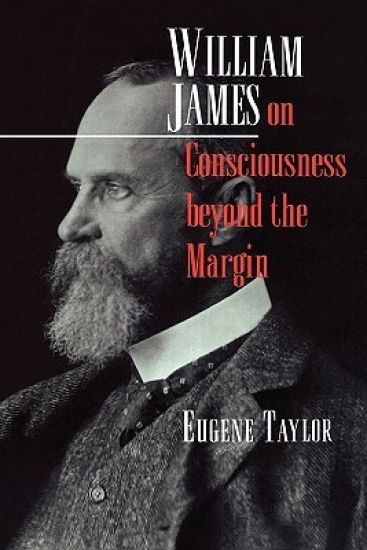
William James on Consciousness beyond the Margin

William James on Consciousness beyond the Margin

Eugene Taylor

Princeton University Press
2011
pokkari
At the turn of the twentieth century, William James was America's most widely read philosopher. In addition to being one of the founders of pragmatism, however, he was also a leading psychologist and author of the seminal work, The Principles of Psychology (1890). While scholars argue that James withdrew from the study of psychology after 1890, Eugene Taylor demonstrates convincingly that James remained preeminently a psychologist until his death in 1910. Taylor details James's contributions to experimental psychopathology, psychical research, and the psychology of religion. Moreover, Taylor's work shows that out of his scientific study of consciousness, James formulated a sophisticated metaphysics of radical empiricism. In light of historical developments in psychology, as well as the current philosophic implications of the neuroscience revolution related to the biology of consciousness, Taylor argues that both the subject matter of James's investigations and his metaphysics of radical empiricism are just as important for psychology today as James believed they were in his own time. This book represents a major new contribution both to James scholarship and to the history of American psychology. Although philosophers have analyzed radical empiricism, this book is the first to trace the development of radical empiricism as a metaphysics addressed to psychologists. It is also the first to show James's involvement in depth-psychology and psychotherapeutics and to trace historical continuity between James's work on consciousness and subsequent developments in psychoanalysis, personality theory, and humanistic psychology.
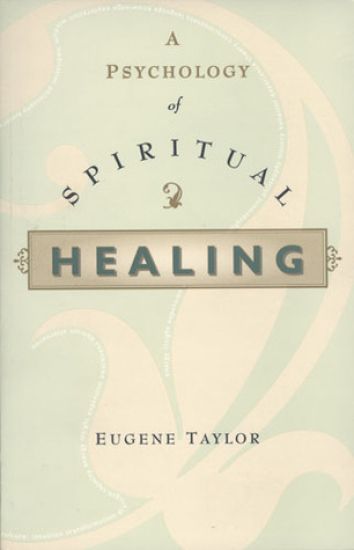
A PSYCHOLOGY OF SPIRITUAL HEALING

A PSYCHOLOGY OF SPIRITUAL HEALING

Eugene Taylor

Swedenborg Foundation
1997
nidottu
In this comprehensive work, Eugene Taylor uses the tenets of modern psychology, concepts from the world's religions, and a lifetime of spiritual experiences and interior exploration to show how true healing comes from within. Taylor asserts that "consciousness and healing are linked and this connection can best be understood within the context of a growth-oriented psychology of self-realization." Everyone has the capacity to develop a healing personality. Drawing from such diverse interpreters of transcendental and psychological experiences as William James, Emanuel Swedenborg, Mircea Eliade, Carl Jung, Victor Frankl, and Abraham Maslow, Taylor explores the divisions between science and religious traditions; presents his own personal experiences, including his meetings with the Dalai Lama and Tenzin Norgay; and provides glimpses into the spiritual lives of others who have shared their experiences with him. The function of belief in the alleviation of suffering, the development of self-awareness, and the importance of human relationships form the basis for Taylor's psychology of spiritual healing. This cogent work both provides answers and raises questions for the spiritual seeker.
The Mystery of Personality

The Mystery of Personality

Eugene Taylor

Springer-Verlag New York Inc.
2011
nidottu
In The Mystery of Personality: A History of Psychodynamic Theories, acclaimed professor and historian Eugene Taylor synthesizes the field’s first century and a half into a rich, highly readable account. Taylor situates the dynamic school in its catalytic place in history, re-evaluating misunderstood figures and events, re-creating the heady milieu of discovery as the concept of "mental science" dawns across Europe, revisiting the widening rift between clinical and experimental study (or the couch and the lab) as early psychology matured into legitimate science. Gradual but vital evolutions form the heart of this chronicle: the ebb and flow of analytic theory and practice, the shift from doctor-centered to client-centered therapy, the movement from exclusionary to multidisciplinary, the evolving role of the therapist. And as can be expected from the author, there is special emphasis on the sublime in psychology: the philosophy/psychology fusion of the New England transcendentalists, the battle between spiritualism and science in 1880s America, and early versions of today’s spiritually-attuned therapies. Pivotal concepts and key individuals covered are: Charcot, Janet, and the origins of dynamic personality theory in the so-called French, Swiss, English, and American psychotherapeutic axis.Person and personality: William James’s "radical empiricism"The rise of psychoanalysis: Freud, the Freudians, and the Neo-FreudiansAdler and Jung, who were never "students" of Freud: Toward, within, and beyond the selfMurray, Allport, and Lewin at Harvard in the 30sCulture and personality, pastoral counseling, and Gestalt Psychology in New York in the ‘40s and ‘50sAn Existential-humanistic and Transpersonally oriented depth psychology in the 60sThe current era: "science confronts itself", as neuroscience enters the picture. Studentsof psychology and its history will find in this inspiring narrative both possibilities for further study and a new appreciation of their own work. The Mystery of Personality: A History of Psychodynamic Theories is a stimulating course conducted by a master teacher.