Kirjojen hintavertailu. Mukana 11 244 527 kirjaa ja 12 kauppaa.

Kirjahaku

Etsi kirjoja tekijän nimen, kirjan nimen tai ISBN:n perusteella.

391 kirjaa tekijältä Euripides

Euripides: Bakkhai

Euripides: Bakkhai

Euripides

Oxford University Press Inc
2001
nidottu
Euripides' Bakkhai is the staple of the canon of Greek tragedy and is required or strongly recommended reading for most undergraduate Classics majors. It also surfaces quite often in non-classics courses focusing on tragedy because its structure and thematics offer exemplary models of the classic tragic elements. The plot of Bakkhai centers around the actions of Pentheus, King of Thebes, who refused to recognise the god Dionysus or permit Thebans to worship him. In revenge, Dionysus drove Pentheus mad, made him cross-dress as a maenad, sent him to worship the god he had spurned, and made his mother, Agave, mistake him for a wild beast and rip him to shreds. Gibbons, a prize-winning poet, and Segal, a renowned classicist, are both leaders in their professions and are well-suited to take on this central text of Greek tragedy. This edition includes an introduction, a new translation, notes on the text, and a glossary.
Euripides: Herakles

Euripides: Herakles

Euripides

Oxford University Press Inc
2001
nidottu
In Herakles, Euripides reveals with great subtlety and complexity the often brutal underpinnings of our social arrangements. The play enacts a thoroughly contemporary dilemma about the relationship between personal and state violence to civic order . Of all of Euripides' plays, this is his most skeptically subversive examination of myth, morality, and power. The play depicts Herakles being driven mad by Hera, the wife of Zeus. Hera hates Herakles because he is one of Zeus' children born of adultery. In his madness, Herakles is driven to murder his own wife and children, and he eventually exiles himself to Athens. The volume includes a new translation, an introduction, notes on the text, and a glossary.
The Complete Euripides

The Complete Euripides

Euripides

Oxford University Press Inc
2009
nidottu
Collected here for the first time in the series are three major plays by Euripides: Bacchae, translated by Reginald Gibbons and Charles Segal, a powerful examination of the horror and beauty of Dionysiac ecstasy; Herakles, translated by Tom Sleigh and Christian Wolff, a violent dramatization of the madness and exile of one of the most celebrated mythical figures; and The Phoenician Women, translated by Peter Burian and Brian Swamm, a disturbing interpretation of the fate of the House of Laios following the tragic fall of Oedipus. These three tragedies were originally available as single volumes. This volume retains the informative introductions and explanatory notes of the original editions and adds a single combined glossary and Greek line numbers.
The Complete Euripides Volume V

The Complete Euripides Volume V

Euripides

Oxford University Press Inc
2011
sidottu
Based on the conviction that only translators who write poetry themselves can properly re-create the celebrated and timeless tragedies of Aeschylus, Sophocles, and Euripides, the Greek Tragedy in New Translations series offers new translations that go beyond the literal meaning of the Greek in order to evoke the poetry of the originals. This volume collects Euipides' Alcestis (translated by William Arrowsmith), a subtle drama about Alcestis and her husband Admetos, which is the oldest surviving work by the dramatist; Medea (Michael Collier and Georgia Machemer), a moving vengeance story and an excellent example of the prominence and complexity that Euripides gave to female characters; Helen (Peter Burian), a genre breaking play based on the myth of Helen in Egypt; and Cyclops (Heather McHugh and David Konstan), a highly lyrical drama based on a celebrated episode from the Odyssey. This volume retains the informative introductions and explanatory notes of the original editions and adds a single combined glossary and Greek line numbers.
The Complete Euripides

The Complete Euripides

Euripides

Oxford University Press Inc
2011
nidottu
Based on the conviction that only translators who write poetry themselves can properly re-create the celebrated and timeless tragedies of Aeschylus, Sophocles, and Euripides, the Greek Tragedy in New Translations series offers new translations that go beyond the literal meaning of the Greek in order to evoke the poetry of the originals. This volume collects Euipides' Alcestis (translated by William Arrowsmith), a subtle drama about Alcestis and her husband Admetos, which is the oldest surviving work by the dramatist; Medea (Michael Collier and Georgia Machemer), a moving vengeance story and an excellent example of the prominence and complexity that Euripides gave to female characters; Helen (Peter Burian), a genre breaking play based on the myth of Helen in Egypt; and Cyclops (Heather McHugh and David Konstan), a highly lyrical drama based on a celebrated episode from the Odyssey. This volume retains the informative introductions and explanatory notes of the original editions and adds a single combined glossary and Greek line numbers.
Euripides Plays: 2

Euripides Plays: 2

Euripides

Methuen Drama
1991
nidottu
Published in the new Methuen Classical Dramatists series Euripides' searching, poetic voice probes the waste and suffering of war in these plays which are set wake of the Trojan defeat to reflect the playwright's changing attitude to the real war between Athens and Sparta in his own day - 4th century BC. Hecuba is a play of ghosts and shadowy death; The Women of Troy is a searing indictment of the aftermath of defeat; Iphigenia at Aulis shows a human tragedy at the heart of the mechanics of war; and Cyclops is a satyr play which offers a comic antidote to the tragedies.With an introduction by J. Michael Walton
Euripides Plays: 3

Euripides Plays: 3

Euripides

Methuen Drama
1997
nidottu
Published in the new Methuen Classical Dramatists series The three plays in this volume straddle the borders between comedy and tragedy. Alkestis is a moving "romance" with death; it has parallels to Shakespeare's The Winter's Tale. Helen, an alternative version of the tragic portrayal of the Trojan War, shows Helen "relocated in a delightful comedy" (Observer) - as an innocent victim of her own beauty, hidden in Egypt by the gods while her image has been abducted by Paris. In Ion, a father who thought he was childless discovers his son, and a son who thought he was motherless finds his mother.
Euripides Plays: 4

Euripides Plays: 4

Euripides

Methuen Drama
1997
nidottu
"Euripides, the Athenian playwright who dared to question the whims of wanton gods, has always been the most intriguing of the Greek tragedians. Now, with translations aimed at the stage rather than the page, his restless intellect strikes the chord This volume contains some of Euripides' most famous works: Elektra, which reverses previous notions of 'heroic' behaviour; Orestes, in which almost all the characters are driven by base motives of cowardice or revenge; Iphigeneia in Tauris who presumes her brother Orestes dead and her mother Klytemnestra and stepfather Aigisthos still living, is visited by a surprise guest. Elektra, Oresetes and Iphigeneia in Tauris were performed together as Agamemnon's children at The Gate Theatre in 1995 and show the consequences of Agamemnon's "sacrifice" of his daughter at the start of the Trojan war.
Euripides Plays: 5

Euripides Plays: 5

Euripides

Methuen Drama
1997
nidottu
Published in the new Methuen Classical Dramatists series Written at the height of the Peloponnesian War, the three plays in this volume highlight the trivial causes and dire consequences of war and the fate of the innocent. In Andromache, Hektor's widow struggles to survive as the concubine of her husband's killer. Herakles' Children and Herakles show his two young families, without his powerful protection at the mercy of his enemies. Full of humanity and subtle characterisation, these new translations by Robert Cannon and Kenneth McLeish which are intended both for performer and student, Euripides is reaffirmed as a fresh and compelling dramatist.
Euripides Plays: 6

Euripides Plays: 6

Euripides

Methuen Drama
1997
nidottu
Published in the new Methuen Classical Dramatists series A dramatist whose trademark was the unexpected, Euripides has constantly challenged and intrigued audiences, from Athens of the fifth century BC to the present. The three plays in this volume demonstrate Euripides' versatility. Hippolytos (which was turned into Phedre by Racine), deals with sexual passion, incest and abstinence; Suppliants (a version of the Antigone story) sets the play in Eleusis and dramatises the moment when the mothers of the dead sons of Oedipus beg Theseus to go to Thebes and demand their sons' bodies for burial. In Rhesos, all the confusion of sentry duty, the intrigue of spies and intruders, disguises and deceptions are crammed into a single night when the fortunes of war turn against the Trojans by a mixture of devious behaviour and sheer bad luck.
Euripides Plays: 1

Euripides Plays: 1

Euripides

Methuen Drama
2000
nidottu
Published in the new Methuen Classical Dramatists series. Always controversial, Euripides' plays are now celebrated for the subtlety of their characterisation and their unorthodox dramatic style. This volume contains three of his finest tragedies: Medea, the abandoned wife, who murders her own children; The Phoenician Women, a further twist in the story of Oedipus and Jocasta; and Bacchae, a macabre and complex play, about the power and irrationality of Dionysos. These translations are by David Thompson and J. Michael Walton.With an introduction by J. Michael Walton
Bacchae of Euripides

Bacchae of Euripides

Euripides

Cambridge University Press
1979
sidottu
The Bacchae is the last and greatest of Euripides' plays. Its theme of the cost of resisting the gods who reside in human nature itself is still of immediate interest to audiences and readers and has inspired modern interpretations. Professor Kirk has made a translation which is both accurate and readable. This he supports with an analytic commentary and a substantial introductory essay which provide the Greek-less reader with essential background information and offer interpretation of a kind usually found only in Greek editions. This is a translation for students of Greek tragedy, particularly in courses on classics in translations or classical civilisation. It will also be useful for students of drama and of English and other literatures.
Euripides: Phoenissae

Euripides: Phoenissae

Euripides

Cambridge University Press
1994
sidottu
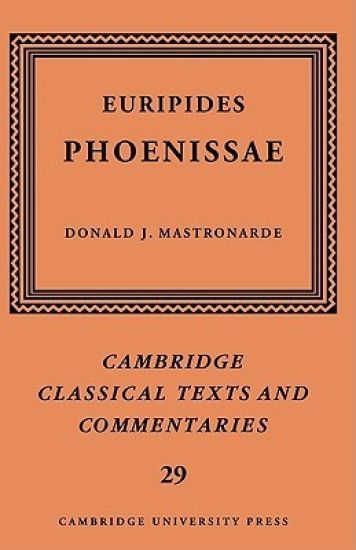
This volume provides a thorough philological and dramatic commentary on Euripides' Phoenissae, the first detailed commentary in English since 1911. Phoenissae is of special interest both as a specimen of late Euripidean dramaturgy, and as the subject of longstanding disputes over the extent of interpolation and rewriting to be detected in it. This commentary aims to offer a balanced treatment of issues of language, style, structure, and dramatic technique as well as to explain the reasons for and uncertainties of the constitution of the text. The introduction treats the play's structure and themes, the possible date, the features of the original production, the varied background of Theban myth against which Euripides' choices and innovations may be judged, and general issues relevant to the problem of interpolation. The Greek text is that of the author's 1988 Teubner edition.
Euripides: 'Helen'

Euripides: 'Helen'

Euripides

Cambridge University Press
2008
pokkari
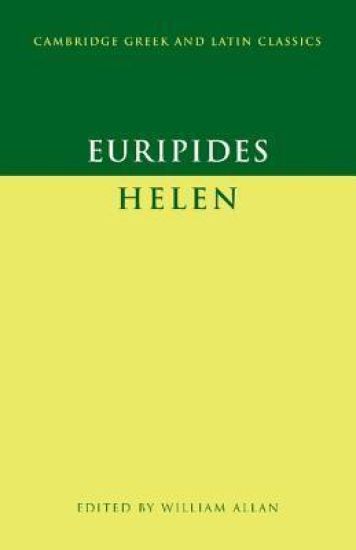
This up-to-date edition offers a detailed literary and cultural analysis of Euripides' Helen, a work which arguably embodies the variety and dynamism of fifth-century Athenian tragedy more than any other surviving play. The story of an exemplary wife (not an adulteress) who went to Egypt (not to Troy), Euripides' 'new Helen' skilfully transforms and supplants earlier currents of literature and myth. The Introduction elucidates Euripides' treatment of Helen and sets the play in its wider intellectual context. It also discusses questions of genre and reception, rejecting such descriptions as 'tragicomedy' or 'romantic tragedy', and showing how later artists have responded to Euripides' unorthodox heroine and her phantom double. The Commentary's notes on language and style are intended to make Helen fully accessible to readers of Greek at all levels, while the edition as a whole is designed for use by anyone with an interest in Greek tragedy.
Euripides: Ion

Euripides: Ion

Euripides

Cambridge University Press
2019
sidottu
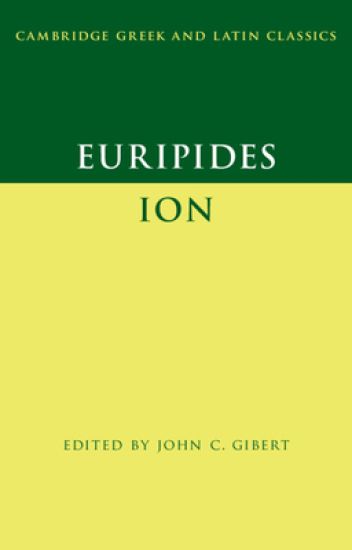
Ion is one of Euripides' most appealing and inventive plays. With its story of an anonymous temple slave discovered to be the son of Apollo and Creusa, an Athenian princess, it is a rare example of Athenian myth dramatized for the Athenian stage. It explores the Delphic oracle and Greek piety; the Athenian ideology of autochthony and empire; and the tragic suffering and longing of the mythical foundling and his mother, whose experiences are represented uniquely in surviving Greek literature. The plot anticipates later Greek comedy, while the recognition scene builds on a tradition founded by Homer's Odyssey and Aeschylus' Oresteia. The introduction sets out the main issues in interpretation and discusses the play's contexts in myth, religion, law, politics, and society. By attending to language, style, meter, and dramatic technique, this edition with its detailed commentary makes Ion accessible to students, scholars, and readers of Greek at all levels.
Euripides: Ion

Euripides: Ion

Euripides

Cambridge University Press
2019
pokkari
Ion is one of Euripides' most appealing and inventive plays. With its story of an anonymous temple slave discovered to be the son of Apollo and Creusa, an Athenian princess, it is a rare example of Athenian myth dramatized for the Athenian stage. It explores the Delphic oracle and Greek piety; the Athenian ideology of autochthony and empire; and the tragic suffering and longing of the mythical foundling and his mother, whose experiences are represented uniquely in surviving Greek literature. The plot anticipates later Greek comedy, while the recognition scene builds on a tradition founded by Homer's Odyssey and Aeschylus' Oresteia. The introduction sets out the main issues in interpretation and discusses the play's contexts in myth, religion, law, politics, and society. By attending to language, style, meter, and dramatic technique, this edition with its detailed commentary makes Ion accessible to students, scholars, and readers of Greek at all levels.
Euripides: Phaethon

Euripides: Phaethon

Euripides

Cambridge University Press
2004
pokkari
The surviving text of the fragmentary Phaethon of Euripides depends chiefly on two sources: two pages from a Euripidean manuscript, written about A.D. 500, and a papyrus of the third century B.C., which contains a substantial part of the parodos. These sources are supplemented by a number of citations in classical authors and by a recently published fragmentary hypothesis. Professor Diggle has examined all the manuscript evidence and offers many decipherments. He gives a text of the play and of the hypothesis, an exegetical commentary, prolegomena and appendices, in which he discusses the treatment of the Phaethon myth in classical literature and attempts a reconstruction of the plot of the play.
Euripides: Phoenissae

Euripides: Phoenissae

Euripides

Cambridge University Press
2004
pokkari
This volume provides a thorough philological and dramatic commentary on Euripides’ Phoenissae, the first detailed commentary in English since 1911. Phoenissae is of special interest both as a specimen of late Euripidean dramaturgy, and as the subject of longstanding disputes over the extent of interpolation and rewriting to be detected in it. This commentary aims to offer a balanced treatment of issues of language, style, structure, and dramatic technique as well as to explain the reasons for and uncertainties of the constitution of the text. The introduction treats the play’s structure and themes, the possible date, the features of the original production, the varied background of Theban myth against which Euripides’ choices and innovations may be judged, and general issues relevant to the problem of interpolation. The Greek text is that of the author’s 1988 Teubner edition.