
Kirjahaku
Etsi kirjoja tekijän nimen, kirjan nimen tai ISBN:n perusteella.
416 kirjaa tekijältä Euripides, Martin Cropp
Euripides: Selected Fragmentary Plays Vol II
Christopher Collard; Martin Cropp; J. Gibert
Aris Phillips Ltd
2004
nidottu
The fragmentary plays of Euripides are a body of texts still regularly increasing in number and extent. They are of very great interest in themselves, apart from the significant aid they give to the fuller appreciation of the surviving complete plays. This two-volume edition brings together for the first time for English readers the more substantial and important of the plays, about fifteen in all. Each play is introduced by a summary bibliography and an appreciative essay which analyses the mythic background and plot: reconstructs the play as far as the fragmentary text and secondary evidence allow; and discusses themes, characterisation, staging, date, reflections of the story in art and other dramatisations. For each play the fragmentary texts are presented as conveniently and succinctly as possible, together with a brief critical apparatus of sources and readings. An English translation stands on the facing page. The text and translation of each play are followed by a short, primarily interpretative commentary.This volume contains: Alexandros (together with Palamedes and Sisyphus), Oedipus, Andromeda, Antiope, Hypsipyle, Archelaus (415 to about 407 B.C.).
Iphigenia in Tauris tells the story of the princess Iphigenia who was sacrificed by her father Agamemnon to expedite his campaign against Troy but was rescued by the goddess Artemis and transported to the land of the Taurians. There she herself must perform human sacrifices as a priestess of Artemis in the local cult. Troy has now been sacked, and Agamemnon murdered by his wife and avenged by his son Orestes. With his mother's blood on his hands, Orestes is guided by Apollo to seek purification through bringing the image of the Tauric Artemis to Greece, and so is reunited with his sister. The drama centers on Orestes' near-sacrifice at Iphigenia’s hands, their recognition in the nick of time, and their ingenious and thrilling escape to bring the cult of Artemis to Halae and Brauron near Athens. Martin Cropp’s first edition was originally published in 2000 and provided the first commentary on the play since those of Maurice Platnauer (Oxford, 1938) and Hans Strohm (Munich, 1949). It contributed significantly to a revival of interest in what had been a rather neglected and underrated play. This new second edition will incorporate substantial revisions to the introduction and commentary and some corrections to the Greek text and translation in light of reviews of the first edition and other recent work.
Euripides: Selected Fragmentary Plays I
Euripides; Christopher Collard; Martin J. Cropp; K. H. Lee
Aris Phillips Ltd
1995
nidottu
The fragmentary plays of Euripides are a body of texts still regularly increasing in number and extent. They are of very great interest in themselves, apart from the significant aid they give to the fuller appreciation of the surviving complete plays. This two-volume edition brings together for the first time for English readers the more substantial and important of the plays, about fifteen in all. Each play is introduced by a summary bibliography and an appreciative essay which analyses the mythic background and plot: reconstructs the play as far as the fragmentary text and secondary evidence allow; and discusses themes, characterisation, staging, date, reflections of the story in art and other dramatisations. For each play the fragmentary texts are presented as conveniently and succinctly as possible, together with a brief critical apparatus of sources and readings. An English translation stands on the facing page. The text and translation of each play are followed by a short, primarily interpretative commentary. Text with facing translation, commentary and notes.
A Literal Translation of Euripides's Hippolytus and Iphigenia. by Martin Tuomy, ...
Euripides
Gale Ecco, Print Editions
2010
pokkari
A Literal Translation of Euripides's Hippolytus and Iphigenia. By Martin Tuomy,
Euripides
Gale Ecco, Print Editions
2018
sidottu
The 18th century was a wealth of knowledge, exploration and rapidly growing technology and expanding record-keeping made possible by advances in the printing press. In its determination to preserve the century of revolution, Gale initiated a revolution of its own: digitization of epic proportions to preserve these invaluable works in the largest archive of its kind. Now for the first time these high-quality digital copies of original 18th century manuscripts are available in print, making them highly accessible to libraries, undergraduate students, and independent scholars.Western literary study flows out of eighteenth-century works by Alexander Pope, Daniel Defoe, Henry Fielding, Frances Burney, Denis Diderot, Johann Gottfried Herder, Johann Wolfgang von Goethe, and others. Experience the birth of the modern novel, or compare the development of language using dictionaries and grammar discourses. ++++The below data was compiled from various identification fields in the bibliographic record of this title. This data is provided as an additional tool in helping to insure edition identification: ++++British LibraryT147001Dublin: printed by W. M'Kenzie, 1790. iv,129, 1]p.; 12
Two versions of Euripides’ masterpiece in a new verse translation by Andy Hinds, with Martine Cuypers. The first version of Iphigenia in Aulis in this volume is a translation of the complete text as it has come down to us via the only surviving manuscript – a highly corrupt text containing numerous interpolations by hands other than Euripides. The second, shorter version offers a tried and tested, more performable ‘stage’ version of the play. The translation is the result of a close collaboration between theatre director and playwright, Andy Hinds (author of Acting Shakespeare’s Language), and Classics scholar, Dr. Martine Cuypers (Trinity College, Dublin). Whilst preserving a scholarly fidelity to the original Greek, the translation is written in a clear and energetic verse, designed to be as 'performable' in the theatre, as it is ‘readable’ in the home or study. It will be of equal interest and use, therefore, to teachers, students and academics, to actors and directors, and to the general reader. Companion VolumeIphigenia in Aulis is released as a companion volume to Hinds’ translation of The Oresteia. Iphigenia represents Euripides’ version of a key episode in the great saga, The Fall of the House of Atreus, while The Oresteia relates Aeschylus’ version of the continuation and conclusion of the saga.

Euripides' Bakkhai is the staple of the canon of Greek tragedy and is required or strongly recommended reading for most undergraduate Classics majors. It also surfaces quite often in non-classics courses focusing on tragedy because its structure and thematics offer exemplary models of the classic tragic elements. The plot of Bakkhai centers around the actions of Pentheus, King of Thebes, who refused to recognise the god Dionysus or permit Thebans to worship him. In revenge, Dionysus drove Pentheus mad, made him cross-dress as a maenad, sent him to worship the god he had spurned, and made his mother, Agave, mistake him for a wild beast and rip him to shreds. Gibbons, a prize-winning poet, and Segal, a renowned classicist, are both leaders in their professions and are well-suited to take on this central text of Greek tragedy. This edition includes an introduction, a new translation, notes on the text, and a glossary.

In Herakles, Euripides reveals with great subtlety and complexity the often brutal underpinnings of our social arrangements. The play enacts a thoroughly contemporary dilemma about the relationship between personal and state violence to civic order . Of all of Euripides' plays, this is his most skeptically subversive examination of myth, morality, and power. The play depicts Herakles being driven mad by Hera, the wife of Zeus. Hera hates Herakles because he is one of Zeus' children born of adultery. In his madness, Herakles is driven to murder his own wife and children, and he eventually exiles himself to Athens. The volume includes a new translation, an introduction, notes on the text, and a glossary.

Collected here for the first time in the series are three major plays by Euripides: Bacchae, translated by Reginald Gibbons and Charles Segal, a powerful examination of the horror and beauty of Dionysiac ecstasy; Herakles, translated by Tom Sleigh and Christian Wolff, a violent dramatization of the madness and exile of one of the most celebrated mythical figures; and The Phoenician Women, translated by Peter Burian and Brian Swamm, a disturbing interpretation of the fate of the House of Laios following the tragic fall of Oedipus. These three tragedies were originally available as single volumes. This volume retains the informative introductions and explanatory notes of the original editions and adds a single combined glossary and Greek line numbers.

Based on the conviction that only translators who write poetry themselves can properly re-create the celebrated and timeless tragedies of Aeschylus, Sophocles, and Euripides, the Greek Tragedy in New Translations series offers new translations that go beyond the literal meaning of the Greek in order to evoke the poetry of the originals. This volume collects Euipides' Alcestis (translated by William Arrowsmith), a subtle drama about Alcestis and her husband Admetos, which is the oldest surviving work by the dramatist; Medea (Michael Collier and Georgia Machemer), a moving vengeance story and an excellent example of the prominence and complexity that Euripides gave to female characters; Helen (Peter Burian), a genre breaking play based on the myth of Helen in Egypt; and Cyclops (Heather McHugh and David Konstan), a highly lyrical drama based on a celebrated episode from the Odyssey. This volume retains the informative introductions and explanatory notes of the original editions and adds a single combined glossary and Greek line numbers.

Based on the conviction that only translators who write poetry themselves can properly re-create the celebrated and timeless tragedies of Aeschylus, Sophocles, and Euripides, the Greek Tragedy in New Translations series offers new translations that go beyond the literal meaning of the Greek in order to evoke the poetry of the originals. This volume collects Euipides' Alcestis (translated by William Arrowsmith), a subtle drama about Alcestis and her husband Admetos, which is the oldest surviving work by the dramatist; Medea (Michael Collier and Georgia Machemer), a moving vengeance story and an excellent example of the prominence and complexity that Euripides gave to female characters; Helen (Peter Burian), a genre breaking play based on the myth of Helen in Egypt; and Cyclops (Heather McHugh and David Konstan), a highly lyrical drama based on a celebrated episode from the Odyssey. This volume retains the informative introductions and explanatory notes of the original editions and adds a single combined glossary and Greek line numbers.
From the renowned contemporary American poet C. K. Williams comes this fluent and accessible version of the great tragedy by Euripides. This book includes an introduction by Martha Nussbaum.
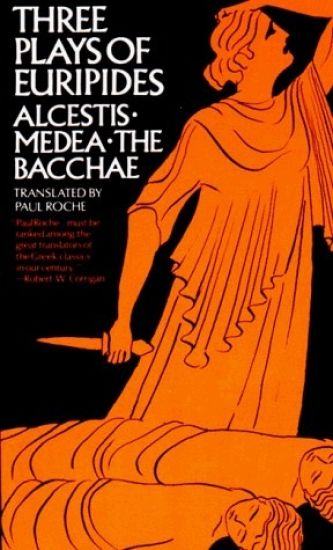
Here are three of Euripides' finest tragedies offered in vivid, modern translations.

Published in the new Methuen Classical Dramatists series Euripides' searching, poetic voice probes the waste and suffering of war in these plays which are set wake of the Trojan defeat to reflect the playwright's changing attitude to the real war between Athens and Sparta in his own day - 4th century BC. Hecuba is a play of ghosts and shadowy death; The Women of Troy is a searing indictment of the aftermath of defeat; Iphigenia at Aulis shows a human tragedy at the heart of the mechanics of war; and Cyclops is a satyr play which offers a comic antidote to the tragedies.With an introduction by J. Michael Walton

Published in the new Methuen Classical Dramatists series The three plays in this volume straddle the borders between comedy and tragedy. Alkestis is a moving "romance" with death; it has parallels to Shakespeare's The Winter's Tale. Helen, an alternative version of the tragic portrayal of the Trojan War, shows Helen "relocated in a delightful comedy" (Observer) - as an innocent victim of her own beauty, hidden in Egypt by the gods while her image has been abducted by Paris. In Ion, a father who thought he was childless discovers his son, and a son who thought he was motherless finds his mother.

"Euripides, the Athenian playwright who dared to question the whims of wanton gods, has always been the most intriguing of the Greek tragedians. Now, with translations aimed at the stage rather than the page, his restless intellect strikes the chord This volume contains some of Euripides' most famous works: Elektra, which reverses previous notions of 'heroic' behaviour; Orestes, in which almost all the characters are driven by base motives of cowardice or revenge; Iphigeneia in Tauris who presumes her brother Orestes dead and her mother Klytemnestra and stepfather Aigisthos still living, is visited by a surprise guest. Elektra, Oresetes and Iphigeneia in Tauris were performed together as Agamemnon's children at The Gate Theatre in 1995 and show the consequences of Agamemnon's "sacrifice" of his daughter at the start of the Trojan war.

Published in the new Methuen Classical Dramatists series Written at the height of the Peloponnesian War, the three plays in this volume highlight the trivial causes and dire consequences of war and the fate of the innocent. In Andromache, Hektor's widow struggles to survive as the concubine of her husband's killer. Herakles' Children and Herakles show his two young families, without his powerful protection at the mercy of his enemies. Full of humanity and subtle characterisation, these new translations by Robert Cannon and Kenneth McLeish which are intended both for performer and student, Euripides is reaffirmed as a fresh and compelling dramatist.
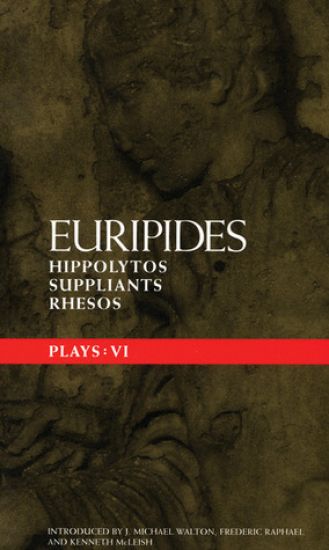
Published in the new Methuen Classical Dramatists series A dramatist whose trademark was the unexpected, Euripides has constantly challenged and intrigued audiences, from Athens of the fifth century BC to the present. The three plays in this volume demonstrate Euripides' versatility. Hippolytos (which was turned into Phedre by Racine), deals with sexual passion, incest and abstinence; Suppliants (a version of the Antigone story) sets the play in Eleusis and dramatises the moment when the mothers of the dead sons of Oedipus beg Theseus to go to Thebes and demand their sons' bodies for burial. In Rhesos, all the confusion of sentry duty, the intrigue of spies and intruders, disguises and deceptions are crammed into a single night when the fortunes of war turn against the Trojans by a mixture of devious behaviour and sheer bad luck.
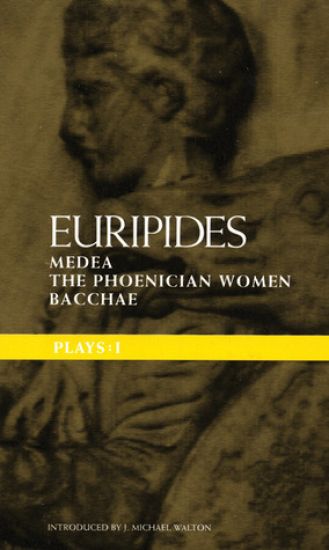
Published in the new Methuen Classical Dramatists series. Always controversial, Euripides' plays are now celebrated for the subtlety of their characterisation and their unorthodox dramatic style. This volume contains three of his finest tragedies: Medea, the abandoned wife, who murders her own children; The Phoenician Women, a further twist in the story of Oedipus and Jocasta; and Bacchae, a macabre and complex play, about the power and irrationality of Dionysos. These translations are by David Thompson and J. Michael Walton.With an introduction by J. Michael Walton