Kirjojen hintavertailu. Mukana 11 699 587 kirjaa ja 12 kauppaa.

Kirjahaku

Etsi kirjoja tekijän nimen, kirjan nimen tai ISBN:n perusteella.

10 kirjaa tekijältä Eva Rieger

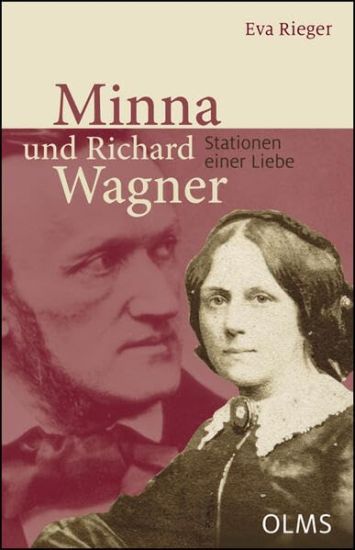
Minna Wagner

Minna Wagner

Eva Rieger

BOYDELL BREWER LTD
2022
sidottu
This biography of Minna Planer, Richard Wagner's wife of 30 years, reveals her as a self-assured woman and artist who was vital to her husband's creative life. When Richard Wagner first met Minna Planer in 1834, he was an unknown conductor, she a popular actress. His hectic pursuit of her affections culminated in marriage in 1836. Minna endured poverty with him, nursed him through chronic illness, followed him across Europe as he fled from creditors and pursued his artistic goals, and sought to provide him with the stable domestic and erotic life that he craved. He played his works to her as he wrote them, up to Tannhäuser and Lohengrin, and set store by her opinions. But when he went on the run as a wanted revolutionary, Minna only reluctantly followed him into Swiss exile. Domestic peace tentatively prevailed, but was ultimately destroyed by Wagner's passion for Mathilde Wesendonck. In 1858, he and Minna separated, she returned home to Germany, and subsequent efforts at reconciliation proved ultimately impossible. They remained married, however, until Minna's death in 1866. Despite having been at Richard's side as he matured into the composer of the Ring and Tristan, Minna has been given short shrift by most Wagner commentators. In Eva Rieger's acclaimed biography, translated into English by Chris Walton, the author reveals Minna as a self-assured woman and artist who played a crucial role in the creative life of her husband.
Minna Wagner

Minna Wagner

Eva Rieger

BOYDELL BREWER LTD
2023
pokkari
This biography of Minna Planer, Richard Wagner's wife of 30 years, reveals her as a self-assured woman and artist who was vital to her husband's creative life. When Richard Wagner first met Minna Planer in 1834, he was an unknown conductor, she a popular actress. His hectic pursuit of her affections culminated in marriage in 1836. Minna endured poverty with him, nursed him through chronic illness, followed him across Europe as he fled from creditors and pursued his artistic goals, and sought to provide him with the stable domestic and erotic life that he craved. He played his works to her as he wrote them, up to Tannhäuser and Lohengrin, and set store by her opinions. But when he went on the run as a wanted revolutionary, Minna only reluctantly followed him into Swiss exile. Domestic peace tentatively prevailed, but was ultimately destroyed by Wagner's passion for Mathilde Wesendonck. In 1858, he and Minna separated, she returned home to Germany, and subsequent efforts at reconciliation proved ultimately impossible. They remained married, however, until Minna's death in 1866. Despite having been at Richard's side as he matured into the composer of the Ring and Tristan, Minna has been given short shrift by most Wagner commentators. In Eva Rieger's acclaimed biography, translated into English by Chris Walton, the author reveals Minna as a self-assured woman and artist who played a crucial role in the creative life of her husband.
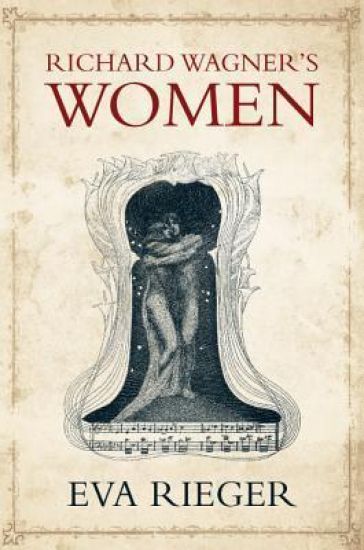
Richard Wagner's Women

Richard Wagner's Women

Eva Rieger

The Boydell Press
2011
sidottu
A well-researched and exhaustive analysis of the role of women in Wagner's operas. Richard Wagner's music contains some of the most powerful portrayals of emotions in all opera, particularly love. Eva Rieger presents a new picture of the composer, showing how the women at his side inspired him and how closely his life and art intertwined. We follow Wagner's restless hunt for the 'ideal woman', her appointed task being to give him shelter, warmth, inspiration, adventure and redemption, all in one. He could hardly have desired anything more contradictory, and this is reflected in the female characters of his operas. They are all in some way torn, faltering between their own desire for self-realization and the societal constraints that impel them to sacrificethemselves for their men. Rieger bids farewell to essentialist, naturalized notions of femininity and masculinity. Her investigations are both comprehensive and convincing, for she avoids the pitfalls of imposing extraneousinterpretation, instead focussing keenly on the music itself. EVA RIEGER is Professor Emeritus in Historical Musicology at the University of Bremen and lives in the principality of Liechtenstein.
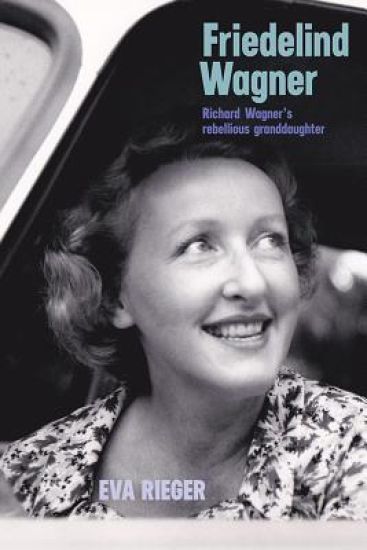
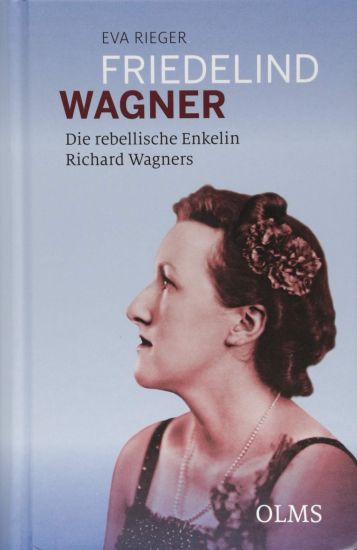
Friedelind Wagner

Friedelind Wagner

Eva Rieger

The Boydell Press
2013
sidottu
The first-ever biography of Richard Wagner's artistically gifted granddaughter who fought against Hitler's Germany but achieved no personal success for her troubles. She was not the 'black sheep' of her family, as often claimed, but a heroic rebel. Friedelind Wagner (1918-1991), Richard Wagner's independent-minded granddaughter, daughter of Siegfried and Winifred Wagner, despised her mother'sclose liaison with Adolf Hitler and was the only member of the Wagner clan who fled Germany in protest. Although Winifred warned her that the Nazis would 'exterminate' her, should she continue her open opposition, she travelled toLondon and published articles pillorying the Nazi élite. All the same, her former proximity to Hitler & Co. made her suspicious in the eyes of the authorities, who promptly interned her. Even the British Parliament debated her fate. Only with the help of the world-famous conductor Arturo Toscanini was she able to gain an exit visa. Once she arrived in New York she broadcast, lectured and published against the Nazis, wrote an autobiography, and became friends with many other emigrants including singers who had themselves abandoned Bayreuth. After the war the Mayor of Bayreuth asked her to run the Festival, but she declined in favour of her brothers. They showed little gratitude, however, for after Friedelind returned to Germany in 1953 she found herself manoeuvred out of any role in the Festival management. She still made a remarkable effort to find a niche in post-war German society and culture, and did her best to cope with a family notorious for its intrigues past and present. Friedelind Wagner remained a staunch friend of artists such as Wilhelm Furtwängler, Frida Leider, Otto Klemperer, Erich Kleiber, Leonard Bernstein, WalterFelsenstein, Michael Tilson Thomas and many others. Drawing on archival research in many countries, Eva Rieger has here written the first-ever biography of Richard Wagner's talented, artistic granddaughter who fought againstHitler's Germany, but achieved no personal success for her troubles. Her book gives many new insights into wartime and postwar musical life in Germany, Europe and the United States. EVA RIEGER is a feminist musicologist and author of many books on music.