Kirjojen hintavertailu. Mukana 12 459 402 kirjaa ja 12 kauppaa.

Kirjahaku

Etsi kirjoja tekijän nimen, kirjan nimen tai ISBN:n perusteella.

141 kirjaa tekijältä Ezra Pound

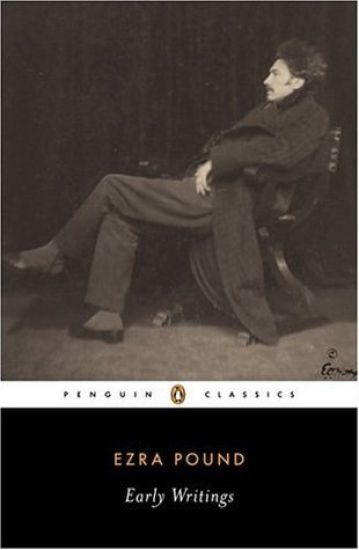
Early Writings (Pound, Ezra): Poems and Prose
Ezra Pound makes his Penguin Classics debut with this unique selection of his early poems and prose, edited with an introductory essay and notes by Pound expert Ira Nadel. The poetry includes such early masterpieces as "The Seafarer," "Homage to Sextus Propertius," "Hugh Selwyn Mauberley," and the first eight of Pound's incomparable "Cantos." The prose includes a series of articles and critical pieces, with essays on Imagism, Vorticism, Joyce, and the well-known "Chinese Written Character as a Medium for Poetry."First time in Penguin ClassicsIncludes generous selections of Pound's poetry, as well as an assortment of prose
Literary Essays of Ezra Pound

Literary Essays of Ezra Pound

Ezra Pound

Praeger Publishers Inc
1978
sidottu
Eliot wrote in his introduction: I hope that this volume will demonstrate that Pound's literary criticism is the most important contemporary criticism of its kind…perhaps the kind we can least afford to do without…the refreshment, the revitalization and `making new' of literature in our time.
Ezra Pound

Ezra Pound

Ezra Pound

Faber Faber
2005
nidottu
Ezra Pound was born in 1885 in Hailey, Idaho. He came to Europe in 1908 and settled in London, where he became a central figure in the literary and artistic world, befriended by Yeats and a supporter of Eliot and Joyce, among others. In 1920 he moved to Paris, and later to Rapallo in Italy. During the Second World War he made a series of propagandist broadcasts over Radio Rome, for which he was later tried in the United States and subsequently committed to a hospital for the insane. After thirteen years, he was released and returned to Italy; dying in Venice in 1972.
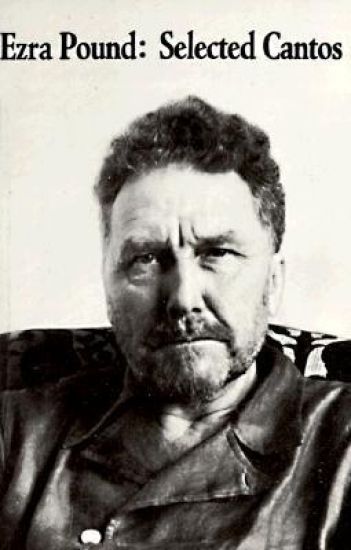
Selected Cantos of Ezra Pound

Selected Cantos of Ezra Pound

Ezra Pound

NEW DIRECTIONS PUBLISHING CORPORATION
1970
nidottu
This selection from the Cantos was made by Ezra Pound himself in 1965. It is intended to indicate main elements in the long poem--his personal epic--with which he was engaged for more than fifty years. His choice includes, of course, a number of the Cantos most admired by critics and anthologists, such as Canto XIII ("Kung Confucius] walked by the dynastic temple..."), Canto XLV ("With usura hath no man a house of good stone...") and the passage from The Pisan Cantos (LXXXI) beginning "What thou lovest well remains / the rest is dross," and so the book is an ideal introduction for newcomers to the great work. But it has, too, particular interest for the already initiated reader and the specialist, in its revelation, through Pound's own selection of 'main elements, ' of the relative importance which he himself placed on various motifs as they figure in the architecture of the whole poem.
Selected Poems of Ezra Pound

Selected Poems of Ezra Pound

Ezra Pound

NEW DIRECTIONS PUBLISHING CORPORATION
1957
nidottu
The verse and criticism which he produced during the early years of the twentieth century very largely determined the directions of creative writing in our time; virtually every major poet in England and America today has acknowledged his help or influence. Pound's lyric genius, his superb technique, and his fresh insight into literary problems make him one of the small company of men who through the centuries have kept poetry alive--one of the great innovators. This book offers a compact yet representative selection of Ezra Pound's poems and translations. The span covered is Pound's entire writing career, from his early lyrics and the translations of Proven al songs to his English version of Sophocles' Trachiniae. Included are parts of his best known works--the Chinese translations, the sequence called Hugh Selwyn Mauberly, the Homage to Sextus Propertius. The Cantos, Pound's major epic, are presented in generous selections, chosen to emphasize the main themes of the whole poem.
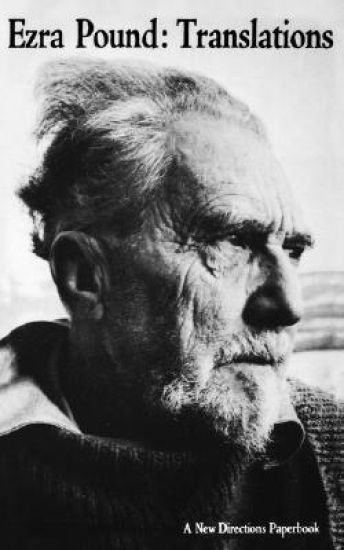
Ezra Pound: Translations

Ezra Pound: Translations

Ezra Pound

NEW DIRECTIONS PUBLISHING CORPORATION
1963
nidottu
Ezra Pound is destined to rank as one of the great translators of all time. Ranging through many languages, he chose for translation writers whose work marked a significant turning point in the development of world literature, or key poems which exemplify what is most vital in a given period or genre. This new enlarged edition, devoted chiefly to poetry, includes some forty pages of previously uncollected material. Anglo-Saxon: The Seafarer. Chinese: (Cathay) Rihaku (Li Po). Bunno, Mei Sheng, T'ao Yuan Ming. Egyptian: Conversations in Courtship. French: du Bellay, de Boufflers, D'Orl ans, Lalorgue, Lubicz-Milosz, Rimbaud, Tailhade. Prose: de Gourmont. Hindi: Kabir. Italian: Cavalcanti, St. Francis, Guinicelli, Leopardi, Montanari, Orlandi. Japanese Noh Plays: 15 plays with Fenollosa's commentary. Latin: Catullus, Horace, Navagero, Rutilius. Proven al: Bertrand de Born, Cercalmon, Daniel, Folquet de Romans, Li Viniers, Ventadorn.
Ezra Pound and Music: The Complete Criticism

Ezra Pound and Music: The Complete Criticism

Ezra Pound

NEW DIRECTIONS PUBLISHING CORPORATION
1977
nidottu
Included here are all of Pound's concert reviews and statements; the biweekly columns written under the pen name William Atheling for The New Age in London; articles from other periodicals; the complete text of the 1924 landmark volume Antheil and the Treatise on Harmony; extracts from books and letters, and the poet's additional writings on the subject of music. The pieces are organized chronologically, with illuminating commentary, thorough footnotes, and an index. Three appendixes complete this comprehensive volume; an analysis of Pound's theories of "absolute rhythm" and "Great Bass;" a glossary of important musical personalities mentioned in the text and the composer George Antheil's 1924 appreciation, "Why a Poet Quit the Muses."
A Walking Tour in Southern France: Ezra Pound Among the Troubadours

A Walking Tour in Southern France: Ezra Pound Among the Troubadours

Ezra Pound

NEW DIRECTIONS PUBLISHING CORPORATION
1992
nidottu
Rummaging through his papers in 1958, Ezra Pound came across a cache of notebooks dating back to the summer of 1912, when as a young man he had walked the troubadour landscape of southern France. Pound had been fascinated with the poetry of medieval Provence since his college days. His experiments with the complex lyric forms of Amaut Daniel, Bertran de Born, and others were included in his earliest books of poems; his scholarly pursuits in the field found their way into The Spirit of Romance (1910); and the troubadour mystique was to become a resonant motif of the Cantos. In the course of transcribing and emending the text of "Walking Tour 1912," editor Richard Sieburth retraced Pound's footsteps along the roads to the troubadour castles. "What this peripatetic editing process revealed," he writes, "was a remarkably readable account of a journey in search of the vanished voices of Provence that at the same time chronicled Pound's gradual discovery of himself as a modernist poet."
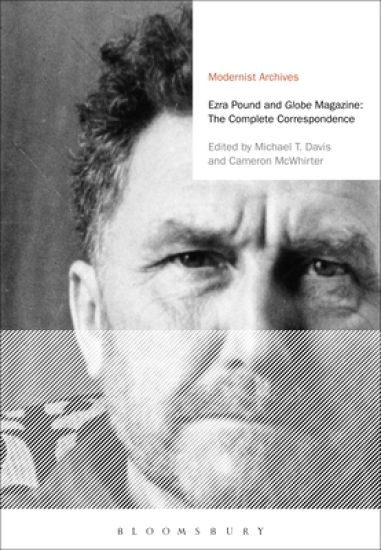
Ezra Pound and 'Globe' Magazine: The Complete Correspondence
In the summer of 1936, Ezra Pound agreed to take on the role of European Correspondent for a newly launched travel journal entitled Globe: The International Magazine. Ezra Pound and 'Globe' Magazine: The Complete Correspondence collects for the first time Pound’s writings for the journal and his extensive correspondence with one of its editors, James Taylor Dunn, and the leading writers who Pound himself attempted to recruit for the magazine. Numbering almost forty letters and twenty published and unpublished articles, these writings represent a darkly significant time in Pound’s thought as his infatuation with the rise of fascism took root. Annotated throughout and supported by substantial explorations of the historical and cultural contexts of the writings, the book also includes a substantial bibliography of related writings and a biographical glossary of the major figures discussed in the correspondence and writing. Together, these texts represent an important resource for anyone interested in an important phase of 20th-Century literary modernism.
The Correspondence of Ezra Pound and the Frobenius Institute, 1930-1959
Collecting in full for the first time the correspondence between Ezra Pound and members of Leo Frobenius' Forschungsinstitut für Kulturmorphologie in Frankfurt across a 30 year period, this book sheds new light on an important but previously unexplored influence on Pound's controversial intellectual development in the Fascist era. Ezra Pound's long-term interest in anthropology and ethnography exerted a profound influence on early 20th century literary Modernism. These letters reveal the extent of the influence of Frobenius' concept of 'Paideuma' on Pound's poetic and political writings during this period and his growing engagement with the culture of Nazi Germany. Annotated throughout, the letters are supported by contextualising essays by leading Modernist scholars as well as relevant contemporary published articles by Pound himself and his leading correspondent at the Institute, the American Douglas C. Fox.