Kirjojen hintavertailu. Mukana 11 627 670 kirjaa ja 12 kauppaa.

Kirjahaku

Etsi kirjoja tekijän nimen, kirjan nimen tai ISBN:n perusteella.

5 kirjaa tekijältä F. P. Lock

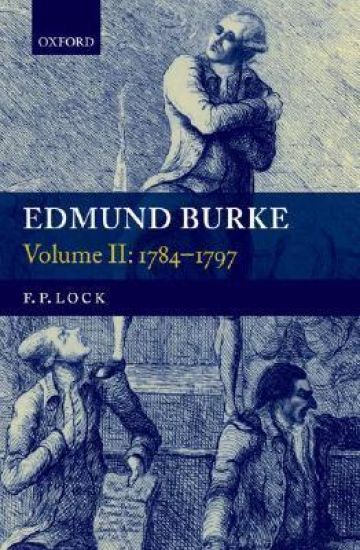
Edmund Burke, Volume II

Edmund Burke, Volume II

F. P. Lock

Clarendon Press
2006
sidottu
This is the second and concluding volume of a biography of Edmund Burke (1730-97), a key figure in eighteenth-century British and Irish politics and intellectual life. Covering the most interesting years of his life (1784-97), its leading themes are India and the French Revolution. Burke was largely responsible for the impeachment of Warren Hastings, former Governor-General of Bengal. The lengthy (145-day) trial of Hastings (which lasted from 1788 to 1795) is recognized as a landmark episode in the history of Britain's relationship with India. Lock provides the first day-by-day account of the entire trial, highlighting some of the many disputes about evidence as well as the great set speeches by Burke and others. In 1790, Burke published Reflections on the Revolution in France, the earliest sustained attack on the principles of the Revolution. Continuously in print ever since, the Reflections remains the most widely read and quoted book about the Revolution. The Reflections was followed by a series of anti-revolutionary writings, as Burke maintained his crusade against the Revolution to the end of his life. In addition to these leading themes, the biography examines many other topics in its coverage of Burke's busy and varied life: his parliamentary career; his family, friendships, and philanthropy; and his often difficult and obsessive personality. There are more than thirty illustrations, including many contemporary caricatures that convey how Burke was perceived by an often hostile and uncomprehending public. Controversial in his time, Burke is now regarded as one of the greatest of orators in the English language, as well as one of the most influential political philosophers in the Western tradition.
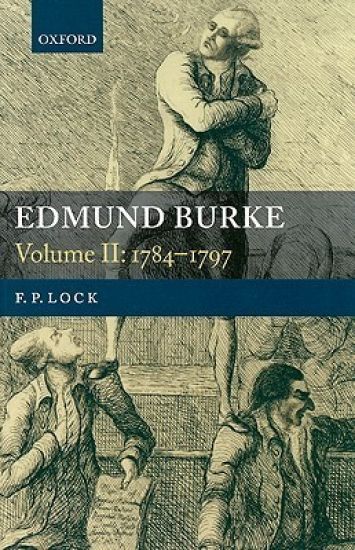
Edmund Burke, Volume II

Edmund Burke, Volume II

F. P. Lock

Oxford University Press
2009
nidottu
This is the second and concluding volume of a biography of Edmund Burke (1730-97), a key figure in eighteenth-century British and Irish politics and intellectual life. Covering the most interesting years of his life (1784-97), its leading themes are India and the French Revolution. Burke was largely responsible for the impeachment of Warren Hastings, former Governor-General of Bengal. The lengthy (145-day) trial of Hastings (which lasted from 1788 to 1795) is recognized as a landmark episode in the history of Britain's relationship with India. Lock provides the first day-by-day account of the entire trial, highlighting some of the many disputes about evidence as well as the great set speeches by Burke and others. In 1790, Burke published Reflections on the Revolution in France , the earliest sustained attack on the principles of the Revolution. Continuously in print ever since, the Reflections remains the most widely read and quoted book about the Revolution. The Reflections was followed by a series of anti-revolutionary writings, as Burke maintained his crusade against the Revolution to the end of his life. In addition to these leading themes, the biography examines many other topics in its coverage of Burke's busy and varied life: his parliamentary career; his family, friendships, and philanthropy; and his often difficult and obsessive personality. There are more than thirty illustrations, including many contemporary caricatures that convey how Burke was perceived by an often hostile and uncomprehending public. Controversial in his time, Burke is now regarded as one of the greatest of orators in the English language, as well as one of the most influential political philosophers in the Western tradition.

Burke's Reflections on the Revolution in France (Routledge Library Editions: Political Science Volume 28)
Edmund Burke’s Reflections on the Revolution in France is one of the major texts in the western intellectual tradition. This book describes Burke’s political and intellectual world, stressing the importance of the idea of ‘property’ in Burke’s thought. It then focuses more closely on Burke’s personal and political situation in the late 1780s to explain how the Reflections came to be written. The central part of the study discusses the meaning and interpretation of the work. In the last part of the book the author surveys the pamphlet controversy which the Reflections generated, paying particular attention to the most famous of the replies, Tom Paine’s Rights of Man. It also examines the subsequent reputation of the Reflections from the 1790s to the modern day, noting how often Burke has fascinated even writers who have disliked his politics.
Burke's Reflections on the Revolution in France (Routledge Library Editions: Political Science Volume 28)
Edmund Burke’s Reflections on the Revolution in France is one of the major texts in the western intellectual tradition. This book describes Burke’s political and intellectual world, stressing the importance of the idea of ‘property’ in Burke’s thought. It then focuses more closely on Burke’s personal and political situation in the late 1780s to explain how the Reflections came to be written. The central part of the study discusses the meaning and interpretation of the work. In the last part of the book the author surveys the pamphlet controversy which the Reflections generated, paying particular attention to the most famous of the replies, Tom Paine’s Rights of Man. It also examines the subsequent reputation of the Reflections from the 1790s to the modern day, noting how often Burke has fascinated even writers who have disliked his politics.
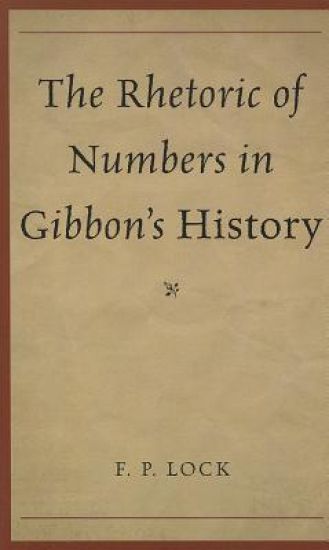
The Rhetoric of Numbers in Gibbon's History

The Rhetoric of Numbers in Gibbon's History

F. P. Lock

University of Delaware Press
2012
sidottu
Gibbon aspired to combine the critical analysis of the eighteenth-century philosophe with the older traditions of the humanist and scholarly historian. His different uses of numbers, to inform and to persuade, illustrate his remarkable fusion of these approaches. This book, the first to be devoted to a historian’s use of numbers, shows how carefully Gibbon interrogated and deployed the numerical evidence in his sources to create a more accurate historical narrative; to demonstrate his own reliability and candor as a historian; and to convince readers of the validity of his interpretations of characters and events.