

Kirjahaku
Etsi kirjoja tekijän nimen, kirjan nimen tai ISBN:n perusteella.
15 kirjaa tekijältä F. a. Forbes

The Life of St. Ignatius Loyola
F. a. Forbes
Createspace Independent Publishing Platform
2013
nidottu

The Life of St Vincent de Paul. c. 1581-1660 His Legacy continues today. Written for teens and young adults. Excerpt: Chapter 5 MISSION WORK THE incident which had given rise to Vincent's first mission at Folleville had never been forgotten by Madame de Gondi. It seemed to her that there was need to multiply such missions among the country poor, and no sooner had Vincent returned to her house than she offered him a large sum of money to endow a band of priests who would devote their lives to evangelizing the peasantry on her estates. Vincent was delighted, but considering himself unfit to undertake the management of such an enterprise, he proposed that it should be put into the hands of the Jesuits or the Oratorians. Madame de Gondi, although convinced in her own mind that Vincent, and Vincent alone, was the man to carry out the enterprise, obediently suggested it to one religious Order after another. In every case some obstacle intervened, until the Countess was more than ever persuaded that her first instinct had been right. Knowing Vincent's loyalty to Holy Church and his obedience to authority, she determined to have recourse to her brother-in-law, the Archbishop of Paris. An old house called the Coll ge des Bons Enfants was at that moment vacant. She asked it of the Archbishop, whom she had interested in her scheme, and who proposed to Vincent to undertake the foundation. There was no longer room for hesitation; the will of God seemed plain; indeed, Vincent's love of the poor had been for some time struggling with his humility. The new Congregation was to consist of a few good priests who, renouncing all thought of honor and worldly advancement, were to devote their lives to preaching in the villages and small towns of France. Their traveling expenses were to be paid from a common fund. They were to spend themselves in the service of their neighbor, instructing, catechizing and exhorting; and they were to take nothing in return for their labors. Nine months of the year were to be given to this kind of work; the other three to prayer and preparation. In March, 1625, the foundation was made, and Vincent de Paul was named the first superior. It was stipulated, however, that he should remain, as he had already promised, in the house of the founders, a condition which seemed likely to doom the enterprise to failure. Vincent could hardly fail to realize how necessary it was that the superior of a new Congregation should be in residence in his own house, but he confided the little company to God and awaited the development of events.
The Life of Saint Columba: Apostle of Scotland
F. a. Forbes
Createspace Independent Publishing Platform
2014
nidottu
AUTHOR'S PREFACE THOUGH more than 1300 years have gone by since the death of St. Columba, there are few saints whose memory is so living and so strong. This is partly due to his vivid and attractive personality, but in a great measure also to the fact that we have his Biography or Life written at great length by Adamnan, ninth abbot of Iona, who was born only twenty-seven years after Columba's death. Adamnan, who was very young when he entered the community at Iona, could have gathered the materials for his book from the lips of those who had personally known the great Apostle of Scotland, and who had been eye-witnesses of the events recorded. We know that these friends were many, and drawn from all classes, for Columbcille, above all the men of his time, had the gift of being loved, and many instances are related of the passionate devotion of the monks of Iona to their great abbot, no less than that of the multitudes with whom in his long and busy life he had come in contact. Adamnan is considered to be a sober and trustworthy author, and has not exaggerated, as many of the later writers undoubtedly have, the miraculous element in the life of the Saint. Carlyle, who cannot be considered as an advocate of the supernatural, remarks of the Life of St. Columba: "You can see that the man who wrote it could tell no lie. What he meant you cannot always find out; but it is clear that he told things as they appeared to him." There are many interesting relics of Columba still in existence. An ancient stone chalice which he is said to have used at Mass is still preserved in Ireland, together with the flagstone which formed the flooring of Eithne's room the night that he was born. A pathetic custom exists amongst the poor Irish emigrants of sleeping the night before they leave their country on this stone, in the hope that he who made himself an exile from his country for the love of God will by his prayers make the burden of their sorrow easier to bear. The stone which he used for so many years as a pillow is still to be seen amongst the ruins of the cathedral of Iona, which was erected in the twelfth century near the site of the old abbey church of Columba's building, while the ruins of St. Oran's chapel near at hand enclose the very spot where the Saint breathed his last upon the altar steps.


"They were thrown to the wild beasts. Felicitas and Perpetua, who had been tossed by a wild cow, though horribly gored, were still alive. Gladiators were summoned to behead them. Felicitas died at the first stroke, but the man's hand trembled, and he struck at Perpetua again and again, wounding her, but not mortally. 'You are more afraid than I, ' she said gently, and taking the point of the sword held it to her throat. "'Strike now, ' she said, and so passed into the presence of her God." Monica drew a long breath. "So weak and yet so strong," she said. "So it is, my child," said the old woman. "It is those who are strong and true in the little things of life who are strong and true in the great trials." "It is hard to be always strong and true," said the girl. "Not if God's love comes always first," answered the old woman. Monica was silent. She was thinking of her own young life, and how, with all the safeguards of a Christian home about her, she had narrowly escaped a great danger.

Saint Athanasius, the Father of Orthodoxy
F. a. Forbes
Createspace Independent Publishing Platform
2017
nidottu

The Life of Saint Monica: Large Print Edition
F. a. Forbes
Createspace Independent Publishing Platform
2017
nidottu
Life of St. Vincent de Paul By F. A. Forbes

Saint Vincent de Paul: Large Print Edition
F. a. Forbes
Createspace Independent Publishing Platform
2017
nidottu
The Life of St Vincent de Paul. c. 1581-1660 His Legacy continues today. Written for teens and young adults. Excerpt: Chapter 5 MISSION WORK THE incident which had given rise to Vincent's first mission at Folleville had never been forgotten by Madame de Gondi. It seemed to her that there was need to multiply such missions among the country poor, and no sooner had Vincent returned to her house than she offered him a large sum of money to endow a band of priests who would devote their lives to evangelizing the peasantry on her estates. Vincent was delighted, but considering himself unfit to undertake the management of such an enterprise, he proposed that it should be put into the hands of the Jesuits or the Oratorians. Madame de Gondi, although convinced in her own mind that Vincent, and Vincent alone, was the man to carry out the enterprise, obediently suggested it to one religious Order after another. In every case some obstacle intervened, until the Countess was more than ever persuaded that her first instinct had been right. Knowing Vincent's loyalty to Holy Church and his obedience to authority, she determined to have recourse to her brother-in-law, the Archbishop of Paris. An old house called the Coll ge des Bons Enfants was at that moment vacant. She asked it of the Archbishop, whom she had interested in her scheme, and who proposed to Vincent to undertake the foundation. There was no longer room for hesitation; the will of God seemed plain; indeed, Vincent's love of the poor had been for some time struggling with his humility. The new Congregation was to consist of a few good priests who, renouncing all thought of honor and worldly advancement, were to devote their lives to preaching in the villages and small towns of France. Their traveling expenses were to be paid from a common fund. They were to spend themselves in the service of their neighbor, instructing, catechizing and exhorting; and they were to take nothing in return for their labors. Nine months of the year were to be given to this kind of work; the other three to prayer and preparation. In March, 1625, the foundation was made, and Vincent de Paul was named the first superior. It was stipulated, however, that he should remain, as he had already promised, in the house of the founders, a condition which seemed likely to doom the enterprise to failure. Vincent could hardly fail to realize how necessary it was that the superior of a new Congregation should be in residence in his own house, but he confided the little company to God and awaited the development of events.
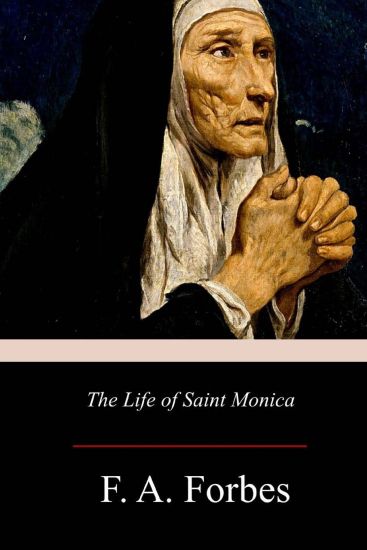
This book is above all things the story of a mother. But it is also the story of a noble woman-a woman who was truly great, for the reason that she never sought to be so. Because she understood the sphere in which a woman's work in the world must usually lie, and led her life truly along the lines that God had laid down for her; because she suffered bravely, forgot herself for others, and remained faithful to her noble ideals, she ruled as a queen amongst those with whom her life was cast. Her influence was great and far-reaching, but she herself was the last to suspect it, the last to desire it, and that was perhaps the secret of its greatness. The type is rare at the present day, but, thank God There are Monicas still in the world. If there were more, the world would be a better place. Excerpt: CHAPTER I HOW ST. MONICA WAS BROUGHT UP BY CHRISTIAN PARENTS IN THE CITY OF TAGASTE On the sunny northern coast of Africa in the country which we now call Algeria stood, in the early days of Christianity, a city called Tagaste. Not far distant lay the field of Zarna, where the glory of Hannibal had perished for ever. But Rome had long since avenged the sufferings of her bitter struggle with Carthage. It was the ambition of Roman Africa, as the new colony had been called by its conquerors, to be, if possible, more Roman than Rome. Every town had its baths, its theatre, its circus, its temples, its aqueducts. It was forbidden even to exiles as a place of refuge-too much like home, said the authorities. It was about the middle of the fourth century. The Church was coming forth from her long imprisonment into the light of day. The successor of Constantine, in name a Christian, sat on the Imperial throne. The old struggle with paganism, which had lasted for four hundred years, was nearly at an end, but new dangers assailed the Christian world. Men had found that it was easier to twist the truth than to deny it, and heresy and schism were abroad. In the atrium or outer court of a villa on the outskirts of Tagaste an old woman and a young girl sat together looking out into the dark shadows of the evening, for the hot African sun had sunk not long since behind the Numidian Mountains, and the day had gone out like a lamp. "And the holy Bishop Cyprian?" asked the girl. "They sent him into exile," said the old woman, "for his father had been a Senator, and his family was well known and powerful. At that time they dared not put him to death, though later he, too, shed his blood for Christ. It was God's will that he should remain for many years to strengthen his flock in the trial." "Did you ever see him, grandmother?" asked the girl. "No," said the old woman, "it was before my time; but my mother knew him well. It was when he was a boy in Carthage and still a pagan that the holy martyrs Perpetua and Felicitas suffered with their companions. It was not till years after that he became a Christian, but it may have been their death that sowed the first seed in his heart." "Tell me," said the girl softly. It was an oft-told tale of which she never tired. Her grandmother had lived through those dark days of persecution, and it was the delight of Monica's girlhood to hear her tell the stories of those who had borne witness to the Faith in their own land of Africa. "Perpetua was not much older than you," said the old woman. "She was of noble race and born of a Christian mother, though her father was a pagan. She was married, and had a little infant of a few months' old. When she was called before the tribunal of Hilarion the Roman Governor, all were touched by her youth and beauty. Sacrifice to the gods, ' they said, 'and you shall go free.' 'I am a Christian, ' she answered, and nothing more would she say, press her as they might. "Her old father hastened to her side with the baby, and laid it in her arms. 'Will you leave your infant motherless' he asked, 'and bring your old father's hairs in sorrow t

The Life of Saint Columba: Apostle of Scotland: Large Print Edition
F. a. Forbes
Createspace Independent Publishing Platform
2017
nidottu
AUTHOR'S PREFACE THOUGH more than 1300 years have gone by since the death of St. Columba, there are few saints whose memory is so living and so strong. This is partly due to his vivid and attractive personality, but in a great measure also to the fact that we have his Biography or Life written at great length by Adamnan, ninth abbot of Iona, who was born only twenty-seven years after Columba's death. Adamnan, who was very young when he entered the community at Iona, could have gathered the materials for his book from the lips of those who had personally known the great Apostle of Scotland, and who had been eye-witnesses of the events recorded. We know that these friends were many, and drawn from all classes, for Columbcille, above all the men of his time, had the gift of being loved, and many instances are related of the passionate devotion of the monks of Iona to their great abbot, no less than that of the multitudes with whom in his long and busy life he had come in contact. Adamnan is considered to be a sober and trustworthy author, and has not exaggerated, as many of the later writers undoubtedly have, the miraculous element in the life of the Saint. Carlyle, who cannot be considered as an advocate of the supernatural, remarks of the Life of St. Columba: "You can see that the man who wrote it could tell no lie. What he meant you cannot always find out; but it is clear that he told things as they appeared to him." There are many interesting relics of Columba still in existence. An ancient stone chalice which he is said to have used at Mass is still preserved in Ireland, together with the flagstone which formed the flooring of Eithne's room the night that he was born. A pathetic custom exists amongst the poor Irish emigrants of sleeping the night before they leave their country on this stone, in the hope that he who made himself an exile from his country for the love of God will by his prayers make the burden of their sorrow easier to bear. The stone which he used for so many years as a pillow is still to be seen amongst the ruins of the cathedral of Iona, which was erected in the twelfth century near the site of the old abbey church of Columba's building, while the ruins of St. Oran's chapel near at hand enclose the very spot where the Saint breathed his last upon the altar steps.
Saint Athanasius: The Father of Orthodoxy: Large Print Edition
F. a. Forbes
Createspace Independent Publishing Platform
2017
nidottu
The interesting Life of St Athanasius who was persecuted, hunted, banned from his own diocese all the while defending the Catholic Church from Arianism that was sweeping the Western World.