Kirjojen hintavertailu. Mukana 11 518 949 kirjaa ja 12 kauppaa.

Kirjahaku

Etsi kirjoja tekijän nimen, kirjan nimen tai ISBN:n perusteella.

21 kirjaa tekijältä Faber Birren

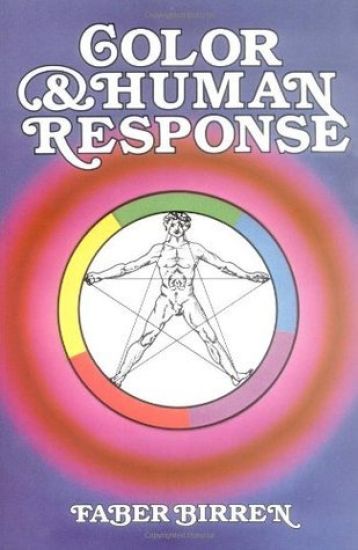
Color and Human Response

Color and Human Response

Faber Birren

John Wiley Sons Inc
1984
nidottu
"Birren presents a kaleidoscopic view of color information that has been a source of fascination " — Color Research and Application "Keeps up with the latest developments in biology and psychology where light and color are involved." — AIA Journal Here is a major work by one of the best-known color authorities in the world. Faber Bitten pioneered in the field of "functional" color, using color properties to promote human welfare psychologically, visually, and physiologically; in this volume he has assembled a wealth of information on the subject. Color and Human Response offers intriguing factual and hypothetical observations on the influences of color in life, supported by historical references and the latest scientific data. Birren explores the biological, visual, emotional, aesthetic, and psychic responses to color — referring both to ancient symbolic uses of color as well as its application in the modern environment. His specifications for color in homes, offices, hospitals, and schools are geared toward relieving modem tensions and anxieties. Complete with drawings, color photographs, and a chapter on the personal meaning of color preferences, Color and Human Response will fascinate anyone concerned with the human environment, including scientists and psychologists. It has become a basic reference for architects, teachers, and interior and industrial designers.
Color Perception in Art

Color Perception in Art

Faber Birren

Schiffer Publishing Ltd
1997
nidottu
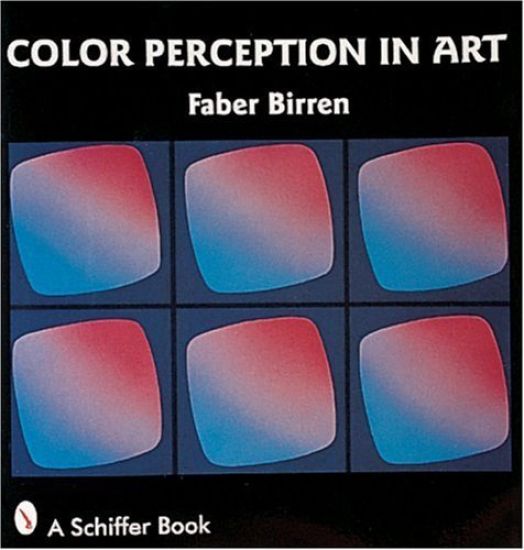
The most vital recent information on the relationship of visual perception to color expression in art is presented here in clear detail. Faber Birren, one of the best-known colorists of our time, prepares us for what he believes will be a new era of color expression. Pioneered by gestalt psychology many secrets of the brain are rapidly being discovered, resulting in creative new principles of color. The book is divided into three sections. First the history of nineteenth-and twentieth-century color expression is traced from Turner through Impressionism to Op Art. Next the parallel history of color theory is covered. Finally, the new concepts and interpretations of illumination, color constancy, adaptation, and the Law of Field Size, which created a revolution in the possibilities of color expression in art and their aesthetic implications, are discussed. These sections are supplemented by numerous black and white photographs of representative paintings, explanatory line drawings and the abstract, geometric color plates themselves-of the incomparable beauty and quality that are the hallmark of Faber Birren.
Principles of Color

Principles of Color

Faber Birren

Schiffer Publishing Ltd
1997
nidottu
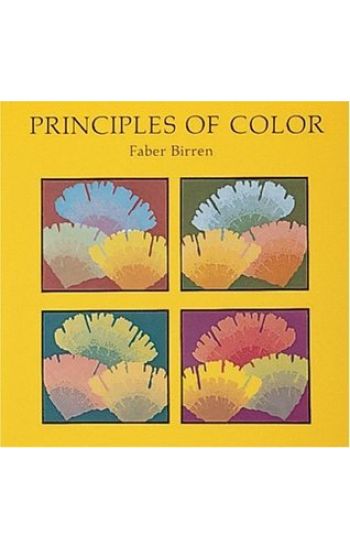
An elementary work on color, dealing with traditional principles of harmony, as well as advanced principles derived from modern studies of the psychology of human color perception. Color consultant and authority Faber Birren tells a well-organized story of how to achieve harmony with color, beginning with a chapter on color circles, and proceeding to a straightforward discussion of traditional principles of color harmony and how they were accepted in the past.
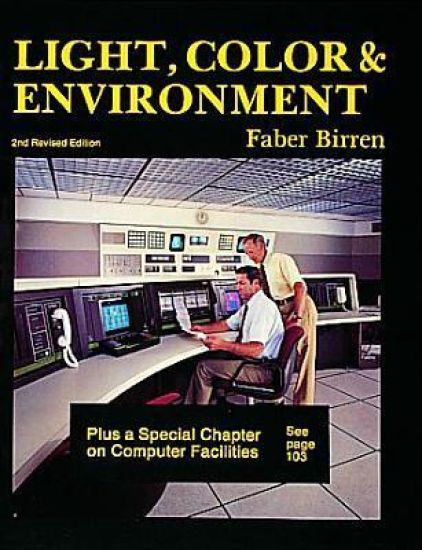
Light, Color & Environment

Light, Color & Environment

Faber Birren

Schiffer Publishing Ltd
1997
nidottu
In this classic study Faber Birren brings his expertise in color to the places we live; our homes, offices, factories, hospitals and schools. The colors used in these spaces have a profound effect on the people who inhabit them, and Faber Birren has spent many years researching the relationship. In this book he shares his findings and the practical applications toward healthier and more creative environments. In this newly revised edition, Mr Birren has added a chapter on the changing environment caused by the computer. He explores the new demands that today's technology puts on work and office spaces and shows the reader some helpful color and light solutions.
Color in Your World: An Intimate Study of Personality Based on the Colors People Like and Don't Like
""Color In Your World"" is a fascinating exploration of the relationship between personality and color preferences. Written by renowned color expert Faber Birren, this book delves into the ways in which our individual tastes in color can reveal important insights into our inner selves.Using a combination of scientific research and anecdotal evidence, Birren examines the various meanings and associations that different colors hold for people. He explores the ways in which color can affect our moods, our behavior, and even our physical health.Throughout the book, Birren provides numerous examples of how color preferences can be used to gain a deeper understanding of ourselves and others. He also offers practical advice for using color to enhance our lives, whether it's through decorating our homes or choosing the right clothing.""Color In Your World"" is a fascinating and thought-provoking read for anyone interested in the psychology of color and its impact on our lives. Whether you're a professional designer or simply someone who loves color, this book is sure to deepen your appreciation for the power and beauty of the hues that surround us every day.This scarce antiquarian book is a facsimile reprint of the old original and may contain some imperfections such as library marks and notations. Because we believe this work is culturally important, we have made it available as part of our commitment for protecting, preserving, and promoting the world's literature in affordable, high quality, modern editions, that are true to their original work.
Selling Color to People: A Book on How to Sell Color in Commercial Products and Advertising to the American Public
""Selling Color To People"" is a comprehensive guidebook written by Faber Birren on the art of selling color in commercial products and advertising to the American public. The book explores the psychology behind color and its impact on consumer behavior, and provides practical advice on how to effectively use color in marketing campaigns. Birren draws on his extensive experience as a color consultant and researcher to offer insights into the cultural and emotional associations that different colors evoke, and how these can be leveraged to create compelling brand identities and advertising messages. The book covers a wide range of topics, including color theory, color psychology, color symbolism, and color trends, and is filled with examples and case studies from real-world advertising campaigns. Whether you are a marketer, designer, or simply interested in the power of color, ""Selling Color To People"" is an essential resource for anyone looking to understand how to use color to sell products and ideas to the American public.This scarce antiquarian book is a facsimile reprint of the old original and may contain some imperfections such as library marks and notations. Because we believe this work is culturally important, we have made it available as part of our commitment for protecting, preserving, and promoting the world's literature in affordable, high quality, modern editions, that are true to their original work.
Color Dimensions: Creating New Principles of Color Harmony and a Practical Equation in Color Definition
Color Dimensions is a comprehensive guide to understanding the principles of color harmony and definition. Written by renowned color expert Faber Birren, this book provides readers with a practical equation for color definition and explores new principles of color harmony that can be applied to various design projects.The book begins with an introduction to the basic concepts of color and light, including the different color systems and the psychological effects of color. It then delves into the principles of color harmony, discussing topics such as color contrast, color balance, and color saturation.One of the key features of Color Dimensions is the practical equation for color definition that Birren introduces. This equation takes into account the hue, value, and chroma of a color, providing a more precise way to define and communicate color.The book also includes a wealth of examples and illustrations to help readers understand the principles of color harmony and definition. These examples range from simple color schemes to complex designs, and cover a variety of applications such as interior design, fashion, and graphic design.Overall, Color Dimensions is a must-read for anyone interested in understanding the principles of color and how to apply them to their design work. Birren's expertise and practical approach make this book an invaluable resource for designers, artists, and color enthusiasts alike.This is a new release of the original 1934 edition.This scarce antiquarian book is a facsimile reprint of the old original and may contain some imperfections such as library marks and notations. Because we believe this work is culturally important, we have made it available as part of our commitment for protecting, preserving, and promoting the world's literature in affordable, high quality, modern editions, that are true to their original work.
Color Psychology and Color Therapy: A Factual Study of the Influence of Color on Human Life
""Color Psychology and Color Therapy: A Factual Study of the Influence of Color on Human Life"" by Faber Birren is a comprehensive guide to understanding the psychological and therapeutic effects of color. The book delves into the science behind color perception and the ways in which different colors can affect our moods, emotions, and behaviors. Birren explores the historical and cultural significance of color, as well as its role in art and design. The book also includes practical applications of color therapy, including the use of color in healing and relaxation techniques. With clear and concise language, Birren provides readers with a wealth of information on the fascinating and complex world of color psychology and therapy. This book is an essential resource for anyone interested in the power of color to influence our lives.""This is a new release of the original 1950 edition.This scarce antiquarian book is a facsimile reprint of the old original and may contain some imperfections such as library marks and notations. Because we believe this work is culturally important, we have made it available as part of our commitment for protecting, preserving, and promoting the world's literature in affordable, high quality, modern editions, that are true to their original work.
Color Psychology And Color Therapy Hardcover

Color Psychology And Color Therapy Hardcover

Faber Birren

LUSHENA BOOKS INC
2013
sidottu
American writer Faber Birren devoted his life to color and it's effects on human life. After writing around 25 texts on the topic, it would be safe to say his work is considered highly among color experts and psychologists around the world. Birren's work has a strong focus on linking how humans perceive colors to how it makes them react. He writes, "Good smelling colors are pink, lilac, orchid, cool green, aqua blue." Birren explores the work of several physicians, scientists and doctors, mainly the German psychoanalyst and physician Felix Deutsch, whose findings throw important light not only on medical practice with references to color but on the whole psychology of color. Birren states that if a person prefers warmer colors such as hues of red and oranges, they are likely to me more aware of their social environment. He labels these as "warm color dominant subjects." On the other hand, those preferring cooler colous such as blues and greens, are categorized generally as "cold color dominant subjects" and are recognized as finding it challenging to adapt themselves to new environments and situations". By splitting people into separate categories, based on their color preferences, Birren finds himself able to establish a greater understanding of their personalities and characteristics. One experiment Birren explores in his text, courtesy of Kurt Goldstein, involves a subject standing before a black wall with his eyes shut and arms outstretched to touch the wall in front. When the subject is influenced by a warm color such as the color red, his arms deviate away from each other, whereas when under the influence of a cooler colour such as green or blue, even though the reaction is a subtle one, the subject will move his arms closer together. I find this experiment, simple as it is, to be fascinating in highlighting the strong effects colors have on our minds and bodies. As well as distinguishing the differences in peoples' character through his use of color psychology, Birren also touches on the effects colors can have on the mentally ill. This section was the most interesting and involved a series of complex experiments such as discovering which neurological disorders were linked to which colors. Courtesy of the work by Hans Huber, it was proven that patients suffering manic tendencies preferred the color red, a symbol of blood and anger. Hysterical patients were more sensitive to green, "perhaps as an escape", the color linked to paranoid subjects was found to be brown and schizophrenics are sensitive to yellow. Birren states that persons troubled with "nervous (neurotic) and mental (psychotic) disturbances are greatly affected by color and are responsive to it". Therefore color becomes much more significant to them, and affects them in a completely different way than those without such neurological disturbances. Chapter 12 "Neurotics and Psychotics" is the most compelling in the text as it relates to my dissertation topic. After struggling to find texts specific to my research subject, this text and its contents came as a welcomed discovery and I will be referring to Birren's work throughout my further research.
Color Psychology and Color Therapy: A Factual Study of the Influence of Color on Human Life
Color Psychology and Color Therapy: A Factual Study of the Influence of Color on Human Life (1950) is a book of color theory by renowned color expert Faber Birren. The work explores the impact of color on human behavior and emotions. Born in 1900 in Chicago, Illinois, Birren began studying color and art as a teen at the Art Institute of Chicago. While he originally intended to follow in his father's footsteps as a landscape painter, he determined that he didn't have the requisite talent. He attended the University of Chicago as an education major instead, but found that his interest was still in the world of color. Since no formal program in color theory existed at the time, he left school to pursue a course of self-managed study, spending hours at the Chicago Public Library.At age 24, Birren began a prolific writing career, publishing dozens of books and articles on color theory over the course of his life. Soon, he began consulting for businesses, claiming he could boost sales with the careful use of color. One of Birren's early successes was a Chicago wholesale meat company. He suggested that the white walls of the meat coolers made the meat appear an unappetizing gray color. He proposed that the meat company paint the coolers in a blue-green color instead, to make the meat's red hue pop. Sales increased, and Birren had proven that paying attention to color theory could reap dividends. Birren brought this expertise to many well-known corporations throughout the middle of the 20th century. He consulted with major manufacturers like Monsanto, General Electric, and DuPont, among others. His goals went beyond sales, aiming to improve employee mood and attentiveness as well. He even consulted with Disney on the color choices in the films Bambi, Fantasia, and Pinocchio.Color Psychology and Color Therapy is written in four parts. In part one, Birren discusses color symbolism in varied mystic, occultist, and religious traditions. He also shares the views on color expressed by various ancient philosophers. In part two, Birren takes a scientific approach to color. He explores the electromagnetic spectrum and the effects of certain wavelengths of light and color on plants, animals, and the human body. In part three, Birren turns his attention to the psychological impacts of color on human behavior and emotions. Unsurprisingly, the impact of color on mood and behavior is far more complex than "red makes us happy" and "gray makes us sad." It is a complex blend of context, personal associations, and subjective impressions, which Birren explores in depth.Finally, part four focuses on the visual aspects of color, like the function of the eye and how it perceives different colors. Through a deliberate use of color, Birren argues that we can reduce eye strain and fatigue, and improve efficiency and safety. He also explores visual difficulties, like color blindness and night blindness, their causes, and their effects. Birren's contributions to the field of color theory are still seen today. Colorful safety margins painted around factory equipment and purple-topped pool tables (instead of the traditional green) are both among his many legacies.