Kirjojen hintavertailu. Mukana 11 342 296 kirjaa ja 12 kauppaa.

Kirjahaku

Etsi kirjoja tekijän nimen, kirjan nimen tai ISBN:n perusteella.

9 kirjaa tekijältä Fabio Parasecoli

Gastronativism

Gastronativism

Fabio Parasecoli

Columbia University Press
2022
sidottu
Winner, Gourmand World Cookbook Awards - Food - Food Heritage - USANominee, Book Award in Food Issues and Advocacy, James Beard FoundationThe Italian political right is outraged by halal tortellini and a pork-free lasagna served at the Vatican. In India, Hindu fundamentalists organize attacks on Muslims who sell beef. European anti-immigrant politicians denounce couscous and kebabs. In an era of nationalist and exclusionary movements, food has become a potent symbol of identity. Why has eating become so politically charged—and can the emotions surrounding food be redirected in a healthier direction?Fabio Parasecoli identifies and defines the phenomenon of “gastronativism,” the ideological use of food to advance ideas about who belongs to a community and who does not. As globalization and neoliberalism have transformed food systems, people have responded by seeking to return to their roots. Many have embraced local ingredients and notions of cultural heritage, but this impulse can play into the hands of nationalist and xenophobic political projects. Such movements draw on the strong emotions connected with eating to stoke resentment and contempt for other people and cultures.Parasecoli emphasizes that gastronativism is a worldwide phenomenon, even as it often purports to oppose local aspects and consequences of globalization. He also explores how to channel pride in culinary traditions toward resisting transnational corporations, uplifting marginalized and oppressed groups, and assisting people left behind by globalization. Featuring a wide array of examples from all over the world, Gastronativism is a timely, incisive, and lively analysis of how and why food has become a powerful political tool.
Gastronativism

Gastronativism

Fabio Parasecoli

Columbia University Press
2022
pokkari
Winner, Gourmand World Cookbook Awards - Food - Food Heritage - USANominee, Book Award in Food Issues and Advocacy, James Beard FoundationThe Italian political right is outraged by halal tortellini and a pork-free lasagna served at the Vatican. In India, Hindu fundamentalists organize attacks on Muslims who sell beef. European anti-immigrant politicians denounce couscous and kebabs. In an era of nationalist and exclusionary movements, food has become a potent symbol of identity. Why has eating become so politically charged—and can the emotions surrounding food be redirected in a healthier direction?Fabio Parasecoli identifies and defines the phenomenon of “gastronativism,” the ideological use of food to advance ideas about who belongs to a community and who does not. As globalization and neoliberalism have transformed food systems, people have responded by seeking to return to their roots. Many have embraced local ingredients and notions of cultural heritage, but this impulse can play into the hands of nationalist and xenophobic political projects. Such movements draw on the strong emotions connected with eating to stoke resentment and contempt for other people and cultures.Parasecoli emphasizes that gastronativism is a worldwide phenomenon, even as it often purports to oppose local aspects and consequences of globalization. He also explores how to channel pride in culinary traditions toward resisting transnational corporations, uplifting marginalized and oppressed groups, and assisting people left behind by globalization. Featuring a wide array of examples from all over the world, Gastronativism is a timely, incisive, and lively analysis of how and why food has become a powerful political tool.
Food

Food

Fabio Parasecoli

MIT Press
2019
pokkari
A consumer's guide to the food system, from local to global: our part as citizens in the interconnected networks, institutions, and organizations that enable our food choices.Everybody eats. We may even consider ourselves experts on the topic, or at least Instagram experts. But are we aware that the shrimp in our freezer may be farmed and frozen in Vietnam, the grapes in our fruit bowl shipped from Chile, and the coffee in our coffee maker grown in Nicaragua, roasted in Germany, and distributed in Canada? Whether we know it or not, every time we shop for food, cook, and eat, we connect ourselves to complex supply networks, institutions, and organizations that enable our food choices. Even locavores may not know the whole story of the produce they buy at the farmers market. In this volume in the MIT Press Essential Knowledge series, food writer and scholar Fabio Parasecoli offers a consumer's guide to the food system, from local to global.Parasecoli describes a system made up of open-ended, shifting, and unstable networks rather than well-defined chains; considers healthy food and the contradictory advice about it consumers receive; discusses food waste and the implications for sustainability; explores food technologies (and "culinary luddism"); and examines hunger and food insecurity in both developing and developed countries. Parasecoli reminds us that we are not only consumers but also citizens, and as citizens we have more power to improve the food system than we do by our individual food choices.
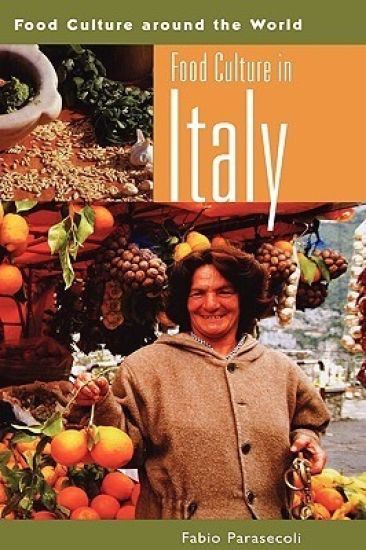
Food Culture in Italy

Food Culture in Italy

Fabio Parasecoli

Greenwood Press
2004
sidottu
There is keen interest in the exquisite yet simple Italian cuisine and Italian culture. This volume provides an intimate look at how Italians cook, eat, and think about food today. It describes the cornucopia of foodstuffs and classic ingredients. An overview of the typical daily routine of meals and snacks gives a good feel for the everyday life. The changing roles of women are explored with a discussion of the inroads that convenience foods are making. In addition, the current concerns about the food supply, the benefits of the Mediterranean diet, and the slow food movement are tied in to the debates on these issues in the United States. Food is one of the main reasons why many Americans travel to Italy. Yet, the fascination with Italian cuisine is not all about health or taste. There is much more to it. Italian food is perceived and portrayed in the media as representing a whole lifestyle: Italians live la dolce vita, leisurely eating and drinking with friends and families, families are still important, and communities are close knit. The reality of Italian society is more complex, and this volume offers a balanced view of Italian culture and identity through its foodways.
Al Dente

Al Dente

Fabio Parasecoli

Reaktion Books
2014
sidottu
Pasta, pizza, parmesan cheese – we have Italy to thank for some of our favourite foods. Home to a dazzling array of wines, cheeses, breads, vegetables and salamis, Italy has become a mecca for foodies. Outside Italy, cities around the world are home to Michelin-starred Italian restaurants and television chefs extol the virtues of Italian cuisine, presenting it as a model of fresh and healthy eating. Taking readers across the country’s regions and beyond, Al Dente explores how Italy’s cuisines became what they are today.For centuries, southern Mediterranean countries such as Italy fought against food scarcity, wars, invasions and an unfavourable agricultural environment. Lacking meat and dairy, Italy developed foodways that depended on grains, legumes and vegetables until a stronger economy in the late 1950s allowed the majority of Italians to afford a more diverse diet. The last half century has seen new packaging, conservation techniques, industrial mass production and more sophisticated systems of transportation and distribution, bringing about profound changes in how the country’s population thinks about food.Including historical recipes for delicious Italian dishes to enjoy alongside a glass of crisp Chianti, Al Dente is a fascinating history of what is perhaps the world’s favourite cuisine.
Al Dente

Al Dente

Fabio Parasecoli

REAKTION BOOKS
2025
nidottu
Italy is a mecca for food lovers. The home of pasta and pizza, it also boasts a dazzling array of wines, cheeses, breads, vegetables and meats. Globally, Michelin-starred Italian restaurants and TV chefs celebrate Italian cuisine for its freshness and health benefits. Now in paperback, Al Dente takes readers on a journey through Italy’s regions and food history, exploring how its cuisine evolved. Southern Italy faced food scarcity, wars and poor agricultural conditions, relying on grains, legumes and vegetables until the late 1950s economic boom allowed a more varied diet. The last 50 years brought new packaging, conservation, and distribution methods, revolutionizing Italian food culture. Including historical recipes, Al Dente is a captivating history of perhaps the world’s most beloved cuisine.
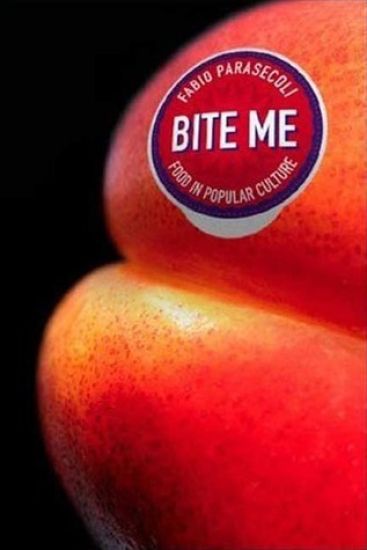
Bite Me

Bite Me

Fabio Parasecoli

Berg Publishers
2008
nidottu
Food is not only something we eat, it is something we use to define ourselves. Ingestion and incorporation are central to our connection with the world outside our bodies. Food's powerful social, economic, political and symbolic roles cannot be ignored - what we eat is a marker of power, cultural capital, class, ethnic and racial identity. Bite Me considers the ways in which popular culture reveals our relationship with food and our own bodies and how these have become an arena for political and ideological battles. Drawing on an extraordinary range of material - films, books, comics, songs, music videos, websites, slang, performances, advertising and mass-produced objects - Bite Me invites the reader to take a fresh look at today's products and practices to see how much food shapes our lives, perceptions and identities.
Bite Me

Bite Me

Fabio Parasecoli

Berg Publishers
2008
sidottu
Food is not only something we eat, it is something we use to define ourselves. Ingestion and incorporation are central to our connection with the world outside our bodies. Food's powerful social, economic, political and symbolic roles cannot be ignored - what we eat is a marker of power, cultural capital, class, ethnic and racial identity. Bite Me considers the ways in which popular culture reveals our relationship with food and our own bodies and how these have become an arena for political and ideological battles. Drawing on an extraordinary range of material - films, books, comics, songs, music videos, websites, slang, performances, advertising and mass-produced objects - Bite Me invites the reader to take a fresh look at today's products and practices to see how much food shapes our lives, perceptions and identities.
Knowing Where It Comes From

Knowing Where It Comes From

Fabio Parasecoli

University of Iowa Press
2017
nidottu
Offering the first broadly comparative analysis of place-based labeling and marketing systems, Knowing Where It Comes From examines the way claims about the origins and meanings of traditional foods get made around the world, from Italy and France to Costa Rica and Thailand. It also highlights the implications of different systems for both producers and consumers. Labeling regimes have moved beyond intellectual property to embrace community-based protections, intangible cultural heritage, cultural landscapes, and indigenous knowledge. Reflecting a rich array of juridical, regulatory, and activist perspectives, these approaches seek to level the playing field on which food producers and consumers interact.