Kirjojen hintavertailu. Mukana 12 384 253 kirjaa ja 12 kauppaa.

Kirjahaku

Etsi kirjoja tekijän nimen, kirjan nimen tai ISBN:n perusteella.

6 kirjaa tekijältä Fabio Rambelli

Buddhist Materiality

Buddhist Materiality

Fabio Rambelli

Stanford University Press
2007
sidottu
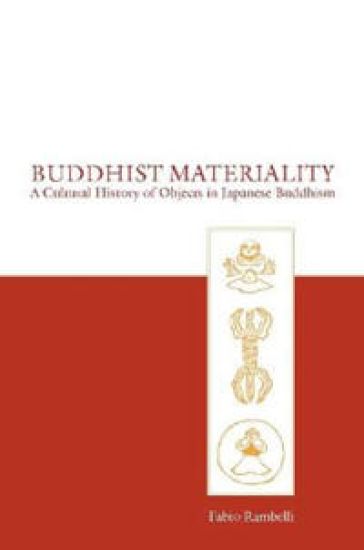
Throughout its history, Buddhism has developed a sophisticated philosophy of materiality, addressing the status of material objects and their role in the quest for salvation. This is an innovative book that addresses the ways in which Buddhism has conceived of, and dealt with, material objects ranging from the environment to everyday tools, ritual implements, icons, and sacred texts. Contrary to received assumptions, careful reading of original sources and study of ritual practices show that in Buddhism the realm of materiality is not simply an obstacle for spiritual pursuits but also a space for interplay in which human beings can give shape and expression to their deepest religious and spiritual ideas.
A Buddhist Theory of Semiotics

A Buddhist Theory of Semiotics

Fabio Rambelli

Bloomsbury Academic USA
2013
nidottu
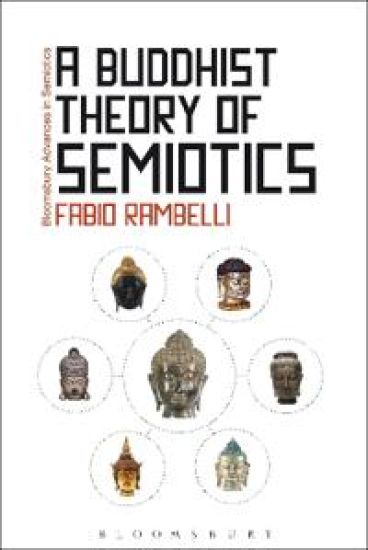
One of the first attempts ever to present in a systematic way a non-western semiotic system. This book looks at Japanese esoteric Buddhism and is based around original texts, informed by explicit and rigorous semiotic categories. It is a unique introduction to important aspects of the thought and rituals of the Japanese Shingon tradition.Semiotic concerns are deeply ingrained in the Buddhist intellectual and religious discourse, beginning with the idea that the world is not what it appears to be, which calls for a more accurate understanding of the self and reality. This in turn results in sustained discussions on the status of language and representations, and on the possibility and methods to know reality beyond delusion; such peculiar knowledge is explicitly defined as enlightenment. Thus, for Buddhism, semiotics is directly relevant to salvation; this is a key point that is often ignored even by Buddhologists. This book discusses in depth the main elements of Buddhist semiotics as based primarily on original Japanese pre-modern sources. It is a crucial publication in the fields of semiotics and religious studies.
A Buddhist Theory of Semiotics

A Buddhist Theory of Semiotics

Fabio Rambelli

Bloomsbury Academic USA
2013
sidottu
One of the first attempts ever to present in a systematic way a non-western semiotic system. This book looks at Japanese esoteric Buddhism and is based around original texts, informed by explicit and rigorous semiotic categories. It is a unique introduction to important aspects of the thought and rituals of the Japanese Shingon tradition.Semiotic concerns are deeply ingrained in the Buddhist intellectual and religious discourse, beginning with the idea that the world is not what it appears to be, which calls for a more accurate understanding of the self and reality. This in turn results in sustained discussions on the status of language and representations, and on the possibility and methods to know reality beyond delusion; such peculiar knowledge is explicitly defined as enlightenment. Thus, for Buddhism, semiotics is directly relevant to salvation; this is a key point that is often ignored even by Buddhologists. This book discusses in depth the main elements of Buddhist semiotics as based primarily on original Japanese pre-modern sources. It is a crucial publication in the fields of semiotics and religious studies.
Zen Anarchism

Zen Anarchism

Fabio Rambelli

Numata Center for Buddhist Translation Research.
2013
sidottu
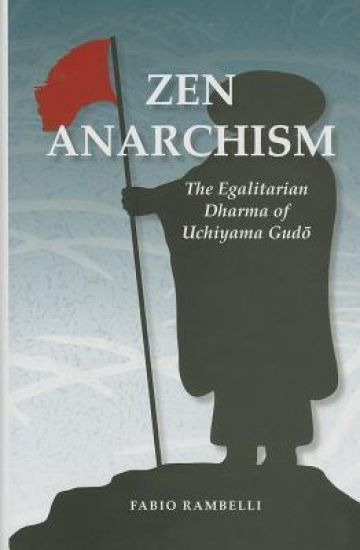
These essays from the fin de siècle Japanese Zen priest Uchiyama Gud?, provides entry into an aspect of Buddhist history that is otherwise little known, the relations that can be constructed between the buddhadharma and radical political critique and action.
Buddhism and Iconoclasm in East Asia

Buddhism and Iconoclasm in East Asia

Fabio Rambelli; Eric Reinders

Bloomsbury Academic USA
2012
sidottu
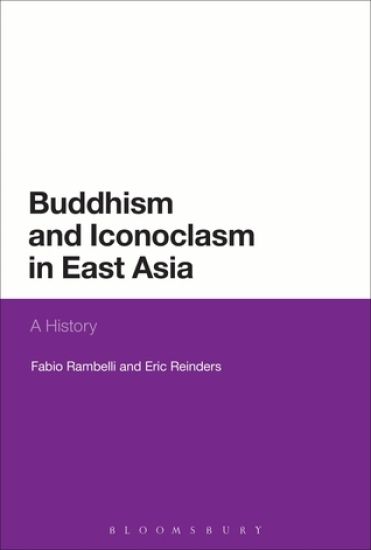
This is a cross-cultural study of the multifaceted relations between Buddhism, its materiality, and instances of religious violence and destruction in East Asia, which remains a vast and still largely unexplored field of inquiry. Material objects are extremely important not just for Buddhist practice, but also for the conceptualization of Buddhist doctrines; yet, Buddhism developed ambivalent attitudes towards such need for objects, and an awareness that even the most sacred objects could be destroyed. After outlining Buddhist attitudes towards materiality and its vulnerability, the authors propose a different and more inclusive definition of iconoclasm-a notion that is normally not employed in discussions of East Asian religions. Case studies of religious destruction in East Asia are presented, together with a new theoretical framework drawn from semiotics and cultural studies, to address more general issues related to cultural value, sacredness, and destruction, in an attempt to understand instances in which the status and the meaning of the sacred in any given culture is questioned, contested, and ultimately denied, and how religious institutions react to those challenges.
Buddhism and Iconoclasm in East Asia

Buddhism and Iconoclasm in East Asia

Fabio Rambelli; Eric Reinders

Bloomsbury Academic
2014
nidottu
This is a cross-cultural study of the multifaceted relations between Buddhism, its materiality, and instances of religious violence and destruction in East Asia, which remains a vast and still largely unexplored field of inquiry. Material objects are extremely important not just for Buddhist practice, but also for the conceptualization of Buddhist doctrines; yet, Buddhism developed ambivalent attitudes towards such need for objects, and an awareness that even the most sacred objects could be destroyed. After outlining Buddhist attitudes towards materiality and its vulnerability, the authors propose a different and more inclusive definition of iconoclasm-a notion that is normally not employed in discussions of East Asian religions. Case studies of religious destruction in East Asia are presented, together with a new theoretical framework drawn from semiotics and cultural studies, to address more general issues related to cultural value, sacredness, and destruction, in an attempt to understand instances in which the status and the meaning of the sacred in any given culture is questioned, contested, and ultimately denied, and how religious institutions react to those challenges.