Kirjojen hintavertailu. Mukana 12 016 292 kirjaa ja 12 kauppaa.

Kirjahaku

Etsi kirjoja tekijän nimen, kirjan nimen tai ISBN:n perusteella.

12 kirjaa tekijältä Faisal Devji

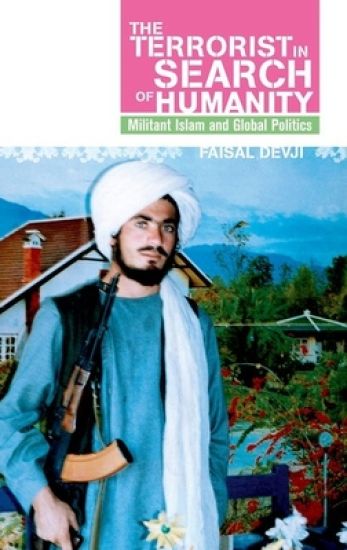
Terrorist in Search of Humanity: Militant Islam and Global Politics
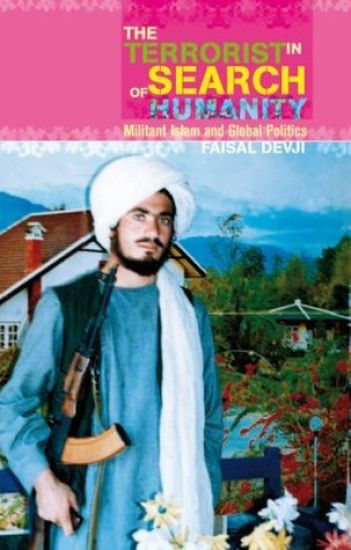
Faisal Devji argues that new forms of militancy, such as the actions of al-Qaeda, are informed by the same desire for agency and equality that animates other humanitarian interventions, such as environmentalism and pacifism. To the militant, victimized Muslims are more than just symbols of ethnic and religious persecution-they represent humanity's centuries-long struggle for legitimacy and agency. Acts of terror, therefore, are fueled by the militant's desire to become a historical actor on the global stage. Though they have yet to build concrete political institutions, militant movements have formed a kind of global society, and as Devji makes clear, this society pursues the same humanitarian objectives that drive more benevolent groups.
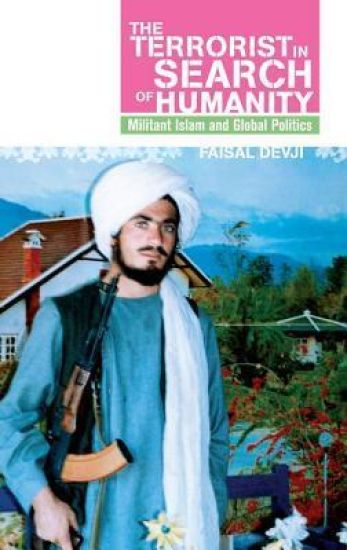
Terrorist in Search of Humanity: Militant Islam and Global Politics
Faisal Devji argues that new forms of militancy, such as the actions of al-Qaeda, are informed by the same desire for agency and equality that animates other humanitarian interventions, such as environmentalism and pacifism. To the militant, victimized Muslims are more than just symbols of ethnic and religious persecution-they represent humanity's centuries-long struggle for legitimacy and agency. Acts of terror, therefore, are fueled by the militant's desire to become a historical actor on the global stage. Though they have yet to build concrete political institutions, militant movements have formed a kind of global society, and as Devji makes clear, this society pursues the same humanitarian objectives that drive more benevolent groups.
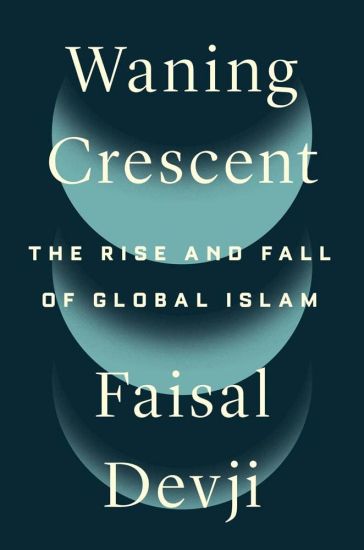
Waning Crescent

Waning Crescent

Faisal Devji

YALE UNIVERSITY PRESS
2025
sidottu
A compelling examination of the rise of Islam as a global historical actor Until the nineteenth century, Islam was variously understood as a set of beliefs and practices. But after Muslims began to see their faith as an historical actor on the world stage, they needed to narrate Islam’s birth anew as well as to imagine its possible death. Faisal Devji argues that this change, sparked by the crisis of Muslim sovereignty in the age of European empire, provided a way of thinking about agency in a global context: an Islam liberated from the authority of kings and clerics had the potential to represent the human race itself as a newly empirical reality. Ordinary Muslims, now recognized as the privileged representatives of Islam, were freed from traditional forms of Islamic authority. However, their conception of Islam as an impersonal actor in history meant that it could not be defined in either religious or political terms. Its existence as a civilizational and later ideological subject also deprived figures like God and the Prophet of their theological subjectivities while robbing the Muslim community of its political agency. Devji illuminates this history and explores its ramifications for the contemporary Muslim world.
The Impossible Indian

The Impossible Indian

Faisal Devji

Harvard University Press
2012
sidottu
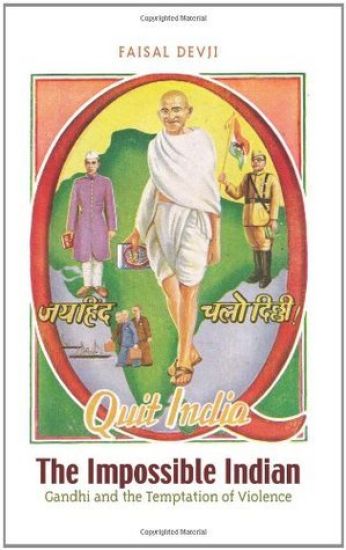
The Impossible Indian offers a rare, fresh view of Gandhi as a hard-hitting political thinker willing to countenance the greatest violence in pursuit of a global vision that went far beyond a nationalist agenda. Revising the conventional view of the Mahatma as an isolated Indian moralist detached from the mainstream of twentieth-century politics, Faisal Devji offers a provocative new genealogy of Gandhian thought, one that is not rooted in a cliched alternative history of spiritual India but arises from a tradition of conquest and violence in the battlefields of 1857. Focusing on his unsentimental engagement with the hard facts of imperial domination, Fascism, and civil war, Devji recasts Gandhi as a man at the center of modern history. Rejecting Western notions of the rights of man, rights which can only be bestowed by a state, Gandhi turned instead to the idea of dharma, or ethical duty, as the true source of the self's sovereignty, independent of the state. Devji demonstrates that Gandhi's dealings with violence, guided by his idea of ethical duty, were more radical than those of contemporary revolutionists.To make sense of this seemingly incongruous relationship with violence, Devji returns to Gandhi's writings and explores his engagement with issues beyond India's struggle for home rule. Devji reintroduces Gandhi to a global audience in search of leadership at a time of extraordinary strife as a thinker who understood how life's quotidian reality could be revolutionized to extraordinary effect.
Muslim Zion

Muslim Zion

Faisal Devji

Harvard University Press
2013
sidottu
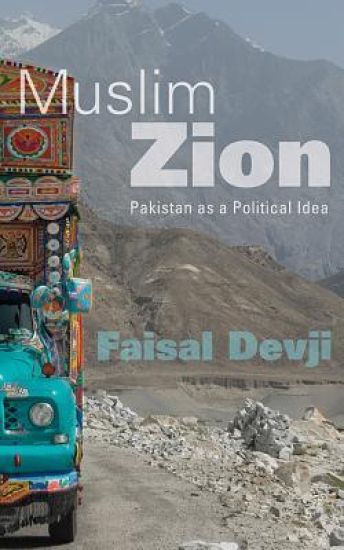
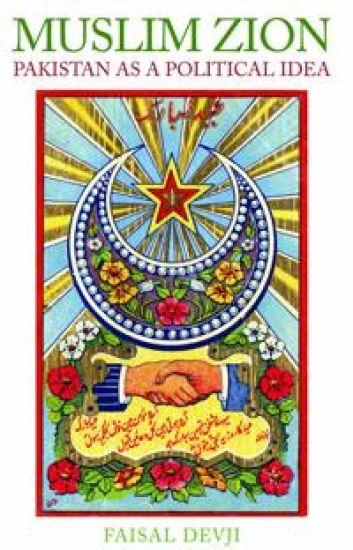
Pakistan, founded less than a decade after a homeland for India's Muslims was proposed, is both the embodiment of national ambitions fulfilled and, in the eyes of many observers, a failed state. Muslim Zion cuts to the core of the geopolitical paradoxes entangling Pakistan to argue that India's rival has never been a nation-state in the conventional sense. Pakistan is instead a distinct type of political geography, ungrounded in the historic connections of lands and peoples, whose context is provided by the settler states of the New World but whose closest ideological parallel is the state of Israel. A year before the 1948 establishment of Israel, Pakistan was founded on a philosophy that accords with Zionism in surprising ways. Faisal Devji understands Zion as a political form rather than a holy land, one that rejects hereditary linkages between ethnicity and soil in favor of membership based on nothing but an idea of belonging. Like Israel, Pakistan came into being through the migration of a minority population, inhabiting a vast subcontinent, who abandoned old lands in which they feared persecution to settle in a new homeland.Just as Israel is the world's sole Jewish state, Pakistan is the only country to be established in the name of Islam. Revealing how Pakistan's troubled present continues to be shaped by its past, Muslim Zion is a penetrating critique of what comes of founding a country on an unresolved desire both to join and reject the world of modern nation-states.
Landscapes of the Jihad

Landscapes of the Jihad

Faisal Devji

Cornell University Press
2005
sidottu
What are the motives behind Osama bin Laden's and Al-Qaeda's jihad against America and the West? Innumerable attempts have been made in recent years to explain that mysterious worldview. In Landscapes of the Jihad, Faisal Devji focuses on the ethical content of this jihad as opposed to its purported political intent. Al-Qaeda differs radically from such groups as Egypt's Muslim Brotherhood and Indonesia's Jemaah Islamiyah, which aim to establish fundamentalist Islamic states. In fact, Devji contends, Al-Qaeda, with its decentralized structure and emphasis on moral rather than political action, actually has more in common with multinational corporations, antiglobalization activists, and environmentalist and social justice organizations. Bin Laden and his lieutenants view their cause as a response to the oppressive conditions faced by the Muslim world rather than an Islamist attempt to build states.Al-Qaeda culls diverse symbols and fragments from Islam's past in order to legitimize its global war against the "metaphysical evil" emanating from the West. The most salient example of this assemblage, Devji argues, is the concept of jihad itself, which Al-Qaeda defines as an "individual duty" incumbent on all Muslims, like prayer. Although medieval Islamic thought provides precedent for this interpretation, Al-Qaeda has deftly separated the stipulation from its institutional moorings and turned jihad into a weapon of spiritual conflict. Al-Qaeda and its jihad, Devji suggests, are only the most visible manifestations of wider changes in the Muslim world. Such changes include the fragmentation of traditional as well as fundamentalist forms of authority. In the author's view, Al-Qaeda represents a new way of organizing Muslim belief and practice within a global landscape and does not require ideological or institutional unity.Offering a compelling explanation for the central purpose of Al-Qaeda's jihad against the West, the meaning of its strategies and tactics, and its moral and aesthetic dimensions, Landscapes of the Jihad is at once a sophisticated work of historical and cultural analysis and an invaluable guide to the world's most prominent terrorist movement.
The Terrorist in Search of Humanity

The Terrorist in Search of Humanity

Faisal Devji

C Hurst Co Publishers Ltd
2019
nidottu
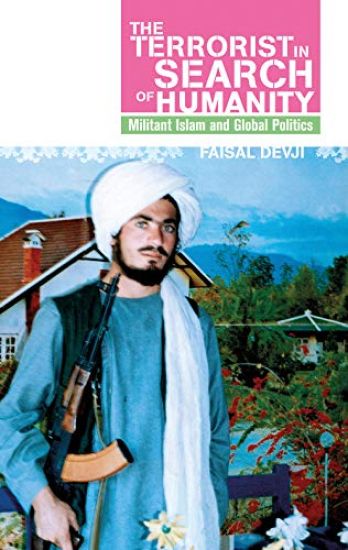
Faisal Devji argues that new forms of militancy, such as the actions of al-Qaeda, are informed by the same desire for agency and equality that animates other humanitarian interventions, such as environmentalism and pacifism. To the militant, victimized Muslims are more than just symbols of ethnic and religious persecution-they represent humanity's centuries-long struggle for legitimacy and agency. Acts of terror, therefore, are fueled by the militant's desire to become a historical actor on the global stage. Though they have yet to build concrete political institutions, militant movements have formed a kind of global society, and as Devji makes clear, this society pursues the same humanitarian objectives that drive more benevolent groups.

The Impossible Indian

The Impossible Indian

Faisal Devji

C Hurst Co Publishers Ltd
2012
sidottu
While in his own time Gandhi was recognised by friends and enemies alike as a major political force, not only in India but the world at large, in our own day the Mahatma has been reduced to an idealist by his supporters as much as by his detractors. Whether this idealism is regarded as sincere or hypocritical, Gandhi has also become a resolutely Indian figure today, capable only of inspiring others in the most general way. Yet the Mahatma always considered his practices as being realistic and even mundane in the ease of their application, while at the same time holding them to possess universal potential. India for him was only the site of an experiment in non-violence. Given that Gandhi had become during his own lifetime one of the world's most famous and admired men, indeed one of the earliest figures who enjoyed such global celebrity, these grandiose impressions of his mission were not out of place. This book is about the Mahatma as a political thinker, one who recognised how the quotidian reality of modern life could be radicalised to produce the most extraordinary effects. In this sense he belongs with Lenin, Hitler and Mao as one of the great revolutionary figures of our times, though his politics was of course directed along paths other than state-building. Focussing on his unsentimental engagement with the hard facts of imperial domination, fascism and civil war, this study places Gandhi at the centre of modern history, exploring the new political reality he claimed to have discovered. This was a politics the Mahatma mobilised in practices that required as much sacrifice, and even death, as those propagated by his revolutionary peers, if for very different reasons. The Impossible Indian reveals Gandhi as the hard-hitting political thinker he was and confirms the contemporary relevance of his legacy to the world at large.
Muslim Zion

Muslim Zion

Faisal Devji

C Hurst Co Publishers Ltd
2013
sidottu
Pakistan is both the embodiment of national ambitions fulfilled and, in the eyes of many, a failed state. Muslim Zion cuts to the core of the geopolitical paradoxes entangling Pakistan to argue that it has never been a nation state in the conventional sense. It is instead a distinct type of political geography, ungrounded in the historic connections of lands and peoples, whose context is provided by the settler states of the New World but whose closest ideological parallel is the state of Israel. A year before the 1948 establishment of Israel, Pakistan was founded on a philosophy that accords with Zionism in surprising ways. This book understands Zion as a political form rather than a holy land, one that rejects hereditary linkages between ethnicity and soil in favour of membership based on nothing but the idea of belonging. Like Israel, Pakistan came into being through the migration of a minority population, inhabiting a vast subcontinent, who abandoned old lands in which they feared persecution to settle in a new homeland. Just as Israel is the world's sole Jewish state, Pakistan is the only Muslim country to make religion the sole basis for its nationality. Revealing how Pakistan's troubled present continues to be shaped by its past, Muslim Zion is a penetrating critique of what comes of founding a country on an unresolved desire both to join and reject the world of modern nation-states.
Landscapes of the Jihad

Landscapes of the Jihad

Faisal Devji

C Hurst Co Publishers Ltd
2017
nidottu
The militant Islam represented by Al-Qaeda is often described as a global movement. Apart from the geographical range of its operations and support, little else is held to define it as 'global'.Landscapes of the Jihad explores the features that Al-Qaeda and other strands of militant Islam share in common with global movements. These include a decentralised organisation and an emphasis on ethical rather than properly political action.Devji brings these and other characteristics of Al-Qaeda together in an analysis of the jihad that locates it squarely within the transformationof political thought after the Cold War. The jihad emerges from the breakdown of traditional as well as modern forms of authority in the Muslim world. It is neither dogmatic in an old-fashioned way nor ideological in the modern sense, and concernedneither with correct doctrinal practice in the present nor with some revolutionary utopia of the future. Instead it is fragmented, dispersed and highly individualistic.
Landscapes of the Jihad

Landscapes of the Jihad

Faisal Devji

C Hurst Co Publishers Ltd
2005
sidottu
The militant Islam represented by Al Qaeda is often described as a global movement. Apart from the geographical range of its operations and support, little else is held to define it as 'global'. Its militants' international mobility and their technological sophistication are portrayed as the only signs of the jihadis' globalisation. Landscapes of the Jihad explores the features that Al Qaeda and other strands of militant Islam share in common with global movements such as environmentalists and anti-globalisation protesters. These include a decentralised organisation and an emphasis on ethical rather than properly political action. Devji brings these and other characteristics of Al Qaeda together in an analysis of the jihad that locates it squarely within the transformation of political thought after the Cold War. The jihad emerges from the breakdown of traditional as well as modern forms of authority in the Muslim world. It is neither dogmatic in an old-fashioned way nor ideological in the modern sense, and concerned neither with correct doctrinal practice in the present nor with some revolutionary utopia of the future. Instead it is fragmented, dispersed and highly individualistic.
The Terrorist in Search of Humanity

The Terrorist in Search of Humanity

Faisal Devji

C Hurst Co Publishers Ltd
2008
nidottu
Faisal Devji argues that new forms of militancy, such as the actions of al-Qaeda, are informed by the same desire for agency and equality that animates other humanitarian interventions, such as environmentalism and pacifism. To the militant, victimized Muslims are more than just symbols of ethnic and religious persecution-they represent humanity's centuries-long struggle for legitimacy and agency. Acts of terror, therefore, are fueled by the militant's desire to become a historical actor on the global stage. Though they have yet to build concrete political institutions, militant movements have formed a kind of global society, and as Devji makes clear, this society pursues the same humanitarian objectives that drive more benevolent groups.