J.L. Gili's selection of Lorca's poems in Spanish, with his own unassuming prose versions as guides to the originals, first appeared in 1960. With its excellent introduction and selection it remains a perfect introductory guide to the great poet. The book is ideal for newcomers to Lorca who know, or are prepared to grapple with, a little Spanish. It influenced a generation of readers and poets, including Ted Hughes who first encountered Lorca through this book.
Prepare to be mesmerized by the genius of Federico Garc a Lorca as he paints for us with poetry an almost surreal tableau of humanity and inhumanity.Lorca described his poetic study of human nature as an intricate retablo of southern Spain. On the surface it depicts the daily struggles of a marginalized people, but beneath the surface there is so much more. In these eighteen poems Lorca illustrates for us with words and lyrical incantations the daily interactions of the oppressors and the oppressed.Here we have on display the seven deadly sins (and three last things ) that Hieronymus Bosch explored hundreds of years earlier with oil paint. You will witness the: lust (Luxuria) of The Cheatin' Wife and her gypsy lover; and thedark sorrow (Tristitia) of the loveless Soledad Montoya, the abandoned girl of the Dreamwalking Ballad, and the conflicted Gypsy Nun. You will be assaulted by thegreed (Avaritia) of the Sons of Benamej as they murder a flamboyant gypsy for his shoes and jewelry, and thewrath (Ira) of knife-wielding rival gangs as they skirmish and kill each other for nothing butpride (Superbia).Lorca then saves his best for the Spanish Civil Guard, symbol of ignorance, brute power, and police oppression as he rails against theirsloth (Acedia), gluttony (Gula), andvanity (Vanagloria...)while they terrorize the peasants of the Andalusian countryside with their guns and raze whole villages in their fury.Lorca knew what might come--he was a marked man--but he did not flinch or pull his punches. Saints and sinners swirl 'round and 'round and 'round midst wind and water under an omnipresent gypsy moon in these songs of seduction and sobriety.What does it all mean? The poet doesn't say, but rather leaves it to us to ponder and find application in our own lives.
Sonnets of Dark Love by Federico Garcia Lorca (1898-1936) have been translated into English by Mar Escribano. These poems were written in 1935, but were not published until after his death by the ABC Spanish newspaper on the 17th of March 1984, (clandestine editions were released before this date). This bilingual edition includes vintage images to get a better understanding of the romantic love he had for Ramirez de Lucas, together with explanations and comments for each sonnet. Lorca did not go to Mexico on exile (despite warnings that he may be killed) because Ramirez de Lucas' family refused him permission to travel with Lorca abroad. Ramirez de Lucas was under 21, and in Spain, at the time, you could not legally travel without parental permission.
El 5 de junio de 1898 nace Federico Garc a Lorca en Fuente Vaqueros, provincia de Granada, hijo de Federico Garc a Rodr guez y Vicenta Lorca Romero. Ser el mayor de cuatro hermanos: Francisco, Concha e Isabel. Ese mismo a o tambi n nacer an otras dos grandes figuras de la literatura mundial: el americano Hemingway y el alem n Brecht. La influencia de su regi n natal se encuentra en toda su obra, desde la "Primeras Canciones" hasta "La Casa de Bernarda Alba", combinaci n de tradici n secular y de modernismo del siglo XX. Nunca perteneci a ning n movimiento literario, aunque algunas caracter sticas del surrealismo se encontraron en su poes a, como las asociaciones extra as de palabras. En 1908 pasa unos meses en Almer a, donde comienza sus estudios de bachillerato y sus primeros estudios de m sica. En 1909 se traslada a vivir a Granada con su familia. Sus primeros estudios universitarios, Filosof a y Letras y Derecho, los realiza en Granada entre los a os 1914 y 1917. En esta Universidad entabla amistad con el n cleo intelectual granadino entre los que se encuentran Melchor Fern ndez, Almagro, Miguel Pizarro, Manuel ngeles Ortiz, Ismael G. de la Serna, ngel Barrios entre otros muchos m s. Empieza a realizar viajes de estudios dirigidos por el Catedr tico Mart n Dom nguez Barrueta por Andaluc a, Castilla y Galicia descubriendo as los tesoros culturales de su pa s. Durante esa poca, Manuel de Falla fija su residencia en Granada y Federico Garc a Lorca inicia una gran amistad con l.
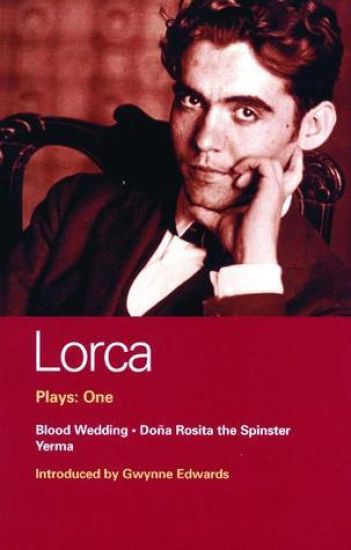
These three tragedies were written at the height if Lorca's powers and display his innovative mix of Spanish popular tradition and modern dramatic technique. Blood Wedding tells the story of a couple drawn irresistibly together in the face of an arranged marriage; Dona Rosita the Spinster follows the appalling fate of a young woman beguiled into the expectation of marriage and left stranded for a lifetime whilst Yerma is possibly Lorca's harshest play following a woman's Herculean struggle against the curse of infertility. Set in and around his home territory, Granada, the plays return again and again to the lives of passionate individuals, particularly women, trapped by the social conventions of narrow peasant communities. The plays appear here in new playable translations.
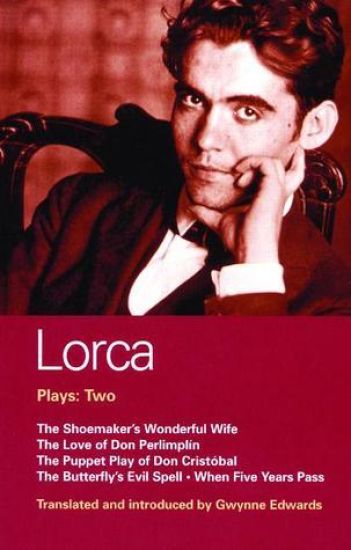
"Lorca is one of the few indisputably great dramatists of the twentieth century" Observer The Shoemaker's Wonderful Wife and The Love of Don Perlimplin use an old story of the old man married to the young wife to expose the social attitudes of a traditional Spain bound by rigid concepts of decency, reputation and honour. The Puppet Play deploys the puppets' uninhibited and passionate emotions as a direct attack on the 'tedious triviality' of commercial theatre. The Butterfly's Evil Spell explores the themes of love and frustration, while When Five Years Pass is a surrealist play with references to the film Un Chien Andalou [The Andalusian Dog] by Lorca's friend and collaborator, Luis Bunuel.
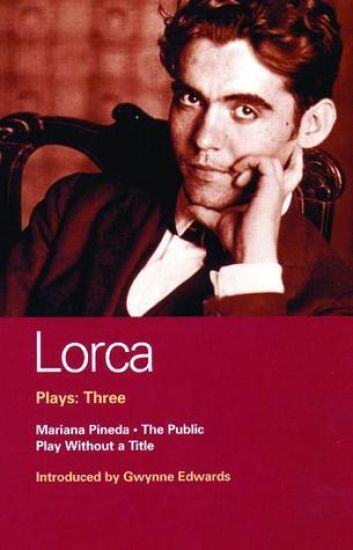
"Lorca is one of the few indisputably great dramatists of the twentieth century" Observer Mariana Pineda achieved immediate critical success on its first performance in Barcelona in 1927. The Public is a powerful and uncompromising demand for sexual, and specifically homosexual, freedom - as predicted it was never performed in Lorca's time - it was first performed in this country by Theatre Royal Stratford East in the 80s. Play Without a Title, an unfinished Lorca rarity, realises his wish 'to do something different, including modern plays on the age we live in'.
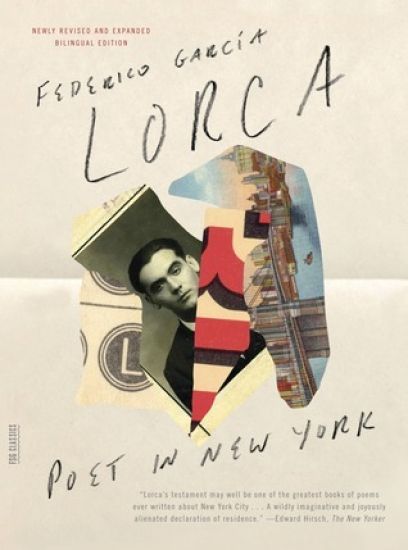
Written while Federico Garcia Lorca was a student at Columbia University in 1929-30, Poet in New York is one of the most important books he produced, and certainly one of the most important books ever published about New York City. Indeed, it is a book that changed the direction of poetry in both Spain and the Americas, a path breaking and defining work of modern literature. Timed to coincide with the citywide celebration of Garcia Lorca in New York planned for 2013, this edition, which has been revised once again by the renowned Garcia Lorca scholar Christopher Maurer, includes thrilling material -new photographs, new and emended letters - that has only recently come to light. Complementing these additions are Garcia Lorca's witty and insightful letters to his family describing his feelings about America and his temporary home there (a dorm room in Columbia's John Jay Hall), the annotated photographs that accompany those letters, a prose poem, extensive notes, and an interpretive lecture by Garcia Lorca himself. An excellent introduction to the work of a key figure of modern poetry, this bilingual edition of Poet in New York, a strange, timeless, vital book of verse, is also an exposition of the American city in the twentieth century.
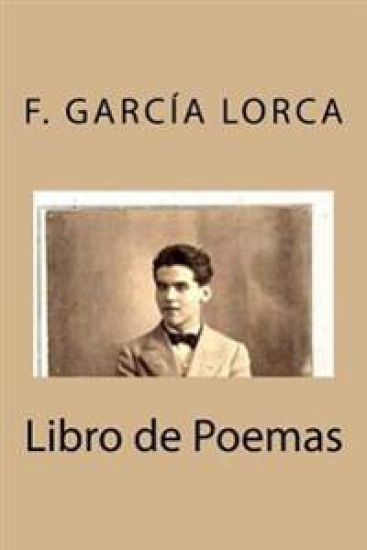
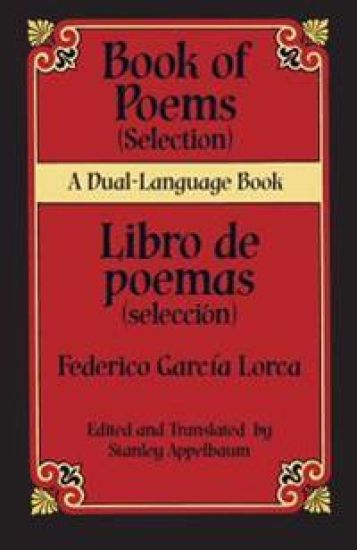
Although the life of Federico Garc a Lorca (1898-1936) was tragically brief, the Spanish poet and dramatist created an enduring body of work that remains internationally important. This selection of 55 poems from the 1921 collection Libro de poemas represents some of his finest work. Imbued with Andalusian folklore, rich in metaphor, and spiritually complex.
Finished just two months before the author's murder on 18 August 1936 by a gang of Franco's supporters, The House of Bernarda Alba is now accepted as Lorca's great masterpiece of love and loathing.Five daughters live together in a single household with a tyrannical mother. When the father of all but the eldest girl dies, a cynical marriage is advanced which will have tragic consequences for the whole family. Lorca's fascinatingly modern play, rendered here in an English version by David Hare, speaks as powerfully as a political metaphor of oppression as it does as domestic drama. The House of Bernarda Alba premiered at the National Theatre, London, in March 2005.
A bride promised. A blood vow broken. The vengeance of a village released.I want you green. Green wind, green branches. Boat on the ocean. Horse on the mountain. Written in the summer of 1932 with the Spanish civil war looming, Lorca's anarchic meditation on the fate of the individual versus society is a prophetic foreshadowing of the violence that would soon tear his beloved country apart and lead to his own tragic end.The mysteries of love and hate are explored against the backdrop of a community gearing up to unleash these elemental forces upon itself, with unstoppable consequences.What is done cannot be undone.Marina Carr's version of Federico García Lorca's Blood Weddingpremiered at the Young Vic, London, in September 2019.
Yerma (meaning 'Barren') is one of three tragic plays about peasants and rural life that make up Lorca's 'rural trilogy'. It is possibly Lorca's harshest play following a woman's Herculean struggle against the curse of infertility. The woman's barrenness becomes a metaphor for her marriage in a traditional society that denies women sexual or social equality. Her desperate desire for a child drives her to commit a terrible crime at the end of the play. This Student Edition comes complete with a full introduction; plot synopsis; commentary on characters, context and themes; bibliography; chronology, and questions for study.
"This excellent edition is most welcome. A select bibliography, a brief vocabulary, several footnotes to explain points of difficulty, fourteen long endnotes... and even the music of the songs, make the edition an extremely valuable and interesting volume, offering the reader the text of the play itself and important new insights into its structure, its significance and indeed its success."Professor Leo Hickey, 'Modern Languages'Bodas de sangre is arguably the best-known work by the most celebrated of all twentieth-century Spanish writers. A passionate story of family feud and tragic elopement is played out in the setting of a poor country village, building up to a dramatic ending full of the intensely poetic symbolism characteristic of Lorca.
The second of Lorca's trilogy of rural dramas, Yerma, is a blend of contrasting moods through which Lorca charts the increasingly destructive obsession of a childless young country wife, and probes the darker zones of human fears and desires. The play's rich mode of expression - a combination of verbal, visual and auditory images and rhythms - is also geared to celebrating sexual attraction and fertility, creation and procreation.Through his characterization of the play's central figure, Lorca raises the question of women's social status - a controversial question both then and now, and one to which Robin Warner pays particular attention in his critical introduction to the play. He also examines the links between the dramatic structure of Yerma and the importance of cultural politics during the course of the Second Spanish Republic. The Spanish text is supported by an introduction and notes in English, as well as by an extensive vocabulary and section of discussion questions.
Federico Garc a Lorca's position as one of the few geniuses of the modern theatre was firmly established in the English-speaking world with his Three Tragedies. Here, with an introduction by the dramatist's brother, Francisco Garc a Lorca, are five of his "comedies," in the authorized translations, extensively revised to reflect recent Lorca scholarship and to convey the sparkle, freshness, and magic of the original Spanish. The Shoemaker's Prodigious Wife tells of a young beauty married to an old man, a theme that often concerned Lorca. The resolution for the earnest shoemaker, who leaves home and comes back disguised as a puppeteer, is lighthearted, but there is underlying pathos. The Love of Don Perlimplin is again about a girl who weds someone much older, this time a bookish, 18th-century gentleman, who seeks an original but sardonic way out of the situation. According to Lorca himself, "Dona Rosita is the outer gentleness and inner scorching of a girl in Granada who, little by little, turns into that grotesque and moving thing -- an old maid in Spain."
Blood Wedding. Concerned with love that cannot become marriage among the primitive hill people of Castile, this is a play of the workings of tremendous passions and tribal ritual toward an inescapable tragic end. Yerma. “The whole tragic burden of Yerma is measured by the deepening of her struggle with the problem of frustrated motherhood.” —From García Lorca, by Edwin Honig. The House of Bernarda Alba. Again about “women whom love moves to tragedy,” Bernarda Alba tells of the repression of five daughters by a domineering mother, of how their natural spirits circumvent her but bring violence and death.
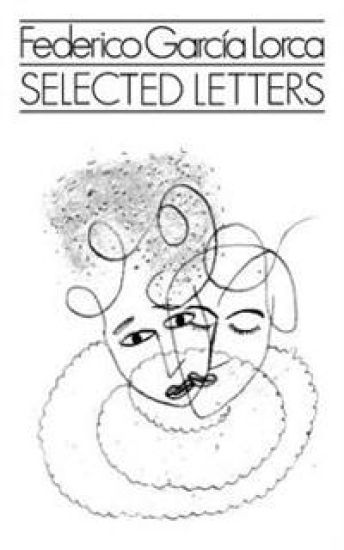
This first English-language edition of Federico Garcia Lorca's Selected Letters presents an intimate autobiographical record of the Spanish poet from the age of twenty to a month before his death at the hands of Franco's forces in 1936. "I was born for my friends," Lorca wrote to Melchor Fern ndez Almagro in 1926, and these letters reveal the personality his friends found so magical. ("A happiness, a brilliance..." Pablo Neruda called him.) Lorca was by turns sympathetic, generous, demanding, whimsical, insecure, and always lyrical. Over the nineteen years covered in this selection, he maintained a correspondence with his closest friends, particularly his childhood companion Melchor Fern ndez Almagro and his fellow poet Jorge Guill n, and wrote in concentrated bursts to many others. He could be playful with Salvador Dali's younger sister Ana Maria; deferential to composer Manuel de Falla; lively and descriptive with his family; and exasperating to Barcelona critic Sebastian Gasch as he poured out literary plans and solicited favors, ever impassioned but good-natured. With their frequent enclosures of poems and scenes from plays, the letters also chronicle Lorca's growth as an artist, from self-doubting romantic dilettante to confident, internationally respected playwright and poet. Begun at Columbia University under the aegis of Lorca's brother, Francisco Garcia Lorca, the translation and selection of these letters has been made by David Gershator, poet, teacher, and co-founder of the Downtown Poets Co-op. Dr. Gershator has also provided an informative biographical introduction.
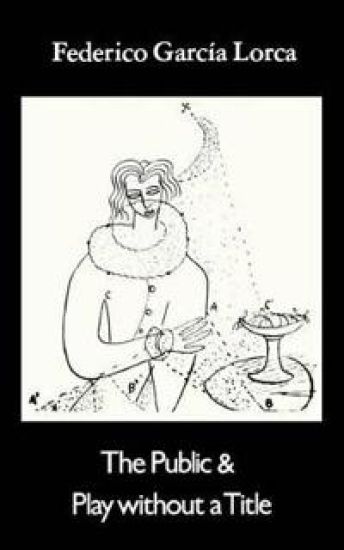
Federico Garcia Lorca called The Public “the best thing I’ve written for the theater.” Yet, he acknowledged, “this is for the theater years from now.” Now, half a century later, The Public and another of Lorca’s most daring works, Play without a Title, are available in English translation for the first time. Surrealism, folk theater, poetry, vivid costumes, black humor––in the The Public, dramatic traditions are ransacked to develop themes as timely in the 1980s as they were taboo when Lorca was writing: if Romeo were a man of thirty and Juliet a boy of fifteen, would their passion be any less authentic? No, says a young observer of the play within the play, “I who climb the mountain twice each day and, when I finish studying, tend an enormous herd of bulls that I’ve got to struggle with and overpower at every instant, I don’t have time to think about whether Juliet’s a man or a woman or a child, but only to observe that I like her with such a joyous desire.” In both The Public and Play without a Title, the player himself is of as much consequence as the role he plays. The fierce, stark Play without a Title, with its cast of Author, Prompter, Stagehand in the wings, and hecklers in the gallery, clearly heralds developments in today’s avant-garde theater. It also reflects the violence of the times in which it was written. As Carlos Bauer notes in his introduction, neither of the plays in this volume was complete in 1936, when Lorca was assassinated by Franco’s forces. Still, both have here the unity and grace of finished tours de force.