

Kirjahaku
Etsi kirjoja tekijän nimen, kirjan nimen tai ISBN:n perusteella.
25 kirjaa tekijältä Felix Bongjoh



Having been pushed to a cliff, where thousands have fatally fallen under the bullets of BIR soldiers in particular, having been trapped in a genocide calculated to wipe them off like "rats" in the words of a dictator, a subjugated people get back on their feet, determined, more than ever, not to yield to the servitude imposed by a neighboring country of equal status. Against the backdrop of agony over departed loved ones who have fought a good fight of resistance and those who must continue to do so for posterity, some of the poems also muse about familiar human struggles and other aspects of human nature and life in general. Consistent with the author's previous books of poetry, Felix Bongjoh in Angle of Angels has tried to pay attention to both form and substance, always giving preference across his poems to criteria of literary merit, including metaphor and symmetry. The poems, most of which are written in free verse, are both accessible and absorbing.
Most of the poems reflect a diverse number of themes, a plethora of waves, as suggested by its title. The themes encompass, but are not limited to pain, love, grief, beauty, nature, man's ordinary and extraordinary experiences, while others project man's interaction with man and nature.
The poems in Beyond Dying Ripples cover a kaleidoscope of themes. Most of them are implicitly or explicitly intended to make the reader see what is hidden behind ripples, especially on a river, where they expand for a while and disappear. The poems in general oscillate around diverse circumstances in life, nature, man's condition in times of war; and facts of life, including love, happiness, beauty, melancholy and death.
Using Eris - the largest of the dwarf planets beyond Neptune - as a symbol of finality or goal, the ultimate, a lucid possibility, a brilliant clue, a way out of anything, and from a metaphysical perspective, what happens beyond imagination and what transcends life on earth, the poet explores ordinary facts of rural and urban life, encompassing the multiple themes of cultural and personal inter-relational values, including love, compassion, war, solitude, man's interaction with nature, etc. Accordingly, the poet draws his imagery from various down-to-earth experiences and universally familiar scenery to drive home specific ideas. For the most part, the local color consists of commonplace geographical sceneries and characters with recognizable traits with which the reader is able to associate.

While much has been said about stars, this book of poetry considers those beaming on a garden through a moon-lit night to be the ultimate harbor, where solutions to ubiquitous problems encountered during the day may be sorted out. Appreciating the beauty of a quiet star-lit night may also hatch questions about and clues to solutions to everyday nagging enigmas, sources of agony, temptations and jubilation over overcome predicaments and sudden dead-ends. Rays from the sun, from street lights, from the moon, from stars, and, above all from the mind tend to connect in symbioses that hatch genuine expression combined with an effusion of feelings to project commonplace patterns and themes that harness various facets of life. Stars in their generic sense, as interpreted herein, have given rise to the title of a book covering life and death, war and peace, love, anger, the ugly and the beautiful, etc., the significance of life as characterized by not only by joy, but also issues we have to deal with, drawing inspiration from various symbolic sources of hope, including the stars.


Light as poetically and realistically captured in its natural form from the sun, and as produced by man through electrical devices, has an impact on how individuals in society, as compared with groups, interact with each other and use it for their daily lives. Beyond light as physically manifested in transparent, plasmatic ions, there is light, an inspiration from within, that leads an individual or groups of individuals, each in their own isles of light, to plough through life's intricacies and savor its pleasures, while avoiding life's dark side. Virtually all the poems in this book deal with ordinary sceneries and experiences, each of which may be interpreted in the context of imagery extensively used from one poem to another. Whether in the office, at home behind the mountains and woods, in times of peace and war, in dreams and in expressive moods of joy and gloom, love and hate, life tends to permeate individuals and groups alike in their interactions with each other. Most of the poems have been crafted within this broad framework of light.

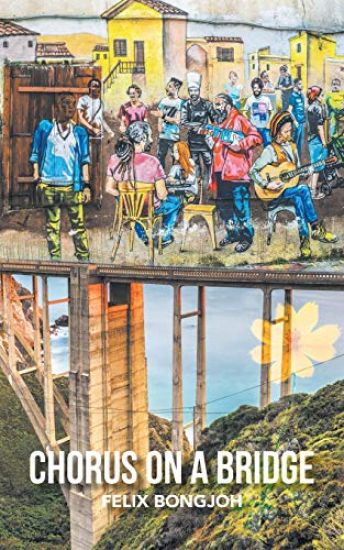
Based on a heavy dose of symbolism and metaphor, the poems reflect the ups and downs and the everyday experiences of life in general that make life worth living. Overall, they laud courage and perseverance and point to the trials and tribulations of life that must be overcome as if one were crossing from one bank of a difficult bridge to the other. The bridge is not necessarily a physical structure, although perceiving it as such enables the reader to interpret what the bridge could look like. The more important element, in a metaphorical sense, is what the reader may associate with the variety of experiences. Struggling to survive may lead to success or apparent failure, which spurs us to further effort either to devise better strategies or improve a preferred course of action. Whatever the result, it seems death is mans ultimate fate and should be experienced with the same equanimity as other setbacks and challenges of life.

The poems herein essentially deal with mans interaction with man, his immediate surroundings, and nature in general. They do not only reflect mans perception of his environment but also represent his attempt to communicate intimately with the objects and events of his experiences. The poems virtually share the same subtleties that tend to relegate the not-so-obvious to a peripheral statusotherwise metaphorically construed as weedswhich, in fact, underlies the very essence of their power and meaning.

The poet continues to draw his imagery from his familiar surroundings, from human behavior and interaction, from key elements in nature, including the skies and water and from flora and fauna alike. The bright side of life with hope as a dominant theme is reflected throughout the poems. No matter how complex, how conflicting, how intriguing or how hostile relations may sometimes appear to bewhich underlie lifes leitmotifa strong undercurrent of love essentially drives the cadenced rhythm of the verse. The beauty of the poems derives from chiaroscuro, the literary technique of balancing shade and light, gloom and hope to achieve balance as the basis for the poems natural flow from a hooting dusk to a bright dawn of eternal life and human aspirations.