Kirjojen hintavertailu. Mukana 11 717 486 kirjaa ja 12 kauppaa.

Kirjahaku

Etsi kirjoja tekijän nimen, kirjan nimen tai ISBN:n perusteella.

4 kirjaa tekijältä Fergus Campbell

The Irish Establishment 1879-1914

The Irish Establishment 1879-1914

Fergus Campbell

Oxford University Press
2020
nidottu
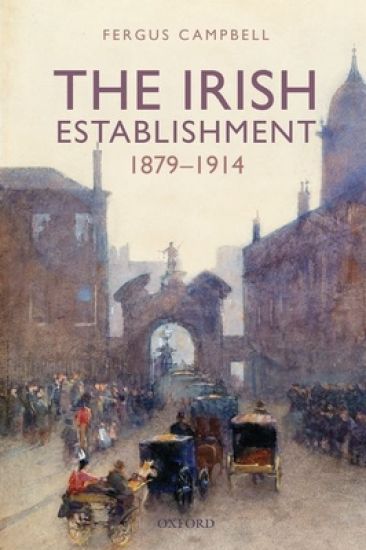
The Irish Establishment is a study of the country's most powerful men and women in the years 1879 to 1914: who they were, how they gained their power, and how the composition of this elite society changed in the tumultuous period between the Land War and the beginning of the Great War. Despite the enormous shifts in economic and political power that were taking place in the middling sections of Irish society, Fergus Campbell shows that the Irish establishment remained remarkably static and unchanged. Whilst the prominent landlord class and the Protestant middle class (particularly businessmen and professionals) retained their positions of power, the rising Catholic middle class was largely - although not entirely - excluded from the elite. Through focusing on specific groups - landlords, businessmen, religious leaders, politicians, police officers, and senior civil servants - and examining their collective biographies, Campbell explores the changing nature of Ireland's elite society. The Irish Establishment challenges the received narrative of these Irish elite classes. Traditional historiography holds that the members of the rising Catholic middle class were becoming successfully integrated into the Irish establishment by the beginning of the twentieth century, and that the Irish Revolution (1916-23) was a perverse turn of events that undermined an otherwise happy and democratic polity. Campbell offers the opposite: that the revolution was not an undermining of a stable society, but rather a direct result of structural inequality and ethnic discrimination that converted well-educated young Catholics from ambitious students into frustrated revolutionaries. By challenging received narratives and drawing evidence from a broad range of social groups, The Irish Establishment offers an exciting and fresh account of Irish society in the years 1879 to 1914, and offers the first full assessment of elite groups in Ireland in the lead up to the revolution.
The Irish Establishment 1879-1914

The Irish Establishment 1879-1914

Fergus Campbell

Oxford University Press
2009
sidottu
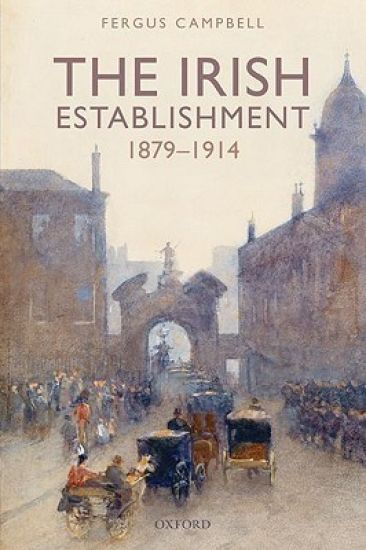
The Irish Establishment examines who the most powerful men and women were in Ireland between the Land War and the beginning of the Great War, and considers how the composition of elite society changed during this period. Although enormous shifts in economic and political power were taking place at the middle levels of Irish society, Fergus Campbell demonstrates that the Irish establishment remained remarkably static and unchanged. The Irish landlord class and the Irish Protestant middle class (especially businessmen and professionals) retained critical positions of power, and the rising Catholic middle class was largely-although not entirely-excluded from this establishment elite. In particular, Campbell focuses on landlords, businessmen, religious leaders, politicians, police officers, and senior civil servants, and examines their collective biographies to explore the changing nature of each of these elite groups. The book provides an alternative analysis to that advanced in the existing literature on elite groups in Ireland. Many historians argue that the members of the rising Catholic middle class were becoming successfully integrated into the Irish establishment by the beginning of the twentieth century, and that the Irish revolution (1916-23) represented a perverse turn of events that undermined an otherwise happy and democratic polity. Campbell suggests, on the other hand, that the revolution was a direct result of structural inequality and ethnic discrimination that converted well-educated young Catholics from ambitious students into frustrated revolutionaries. Finally, Campbell suggests that it was the strange intermediate nature of Ireland's relationship with Britain under the Act of Union (1801-1922)-neither straightforward colony nor fully integrated part of the United Kingdom-that created the tensions that caused the Union to unravel long before Patrick Pearse pulled on his boots and marched down Sackville Street on Easter Monday in 1916.
Land and Revolution

Land and Revolution

Fergus Campbell

Oxford University Press
2005
sidottu
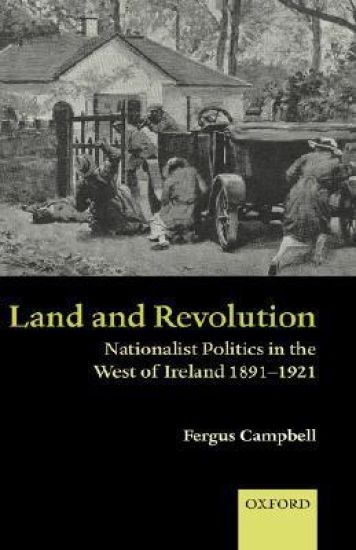
In the 1890s, most of the inhabitants of the west of Ireland experienced great poverty and hardship, living - as they did - on farms that were too small to provide them with a reasonable standard of living. By 1921, however, the living conditions of many of them had been transformed by a series of Land Acts that revolutionized the system of land holding in Ireland. This book examines agrarian conflict in Ireland during the neglected period between the death of Parnell (1891) and the signing of the Anglo-Irish Treaty (1921), and demonstrates that land reform was often introduced in response to popular protest. Whereas earlier accounts have tended to examine Irish political history from the perspective of British governments or nationalist leaders, this book breaks new ground by providing an account of popular political activity in late nineteenth- and twentieth-century Ireland. For the first time, the social background, ideas, and activities of grass-roots political activists are systematically explored, as are the class conflicts that threatened to fragment the unity of the nationalist movement in rural communities. By reinserting the activism of ordinary people into the broader historical record, Dr Campbell suggests new interpretations of a number of critical developments including the failure of 'constructive unionism', the origins of Sinn Féin, and the nature and dynamics of the Irish revolution (1916-23). Using the recently released archives of the Bureau of Military History, the story of the war of independence in the western county of Galway is told in the words of both the Irish Republican Army and its enemies. Land and Revolution transforms our understanding of late nineteenth- and early twentieth-century Irish history, and also contributes to comparative studies of nationalism, revolution, and agrarian protest.
Land and Revolution

Land and Revolution

Fergus Campbell

Oxford University Press
2008
nidottu
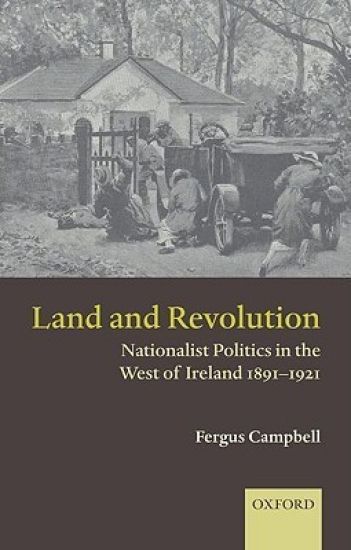
In the 1890s, most of the inhabitants of the west of Ireland experienced great poverty and hardship, living - as they did - on farms that were too small to provide them with a reasonable standard of living. By 1921, however, the living conditions of many of them had been transformed by a series of Land Acts that revolutionized the system of land holding in Ireland. This book examines agrarian conflict in Ireland during the neglected period between the death of Parnell (1891) and the signing of the Anglo-Irish Treaty (1921), and demonstrates that land reform was often introduced in response to popular protest. Whereas earlier accounts have tended to examine Irish political history from the perspective of British governments or nationalist leaders, this book breaks new ground by providing an account of popular political activity in late nineteenth- and twentieth-century Ireland. For the first time, the social background, ideas, and activities of grass-roots political activists are systematically explored, as are the class conflicts that threatened to fragment the unity of the nationalist movement in rural communities. By reinserting the activism of ordinary people into the broader historical record, Dr Campbell suggests new interpretations of a number of critical developments including the failure of 'constructive unionism', the origins of Sinn Féin, and the nature and dynamics of the Irish revolution (1916-23). Using the recently released archives of the Bureau of Military History, the story of the war of independence in the western county of Galway is told in the words of both the Irish Republican Army and its enemies. Land and Revolution transforms our understanding of late nineteenth- and early twentieth-century Irish history, and also contributes to comparative studies of nationalism, revolution, and agrarian protest.