
Kirjahaku
Etsi kirjoja tekijän nimen, kirjan nimen tai ISBN:n perusteella.
3 kirjaa tekijältä Fernando Rodriguez-Valls
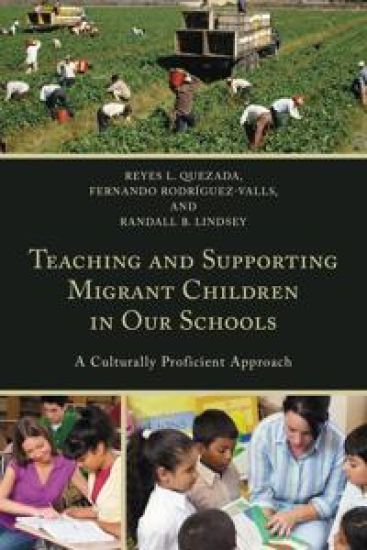
Teaching and Supporting Migrant Children in Our Schools
Reyes L. Quezada; Fernando Rodriguez-Valls; Randall B. Lindsey
Rowman Littlefield
2016
sidottu
General approaches to multiculturalism run the risk of overlooking an increasingly diverse student population that deserves special consideration and attention: students from immigrant backgrounds whose families toil the fields in order to provide better educational opportunities for their children. This book’s purpose is to guide educators to think deeply about their roles and responsibilities in the education of children of farmworker families in our nation’s schools. Readers will view their classrooms, schools, districts, and the migrant programs they lead in a broad and inclusive manner through the lens of cultural proficiency. The initial steps when embracing cultural proficiency entails thinking reflectively about one’s own values and behaviors and the school’s policies and practices toward children of farmworker families. Cultivating a willingness, openness and commitment to meeting the challenges and opportunities of this often-invisible aspect of diversity is an important first step for the development of effective educational practices for migrant students and their families. The cultural proficiency framework can inform staff development models for working effectively with migrant students and their families.
Teaching and Supporting Migrant Children in Our Schools
Reyes L. Quezada; Fernando Rodriguez-Valls; Randall B. Lindsey
Rowman Littlefield
2016
nidottu
General approaches to multiculturalism run the risk of overlooking an increasingly diverse student population that deserves special consideration and attention: students from immigrant backgrounds whose families toil the fields in order to provide better educational opportunities for their children. This book’s purpose is to guide educators to think deeply about their roles and responsibilities in the education of children of farmworker families in our nation’s schools. Readers will view their classrooms, schools, districts, and the migrant programs they lead in a broad and inclusive manner through the lens of cultural proficiency. The initial steps when embracing cultural proficiency entails thinking reflectively about one’s own values and behaviors and the school’s policies and practices toward children of farmworker families. Cultivating a willingness, openness and commitment to meeting the challenges and opportunities of this often-invisible aspect of diversity is an important first step for the development of effective educational practices for migrant students and their families. The cultural proficiency framework can inform staff development models for working effectively with migrant students and their families.