Kirjojen hintavertailu. Mukana 12 083 983 kirjaa ja 12 kauppaa.

Kirjahaku

Etsi kirjoja tekijän nimen, kirjan nimen tai ISBN:n perusteella.

4 kirjaa tekijältä Fernando Vidal

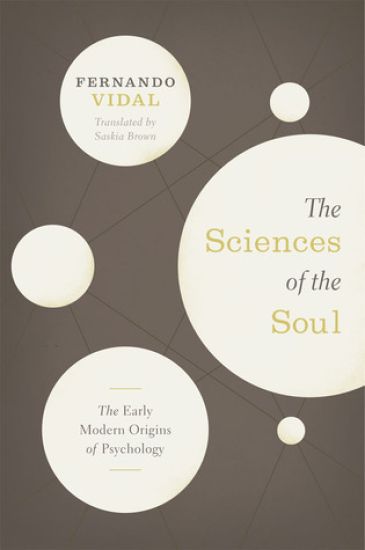
The Sciences of the Soul

The Sciences of the Soul

Fernando Vidal

University of Chicago Press
2011
sidottu
"The Sciences of the Soul" is the first attempt to explain the development of the disciplinary conception of psychology from its appearance in the late sixteenth century to its redefinition at the end of the seventeenth and its emergence as an institutionalized field in the eighteenth. Fernando Vidal traces this development through university courses and textbooks, encyclopedias, and nonacademic books, as well as through various histories of psychology. Vidal reveals that psychology existed before the eighteenth century essentially as a "physics of the soul", and it belonged as much to natural philosophy as to Christian anthropology. It remained so until the eighteenth century, when the "science of the soul" became the "science of the mind". Vidal demonstrates that this Enlightenment refashioning took place within a Christian framework, and he explores how the preservation of the Christian idea of the soul was essential to the development of the science. Not only were most psychologists convinced that an empirical science of the soul was compatible with Christian faith; their perception that psychology preserved the soul also helped to elevate its rank as an empirical science. Broad-ranging and impeccably researched, this book will be of wide importance in the history and philosophy of psychology, the history of the human sciences more generally, and in the social and intellectual history of eighteenth-century Europe.

Piaget before Piaget

Piaget before Piaget

Fernando Vidal

Harvard University Press
1994
sidottu
The great Swiss psychologist and theorist Jean Piaget (1896–1980) had much to say about the developing mind. He also had plenty to say about his own development, much of it, as Fernando Vidal shows, plainly inaccurate. In the first truly historical biography of Piaget, Vidal tells the story of the psychologist’s intellectual and personal development up to 1918. By exploring the philosophical, religious, political, and social influences on the psychologist’s early life, Vidal alters our basic assumptions about the origins of Piaget’s thinking and his later psychology.The resulting profile is strikingly dissimilar to Piaget’s own retrospective version. In Piaget’s own account, as an adolescent he was a precocious scientist dedicated to questions of epistemology. Here we find him also—and increasingly—concerned with the foundations of religious faith and knowledge, immersed in social and political matters, and actively involved in Christian and socialist groups. Far from being devoted solely to the classification of mollusks, the young Piaget was a vocal champion of Henri Bergson’s philosophy of creative evolution, an interest that figured much more prominently in his later thinking than did his early work in natural history. We see him during World War I chastising conservatism and nationalism, espousing equality and women’s rights, and advocating the role of youth in the birth of a new Christianity.In his detailed account of Jean Piaget’s childhood and adolescence—enriched by the intellectual and cultural landscape of turn-of-the-century Neuchâtel—Vidal reveals a little-known Piaget, a youth whose struggle to reconcile science and faith adds a new dimension to our understanding of the great psychologist’s life, thought, and work.
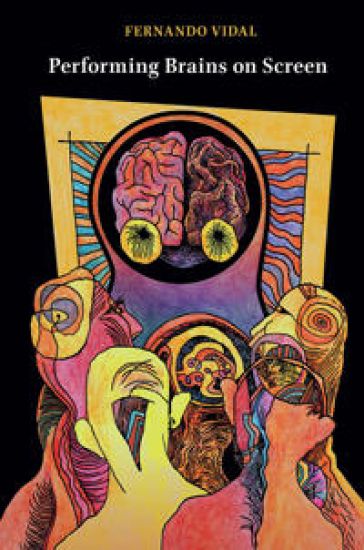
Performing Brains on Screen

Performing Brains on Screen

Fernando Vidal

TAYLOR FRANCIS LTD
2025
nidottu
Performing Brains on Screen deals with film enactments and representations of the belief that human beings are essentially their brains, a belief that embodies one of the most influential modern ways of understanding the human. Films have performed brains in two chief ways: by turning physical brains into protagonists, as in the brain movies of the 1950s, which show terrestrial or extra-terrestrial disembodied brains carrying out their evil intentions; or by giving brains that remain unseen inside someone’s head an explicitly major role, as in brain transplantation films or their successors since the 1980s, in which brain contents are transferred and manipulated by means of information technology. Through an analysis of filmic genres and particular movies, Performing Brains on Screen documents this neglected filmic universe, and demonstrates how the cinema has functioned as a cultural space where a core notion of the contemporary world has been rehearsed and problematized.
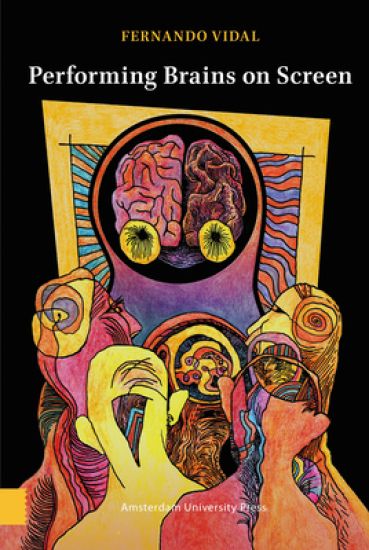
Performing Brains on Screen

Performing Brains on Screen

Fernando Vidal

AMSTERDAM UNIVERSITY PRESS
2022
sidottu
Performing Brains on Screen deals with film enactments and representations of the belief that human beings are essentially their brains, a belief that embodies one of the most influential modern ways of understanding the human. Films have performed brains in two chief ways: by turning physical brains into protagonists, as in the "brain movies" of the 1950s, which show terrestrial or extra-terrestrial disembodied brains carrying out their evil intentions; or by giving brains that remain unseen inside someone’s head an explicitly major role, as in brain transplantation films or their successors since the 1980s, in which brain contents are transferred and manipulated by means of information technology. Through an analysis of filmic genres and particular movies, Performing Brains on Screen documents this neglected filmic universe, and demonstrates how the cinema has functioned as a cultural space where a core notion of the contemporary world has been rehearsed and problematized.