Kirjojen hintavertailu. Mukana 11 364 312 kirjaa ja 12 kauppaa.

Kirjahaku

Etsi kirjoja tekijän nimen, kirjan nimen tai ISBN:n perusteella.

10 kirjaa tekijältä Filip Reyntjens

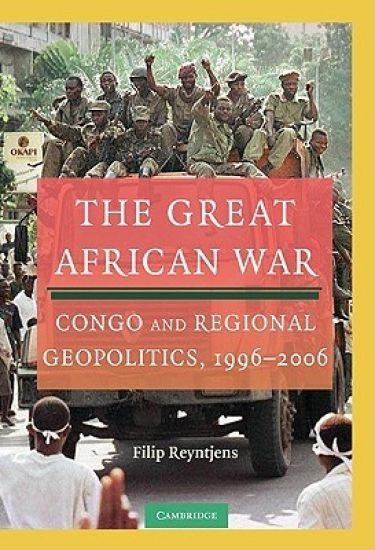
The Great African War

The Great African War

Filip Reyntjens

Cambridge University Press
2009
sidottu
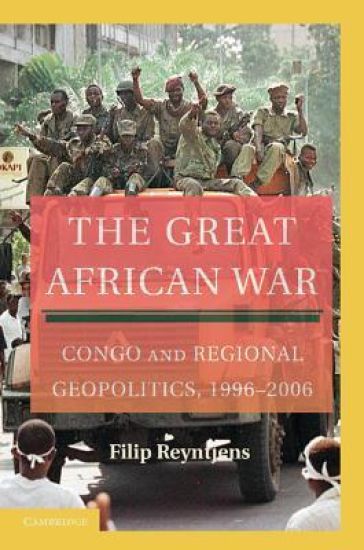
This book examines a decade-long period of instability, violence and state decay in Central Africa from 1996, when the war started, to 2006, when elections formally ended the political transition in the Democratic Republic of Congo (DRC). A unique combination of circumstances explain the unravelling of the conflicts: the collapsed Zairian/Congolese state; the continuation of the Rwandan civil war across borders; the shifting alliances in the region; the politics of identity in Rwanda, Burundi and eastern DRC; the ineptitude of the international community; and the emergence of privatised and criminalised public spaces and economies. This book seeks to provide an in-depth analysis of concurrent developments in Zaire/DRC, Rwanda, Burundi and Uganda in African and international contexts. By adopting a non-chronological approach, it attempts to show the dynamics of the inter-relationships between these realms and offers a toolkit for understanding the past and future of Central Africa.
The Great African War

The Great African War

Filip Reyntjens

Cambridge University Press
2010
pokkari
This book examines a decade-long period of instability, violence and state decay in Central Africa from 1996, when the war started, to 2006, when elections formally ended the political transition in the Democratic Republic of Congo (DRC). A unique combination of circumstances explain the unravelling of the conflicts: the collapsed Zairian/Congolese state; the continuation of the Rwandan civil war across borders; the shifting alliances in the region; the politics of identity in Rwanda, Burundi and eastern DRC; the ineptitude of the international community; and the emergence of privatised and criminalised public spaces and economies. This book seeks to provide an in-depth analysis of concurrent developments in Zaire/DRC, Rwanda, Burundi and Uganda in African and international contexts. By adopting a non-chronological approach, it attempts to show the dynamics of the inter-relationships between these realms and offers a toolkit for understanding the past and future of Central Africa.
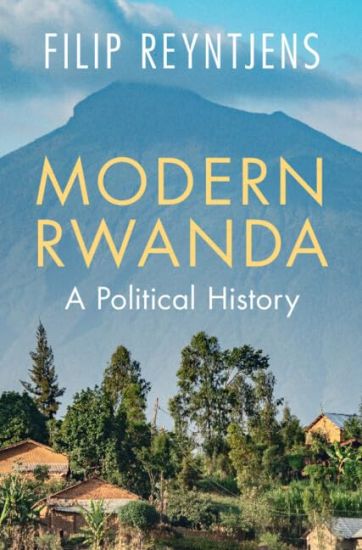
Modern Rwanda

Modern Rwanda

Filip Reyntjens

Cambridge University Press
2024
sidottu
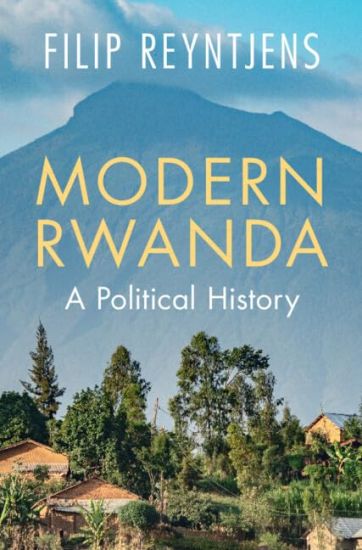
Rwanda has been the subject of much research following the genocide against the Tutsi ethnic group in 1994. Moving beyond recent histories which examine Rwanda's past predominantly through the lens of this tragic event, Filip Reyntjens utilises a longue durée framework to provide new insights into historical developments over the last hundred and fifty years. Tracking the foundations of modern Rwanda from the mid-nineteenth century to the present day, this study offers the first comprehensive examination of both the political continuities and ruptures which have shaped the country. Reyntjens examines the 19th century precolonial polity, colonisation from the end of the 19th century; the revolution of 1959-1961 followed by independence in 1962; and the 1994 genocide followed by the seizure of power by the Rwandan Patriotic Front (RPF). Across these periods of dramatic transition this study demonstrates the role of both political constancy and change, allowing readers to reshape their understanding of Rwanda's political history.
Modern Rwanda

Modern Rwanda

Filip Reyntjens

Cambridge University Press
2024
pokkari
Rwanda has been the subject of much research following the genocide against the Tutsi ethnic group in 1994. Moving beyond recent histories which examine Rwanda's past predominantly through the lens of this tragic event, Filip Reyntjens utilises a longue durée framework to provide new insights into historical developments over the last hundred and fifty years. Tracking the foundations of modern Rwanda from the mid-nineteenth century to the present day, this study offers the first comprehensive examination of both the political continuities and ruptures which have shaped the country. Reyntjens examines the 19th century precolonial polity, colonisation from the end of the 19th century; the revolution of 1959-1961 followed by independence in 1962; and the 1994 genocide followed by the seizure of power by the Rwandan Patriotic Front (RPF). Across these periods of dramatic transition this study demonstrates the role of both political constancy and change, allowing readers to reshape their understanding of Rwanda's political history.
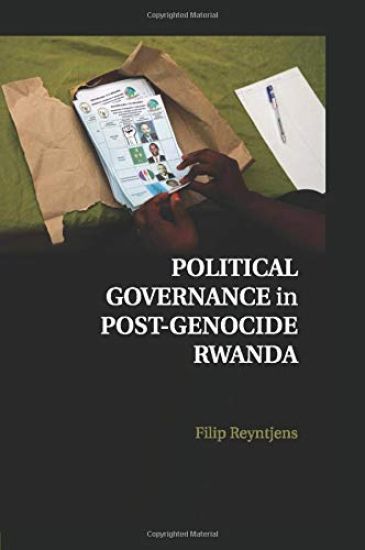
Political Governance in Post-Genocide Rwanda

Political Governance in Post-Genocide Rwanda

Filip Reyntjens

Cambridge University Press
2013
sidottu
Filip Reyntjens's book analyzes political governance in post-genocide Rwanda and focuses on the rise of the authoritarian Rwandan Patriotic Front (RPF). In the aftermath of the 1994 Rwandan genocide, the RPF has employed various means - rigged elections, elimination of opposition parties and civil society, legislation outlawing dissenting opinions, and terrorism - to consolidate power and perpetuate its position as the nation's ruling party. Although many international observers have hailed Rwanda as a 'success story' for its technocratic governance, societal reforms, and economic development, Reyntjens complicates this picture by casting light on the regime's human rights abuses, social engineering projects, information management schemes, and retributive justice system.
Political Governance in Post-Genocide Rwanda

Political Governance in Post-Genocide Rwanda

Filip Reyntjens

Cambridge University Press
2015
pokkari
Filip Reyntjens's book analyzes political governance in post-genocide Rwanda and focuses on the rise of the authoritarian Rwandan Patriotic Front (RPF). In the aftermath of the 1994 Rwandan genocide, the RPF has employed various means - rigged elections, elimination of opposition parties and civil society, legislation outlawing dissenting opinions, and terrorism - to consolidate power and perpetuate its position as the nation's ruling party. Although many international observers have hailed Rwanda as a 'success story' for its technocratic governance, societal reforms, and economic development, Reyntjens complicates this picture by casting light on the regime's human rights abuses, social engineering projects, information management schemes, and retributive justice system.